

Roger Stone: A Life of Scandals, Controversies and Crimes
Updated: Aug 29

Few political operatives have spent half a century this close to scandal without ever holding office themselves. Roger Stone has been linked to Watergate, lobbied for foreign dictators, been fired from a presidential campaign over a tabloid sex scandal, and was eventually convicted on seven federal felony counts, before a presidential pardon wiped the conviction away. Supporters call him a fearless political strategist. Critics call him a con man who's spent decades treating democracy as a game to be won by any means necessary. Both descriptions draw from the same documented record.
Quick Answers
Who is Roger Stone? A Republican political consultant and self-described 'dirty trickster' who has worked on Republican campaigns from Richard Nixon to Donald Trump since the 1970s.
What was he convicted of? In November 2019, a federal jury found him guilty of witness tampering, obstruction and lying to Congress during the Mueller investigation into Russian election interference.
Did he go to prison? No. President Trump commuted his 40-month sentence in July 2020 and issued him a full pardon that December, before Stone served any time.
Is he still active in politics? Yes. As of 2025 and 2026 he continues to work as a registered lobbyist and remains a vocal Trump ally and commentator.

A Trickster From the Start
Roger Jason Stone Jr. was born in 1952 in Norwalk, Connecticut. By his own account, one of his first political acts came in a high school mock election, where he spread a false rumour that his opponent's candidate wanted students in school on Saturdays. The rumour worked, and Stone later said the experience taught him the power of what he'd go on to call disinformation.
By 19 he was working for Richard Nixon's re-election campaign, and at that age became one of the youngest people to testify before the Watergate grand jury. He wasn't a central figure in the scandal itself, but he was accused of political sabotage against the Democratic primary field, including funnelling a campaign contribution to a Republican opponent's campaign under a false name, specifically to embarrass a rival candidate and draw press attention to alleged corruption on the other side. Rather than distance himself from Watergate in the decades that followed, Stone leaned into the association. He later had Nixon's face tattooed on his back, and has repeatedly called him one of the great political minds of the century.
Lobbying for the World's Strongmen
After Nixon, Stone moved into lobbying. In the 1980s he co-founded the firm Black, Manafort, Stone & Kelly with Paul Manafort and Charles Black, which became one of the most talked-about lobbying operations in Washington for the client list it was willing to represent.
Those clients included Ferdinand Marcos of the Philippines, ousted in 1986 after years of corruption allegations, and Mobutu Sese Seko of Zaire, a dictator widely accused of looting his country's wealth while much of the population lived in poverty. Journalists covering Washington lobbying at the time nicknamed the firm the torturers' lobby, a label Stone never seriously disputed. The work cemented his reputation as someone willing to represent almost any client, provided the money was there.

A Very Public Private Scandal
By the mid-1990s, Stone's reputation for controversy had extended well beyond politics. In 1996, while working on Bob Dole's presidential campaign, tabloid reporters found personal ads that Stone and his then wife had placed in swingers' magazines seeking group sex partners. Dole's campaign cut ties with him almost immediately.
Stone has since said he gave a blanket denial at the time mainly because his grandparents were still alive, and has more recently described himself openly as a libertine. Whatever the explanation, the episode became a permanent part of his public reputation.
The Brooks Brothers Riot
Four years later, Stone was at the centre of one of the more consequential episodes of his career, though it had nothing to do with his own campaign work. During the disputed 2000 presidential recount in Florida, dozens of Republican operatives, many flown in from Washington and dressed in business attire, descended on the Miami-Dade County elections office as officials tried to conduct a manual recount of contested ballots. The protest turned physical, with demonstrators shoving and shouting at election staff, and it became known afterward as the Brooks Brothers riot, after the conservative, buttoned-down clothing many of the protesters wore. Officials halted the recount that day, a decision widely seen as a turning point in a race eventually settled in George W. Bush's favour by a margin of 537 votes.
Stone later told The New Yorker that organising the protest had been his idea, describing it as a coordinated operation run from a Winnebago with phone banks and walkie-talkies. Fellow Republican operative Brad Blakeman disputed that account, telling reporters Stone had exaggerated his role. Whichever version is closer to the truth, the tactic itself, using an apparently spontaneous crowd to shut down an official proceeding, became a template Stone and others would return to two decades later.
The Trump Whisperer
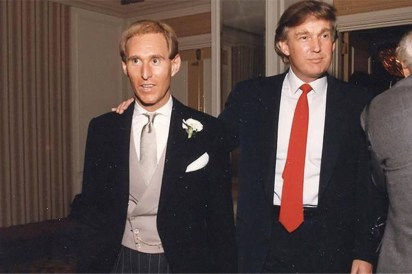
Stone first met Donald Trump in the 1980s, when Trump was a New York real-estate developer already flirting with the idea of running for office. Stone encouraged him to run as early as 1988 and stayed loosely connected to him for decades afterward, describing Trump at various points as having, in his words, the aura, the charisma and the confidence of a star.
Stone briefly joined Trump's formal 2016 campaign staff before clashing with other advisers and departing, but he remained closely associated with Trump from the outside, presenting himself as one of the campaign's most combative public defenders.
The Mueller Investigation and a Federal Conviction
When Special Counsel Robert Mueller investigated Russian interference in the 2016 election, Stone became a central figure. Investigators established that Russian military intelligence officers had used the online persona Guccifer 2.0 to leak hacked Democratic Party material, and that Stone had exchanged direct messages with that persona on Twitter, which he later confirmed and described as brief and innocuous. Days before that contact became public, in August 2016, Stone had tweeted that it would soon be, in his words, Podesta's time in the barrel, a reference to Clinton campaign chairman John Podesta weeks before Podesta's own hacked emails became public knowledge. Stone maintained he'd been referring to unrelated business dealings and had no advance knowledge of the leak; prosecutors and journalists who examined the timeline argued the explanation didn't hold up well.
Prosecutors said Stone had acted as an informal go-between linking the Trump campaign to WikiLeaks, which published the hacked emails, and that he had lied to Congress about the extent of those contacts.
Central to the case against him was a text message Stone sent to radio host Randy Credico, a potential witness, after Credico received a request to testify before the House Intelligence Committee. Stone quoted Richard Nixon's own words from the Watergate tapes back to him: stonewall it, plead the fifth, anything to save the plan. The indictment also cited a separate message in which Stone told Credico he intended to take away Credico's therapy dog, Bianca, a threat prosecutors treated as a further act of witness intimidation. FBI agents arrested Stone in a pre-dawn raid at his Florida home in January 2019, and in November of that year a jury convicted him on seven felony counts, including witness tampering, obstruction of an official proceeding and lying to Congress. He was sentenced to 40 months in February 2020.
The Judge, the Crosshairs and a Gag Order
Stone's pretrial conduct produced a scandal of its own. In February 2019, he posted a photo on Instagram of the federal judge overseeing his case, Amy Berman Jackson, next to what appeared to be the crosshairs of a gun sight, alongside a caption criticising her rulings. He deleted it within the hour and told the court it had been a stupid lack of judgment, but the judge imposed a limited gag order regardless, warning that she believed he posed a danger to others connected to the case if she didn't act.
Stone went on to violate that order with further social media posts about the investigation, prompting Jackson to bar him entirely from Instagram, Twitter and Facebook for the remainder of the case, telling him in open court she didn't know what she was supposed to do with him.
He never served that sentence. President Trump commuted it in July 2020, and pardoned him outright that December. Supporters framed the pardon as correcting what they saw as a politically motivated prosecution; critics saw it as the president protecting an ally who'd been convicted of covering for him.

Election Denial and January 6
After his pardon, Stone became a regular presence on far-right media, including Alex Jones's InfoWars, where he promoted a range of unsubstantiated claims about the 2020 election. His most widely reported claim, made without any supporting evidence, was that North Korea had shipped thousands of fraudulent ballots into the United States by boat to benefit Joe Biden.
Stone was in Washington on 5 January 2021, the night before the Capitol riot, where he was photographed being guarded by members of the Oath Keepers militia acting as his personal security detail. He has denied any involvement in the riot itself, though his connections to militia members who later faced seditious conspiracy charges drew sustained scrutiny from the House committee that investigated the events of that day. His long association with hardball tactics and disregard for convention has drawn comparisons to other Trump-era operators; our piece on Roy Cohn traces a similar pattern decades earlier, when Cohn mentored a young Donald Trump in much the same take-no-prisoners style.
Stone's Rules
Stone laid out his own political philosophy in his 2018 book, Stone's Rules: How to Win at Politics, Business, and Style. Among its central maxims: admit nothing, deny everything, launch counterattack. In the 2017 Netflix documentary Get Me Roger Stone, he summarised his whole approach to public life in a single line, saying it's better to be infamous than never to be famous at all.
Still in the Game
Stone's habit of courting controversy hasn't slowed with age. In 2024, undercover recordings obtained by Rolling Stone captured him discussing plans for how Republicans might contest the results of that year's presidential election if Trump lost again, at one point suggesting bringing armed personnel to polling locations and referencing a lawyer and judge on standby to intervene. Stone did not deny making the comments.
As of 2025 and 2026, Stone remains a registered lobbyist through his firm, Drake Ventures, with recent disclosed work representing Native American tribal clients in Washington, including a Louisiana tribe and a Bay Area tribe seeking control of federal land at San Francisco's Presidio. Whatever else has changed, Stone has continued doing what he's done since the 1970s: working the edges of Washington influence, staying close to power, and rarely leaving a room without being noticed.
A Divided Legacy
Roger Stone has never held elected office, authored major legislation or led a government agency. Yet across five decades he's remained a fixture near the centre of Republican politics, from Nixon's re-election campaign to Trump's White House orbit. His supporters describe him as a shrewd and unapologetic strategist willing to fight by rules his opponents won't. His critics describe him as a symbol of exactly the kind of institutional decay he's spent his career either exploiting or celebrating, depending on who's asking. The documented record, the convictions, the pardon, the lobbying disclosures and the sworn testimony, doesn't resolve that argument. It simply keeps growing.
You Might Also Like
Sources
2. PBS NewsHour / AP: Trial reveals Roger Stone quoted Nixon as he urged witness to stonewall Congress
13. NBC News: Roger Stone draws ire of judge over gag order violation, has social media blackout imposed


