

The Beaumont Children Disappearance and the Day Australia Changed
Updated: Mar 19

On the morning of 26th January, 1966, Australia Day unfolded in Adelaide with the relaxed familiarity of a long public holiday. The beaches were already crowded, the heat was building early, and families moved through the day with an unspoken confidence that public spaces were safe. In the beachside suburb of Somerton Park, three siblings prepared for what should have been a routine trip to the sea. By nightfall, they would have vanished without a trace, leaving behind a mystery that still haunts Australia sixty years later.
The disappearance of Jane Beaumont, Arnna Beaumont, and Grant Beaumont is not defined by forensic evidence or dramatic breakthroughs. Instead, it is a case built from ordinary details, credible witnesses, and an unsettling absence of proof. What makes it endure is not what is known, but what never surfaced.

A family and a familiar freedom
Jane, Arnna, and Grant lived with their parents at 109 Harding Street, a short distance from Glenelg Beach. Their father, Jim Beaumont, was a former serviceman who worked as a taxi driver and travelling salesman. Their mother, Nancy Beaumont, managed the household and cared for the children.
They were a close family, living in a community where it was entirely normal for children to move independently. In 1966, no one questioned whether it was safe for children to take public transport alone. That assumption would change forever.
On 25th January, 1966, Adelaide was experiencing a summer heatwave. Jim dropped the children at Glenelg Beach before leaving on a planned three day sales trip to Snowtown. The following morning, Australia Day itself, the children asked Nancy if they could return to the beach. It was too hot to walk, so she agreed they could take the bus.
Nancy gave them six shillings and sixpence, enough for fares and lunch, and told them to be home on the 12:00 noon bus. Jane, aged nine, was described by her parents as shy, cautious, and responsible. Arnna, seven, and Grant, four, followed her lead. Nothing about the arrangement raised concern.
The journey to Glenelg

At 8:45 am, the three siblings boarded a bus from Somerton Park for the short journey to Glenelg. The bus driver later told police he clearly remembered the children boarding. A local postman also recalled seeing them during their trip.
Once at Glenelg, the children were seen near the foreshore and later at Colley Reserve, a grassy area close to the beach where families gathered throughout the day.
It was here that multiple witnesses observed the children with an adult man, a detail that would later define the case.
The man seen with the children
Several independent witnesses described the same individual. He was tall, with fairish to light brown hair, a thin face, and a sun tanned complexion. He appeared to be of medium, thin to athletic build, and was estimated to be in his mid thirties. He was wearing swim trunks and was described as confident, articulate, and well spoken, often characterised as “British looking”.
The children appeared entirely at ease. They were laughing, playing, and interacting with the man as though they knew him. One witness recalled the man approaching her to ask whether anyone had interfered with the children’s belongings, explaining that their money was “missing”. He then left briefly to change clothes while the children waited nearby.

Later, witnesses saw the man and the children walking away together from the beach. Police later estimated this occurred at around 12:15 pm.
For Jim and Nancy, a remark made weeks earlier took on devastating significance. Arnna had casually told her mother that Jane had “got a boyfriend down the beach”. At the time, Nancy assumed this meant another child. Investigators later theorised that the children may have encountered the man on previous visits and gradually come to trust him.
The bakery sighting
Between 11:15 and 11:30 am, the Beaumont children were seen at Wenzel's Bakery on Moseley Street. This encounter became one of the most critical moments in the investigation.
Jane paid for pasties, a meat pie, and drinks using a £1 note. The shopkeeper knew the children from previous visits and immediately found this unusual. Nancy had given them far less money, and Jane had never purchased a meat pie before.
Police concluded that the £1 note must have been given to them by someone else. That person has never been identified.
This visit to Wenzel’s Bakery remains the last confirmed sighting of the Beaumont children.

Missed buses and mounting alarm
When the children failed to return on the 12:00 noon bus, Nancy began to worry. When they also missed the 2:00 pm bus, concern turned into fear. Jim returned home early from his sales trip around 3:00 pm and immediately drove to Glenelg.
The beach was crowded. He searched the foreshore, nearby streets, shops, and familiar meeting places. He found nothing.
At 5:30 pm, Jim and Nancy went to the Glenelg police station to report their children missing.
The search and early confusion
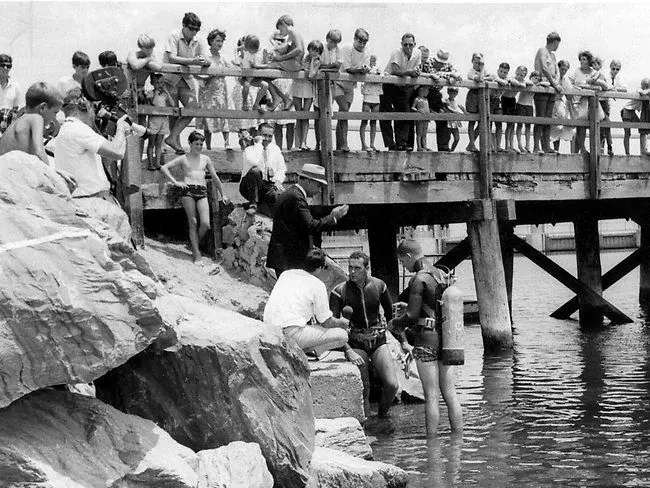
Police initially assumed the children were nearby and had simply lost track of time. A search of Glenelg Beach began immediately and quickly expanded to include sandhills, nearby buildings, boats, and the ocean. Airports, rail lines, and interstate roads were monitored amid fears of accident or abduction.
Within twenty four hours, the disappearance was national news.
On 29th January, 1966, the Adelaide Sunday Mail ran the headline “Sex crime now feared”, reflecting how rapidly public anxiety escalated. Despite this, the initial reward was only £250, highlighting how unprepared authorities were for crimes of this nature.

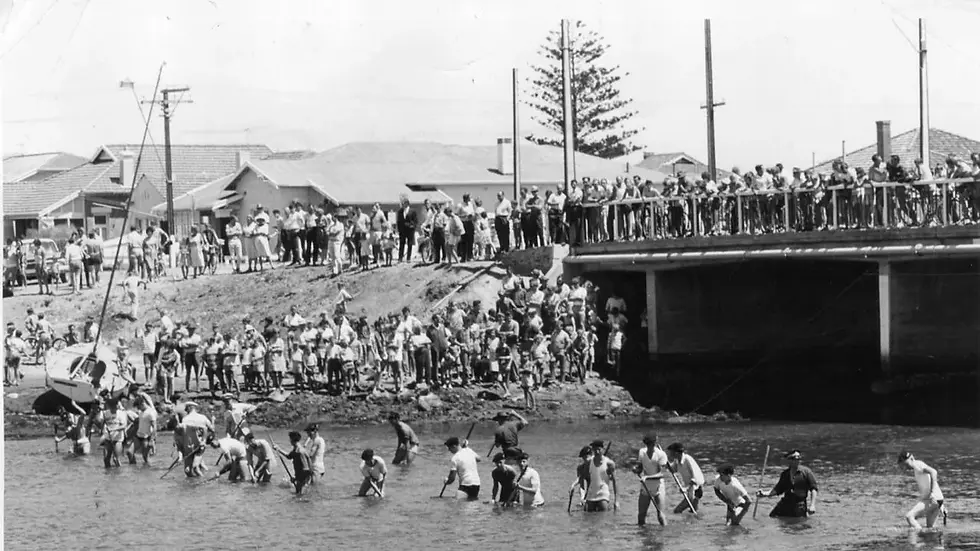
One report led police to drain the Patawalonga Boat Haven after a woman claimed she had spoken with three children resembling the Beaumonts at 7:00 pm on the day of the disappearance. Police cadets and emergency teams searched the area thoroughly. Nothing was found.
A postman who knew the children well initially claimed he saw them at 2:55 pm, walking along Jetty Road holding hands and laughing. Days later, he corrected himself, believing he had seen them earlier in the day. Other reported sightings continued for almost a year, none of which could be verified.
Psychic intervention and hoaxes
The case attracted international attention. On 8th November, 1966, Dutch psychic Gerard Croiset was brought to Australia. His claims shifted repeatedly, eventually identifying a warehouse near the Beaumont home as a burial site. Public pressure led to the building’s demolition and excavation. No remains were found. A further search in 1996 produced the same result.
About two years after the disappearance, Jim and Nancy received letters postmarked Dandenong, Victoria, supposedly written by Jane and by a man claiming to be keeping the children. Police initially believed the letters could be genuine based on handwriting comparisons. Jim and Nancy attended a nominated meeting place, followed by a detective. No one appeared.
In 1992, forensic testing confirmed the letters were a hoax, written by a man who had been a teenager at the time. He was never charged.
Suspects and investigations
Over the decades, several suspects have been examined.
Bevan Spencer von Einem was convicted in 1984 of murdering Richard Kelvin. An informant later alleged von Einem confessed to abducting three children. Some details aligned with known facts, others did not. He remains a person of interest.

Arthur Stanley Brown resembled witness descriptions but was 53 in 1966, significantly older than the suspect seen with the children.
James Ryan O'Neill made ambiguous remarks suggesting involvement, but police interviewed and discounted him.
Derek Ernest Percy was only 17 at the time and later imprisoned, making his involvement unlikely.
Harry Phipps lived 300 metres from Glenelg Beach, was known to give out £1 notes, and his son later claimed to have seen the children in his yard. Excavations in 2013, 2018, and 2025 found no remains.

A nation quietly changed
No public criticism was directed at the Beaumont parents. Allowing children to travel alone was socially accepted. After the disappearance, that assumption collapsed.
Alongside the Graeme Thorne kidnapping and the Wanda Beach murders, the Beaumont case is often described as marking the end of post war Australian innocence.
The parents who waited
Jim and Nancy remained in their Somerton Park home for many years, fearful their children might return and find them gone. Their marriage eventually ended under the strain. In 1990, newspapers published computer generated images of what the children might look like as adults, against their wishes.
Nancy Beaumont died on 16th September, 2019, aged 92. Jim Beaumont died on 9th April, 2023, aged 97. Neither ever learned the truth.

An unanswered absence
Sixty years on, the Beaumont children remain missing. No remains have been found. No one has been charged. South Australia Police maintain that the investigation remains open, with a A$1 million reward still offered.
Three children went to the beach on a summer morning. They never came home. What happened in between remains one of Australia’s most enduring and unsettling questions.


