

The Lonely Hearts Killers: The Strange and Deadly Partnership of Raymond Fernandez and Martha Beck
Updated: Mar 11

On the morning of the 8th March, 1951, reporters gathered outside Sing Sing Prison in Ossining, New York. The case they had followed for nearly two years was reaching its final chapter. Inside the prison walls, two prisoners waited in separate cells. Within minutes of one another they would be led into the execution chamber and strapped into the electric chair.
Their names were Raymond Martinez Fernandez and Martha Jule Beck, and by the time of their deaths they had become infamous across the United States as the Lonely Hearts Killers.
Their crimes had shocked the public not only because of their brutality but also because of how they selected their victims. The couple travelled across the country responding to personal advertisements placed by women seeking companionship. These lonely hearts columns were meant to help people find love. Instead, for several women, the letters they received from Fernandez would lead to theft, betrayal, and sometimes murder.
Although the pair were only convicted of one killing, investigators believed they might have been responsible for as many as twenty deaths between 1947 and 1949. Their case remains one of the most unusual criminal partnerships in American history.

Raymond Fernandez: A Difficult Early Life
Raymond Martinez Fernandez was born on 17th December, 1914, in the Territory of Hawaii. His parents were Spanish immigrants who soon moved the family to Bridgeport, Connecticut, where his father worked as a handyman.
Accounts of Fernandez’s childhood suggest a strained relationship with his father. According to later testimony, he was treated harshly and often forced to perform heavy labour rather than attend school regularly.
One early incident hinted at the troubled life that might follow. At the age of sixteen Fernandez and two other boys were caught stealing chickens. The other boys were bailed out by their families, but Fernandez’s father refused to help him. As a result, he spent two months in jail, an experience that appears to have left a lasting impression.
Not long afterwards the family moved to Órgiva, a small town in southern Spain, where his father eventually became the local mayor. Fernandez spent much of his adolescence moving between Spain and Gibraltar.
By the age of twenty he had married a Spanish woman named Encarnación Robles, and the couple eventually had four children together. Despite having a family, Fernandez rarely stayed in one place for long. He worked in shipping and spent time at sea, eventually serving in the Spanish merchant navy.
During the Second World War he reportedly carried out intelligence work for British authorities while operating around Gibraltar, though details of this work remain unclear.
The Accident That Altered His Personality
In December 1945, Fernandez boarded a ship bound for the United States, leaving his wife and children behind in Spain. During the voyage an accident occurred that would later play a central role in attempts to explain his behaviour.
While the ship was sailing near Curaçao, a heavy steel hatch fell onto Fernandez’s head, causing a severe skull fracture. He spent several months recovering in hospital.
Medical evaluations carried out later suggested that the injury may have damaged his frontal lobe, the region of the brain associated with judgement and impulse control. One psychiatric report written during his trial stated that the accident may have altered his personality significantly.
After leaving hospital Fernandez quickly drifted into criminal activity. In Mobile, Alabama, he attempted to smuggle stolen clothing through customs and was arrested for robbery. He pleaded guilty and was sentenced to one year in prison in Tallahassee, Florida.
During this time he met a Haitian cellmate who introduced him to beliefs in voodoo, hypnotism, and black magic. Fernandez later claimed that these practices gave him a mysterious power over women.
He told several acquaintances that he sprinkled a special powder over letters he wrote to women and performed rituals designed to enchant them.
Whether he truly believed these rituals had supernatural effects or simply used them to enhance his reputation remains uncertain. What is clear is that Fernandez had already begun to develop a system for manipulating women long before he met Martha Beck.
Lonely Hearts Clubs in Post War America
By the mid twentieth century lonely hearts advertisements were a common feature of newspapers and magazines across the United States. Thousands of people used them to search for companionship.
For widows, divorcees, or people living in isolated communities, these advertisements offered one of the few ways to meet potential partners. Various organisations operated clubs that helped facilitate these introductions.
One such organisation was Mother Dinene’s Friendly Club, based in New York. Members paid a small fee and received lists of other members looking for correspondence.

After leaving prison in 1946, Fernandez moved to New York City and joined the club. He quickly realised that the membership lists contained exactly the kind of targets he needed.
Many of the women were lonely, trusting, and sometimes financially comfortable. Fernandez began writing letters to them, telling each woman that they had much in common and suggesting that they meet in person.
The scheme worked remarkably well.
Martha Beck: A Lonely Childhood
Martha Jule Beck was born on the 6th of May, 1920, in Milton, Florida, the youngest child of William and Martha Seabrook.
Her father left the family when she was ten years old, leaving her mother to raise the children alone. Beck grew up shy and socially isolated. She was overweight, something doctors of the time attributed to a glandular disorder.
She also experienced early puberty, which created further difficulties during childhood. At her later trial Beck claimed that she had been sexually assaulted by her brother and that her mother blamed and beat her afterwards.
Whether every detail of this account was accurate remains uncertain, but it contributed to the portrait of a deeply troubled upbringing.

Despite these difficulties Beck completed nursing training in Pensacola in 1942. Yet she struggled to secure stable employment. Employers sometimes rejected her because of her appearance, something that was unfortunately common at the time.
For a period she worked in a funeral home, preparing bodies for burial. The work depressed her and she eventually moved to California, where she found employment at a United States Army hospital.
During this period Beck became pregnant. The father refused to marry her and later committed suicide. Beck suffered a nervous breakdown and returned to Florida, where she gave birth to her first child.
Soon afterwards she became pregnant again by Alfred Beck, a Pensacola bus driver. The couple married on 13th December, 1944, but the marriage collapsed within six months.
By 1946, Beck was a single mother of two children trying to rebuild her life.
Romance Novels and Escapism
Despite these setbacks Beck managed to secure a position at a residential facility for disabled children in Pensacola. She eventually rose to the position of director.
Yet her personal life remained unhappy. Beck struggled with alcohol and spent much of her free time reading romance novels and magazines or watching romantic films.
These stories provided an escape from the difficulties of her daily life. In November 1946, an acquaintance jokingly submitted Beck’s details to a lonely hearts club in New York.
Soon afterwards she began receiving letters from several men. One of them was Raymond Fernandez.
A Meeting That Changed Everything
Fernandez travelled from New York to Florida shortly before Christmas 1947 to meet Beck.
At first he was unimpressed. Beck had suggested in her letters that she possessed financial resources that she did not actually have. After two days Fernandez returned to New York.
Beck, however, had already become emotionally attached to him. She wrote him a series of romantic letters declaring her love.
At one point she threatened suicide, telling Fernandez that she planned to kill herself using the oven in her home.
The letter achieved its intended effect. Fernandez invited her to visit him in New York.
On 18th January, 1948, Beck arrived unexpectedly at his boarding house with her two children. Fernandez refused to allow them to stay, so Beck sent the children back to Florida to live with her mother.
It was a decision that demonstrated just how determined she was to remain with him.
Fernandez then told Beck the truth about his life. He admitted that he earned money by conning women through lonely hearts clubs.
Rather than leaving him, Beck decided to join him.
The Criminal Partnership Begins
Once Beck became involved, Fernandez’s scheme grew more elaborate.
He continued writing to women across the country through lonely hearts clubs. When he travelled to meet them Beck usually accompanied him.
She often posed as his sister or sister in law, which reassured potential victims who might otherwise have been suspicious. The presence of another woman made the situation appear respectable.
Fernandez would charm the woman and gain her trust, sometimes proposing marriage within days. He then persuaded his victims to transfer money, jewellery, or property into his name.
Beck watched closely for signs that the women possessed savings or insurance policies.
In many cases the victims survived the encounter but lost significant sums of money. In other cases the encounters ended far more violently.
Early Suspected Victims
One early suspected victim was Jane Lucilla Wilson Thompson, a divorced boarding house owner from New York.
In October 1947 Fernandez travelled with her to Spain. During the trip he introduced Thompson to his wife and children. Shortly afterwards she died in her hotel room in La Línea de la Concepción near Gibraltar.
The death was officially attributed to a heart attack, though later investigators suspected poisoning.

Another target was Esther Henne, a retired schoolteacher whom Fernandez married in Fairfax, Virginia, on 28th February, 1948. Beck accompanied him on the trip, posing as a relative. Henne eventually realised something was wrong and managed to escape.
Later that year the pair targeted Myrtle Young, whom Fernandez married in Chicago on 14th August, 1948. Following an argument Young consumed a jar of barbiturates and was placed on a bus back to Arkansas. She died later from a brain haemorrhage.
Authorities later suspected the couple had orchestrated the poisoning.
The Murder of Janet Fay
The killing that ultimately led to their arrest occurred in January 1949.
Fernandez had been corresponding with Janet Fay, a deeply religious widow from Albany, New York. Using the name Charles Martin, he claimed to share her beliefs.
On the 1st of January, 1949, Fernandez and Beck travelled to Fay’s home. Beck was introduced as his sister.
Fay quickly became attached to Fernandez and agreed to marry him. She withdrew $2,500 from her bank account and later another $3,500.
The trio moved into an apartment on Long Island while planning the wedding.
Tensions soon developed between the two women. Fay questioned Beck about Fernandez’s background and became suspicious when Beck refused to answer.
During an argument Beck followed Fay into the bedroom and struck her repeatedly with a hammer. Fernandez then strangled her.
The couple placed Fay’s body in a large chest and later buried it in cement in the basement of a rented house in Queens.
The Downing Murders
Shortly after Fay’s death, Fernandez began corresponding with Delphine Downing, a widow from Grand Rapids, Michigan, who had a two year old daughter named Rainelle.
Fernandez and Beck travelled to Michigan in February 1949.
As before, Beck pretended to be Fernandez’s sister in law. Fernandez began a relationship with Downing while Beck struggled to conceal her jealousy.
On 27th February, Beck offered Downing pills she claimed would help terminate a pregnancy. The pills were actually strong sleeping tablets.

When Downing lost consciousness Fernandez shot her with her former husband’s revolver.
The couple wrapped the body in sheets and buried it in the basement.
Over the next two days they argued about what to do with Rainelle. The child cried constantly and refused to eat.
Eventually Fernandez instructed Beck to kill her.
Beck drowned the two year old in a basin of water.
Arrest in Michigan
Neighbours had already grown suspicious of Downing’s disappearance and contacted the police.
On 01st March, 1949, officers arrived at the house. Fernandez and Beck spoke with them calmly and even left to watch a film at the cinema.
When they returned later that evening police were waiting. Both were arrested.
Investigators soon discovered the bodies buried in the basement.
Confession and Trial
During interrogation Fernandez initially confessed to seventeen murders across the United States. He later attempted to retract the confession, claiming he had only made it to protect Beck.
Because Michigan had abolished the death penalty, the state did not pursue capital charges. Instead the pair were extradited to New York, where they were charged with the murder of Janet Fay.

Both pleaded not guilty by reason of insanity.
The trial lasted 44 days and attracted enormous media attention. Newspapers across the country published photographs of the pair and described their relationship as a deadly romantic partnership.
Psychiatrists testified that Fernandez’s brain injury may have impaired his judgement, while Beck was described as emotionally dependent and desperate for affection.
The jury rejected the insanity defence.
Both were convicted of first degree murder and sentenced to death.
Final Hours
While awaiting execution the relationship between the two killers remained complicated.
Fernandez reportedly told prison doctors that he felt “sincere affection” for Beck but was unsure whether he truly loved her.
Beck was devastated when prison doctors told her that Fernandez had said he did not love her and that he was suffering from syphilis.
Yet shortly before their execution Fernandez sent her a final message that read:
“I would like to yell to the world the love I feel for you.”
The message comforted Beck. According to witnesses she told a nurse she was content to die knowing that he loved her.
Earlier she had told reporters:
“What does it matter who is to blame? My story is a love story. Only those tortured with love can understand.”
Execution at Sing Sing
On the night of the 8th of March, 1951, the long and sensational case of Raymond Fernandez and Martha Beck reached its final moment inside Sing Sing Prison in Ossining, New York. The pair had spent nearly two years on death row after being convicted of the murder of Janet Fay, the Albany widow whose death had finally exposed their travelling fraud and killing spree.
Executions at Sing Sing during this period followed a precise and solemn procedure. Shortly before 11:00 p.m., prison officials escorted Raymond Fernandez from his cell to the execution chamber. Waiting inside were prison doctors, guards, state officials, and a small number of witnesses, including members of the press. In the centre of the room stood the electric chair, often referred to by prison staff as “Old Sparky.”
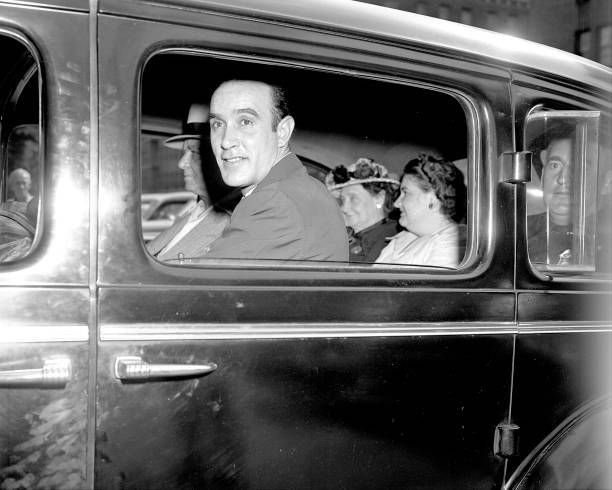
Fernandez was described by witnesses as composed as he entered the chamber. After being seated in the chair, guards secured thick leather straps around his arms, legs, chest, and head to prevent movement during the procedure. Electrodes were then attached to his head and leg, and a saline soaked sponge was placed beneath the headpiece to improve electrical contact.
At 11:07 p.m., the current was switched on. Within moments the electrical surge passed through Fernandez’s body. Prison doctors examined him shortly afterwards and officially pronounced him dead.
Only minutes later, Martha Beck was brought into the chamber.
Beck had spent the final hours of her life speaking with prison staff and clergy. Witnesses later recalled that she appeared pale but calm as she walked into the room. Like Fernandez, she was strapped into the chair and prepared for the execution in silence.
At 11:15 p.m., the current was applied. After several seconds the electricity was switched off and prison physicians moved forward to examine her. She was declared dead shortly afterwards.
The executions had taken less than twenty minutes in total.
Legacy of the Lonely Hearts Killers
The story of the Lonely Hearts Killers quickly entered American popular culture. Their case inspired numerous films including The Honeymoon Killers (1970), Deep Crimson (1996), Lonely Hearts (2006), and Alleluia (2014).
The case also damaged the reputation of lonely hearts clubs, many of which temporarily closed amid fears of fraud.
Today the story of Raymond Fernandez and Martha Beck remains one of the most unusual criminal partnerships of the twentieth century. Their crimes were driven not only by greed but also by jealousy, obsession, and a dangerous emotional dependence.
For the women who answered those lonely hearts advertisements, the letters promised companionship and perhaps even marriage.
Instead, for several of them, the search for love led directly into the path of two of the most disturbing killers in American criminal history.


