

The Cheryl Crane Case: The Night Lana Turner’s Daughter Killed Johnny Stompanato

At around 8 o’clock on the evening of 4th April, 1958, a violent argument was unfolding behind a closed bedroom door in a Beverly Hills house. Raised voices carried down the hallway, followed by threats that were specific enough to be taken seriously. Within minutes, a 14 year old girl would step into the room holding a kitchen knife, and the situation would end with a single fatal wound.
The girl was Cheryl Crane. The man who died was Johnny Stompanato. The house belonged to Lana Turner.
The legal system resolved the case quickly. The public never really did.
A Relationship That Had Already Turned
By the time Stompanato entered Turner’s life in 1957, she was already a well established figure in Hollywood. Discovered as a teenager in Los Angeles, she had spent two decades in the film industry, building a reputation that combined box office success with a closely watched private life.

Stompanato arrived from a very different world. A former Marine who had served in the Pacific during the Second World War, he had later settled in Los Angeles and become associated with organised crime, working under Mickey Cohen. His reputation was not subtle. He was known for his temper, his possessiveness, and his willingness to use violence.
He first contacted Turner under the name “John Steele”, sending flowers and calling repeatedly until she agreed to meet him. What began as curiosity developed into a relationship that quickly became difficult to manage. Over the following months, arguments became routine, and according to Turner’s later testimony, those arguments were often physical.
There were incidents that stood out even in that pattern. While Turner was filming Another Time, Another Place in London, Stompanato appeared uninvited on set and confronted her. The situation escalated to the point where Sean Connery intervened physically, disarming him and forcing him away. Police became involved, and Stompanato was deported.
Even that did not end the relationship. By early 1958, the two were travelling together again, including a trip to Mexico. The cycle of separation and reconciliation continued, though by March it appears Turner had reached a limit.

The Days Leading Up to 4th April, 1958
The Academy Awards in March 1958 provided one of the final triggers. Turner attended without Stompanato, which reportedly led to another violent confrontation when she returned home.
In the days that followed, she decided to end the relationship. According to later accounts, she warned her daughter Cheryl that the conversation would not go smoothly.
On the evening of 4th April, Stompanato arrived at Turner’s rented house on North Bedford Drive. The argument began almost immediately and moved into the bedroom. Voices carried through the house, and the tone shifted from anger to threat.
According to testimony, Stompanato threatened to kill Turner, her daughter, and her mother. He also made specific threats about disfigurement, including cutting her face. These were not vague statements, and they were heard by someone outside the room.
The Moment Everything Changed
Cheryl Crane had already seen enough of the relationship to understand its pattern. She had witnessed arguments before and had seen the aftermath. That evening, hearing the escalation through the door, she believed the situation had gone further than usual.
She went downstairs to the kitchen and picked up a knife.
What followed happened quickly. As she returned upstairs, the bedroom door opened. Turner was attempting to push Stompanato out of the room. He moved forward. Crane stepped in.
Years later, she described it in a way that never really changed:
There's a knife on the counter. I picked it up ran back up the stairs. Her door suddenly flies open. I see John coming toward me. He's got his hand up... I raised the knife and he walks right into it. And he looked at me. And he said, 'My God, Cheryl, what have you done?'"
The blade entered his abdomen. It was a single strike.
Stompanato looked at her and said, “My God, Cheryl, what have you done?”
Turner corroborated this, stating that Crane, who had been listening to the couple's fight behind the closed door, stabbed Stompanato in the stomach when Turner attempted to usher him out of the bedroom.Turner initially believed Crane had punched him, but realized he had been stabbed when he collapsed and she saw blood on his shirt.

What Happened Immediately After
The response inside the house was immediate but fragmented.
Crane left the room and contacted her father, Stephen Crane. Turner called for medical assistance. A doctor arrived and attempted resuscitation using an adrenaline injection and artificial respiration, but there was no pulse.
The wound had caused catastrophic internal bleeding. Stompanato was pronounced dead at the scene.
When police arrived, the situation was already shifting from emergency to investigation. Accounts from officers later suggested that Turner initially tried to take responsibility, asking to say that she had done it. Crane, however, maintained that she was the one who had used the knife.
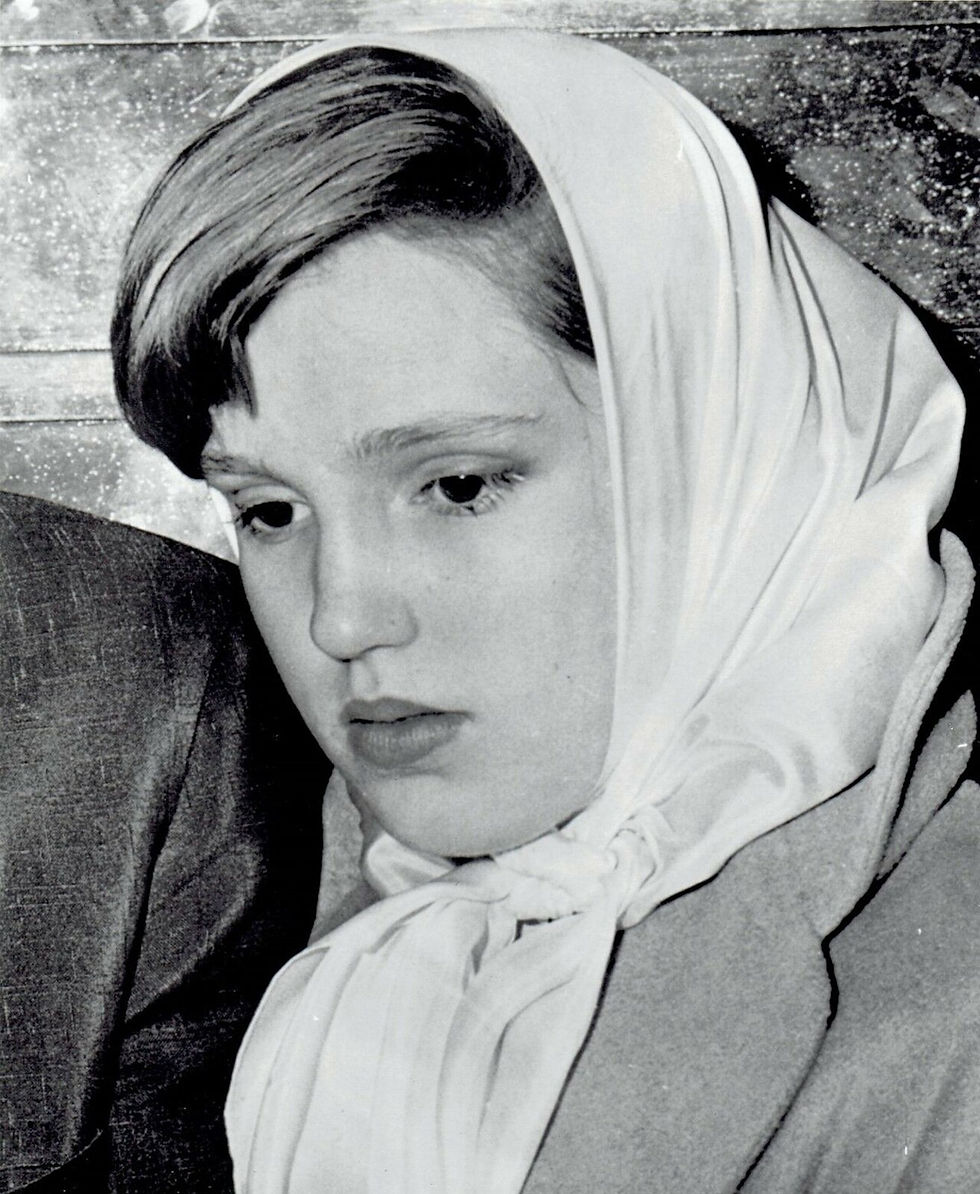
In the early hours of 5th April, she was taken to the Beverly Hills Police Department and gave a formal statement. She was then placed in juvenile custody.
A Case Played Out in Public
The legal process moved quickly, but it unfolded in full view of the press.
The coroner’s inquest on 11th April, 1958 drew over one hundred journalists. Reports described the atmosphere as chaotic, with interruptions and competing claims about what had really happened.
Crane didn't attend. Her statement was read aloud instead:
“He kept threatening her and I thought he was going to hurt her, so I went into the room and I stuck him with the knife.”
Police testimony supported her account, noting that her version of events remained consistent. Her father and grandmother also appeared, though the latter was too distressed to continue.
When Turner took the stand, the room reportedly fell silent. She described the argument, the threats, and the moment the door opened. At first, she believed her daughter had struck Stompanato with her fist, only realising what had happened when he collapsed.
Observers focused as much on her manner as her words. Some described her as controlled, others as visibly close to collapse. The tone of the coverage reflected a broader suspicion of Hollywood figures, particularly when they appeared in court.
After several hours of testimony and a short deliberation, the jury returned its decision.
The killing was ruled a justifiable homicide.

Doubt, Criticism, and a Second Case
The verdict closed the legal case, but it did not end the discussion.
Almost immediately, sections of the press began questioning whether the full story had been told. Some criticised Turner’s behaviour, suggesting that her testimony resembled a performance. Others focused on the speed of the decision.
In June 1958, the case reopened in a different form. Stompanato’s ex wife filed a wrongful death lawsuit on behalf of herself and her son. The claim suggested that Turner may have been responsible for the stabbing, or that both she and Crane were involved.
During depositions, new details and inconsistencies were raised, including questions about the exact position of the body. At one point, Crane reportedly said she could not clearly remember the moment of the stabbing.
The lawsuit didn't go to trial. In May 1962, it was settled out of court for $20,000.

The Question That Never Went Away
From that point onwards, the case settled into something less defined.
One version remained official: a teenager, acting out of fear for her mother, used a knife in self defence.
Another version circulated more quietly: that Turner had delivered the fatal blow and her daughter had taken responsibility to protect her.
Over the years, various individuals claimed to support that second version, including people who said Turner had privately admitted it. None of these claims were substantiated in court.
Crane consistently rejected them. Decades later, she addressed the speculation directly:
“I killed John Stompanato… And I didn’t do it to cover it up for my mother.”
What Happened Afterwards
For Turner, the scandal did not end her career. In 1959, she starred in Imitation of Life, which became one of her most successful films. She continued working in film and television for years afterwards.
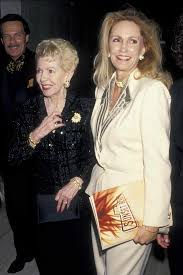
Crane’s path was less stable in the immediate aftermath. She spent time in juvenile facilities and later struggled with addiction. Over time, she built a career in real estate and established a more settled life.
The case itself continued to resurface. It has been revisited in books, documentaries, and television programmes, often framed as one of the most enduring Hollywood crime stories.
Why the Story Still Holds Attention
What happened on 4th April, 1958 was resolved quickly in legal terms. The facts were established, a verdict was reached, and no charges followed.
What remains unsettled is how those facts are interpreted.
The case sits in a space where several elements overlap: domestic violence, celebrity influence, media scrutiny, and the involvement of a minor. Each of those factors complicates the narrative slightly, making it difficult to reduce to a single, accepted version.
That is why it continues to be revisited. Not because the outcome is unclear, but because the circumstances never entirely stopped raising questions.


