


Kurt Cobain’s Final Days: What Happened Between Rome, Rehab and His Death in Seattle
Updated: 2 days ago

There are certain events that become so widely known that their outline begins to replace their substance. The death of Kurt Cobain is one of them. I was 15 when it happened and the shorthand version is familiar: a greenhouse in Seattle, a shotgun, a note, and a date in April 1994.
What's less often revisited is how gradual the process was that led there.
Cobain did not disappear from a stable life into a single moment of crisis. In the months leading up to his death, there had been visible signs of strain—medical, psychological, and professional—that those around him struggled to interpret and, ultimately, to manage.
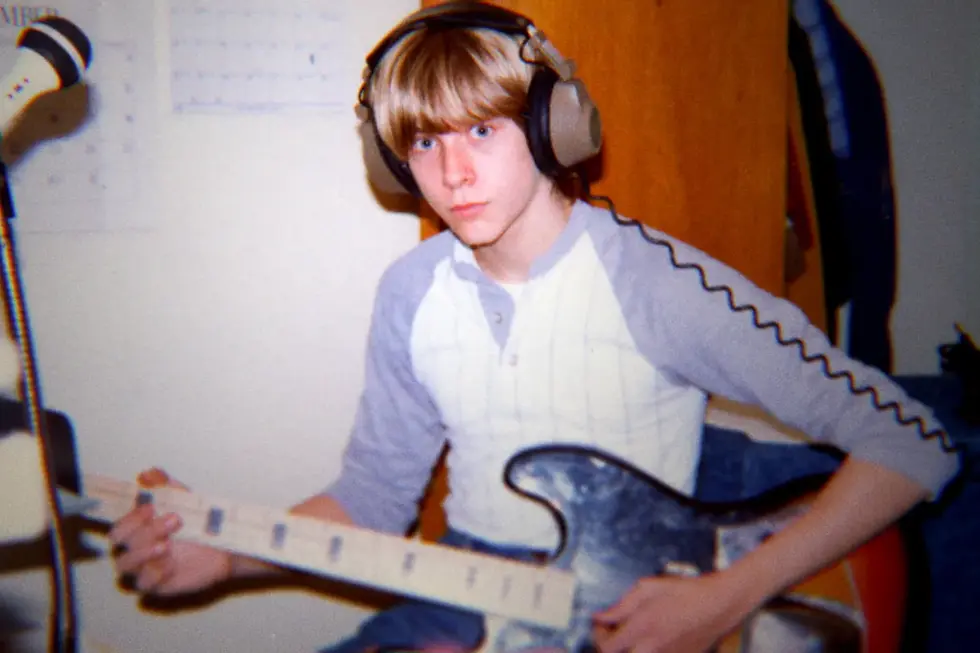
The 1990s, Fame, and the Pressure of Alternative Culture
By the early 1990s, Nirvana had moved from underground recognition to global prominence. Their 1991 album Nevermind had shifted the centre of popular music towards alternative rock, and Cobain had become an unlikely cultural figurehead.
This transition carried expectations that sat uneasily with him. The ethos associated with the emerging grunge movement was rooted in resistance to commercialism, yet Nirvana’s success placed them firmly within it. Cobain was often described as uncomfortable with this contradiction, wary of what fame demanded and uncertain about how to navigate it.
At the same time, he was dealing with long-standing personal difficulties. Chronic stomach pain, described by Cobain as severe, had followed him for years. Alongside this, there were periods of depression and an increasing reliance on heroin. These were not new developments in 1994, but they had become more visible and more difficult to contain.
The Rome Overdose in March 1994
On the 4th of March, Cobain was admitted to hospital in Rome after taking a large quantity of Rohypnol along with alcohol. The incident took place at the Excelsior Hotel during Nirvana’s European tour.

At the time, the explanation given publicly suggested exhaustion and illness. Later, Courtney Love stated that she believed it had been a deliberate act, describing the number of pills consumed as excessive.
Regardless of how it was framed, the event marked a clear escalation. Cobain required emergency treatment and remained under medical supervision before returning to the United States. For some of those around him, this was the point at which the situation could no longer be considered manageable without intervention.
Escalation in Seattle
Cobain’s return to Seattle did not bring stability.
Accounts from friends, family, and colleagues describe a period of increasing unpredictability. There were arguments, periods of isolation, and a general withdrawal from those who had previously been able to reach him.
On the 18th of March police were called to his home following a domestic dispute. Reports indicated that Cobain had locked himself in a room with a firearm and made statements suggesting he might harm himself. Officers confiscated several weapons and described the situation as volatile. No charges were filed.
The incident reinforced a growing sense that the situation had moved beyond informal concern.
The Intervention and Failed Rehab Attempt
On the 25th of March a structured intervention took place at Cobain’s home. Present were friends, bandmates, and members of management, all of whom had become increasingly concerned about his condition.

The meeting was prolonged and, by most accounts, difficult. Cobain initially resisted the suggestion that he required treatment. Over time, however, he agreed to enter a rehabilitation programme in Los Angeles.
He travelled there shortly afterwards and was admitted to the Exodus Recovery Center.
His stay lasted less than two days.
On the 1st of April Cobain left the facility by climbing over a wall. The act itself was straightforward, but it signalled a clear decision. Within hours, he had begun making arrangements to return to Seattle.
Timeline: Kurt Cobain’s Final Weeks
04/March/1994 – Hospitalised in Rome following overdose
18/March/1994 – Police called to Seattle home
25/March/1994 – Intervention takes place
30/March/1994 – Enters rehabilitation in Los Angeles
01/April/1994 – Leaves rehab facility
05/April/1994 – Estimated date of death
08/April/1994 – Body discovered in Seattle
Disappearance in Early April
After returning to Seattle, Cobain’s movements became difficult to track.
Friends attempted to contact him without success. Financial records later showed attempts to access money, and there were occasional sightings in different parts of the city. These reports were inconsistent and often lacked detail.
Mark Lanegan later reflected on the period:
“He hadn’t called anybody… I had a feeling that something real bad had happened.”
At the same time, efforts to locate him intensified. Courtney Love hired private investigator Tom Grant. Friends checked places Cobain was known to visit.
None of these efforts led to the greenhouse at his own home.
The Final Days Before His Death
Between the 2nd and 5th of April, Cobain appears to have moved through Seattle without a fixed pattern.
Witness accounts suggest that he looked physically unwell and detached. He was seen in neighbourhoods such as Capitol Hill and reportedly spent time with acquaintances connected to drug use.
At some point during these days, he returned to his home on Lake Washington Boulevard.
In the greenhouse above the garage, he began writing a note addressed to his childhood imaginary friend. The document reflected on his relationship with music, his sense of detachment, and his inability to sustain enthusiasm for a life that had become increasingly difficult to inhabit.
“I haven’t felt the excitement of listening to as well as creating music… for too many years now.”
He also wrote about his wife and daughter, expressing both affection and concern.
The suicide note reads:
To Boddah
Speaking from the tongue of an experienced simpleton who obviously would rather be an emasculated, infantile complainee. This note should be pretty easy to understand.
All the warnings from the punk rock 101 courses over the years, since my first introduction to the, shall we say, ethics involved with independence and the embracement of your community has proven to be very true. I havent felt the excitement of listening to as well as creating music along with reading and writing for too many years now. I feel guilty beyond words about these things.
For example when were back stage and the lights go out and the manic roar of the crowds begins It doesnt affect me the way in which it did for Freddy Mercury who seemed to love, relish in the love and adoration from the crowd which is something I totally admire and envy. The fact is, I cant fool you, any one of you. It simply isnt fair to you or me. The worst crime I can think of would be to rip people off by faking it and pretending as if im having 100% fun. Sometimes I feel as if I should have a punch in time clock before I walk out on stage. Ive tried everything within my power to appreciate it (and I do, God, believe me I do, but its not enough). I appreciate the fact that I and we have affected and entertained a lot of people. It must be one of those narcissists who only appreciate things when theyre gone. Im too sensitive. I need to be slightly numb in order to regain the enthusiasms I once had as a child.
On our last 3 tours, Ive had a much better appreciation for all the people Ive known personally, and as fans of our music, but I still can't get over the frustration, the guilt and empathy I have for everyone. Theres good in all of us and I think I simply love people too much, so much that it makes me feel too fucking sad. The sad little, sensitive, unappreciative, Pisces, Jesus man. Why dont you just enjoy it? I dont know!
I have a goddess of a wife who sweats ambition and empathy and a daughter who reminds me too much of what I used to be, full of love and joy, kissing every person she meets because everyone is good and will do her no harm. And that terrifies me to the point to where I can barely function. I cant stand the thought of Frances becoming the miserable, self-destructive, death rocker that Ive become.
I have it good, very good, and Im grateful, but since the age of seven, Ive become hateful towards all humans in general. Only because it seems so easy for people to get along that have empathy. Only because I love and feel sorry for people too much I guess.
Thank you all from the pit of my burning, nauseous stomach for your letters and concern during the past years. Im too much of an erratic, moody baby! I dont have the passion anymore and so remember, its better to burn out than to fade away.
peace, love, empathy. Kurt Cobain
Frances and Courtney, Ill be at your altar. Please keep going Courtney, for Frances. For her life, which will be so much happier without me.
I LOVE YOU, I LOVE YOU!

The Discovery on 8 April 1994
On the morning of April the 8th electrician Gary Smith arrived at Cobain’s property to install a security system.
Looking through the greenhouse window, he initially believed he was seeing a mannequin.
“Then I noticed it had blood in the right ear… then I saw a shotgun lying across the chest.”
Police were contacted immediately.
Inside, Cobain’s body was found with a Remington Model 11 20-gauge shotgun positioned across him. A handwritten note was located nearby. The condition of the body indicated that it had been there for several days.
Investigation and Official Findings
The investigation conducted by the Seattle Police Department concluded that Cobain had died from a self-inflicted gunshot wound.
The King County Medical Examiner placed April the 5th as the date of death.
Toxicology reports indicated a high concentration of heroin in his bloodstream, along with traces of Valium. The interpretation of these levels has been subject to discussion, particularly in relation to tolerance. However, these debates did not alter the official conclusion.
The death was ruled a suicide.
How Those Around Him Described the Final Weeks
In the years that followed, those closest to Cobain reflected on the period leading up to his death with a degree of consistency.
Krist Novoselic described him as increasingly withdrawn and disconnected from those around him. Dave Grohl later noted that the final year of the band had been difficult, marked by instability rather than cohesion.
These accounts do not introduce new facts so much as reinforce an existing pattern. Cobain’s behaviour had become harder to predict, and the people around him were attempting to respond without a clear sense of what would be effective.
Public Reaction and Cultural Impact
News of Cobain’s death spread rapidly, first through local radio and then across national and international media.
On the 10th of April thousands gathered in Seattle for a public vigil. A recording of Courtney Love reading from Cobain’s note was played to those assembled.
Musicians responded with a mixture of shock and reflection. Eddie Vedder addressed an audience shortly afterwards:
“Don’t die. Swear to God.”
The scale of the response reflected not only Cobain’s influence, but also the way his work had been used by listeners to interpret their own experiences.
Legacy: Music, Myth, and Interpretation
In the years since his death, Cobain’s position in cultural history has remained significant.
Nirvana’s music continues to influence artists across genres, and Cobain himself is often referenced in discussions of authenticity, fame, and the pressures associated with both. His reluctance to embrace success has become central to how his legacy is interpreted.
He is also frequently associated with the so-called “27 Club,” alongside figures such as Jimi Hendrix and Janis Joplin, though this grouping is retrospective rather than analytical.
What remains consistent is the sense that his work continues to be revisited, not only for its musical qualities but for what it represents about the period in which it was produced.
Unreleased Photographs from Kurt Cobain’s Death Scene
In the years following the death of Kurt Cobain, much of the discussion has centred not only on what is known, but on what has never been made public. Among the most frequently referenced aspects of the case are a series of photographs taken at the scene, some of which remain unreleased, including images that reportedly show Cobain’s body in full.
These photographs were taken by the Seattle Police Department as part of their standard documentation of the scene in April 1994. While a limited number of images have been disclosed over time, others have been withheld, and their existence has contributed to continued public interest in the case.
For some individuals, particularly those who question the official conclusion, these images are seen as significant. Among the most prominent of these voices is Richard Lee, who has spent years arguing that Cobain’s death should be re-examined. Lee maintained that access to the full photographic record could allow for closer scrutiny of the circumstances surrounding the death.
He pursued this position through both media and legal channels, including a long-running public access programme titled Now See It Person to Person: Kurt Cobain Was Murdered. In 2014, Lee filed a lawsuit against the City of Seattle, seeking the release of additional materials under Washington State’s Public Records Act. His argument rested on the idea that the unreleased photographs might provide grounds for reopening the investigation.
The courts did not accept this position.
Judicial decisions concluded that the existing evidence, including the materials already reviewed by investigators, did not justify a new inquiry. The withheld photographs were not considered sufficient grounds to challenge the original ruling that Cobain’s death was a suicide.
Love claimed:
"I have never seen these graphic and disturbing images, nor do I ever want to. Certainly, public disclosure would reopen all my old wounds and cause me and my family permanent — indeed, endless and needless — pain and suffering, and would be a gross violation of our privacy interests...[the photos would] "wind up on the internet, where they would be permanently circulated. By virtue of the fact that Kurt is my late husband, they will also likely end up in search results about myself. I would unavoidably come across them, and I would never be able to erase those haunting images from my mind. I cannot even imagine the enormity of the trauma and mental scarring this would cause me, not to mention many others."
Kurt's daughter, Frances Bean Cobain shared a similar statement with the courts, citing mental and emotional distress as the primary reason not to release these photos of Kurt Cobain's death:
"I once saw mock photos depicting my father's body. That experience irreparably scarred me. I cannot imagine how terrible it would be knowing that the photographs Mr. Lee seeks were public and that I or any of my loved ones, including my father's mother and sisters, might inadvertently see them. Release and publication of the photographs would shock me and exacerbate the post-traumatic stress that I have suffered since childhood. I have had to cope with many personal issues because of my father's death. Coping with even the possibility that those photographs could be made public is very difficult. Further sensationalizing it through the release of these pictures would cause us indescribable pain."
Privacy, Evidence, and Public Access
The question of whether these images should be released has not been determined solely by legal thresholds for reopening the case. It has also been shaped by concerns over privacy.
Lower courts ruled that releasing the remaining photographs would constitute an invasion of privacy for Cobain’s family, particularly Courtney Love and Frances Bean Cobain. This position reflects a broader legal principle in the United States, where graphic death scene imagery is often withheld to protect surviving relatives.
Concerns about the potential circulation of such images date back to the mid-1990s. Police records indicate that as early as 1995, Courtney Love had contacted authorities to ask whether the photographs could be destroyed, fearing that they might be released or misused.
The decision not to release them has remained in place.
Conclusion
The events of April 1994 are clear in their sequence. Cobain left treatment, returned to Seattle, withdrew from those around him, and died several days later.
What remains more difficult to resolve is the question of proximity. The signs of distress were visible. Efforts were made to intervene. Yet the outcome did not change.
That tension—between what was seen and what could be done—continues to shape how the events surrounding Cobain's death are understood.


