

The Lykov Family: Forty Years Beyond the Edge of the World

There are parts of Siberia where maps feel theoretical. The roads thin out, the settlements disappear, and the forest takes over. The taiga stretches for millions of square miles, from the Urals to the Pacific and from the Arctic south towards Mongolia. For much of the year it is frozen into stillness. Snow lingers into May. By September the cold returns. Rivers lock under ice. The silence can feel complete.
It was in this landscape, in the southern reaches of the Sayan Mountains near the Abakan River basin, that a helicopter pilot made an unexpected discovery in the summer of 1978. Roughly 250 kilometres from the nearest settlement, high on a mountainside, he saw something that did not belong there: a cultivated clearing cut into dense pine and larch forest.
The Soviet authorities had no record of anyone living in that district.
Yet someone clearly was.
What followed was one of the most extraordinary rediscoveries of the twentieth century: the Lykov family, Old Believers who had fled into the Siberian wilderness in 1936 and remained there, in total isolation, for more than forty years.

A Clearing in the Forest
The helicopter had been ferrying geologists into the region to prospect for iron ore. Siberia was, and remains, central to Russia’s mineral and energy wealth. Even the most remote valleys were regularly overflown by survey aircraft.
Peering through his windscreen, the pilot noticed furrows in the mountainside clearing. The aircraft circled several times. It was unmistakable. A garden.
The geologists, led by Galina Pismenskaya, were informed. Rather than ignore the sighting, they chose to investigate. As Russian journalist Vasily Peskov later recorded in Lost in the Taiga, “In the taiga, it’s less dangerous to run across a wild animal than a stranger.” Even so, the scientists packed small gifts and climbed towards the clearing.
They found a rough path. A log laid across a stream. A shed containing birch bark containers filled with dried potatoes.
Then they reached a hut.
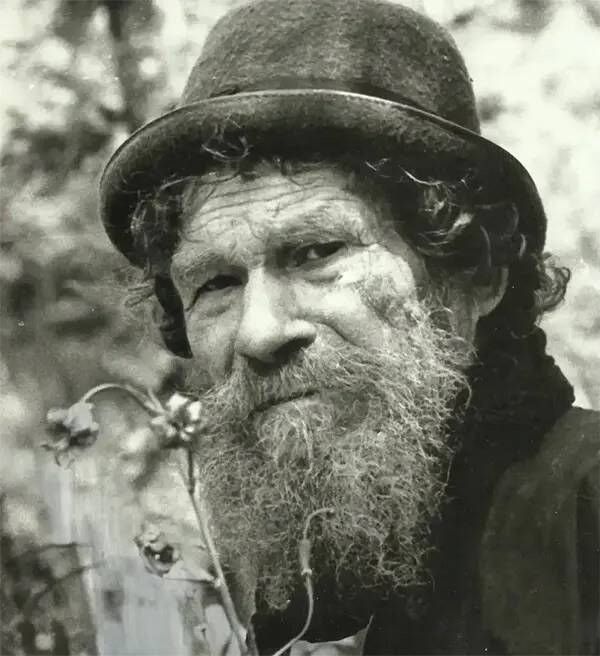
It was low and blackened by time, its small window barely larger than a rucksack. When the door creaked open, an elderly man emerged barefoot, dressed in patched sacking. His beard was untrimmed, his hair uncombed.
“Greetings, grandfather! We’ve come to visit,” Pismenskaya called.
After a pause, a soft voice replied, “Well, since you have traveled this far, you might as well come in.”
Inside, two women were sobbing and praying. The geologists withdrew quickly, recognising their arrival had caused genuine alarm. Half an hour later, the elderly man and his daughters emerged, wary but curious.
They refused jam, tea and bread. “We are not allowed that,” they said.
The man introduced himself as Karp Osipovich Lykov.
The Old Believers and the Raskol
To understand why the Lykovs were there at all, it is necessary to go back to the seventeenth century.
In the 1650s, Patriarch Nikon introduced reforms to align Russian Orthodox rituals with Greek practice. Many believers rejected the changes, insisting that the older rites were sacred and immutable. The resulting schism, known as the Raskol, divided Russian Orthodoxy for centuries. Those who refused reform became known as Old Believers.
Persecution followed. Old Believers were fined, exiled and sometimes executed. Entire communities fled eastward, seeking refuge in remote parts of Siberia.
Under Peter the Great, efforts to modernise Russia deepened the rift. Symbolic acts such as the enforced shaving of beards were experienced by Old Believers as religious assault. These grievances lingered in community memory.
By the twentieth century, Old Believers still lived in isolated Siberian villages. The Lykovs were part of that tradition.
Flight in 1936
In 1936, Stalin’s purges intensified. Christianity was suppressed, churches closed, clergy arrested. According to family accounts, Karp Lykov’s brother was shot by a Soviet patrol near their village of Lykovo in Tyumen Oblast.
Faced with escalating repression, Karp and his wife Akulina gathered their two children, Savin and Natalia, and fled eastward into the forest. They carried seeds, a spinning wheel, parts of a loom and basic utensils.
They did not intend to return.
Over time, they retreated deeper and deeper into the taiga, eventually settling near the Yerinat River in the Abakan basin, around 250 kilometres from the nearest settlement.
Two more children were born in isolation: Dmitry in 1940 and Agafia in 1944.
From that point forward, their lives unfolded almost entirely beyond the awareness of the modern world.

A Self Contained World
The hut discovered in 1978 was only the last in a succession of dwellings. It was a single room structure of logs, heated by a smoky stove, lit by a small window. The floor was covered in pine nut shells and potato peelings.
They farmed a small terraced plot on the mountainside, growing rye, potatoes, hemp and peas. Tools were wooden. Clothes were woven from hemp fibre. Birch bark served as footwear and container material.
When their metal kettles rusted away, they replaced them with bark vessels that could not be placed directly in fire. Cooking became more difficult.
Fire was preserved by maintaining embers continuously. Matches were considered sinful innovation.
Akulina taught her children to read and write using sharpened sticks dipped in honeysuckle juice. Their only books were prayer texts and an old family Bible. Language preserved archaic forms. Visitors noted that the younger children spoke in rhythms and vocabulary shaped almost entirely by scripture.
The family’s primary entertainment, Peskov recorded, was recounting dreams to one another.

Hunger and Agricultural Extremes
Subsistence agriculture at that latitude is precarious. Frost can arrive in June. Summers are short. Soil is thin.
In the late 1950s, Dmitry began hunting without firearms. He dug traps or pursued animals across mountains until they collapsed from exhaustion. His endurance impressed the geologists. He could travel barefoot in winter and sometimes returned carrying an elk.
Still, famine was frequent. Agafia later described “the hungry years” when they survived on rowanberry leaves, roots, mushrooms and bark. Each year they held councils to decide whether to consume all remaining grain or preserve seed for planting.
In 1960, snow fell in June, destroying their crops. By February 1961 they were reduced to eating leather shoes and straw. Akulina sacrificed her share so her children might live. She died of starvation.

Their recovery hinged on a single rye grain that sprouted in their pea patch. They fenced it and guarded it against animals. It yielded eighteen grains. From this, they rebuilt their crop.
Agricultural historians have noted the statistical improbability of such recovery. It represents subsistence farming at the edge of viability.
Time Without History
The children knew of cities and other countries only through stories. They had heard vaguely of war but did not comprehend scale. When told of the Second World War, Karp reportedly linked it back to earlier grievances against Germans and Peter the Great.
Meanwhile, satellites crossed the sky overhead. Karp had noticed “stars” moving quickly and speculated that people were “sending out fires that are very like stars.”
The twentieth century unfolded in parallel. Nuclear weapons were developed. The Soviet Union rose and fell. Humans walked on the moon. Yet in the taiga, time was measured by harvests and prayer cycles.

Contact and Decline
After initial suspicion, the Lykovs gradually accepted limited assistance. Salt was treasured. Blankets, grain and a flashlight followed. Television fascinated them, though Karp prayed after watching it.
Medical questions remain debated. In 1981, Savin and Natalia died of kidney failure, likely linked to chronic malnutrition. Dmitry died of pneumonia. Some have speculated about lack of immunity to common pathogens, but contemporary accounts suggest their bodies were already weakened.
Dmitry refused evacuation to hospital. “A man lives for howsoever long God grants,” he said.
By the end of 1981, only Karp and Agafia remained.
Karp died in his sleep on 16th February, 1988, exactly twenty seven years after Akulina.
Agafia Lykova: The Last Survivor
Agafia briefly travelled across the Soviet Union at government invitation but found towns overwhelming. “It’s scary out there,” she later said. “You can’t breathe.”
For eighteen years she lived alongside geologist Yerofei Sedov. After his death on the 3rd of May, 2015, she accepted occasional helpers. In 2016 she was airlifted to Tashtagol for treatment related to cartilage deterioration. She returned to the taiga.
As of 2025, she remains there, now in her eighties. She keeps goats and chickens. A satellite phone connects her to volunteers. Helicopters occasionally deliver supplies. A new wooden cottage was constructed with outside assistance.
It is a paradox. The family once fled state interference. Today she survives partly through state and private support. Yet she refuses relocation.

Environmental and Historical Context
The taiga is the largest terrestrial biome on Earth and a major global carbon sink. Industrial expansion and climate change are reshaping it. The Lykovs’ rediscovery occurred precisely because of mineral exploration flights.
Their story sits at the intersection of religious dissent, Soviet repression and industrial modernity.
Unlike explorers or trappers, they did not seek the frontier. They retreated to it. Their isolation was neither accidental nor temporary. It was a deliberate act of withdrawal sustained across generations.
A Different Measure of Time
When geologist Sedov looked back on the day of Karp’s funeral, he saw Agafia standing by the river, nodding for them to leave. “Go on, go on,” she said.
The helicopter departed. The forest remained.
While the twentieth century accelerated, the Lykovs held to a slower rhythm. Seed. Frost. Prayer. Hunger. Survival.
Their story isn't just about endurance. It is about continuity. In the vastness of Siberia, a family sustained a seventeenth century faith into the space age.
And one of them is still there.


