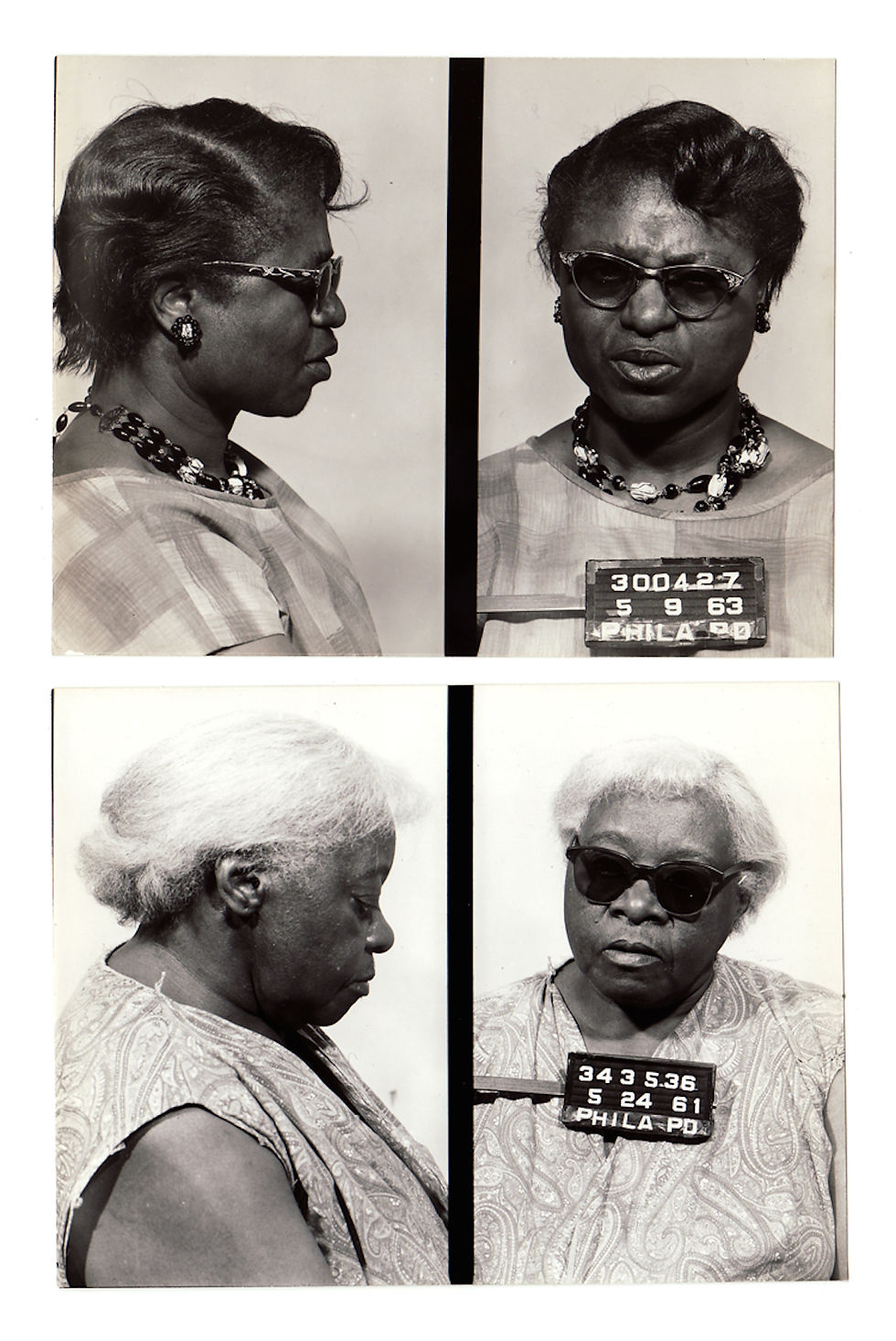
Philadelphia MugShots From The 1950s and 1960s
Updated: Mar 11

In a quiet municipal archive in Pennsylvania sit hundreds of faces that once passed briefly through the criminal justice system of mid twentieth century America. The mugshots taken in Philadelphia during the 1950s and 1960s are more than police records. They are accidental portraits of a city in transition.
By the 1950s, the Philadelphia Police Department had standardised its booking procedures. Suspects were photographed front on and in profile, often holding placards that recorded name, arrest number and date. The lighting was flat and functional, yet the results are striking. Men in narrow ties and Brylcreemed hair stand beside women with carefully set curls and cat eye glasses. Even in custody, mid century style is unmistakable.


The period was one of considerable change in Philadelphia. Post war prosperity sat alongside industrial decline. Neighbourhoods shifted as African American families moved north in the later waves of the Great Migration, while white residents relocated to expanding suburbs. The mugshots capture this social cross section. Teenagers arrested for minor disorderly conduct appear beside older men detained for gambling, liquor violations or small scale theft. A few faces suggest more serious charges, though the images themselves rarely reveal context.


Technically, these photographs mark the transition from earlier large format police cameras to more portable equipment. By the early 1960s, improved film stocks and lighting created clearer, sharper images. What had once been a purely bureaucratic exercise began to resemble studio portraiture in its composition. Yet the emotional distance remains. The expressions are often neutral, occasionally defiant, sometimes bewildered.
Today, historians and archivists treat these mugshots as valuable primary sources. They offer visual evidence of fashion, ethnicity, ageing, and even local policing practices. Removed from their original function, they form an unintended gallery of everyday Philadelphians at a moment of vulnerability. In their ordinariness lies their power.