Stephen Lawrence: The Murder That Changed Britain
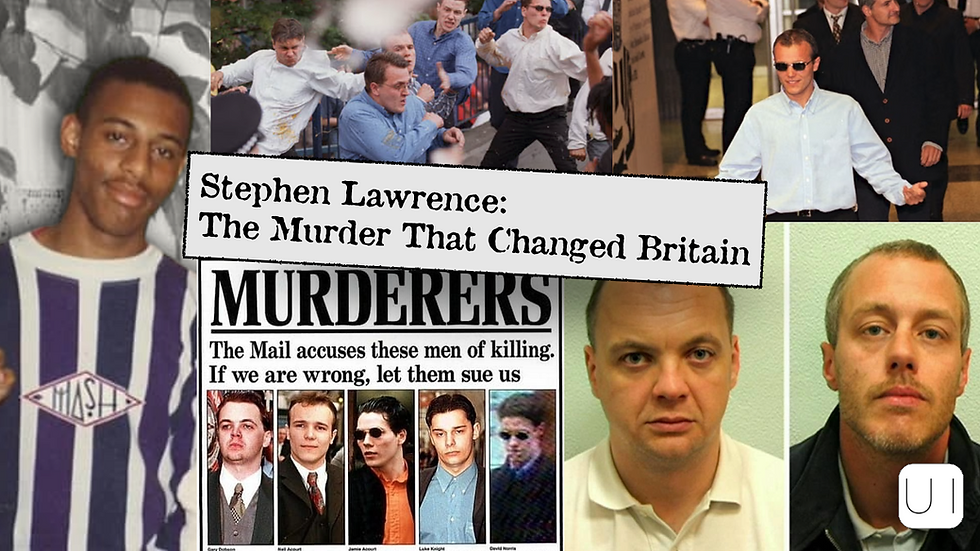
Today, 22 April 2026, marks 33 years since Stephen Lawrence was stabbed to death while waiting for a bus in Eltham, south-east London. What followed was not only a long fight for justice for one family, but a reckoning that reshaped British law, policing, and the national conversation on race.
Who Was Stephen Lawrence?
Stephen Adrian Lawrence was born on 13 September 1974 at Greenwich District Hospital to Neville and Doreen Lawrence, Jamaican immigrants who had settled in the UK during the 1960s. Neville worked as a carpenter; Doreen was a special needs teacher. The family settled in Plumstead, south-east London, where Stephen grew up as the eldest of three children, alongside his brother Stuart, born in 1976, and sister Georgina, born in 1982.

By all accounts, Stephen was an exceptional young man. He competed as a middle-distance runner for the Cambridge Harriers athletics club and had even appeared as an extra in the Denzel Washington film For Queen and Country. At the time of his death he was studying A-levels in Technology and Physics at Blackheath Bluecoat School while also taking English Language and Literature at Woolwich College. His ambition was to become an architect.
He was 18 years old.
The Night of 22 April 1993
Stephen had spent that Thursday at school before visiting shops in Lewisham and then his uncle's home in Grove Park. His friend Duwayne Brooks joined him there and the two played video games until around 10pm, when they headed home by bus.
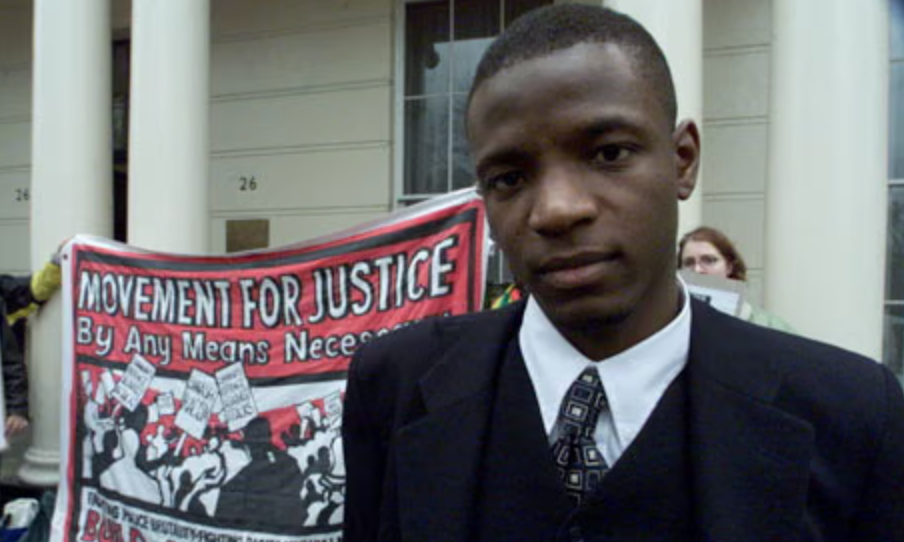
Realising their route would take too long, they got off and waited at a bus stop on Well Hall Road in Eltham, hoping to catch either the 161 or 122 bus. Stephen walked slightly ahead, towards the junction with Dickson Road, to look for an approaching bus. Brooks remained near the roundabout junction with Rochester Way.
At approximately 10:38pm, Brooks spotted a group of six white youths crossing the road and moving in their direction. He shouted to Stephen to ask if he could see the bus. According to Brooks, one of the group hurled a racial slur as they rushed forward and "engulfed" Stephen.
What followed took only seconds. Stephen was forced to the ground and stabbed twice, once in the right collarbone and once in the left shoulder, each wound reaching approximately five inches deep. Both stab wounds severed axillary arteries and penetrated a lung. He lost feeling in his right arm, his breathing became severely restricted, and he was bleeding from four major blood vessels simultaneously.

Brooks ran. He shouted for Stephen to get up and run with him. Remarkably, Stephen did. Despite catastrophic internal injuries, he ran 130 yards in the direction of Shooters Hill before collapsing. The pathologist who later examined him noted that only his exceptional physical fitness had made that possible.
A passing off-duty police officer stopped and covered Stephen with a blanket. Paramedics arrived and took him to Brook General Hospital, but he was already dead on arrival. The time was 11:05pm.
The Suspects Were Named Quickly. The Arrests Were Not.
Within three days of the murder, police had received the names of the five main suspects from multiple local residents. Anonymous notes were left both on a police car windscreen and in a nearby telephone box. The names given were Gary Dobson, brothers Neil and Jamie Acourt, Luke Knight, and David Norris. All five had prior links to racist knife attacks in the Eltham area. Just four weeks before Stephen's murder, Dobson and Neil Acourt had verbally abused and attempted to stab a Black teenager named Kevin London. David Norris had stabbed a teenager named Stacey Benefield only a month before Stephen died.

Despite this, no arrests were made for over a fortnight. The suspects' homes were not searched for four days. When Detective Superintendent Brian Weeden, the officer leading the investigation, was later asked why no arrests had been made by 26 April, he gave an answer that stunned the public inquiry: he had not known that the law permitted arrest on reasonable suspicion. A basic principle of criminal law, unknown to the man in charge of a murder investigation.
Surveillance footage eventually gathered by police showed the suspects apparently reenacting the attack to one another. Two of the men, Neil Acourt and Luke Knight, were charged with murder in May and June 1993 respectively. But the Crown Prosecution Service dropped the charges in July 1993, citing insufficient evidence.
A Family's Fight: The Private Prosecution
Unable to secure a public prosecution, Lawrence's parents funded a private case against five of the suspects themselves. Without access to legal aid, a public fighting fund was established. Leading barrister Michael Mansfield QC took the case on pro bono, assisted by Tanoo Mylvaganam and Annie Dixon.
Charges against two of the defendants were dropped before the trial for lack of evidence. On 23 April 1996, the three remaining defendants, including Gary Dobson, were acquitted at the Central Criminal Court after the trial judge ruled that the identification evidence provided by Duwayne Brooks was unreliable.
The Inquest, the Daily Mail, and a Nation's Anger
In February 1997, an inquest into Stephen's death was held. All five suspects appeared but refused to answer any questions, invoking their privilege against self-incrimination. Their behaviour outside the courtroom, sneering at mourners and making offensive gestures in front of cameras, caused widespread revulsion. The jury took just 30 minutes to return a verdict of unlawful killing "in a completely unprovoked racist attack by five white youths."

The following day, 14 February 1997, the Daily Mail ran one of the most extraordinary front pages in British newspaper history. Under five photographs of the suspects, the headline read: "Murderers: The Mail accuses these men of killing. If we are wrong, let them sue us."
None of them did.
The Macpherson Report: A Watershed for British Justice
On 31 July 1997, Home Secretary Jack Straw ordered a public inquiry headed by Sir William Macpherson. The resulting report, published in February 1999, ran to more than 100,000 pages of supporting material and reached conclusions that shook British institutions to their foundations.
It found that the original Metropolitan Police investigation had been fundamentally incompetent. Officers had failed to administer first aid when they arrived at the scene, failed to follow obvious leads, and failed to arrest the suspects in a timely manner. The recommendations of the 1981 Scarman Report into race-related riots in Brixton and Toxteth had been ignored.
Most significantly, the report declared the Metropolitan Police to be institutionally racist. It made 70 recommendations for reform covering policing, criminal law, the Civil Service, local government, the NHS, schools, and the judiciary. Among those recommendations was one that would eventually deliver a measure of justice: the abolition of the double jeopardy rule in murder cases.
Jack Straw later described ordering the inquiry as the most important decision he made during his four years as Home Secretary. The publication of the Macpherson Report has since been described as "one of the most important moments in the modern history of criminal justice in Britain."
Changing the Law: Double Jeopardy
The double jeopardy principle, a cornerstone of English common law dating back centuries, held that a person acquitted of a crime could never be tried for it again. The Macpherson Report recommended it be repealed in murder cases where fresh and compelling evidence emerged.
The Law Commission supported this position in 2001, as did Lord Justice Auld's parallel review of the criminal justice system, which went further and suggested the exception should extend beyond murder to other serious offences carrying life sentences.
These recommendations became law through the Criminal Justice Act 2003, with the relevant provisions coming into force in April 2005. The change applied retrospectively.

New Evidence, New Trial
In June 2006, a cold case review was quietly opened. Forensic scientist Angela Gallop, one of the UK's most accomplished forensic scientists, led the re-examination of physical evidence. What she found changed everything.
A microscopic blood stain, measuring just 0.5 x 0.25 millimetres, was identified on Gary Dobson's jacket. It had dried into the fibres and the analysis concluded it had been deposited fresh at the time of the attack, almost certainly at the crime scene. Fibres from Stephen's clothing and hairs with a 99.9% probability of belonging to Stephen were found on clothing belonging to both Dobson and Norris. None of this had been detectable with 1990s forensic technology.
Gary Dobson and David Norris were arrested on 8 September 2010. On 23 October 2010, the Director of Public Prosecutions, Keir Starmer QC, applied to the Court of Appeal to have Dobson's original acquittal quashed. The arrests were kept from the public under reporting restrictions to protect the integrity of the proceedings.
Dobson's acquittal was formally quashed on 12 April 2011. The trial began at the Central Criminal Court on 14 November 2011. On 3 January 2012, after deliberating for just over eight hours, the jury found both Gary Dobson and David Norris guilty of the murder of Stephen Lawrence.
Sentencing took place the following day. Because Dobson had been 17 and Norris 16 at the time of the offence, both were sentenced to detention at Her Majesty's Pleasure, the juvenile equivalent of a life sentence. Dobson received a minimum term of 15 years and 2 months; Norris received 14 years and 3 months. The judge described it as a "terrible and evil crime" and acknowledged that a similar offence committed as an adult in 2011 would have attracted a minimum of 30 years.
Surveillance of Gary Dobson, 36, and David Norris, 35,
The Sixth Man
A detail largely forgotten by the wider public was that six people had been present during the attack, not five. The identity of the sixth man was not publicly named until June 2023, when a BBC investigation revealed him to be Matthew White, who had died in 2021 at the age of 50.
The BBC investigation found that witnesses had told police White had admitted being present during the attack. His alibi had been demonstrably false. In 1993 he physically resembled the description Duwayne Brooks had given of an unidentified attacker. At least one relative had contacted police after the murder to share what White had told them, but wrong information had been entered into the police database and the lead was never followed up.

The officer who had eventually pursued White, Detective Chief Inspector Clive Driscoll, later stated that Cressida Dick, then Commissioner of the Metropolitan Police, had suggested in 2012 that he should not bother pursuing the remaining suspects, despite the trial judge having explicitly urged police to do so. Driscoll was made to retire before he could complete his investigation.
In the year before his death, White had pleaded guilty to an assault on a Black shop worker just a few hundred metres from where Stephen had been killed. The victim told the BBC that White had invoked Stephen's name during the attack. Matthew White died without being tried for his role in the murder.
Corruption, Cover-Ups, and Undercover Police
Concerns about corruption in the original investigation had circulated for years. In 2006, a BBC documentary alleged that the lead detective on the case, Sergeant John Davidson, had taken money from Clifford Norris, the father of suspect David Norris, to obstruct the investigation. A whistleblower detective named Neil Putnam claimed Davidson had told him he was "looking after" the Norris family. Davidson denied it.
In 2013 a former undercover police officer named Peter Francis gave an interview to the Guardian stating that, while working undercover within an anti-racist campaign group in the mid-1990s, he had been repeatedly pressured by superiors to find dirt on Lawrence's family, in order to undermine their public campaign for a proper investigation.

The 2014 Ellison Review, commissioned by Home Secretary Theresa May and conducted by Mark Ellison QC (who had also led the prosecution of Dobson and Norris), described the original investigation as "seriously flawed and deserving of severe criticism." Commissioner Sir Bernard Hogan-Howe described the report as "devastating." Ellison also found possible links between an allegedly corrupt police officer in the Lawrence case and the 1987 murder of private investigator Daniel Morgan.
In July 2023, the Crown Prosecution Service announced that four retired detectives who ran the original investigation would not face criminal charges for alleged corruption. Doreen Lawrence publicly said she wanted the decision reviewed.
David Norris: Parole, Admission, and Denial
David Norris's minimum tariff expired in 2024 and his case was referred to the Parole Board. In March 2025, he admitted for the first time that he had been involved in the murder, acknowledging that he had punched Stephen Lawrence. He later said he was "deeply sorry" to the Lawrence family but claimed he could not name his accomplices.
In December 2025, the Parole Board concluded that his continued imprisonment remained necessary for the protection of the public. The board noted that despite claiming to have overcome his racism, Norris had a recorded history of racist behaviour in prison as recently as October 2023. He was denied release and denied a transfer to a lower security category.

A Legacy That Changed Britain
Stephen Lawrence's murder and the decades of reckoning that followed produced consequences that reached far beyond the criminal justice system.
The Macpherson Report's diagnosis of institutional racism triggered reform programmes across the Metropolitan Police, the NHS, local government, schools, and the Crown Prosecution Service. A 2001 internal review found the CPS itself was institutionally racist, and it accepted all ten resulting recommendations. Targets were introduced for the recruitment, retention and promotion of Black and Asian police officers. The Independent Police Complaints Commission was established with power to appoint its own investigators.
Yet the Casey Report published in 2023, an independent review commissioned after the murder of Sarah Everard by a serving Metropolitan Police officer, found that institutional racism, alongside institutional homophobia and misogyny, remained embedded in the force. The Macpherson Report and the Casey Report are separated by 24 years. The diagnosis is essentially the same.

In 2008, the Stephen Lawrence Centre, designed by renowned architect David Adjaye, opened in Deptford, south-east London. The Stephen Lawrence Day Foundation, founded by Doreen Lawrence, now runs mentorship programmes, bursaries, apprenticeship schemes, career pathways and community workshops. In 2025, the foundation launched its "Knowledge Changes Everything" campaign, focused on equipping marginalised young people with skills in financial literacy, Black history and emerging technology. Its HOPE Initiative, run in partnership with Great Ormond Street Hospital, supports young people from underrepresented backgrounds into healthcare careers.
An annual architectural award in Stephen's name has been given by the Royal Institute of British Architects since 1998. A research centre at De Montfort University bears his name, where Doreen Lawrence served as Chancellor from 2016. Part of the University of Reading's student union building has been named in his honour.
Doreen Lawrence was appointed a life peer in September 2013, becoming Baroness Lawrence of Clarendon. She sits on the Labour benches in the House of Lords, working specifically on race and diversity.

In April 2018, Prime Minister Theresa May announced that 22 April would become Stephen Lawrence Day, a national annual commemoration beginning in 2019. In 2025, the day's theme was "Knowledge Changes Everything," with events held across the country including at universities, schools, and community organisations.
As Doreen Lawrence has said of her son: "I would like Stephen to be remembered as a young man who had a future. He was well loved, and had he been given the chance to survive maybe he would have been the one to bridge the gap between black and white because he didn't distinguish between black or white. He saw people as people."
Three of the five original suspects, Neil Acourt, Jamie Acourt, and Luke Knight, have never been convicted of any offence related to Stephen's murder. The Metropolitan Police officially closed the case in 2020.
Stephen Lawrence was 18 years old. He wanted to be an architect. He never got the chance.