

James Zwerg: The White Student Who Rode Into Hell for Civil Rights

In May 1961, a 21-year-old white student from Appleton, Wisconsin walked off a bus in Montgomery, Alabama and into one of the most violent mob attacks of the civil rights era. He had cracked vertebrae, a broken nose, a severe concussion, and every tooth fractured. He'd been beaten unconscious, held up while strangers clawed at his face, and thrown over a railing onto concrete. When he finally woke up in the hospital two days later, his first act was to give a speech that stopped the country in its tracks.
This is the story of James Zwerg, and it is one that deserves to be far better known.
Growing Up in Appleton: A Comfortable Life Interrupted
Born on 28 November 1939, James Zwerg grew up in Appleton, Wisconsin in the kind of stable, modest household that had little reason to confront the realities of racial segregation. His father was a dentist who set aside one day a month to provide free care to those who could not afford it, a quiet act of service that left an impression on his son. James was active at school, involved in his church, and raised with the straightforward belief that all people are created equal regardless of race or religion.
That belief, instilled early, would eventually cost him greatly. But it would also make him.
A Roommate Who Changed Everything
When Zwerg arrived at Beloit College in Wisconsin to study sociology, he was assigned two roommates: the football team's quarterback and a quiet, brilliant young Black man from the South named Robert Carter, a classics scholar with a gift for Latin and Greek. It was Carter who first made segregation real to Zwerg, not as an abstract injustice but as a daily, grinding humiliation.
"I witnessed prejudice against him. We would go to a lunch counter or cafeteria and people would get up and leave the table. I had pledged a particular fraternity and then found out that he was not allowed in the fraternity house. I decided that his friendship was more important than that particular fraternity, so I depledged."
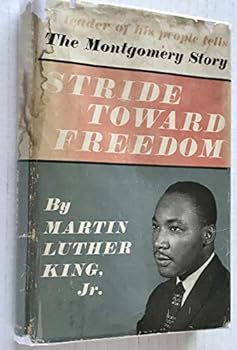
Carter gave Zwerg a copy of Martin Luther King Jr.'s first book, Stride Towards Freedom: The Montgomery Story, and something shifted. A philosophically-minded, devout Christian already troubled by what he was seeing, Zwerg found in King's writing a framework for his anger. He wanted to understand what it felt like to navigate life as his roommate did. So he decided to find out.
Fisk University and the Nashville Student Movement
In January 1961, Zwerg enrolled in a student exchange programme at Fisk University, a historically Black institution in Nashville, Tennessee. The cab driver who drove him from the station refused to pull onto the campus once he realised where Zwerg was headed, stopping at the gates and making no effort to help with his luggage. It was a small but telling welcome to a different world.
At Fisk, Zwerg encountered James Lawson, a Black pastor who had studied nonviolent resistance in India and was running what were among the most sophisticated civil rights training workshops in the country. He also met John Lewis, a young man whose quiet intensity made an immediate impression.
"His face was extremely strong. He didn't talk a lot, but when John spoke, everybody listened. There was just this quiet strength about him."
Zwerg joined the Student Nonviolent Coordinating Committee (SNCC) and began attending nonviolence workshops, often playing the role of the angry bigot in practice scenarios. His first real test came on 21 February 1961, when the group attempted to desegregate a Nashville movie theatre. Zwerg was struck with a monkey wrench and knocked unconscious. He was not yet deterred.
Joining the Freedom Rides
The Congress of Racial Equality (CORE) had launched the Freedom Rides in 1961 to challenge the continued segregation of interstate bus travel, despite a Supreme Court ruling that it was illegal. The first group of 13 riders departed Washington DC and headed south, but the journey turned violent when one of the buses was firebombed near Anniston, Alabama. The rides appeared to be finished.

At an SNCC meeting in Nashville, Lewis, Zwerg, and eleven others volunteered to step in as reinforcements. Zwerg was the only white male in the group. His mother pleaded with him not to go. He went anyway.
"My faith was never so strong as during that time. I knew I was doing what I should be doing."

The group took the bus to Birmingham, where Zwerg was arrested almost immediately for refusing to move seats on the bus when seated next to his companion Paul Brooks. He was placed in solitary, then briefly in a drunk tank, where his guards let the the other inmates know the reason for his arrest and invited them to "have at him." He spent two and a half days in Birmingham Jail.
Montgomery: The Attack That Shocked a Nation
Three days after their arrest, the riders regrouped and travelled onward to Montgomery. When the bus pulled in, the station was unnervingly quiet. That silence lasted only seconds.

Around 500 people surged from all directions, armed with bricks, lead pipes, baseball bats, hammers, and chains. Zwerg was singled out with particular ferocity, targeted as a traitor to his race. He was hit in the face with his own suitcase, knocked to the ground, and beaten into unconsciousness. A man held his head between his knees while others took turns striking and clawing at him. At one point, three men held his limp body upright while women dug their fingernails into his face, and mothers lifted small children to do the same. When he briefly regained semi-consciousness and reached for a handrail to pull himself upright, a man grabbed him and threw him over the railing. He landed on his head on the concrete below.

When it was over, James Zwerg had three cracked vertebrae, a broken nose, a concussion, and every tooth fractured. He remained unconscious for two days. He was initially denied medical attention because no white ambulance was available. A fellow Freedom Rider, Lucretia Collins, later recalled the scene in harrowing detail. A black stranger in work clothes who happened to pass by offered himself up to the mob, saying "Stop beating that kid. If you want to beat someone, beat me." He was still unconscious when Zwerg left hospital. Zwerg never learned whether he survived.
"There was nothing particularly heroic in what I did. If you want to talk about heroism, consider the black man who probably saved my life."

The Hospital Speech That Galvanised a Movement
When Zwerg finally regained consciousness and was well enough to speak, he gave an interview from his hospital bed that was broadcast on national news. His face battered, his voice steady, he said:
"Segregation must be stopped. It must be broken down. Those of us on the Freedom Ride will continue. We're dedicated to this. We'll take hitting, we'll take beating. We're willing to accept death. But we're going to keep coming until we can ride from anywhere in the South to any place else in the South without anybody making any comments, just as American citizens."
The speech was transmitted across the country and is widely credited with reinvigorating the Freedom Rides, drawing participants of all backgrounds to continue the campaign. The photographs of Zwerg's destroyed face, printed in newspapers and magazines nationwide, made it impossible for ordinary Americans to look away.
He later reflected on what he had experienced in those moments of violence. In a 2013 interview he said: "In that instant, I had the most incredible religious experience of my life. I felt a presence with me. A peace. Calmness. It was just like I was surrounded by kindness, love. I knew in that instance that whether I lived or died, I would be OK."
Life After the Freedom Rides
Later in 1961, Martin Luther King Jr. personally presented Zwerg with the Southern Christian Leadership Conference Freedom Award. A conversation with King helped Zwerg decide his next step: he enrolled at Garrett Theological Seminary in Evanston, Illinois, where he met his future wife Carrie and trained as a minister in the United Church of Christ.

He served churches in three rural Wisconsin communities for five years before the family relocated to Tucson, Arizona in 1970, where he became minister at Casas Adobes United Church of Christ. He and Carrie raised three children. Over subsequent decades he changed careers several times, working in charity organisations and spending time in community relations at IBM. He retired in 1993, after which he and Carrie built a cabin in rural New Mexico, roughly 50 miles from the nearest grocery store.
His story reached a new audience when the 2020 film Son of the South depicted the Freedom Rides era, with actor Matt William Knowles portraying Zwerg. He was also featured prominently in the PBS documentary People's Century and participated in a re-creation of the Freedom Rides in 2001 to mark the 40th anniversary of the campaign.

In 2015, Lawrence University in his hometown of Appleton awarded both Zwerg and his old companion John Lewis honorary doctorates of humane letters. The two men, who had shared a seat on that Greyhound bus more than half a century earlier, were reunited on the same stage. Lewis delivered the commencement address.
Zwerg has continued to speak publicly about the Freedom Rides for decades, appearing at the Troy University Rosa Parks Museum in 2011 and at schools and events across the country. He consistently downplays his own courage and redirects attention to those around him, particularly the Black Americans who bore the movement's greatest burdens.
"Why did I participate in the Freedom Rides? The answer is simple. It was the right thing to do."
Why James Zwerg Still Matters
Zwerg himself has spoken candidly about the complicated nature of his fame, acknowledging that he likely received disproportionate media attention because he was white, while Black Freedom Riders who suffered equally or worse were photographed and then forgotten. That honesty is part of what makes him a genuinely instructive figure.
He also reflects a truth that the civil rights movement was not built by heroes who felt no fear, but by ordinary people who were afraid and went forward anyway. A Wisconsin kid who depledged his fraternity over a friendship, who read one book and changed the course of his life, who was thrown over a railing in Montgomery and then woke up and spoke truth on live television.
"Spiritually," he said of those weeks in 1961, "I was never so alive as I was during that time of the movement."


