

Eve Adams: From a Greenwich Village Lesbian Salon to Auschwitz

In the mid 1920s, visitors wandering through the narrow streets of Greenwich Village might have noticed a small tearoom on MacDougal Street that seemed slightly different from the others around it. Inside, the atmosphere was informal and lively. People gathered to drink tea, read poetry, debate politics, and talk late into the evening. Writers and artists mixed with curious locals. Conversations drifted from literature to radical politics to the changing social world of New York.
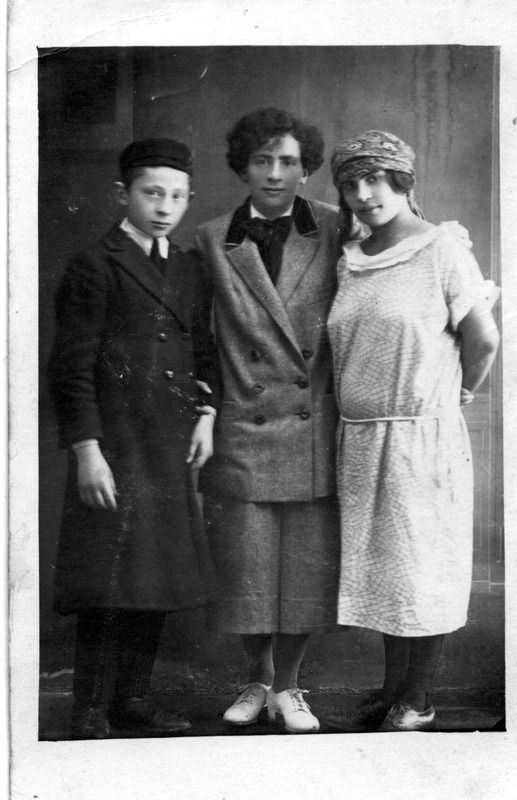
The woman who ran the place was a Polish Jewish immigrant named Eva Kotchever, though she preferred to be known as Eve Adams. She dressed in masculine clothing, spoke several languages, and had spent years moving between radical political circles and artistic communities. In 1925 she also quietly published a small book titled Lesbian Love, a collection of short stories about relationships between women.

Both the tearoom and the book were unusual for their time. Although Greenwich Village was known for its bohemian culture, American society in the 1920s remained deeply hostile toward homosexuality. Adams was well aware of the risks involved in running a space that openly welcomed lesbian patrons. Within a year, those risks would catch up with her. Her tearoom would be shut down by police, she would be imprisoned, and eventually deported from the United States.
Less than two decades later, after building a new life in Europe, she would be murdered in Auschwitz.
Yet today Eve Adams is remembered as one of the earliest figures in American lesbian cultural history, a woman whose small café and small book captured a moment when queer communities were beginning to become visible in modern cities.
Early Life in Poland
Eva Kotchever was born Chawa Złoczower on 27th June, 1891 in the town of Mława, located in what was then the Russian controlled Kingdom of Poland. She was the eldest of seven children born to Mordechai and Miriam Złoczower. Like many Jewish families living in the region at the time, the Złoczowers navigated a difficult social environment shaped by political instability and persistent antisemitism.
Family members later remembered Chawa as a responsible and capable older sister who often helped her mother care for the younger children. She attended primary school in Mława and later studied in Płock. By early adulthood she had developed an impressive ability with languages and was able to speak seven of them, a skill that would later prove useful as she moved between countries and cultures.
For many young Eastern European Jews at the beginning of the twentieth century, the United States represented both opportunity and escape. Economic hardship and political unrest encouraged thousands to leave for America each year. Chawa made the same decision.
In 1912, at the age of twenty, she boarded the steamship S.S. Vaderland in Antwerp and sailed across the Atlantic. She arrived in New York through Ellis Island and soon began building a new identity in her adopted country. The name Chawa Złoczower gradually gave way to a new name that would follow her for the rest of her life: Eve Adams.
Radical Politics in Early Twentieth Century New York
New York in the 1910s was a city alive with political debate. Labour movements, anarchist groups, socialist organisations, and progressive reform campaigns all competed for influence. Adams quickly found herself drawn into these circles.
She became involved in the anarchist movement and began distributing copies of Mother Earth, the influential anarchist magazine edited by Emma Goldman. Through this work she met many figures associated with the radical intellectual scene of the time, including Goldman herself, along with Alexander Berkman and the activist Ben Reitman.
Adams attended rallies, political meetings, and social gatherings where debates about free speech, workers’ rights, and sexual freedom were common. Her political interests also made her visible to government authorities. By 1919 she had attracted the attention of the Bureau of Investigation, the agency that would later become the FBI. Under the leadership of J Edgar Hoover, the agency’s Radical Division monitored individuals suspected of spreading anarchist or revolutionary ideas.
Adams appeared in their records as someone distributing radical literature and stirring political discussion. For her, however, these activities were simply part of everyday life among the bohemian communities she inhabited.
During these years she supported herself as a travelling saleswoman for left wing publications. She moved frequently, selling newspapers and magazines connected to progressive causes.
Chicago and the Grey Cottage
By the early 1920s Adams had relocated to Chicago, another city with an active intellectual and artistic community. There she continued selling publications while also offering lessons in Russian to students interested in learning the language.
For a brief period she also ran a tearoom with her partner, the Swedish painter Ruth Norlander. Their establishment, known as the Grey Cottage, operated at 10 East Chestnut Street and quickly developed a reputation as a meeting place for artists and radical thinkers.
Like many cafés in bohemian districts during the period, the Grey Cottage functioned less as a conventional business and more as a salon where ideas could be exchanged freely. It also became known as a welcoming space for members of the city’s emerging gay community.

Norlander herself exhibited paintings at the Chicago No Jury Exhibition in 1922, including a work titled Nudes. Some historians believe Adams may have posed for at least one of these paintings.
Although the Grey Cottage existed for less than a year, it established a pattern that Adams would later repeat in New York: the creation of small, informal spaces where art, politics, and queer identity could intersect.
Greenwich Village and Eve’s Hangout
In 1923 Adams returned to New York and signed a declaration stating her intention to become an American citizen. She settled in Greenwich Village, which by that time had become the centre of the city’s bohemian cultural life.
The Village attracted writers, actors, radicals, and political activists. The neighbourhood’s cafés and theatres hosted lively debates about art, politics, and social change. Figures such as Edna St Vincent Millay, Eugene O’Neill, and Djuna Barnes were all associated with the area.
After the First World War, the Village also became known as one of the few places in New York where queer communities could gather with a degree of relative openness. Speakeasies and private clubs quietly welcomed gay and lesbian patrons, though these venues were always vulnerable to police raids.
In March 1925 Adams opened a tearoom at 129 MacDougal Street. The establishment soon became known as Eve’s Hangout or Eve Addams’ Tearoom.
The café developed a reputation as a gathering place for artists, writers, and intellectuals. Poetry readings were occasionally held there and discussions about literature and politics were common. But the tearoom also attracted lesbian patrons who were looking for a place where they could socialise without hiding their identities.
Some newspapers later claimed that a sign outside the tearoom read, “Men are admitted but not welcome.” However historians believe this story probably originated in sensational journalism rather than reality. The phrase first appeared in a 1926 article in Variety, and biographer Jonathan Ned Katz has suggested that the sign likely never existed.
What is clear is that the tearoom became widely known as a lesbian friendly space. This visibility attracted criticism from moral reformers and gossip from journalists eager to portray Greenwich Village as a hotbed of scandal.

Writing Lesbian Love
Around the same time she opened the tearoom, Adams produced a small and unusual book.
In February 1925 she printed 150 copies of a short story collection titled Lesbian Love. She published the work under the name Evelyn Adams and described it as being intended for “private circulation only, particularly among the artists and poets of Greenwich Village.”
The book portrayed relationships between women in a straightforward and sympathetic way. Adams wrote that the stories were based on “true facts and living characters today,” presenting lesbian women as ordinary people living ordinary lives.
Historians today consider the book groundbreaking. Jonathan Ned Katz has described it as the earliest portrait of the lesbian community in the United States written by a lesbian author.
Yet in the social climate of the 1920s, even acknowledging same sex relationships could be considered immoral. Adams printed only a small number of copies and expected the book to circulate quietly among friends.
Events would soon prove that assumption wrong.
Police Investigation and Arrest
In the summer of 1926 the New York Police Department received a complaint about Eve’s Hangout. Authorities were already conducting raids on venues associated with queer communities, and the tearoom soon attracted official attention.
Policewoman Margaret Leonard from the Women’s Bureau was assigned to investigate. Posing as a young college student, she visited the tearoom several times in June, mingling with customers and gradually gaining Adams’s trust.
Eventually Leonard arranged to spend an evening with Adams. According to testimony later given in court, the two attended a theatre performance and had dinner together. They briefly stopped at Adams’s room before returning to the tearoom.
At that point Leonard revealed her identity and additional officers entered the premises. Adams was arrested on charges of obscenity and disorderly conduct.
The obscenity charge related to the possession and distribution of Lesbian Love. The disorderly conduct charge was based on Leonard’s claim that Adams had made sexual advances toward her.
Adams insisted that the evening had been entirely innocent. Nevertheless the authorities accepted Leonard’s account.

Trial, Prison, and Deportation
Adams was convicted and sentenced to one year in prison at Jefferson Market Prison in Greenwich Village. During her time there she reportedly encountered the young actress Mae West, who would later become famous for her provocative stage performances.
The legal consequences of the conviction extended beyond the prison sentence. Because Adams was not yet a United States citizen, immigration authorities began proceedings to deport her.
During the hearings officials repeatedly described her as morally undesirable. Her sexuality was treated as evidence that she lacked the character required to become an American citizen.
Although prosecutors attempted to link Adams to prostitution, no formal charges were ever filed. Her uncle even testified on her behalf, stating plainly that he did not believe she had engaged in such activities.
The outcome, however, had already been decided. Adams was labelled an undesirable alien.
In December 1927, after completing her prison sentence, she was placed aboard a ship and deported to Poland.

Exile and Life in Paris
Back in Europe Adams struggled to rebuild her life. She spent time in Warsaw, Gdańsk, and Sopot, writing letters to friends in the United States describing economic hardship and rising antisemitism.
By 1930 she had relocated to Paris, where she joined the city’s lively expatriate literary community. Many American writers and artists had settled in the city during the 1920s and 1930s, gathering in cafés such as Le Dôme in Montparnasse.
Adams supported herself by selling controversial books to American tourists. Works by James Joyce, Henry Miller, Anaïs Nin, and D H Lawrence often faced censorship in the United States, making them popular among visitors eager to purchase them abroad.
She became acquainted with several writers connected to these circles, including Henry Miller and Anaïs Nin.
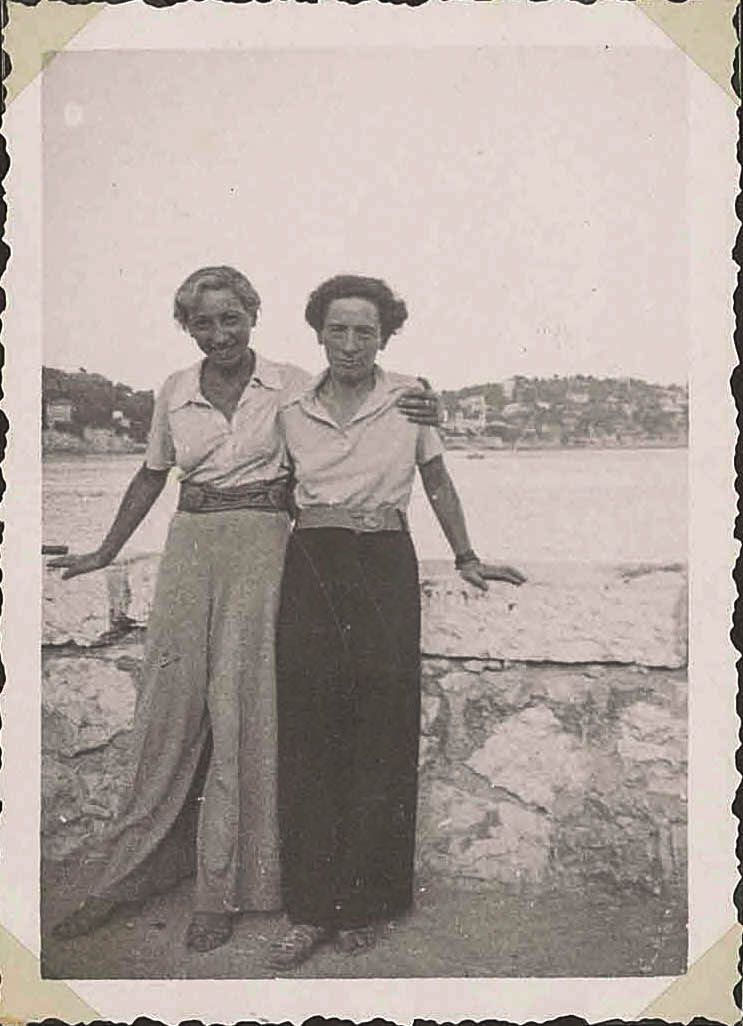
In 1933 Adams began a relationship with the Jewish singer Hella Olstein Soldner, who performed under the stage name Norah Waren. The two women lived together in France for several years.
At one point they considered emigrating to Palestine to join Adams’s brother, but they lacked the financial resources to do so. Adams also attempted to secure permission to return to the United States, writing repeatedly to Ben Reitman for assistance. These efforts were unsuccessful.
In 1940 the couple moved to southern France as the Second World War spread across Europe.

Arrest and Auschwitz
By 1943 the Nazi occupation had extended its reach across France. Jewish residents were increasingly subject to arrest and deportation.
That December Adams and Soldner were arrested in Nice and sent to the Drancy internment camp near Paris. Drancy served as the main transit camp for Jews being deported from France to Nazi concentration camps.
On 17th December, 1943, the two women were placed aboard Convoy 63, a train carrying approximately 850 Jewish prisoners to Auschwitz.
Only 31 people from that convoy survived the war.
Neither Eve Adams nor Hella Soldner were among those survivors.
Eve Adams was murdered at Auschwitz on 19th December, 1943, just two days after arriving at the camp. She was 52. The exact date of Hella Soldner’s death is not recorded, but she is believed to have been killed either immediately upon arrival or shortly afterwards, as was the fate of most prisoners deemed unfit for forced labour.
Rediscovering Eve Adams
For many decades Adams’s story remained largely forgotten. Her tearoom had existed only briefly and the small print run of Lesbian Love had disappeared from view.
In 1999 a student named Nina Alvarez discovered what is believed to be the only surviving copy of the book in a library collection in Albany, New York. The discovery allowed historians to finally examine the work and confirm its historical importance.
Interest in Adams’s life grew rapidly after that. Playwright Barbara Kahn wrote several plays about her, including The Spring and Fall of Eve Adams and Unreachable Eden.
Today Adams is widely recognised as an early figure in LGBTQ cultural history. A street in Paris, Rue Eva Kotchever, has been named in her honour, along with a local school.
Her story also forms part of the historical record maintained by the City of New York and the National Park Service, which have documented early queer gathering spaces in Greenwich Village.

A Life That Reflected the Turbulence of the Century
Eve Adams never set out to become a historical symbol. She ran small cafés, sold books, and moved among artists and radicals who believed in freedom of expression.
Yet her life intersected with several of the defining forces of the twentieth century. She experienced the radical politics of early twentieth century America, the vibrant bohemian culture of Greenwich Village, the expatriate literary world of Paris, and finally the destruction of European Jewry during the Holocaust.
Her tearoom existed for barely a year. Her book circulated only among a small group of readers. But together they represent one of the earliest documented attempts to create public space for lesbian community in the United States.
More than a century after she first arrived in New York, the story of Eve Adams remains a reminder of how fragile freedom can be, and how quietly some people worked to expand it.


