


Eugene Lazowski and the Truth Behind the Fake Epidemic That Saved a Polish Town
Updated: Sep 28

It began with a rumour. Years after the war ended, stories started circulating about a Polish doctor who had supposedly saved thousands of Jews from the gas chambers by inventing a false epidemic. Newspapers repeated it. A documentary crew went looking for it. A myth formed around the idea that one man and one clever medical trick had preserved a large Jewish population from certain death.
The truth is more nuanced, grounded in the very specific nature of life in occupied Poland, in the habits of the German authorities, and in the slow and sometimes uncomfortable way historical memory evolves. Eugene Lazowski did save people. Many of them. But not in the precise way the legend later claimed.
What he did manage was extraordinary in its own right. It simply deserves to be told as it really happened.
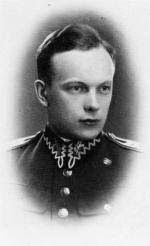
Early life and medical training
Eugeniusz Sławomir Łazowski was born in Częstochowa in 1913, a city known as much for its religious heritage as for its industrial sprawl. He grew up in a Catholic family and followed a familiar path for a young man with academic ambitions in interwar Poland. He studied medicine at the Józef Piłsudski University in Warsaw, qualifying shortly before the outbreak of the Second World War. He was only twenty six when Poland was invaded.
A friend later remarked that Łazowski had the look of someone who noticed everything. It was a quality that would serve him well when medical improvisation became an act of resistance.
War begins and the path to Rozwadow
At the start of the German invasion he served as a medic in the Polish Army with the rank of second lieutenant. He was captured by Soviet forces when eastern Poland was occupied, and placed in a prisoner of war camp. Escape stories from this period are rarely tidy, and Łazowski’s account fits that pattern. He took advantage of confusion and slipped away, eventually finding work on a Red Cross train. This allowed him to continue practising medicine even while the country was torn apart.
Later he settled in the small settlement of Rozwadow in the southeast, which later became part of the town of Stalowa Wola. He arrived there with his wife, and it was in this place that their daughter Alexandra was born. The town was modest, a cluster of streets, a railway line, a nearby forest, and the constant presence of German authority. Like many rural Polish communities at the time, its Jewish residents were pushed into a small ghetto. The Lazowski home bordered that area.
As a doctor, he was permitted limited supplies of medicines. Those supplies were supposed to be used only for non Jewish patients. Treating Jews in any form was forbidden and punishable by death. Yet Lazowski passed medicines through holes in the fence and treated children at night. These acts were not part of any grand plan. They were quiet gestures, performed frequently enough to put him at considerable risk.
Partnership with Dr Stanisław Matulewicz
Working alongside Lazowski in Rozwadow was Dr Stanisław Matulewicz, a friend from university. Matulewicz had also served with the Red Cross and had a particular interest in bacteriology. It was still a young science. In London, Alexander Fleming had noticed in 1928 that a mould could kill bacteria, though penicillin only became a usable medicine once the war was under way. It was Matulewicz who made the discovery that would allow their most famous ruse to take shape.
He learned that patients injected with a harmless strain of Proteus bacteria known as OX 19 would test positive for typhus in the standard German blood tests. The test produced a cross reaction. The body recognised the presence of the organism and produced antibodies that mimicked those generated by true typhus infection. In effect, one could create the appearance of an epidemic without the disease itself being present.

This was not a trivial matter. German authorities were terrified of typhus. The disease had ravaged armies during the First World War, and military leaders had become deeply cautious about any outbreak. Typhus meant quarantine, restrictions on movement, and the avoidance of entire villages.
In 1941 and into 1942, Lazowski and Matulewicz began using this knowledge to create what became known as the epidemic that never was.
How the fake epidemic worked
The doctors selected patients who were already ill with other conditions and gave them the OX 19 injections so that their blood tests would resemble cases of typhus. When tests were carried out, the samples came back positive. Over time, as the number of positive samples increased, German officials concluded that the region was becoming unsafe.
The doctors were careful. They avoided treating Jewish patients with OX 19 because they knew the German response to suspected typhus among Jewish communities. In those cases, authorities often responded with shootings and the burning of homes. The method was used only among the non Jewish Polish population in the surrounding villages. It bought time and space.
By late 1942, the authorities had quarantined the area. German patrols were reduced. Roundups were suspended. Deportations from the village effectively stopped. People were not marched away to forced labour camps because no one wanted to enter a place thought to be filled with infected bodies.

This is the point at which later writers started to inflate the story. In an English language article published decades later, the journalist involved claimed that eight thousand Jews had been saved by the epidemic. It was a compelling line, especially in an era eager for stories of unexpected heroism. But it was also untrue.
What really happened and who was saved
The number often repeated in newspapers is eight thousand. It appears frequently but has no basis in the demographics of Rozwadow.
The Jewish population of the area was nowhere near that number. Most of the local Jewish community had already been deported or murdered by the time the fake epidemic began to take effect. The ghetto in Rozwadow was small. Even its combined population with other nearby Jewish communities did not reach eight thousand.
So what was the real impact of the epidemic?
The quarantine protected the surrounding Polish communities. Those villages were shielded from forced labour conscriptions and from some of the violent crackdowns that were common in other rural districts. The epidemic zone encompassed several villages, and the best historical estimates suggest that several thousand Polish men, women and children avoided deportation.
Lazowski did save Jewish lives, but in a different way. His clandestine treatment of ghetto residents kept individuals alive despite German restrictions. He smuggled medicines, provided care without documentation, and sometimes left supplies where they could be found. These acts were dangerous and humane. They were simply not carried out through the fake typhus epidemic.

His own memoir, published in Polish in 1993 as Private War and later translated into English by his daughter, makes this clear. One Jewish man in the area remembered being given medicine by the doctor at night. Others recalled that he would quietly pass food when it was possible. These were small acts, but they mattered.
Later, when asked by documentarians about his fame as the Polish Schindler, Lazowski’s daughter noted that her father never disputed the embellished claim. She also pointed out that his memoir contradicted it repeatedly. The German response to typhus among Jewish populations would have been lethal, and the numbers alone proved the legend was impossible.
The journalist who created the inflated claim admitted on camera years later that he had not verified the facts. He did not know Polish and had relied on partial translations. The exaggerated story took on a life of its own.
The end of the war and the decision to emigrate
After the war Lazowski continued to practise medicine. Like many Polish professionals, he faced political pressure as the country fell under Soviet influence. In 1958 he emigrated with his wife Maria and their daughter Alexandra to the United States. The Rockefeller Foundation awarded him a scholarship, and he built a new life in Chicago.
By the mid nineteen eighties he had become a professor of paediatrics at the University of Illinois. He wrote more than one hundred scientific papers, and colleagues remembered him as genial and quietly proud of his past. Only in later years did he begin to speak publicly about the epidemic story. The fame amused him. According to his daughter, he enjoyed telling the tale but did not volunteer corrections unless asked.
He continued practising medicine in some form until 2004. He died in 2006 at the age of ninety three.
Memory, myth and the historical record
The story of Eugene Lazowski raises interesting questions about how wartime experience becomes remembered. It is true that he did not single handedly save eight thousand Jews. It is also true that he and Dr Matulewicz used science and a clever understanding of German fears to shield thousands of Polish villagers from deportation. Both things can be true without diminishing either achievement.
In 2019, journalist Barbara Necek directed a documentary titled In Search of the Polish Schindler. The film explored the myth directly and featured interviews with the journalist who had first published the exaggerated version of events. It also featured Lazowski’s daughter, who explained that her father did not correct the record because he found the attention pleasant.
Historical memory often simplifies. In this case the simplification grew so large that it overshadowed what was actually done.
What remains is still remarkable. A doctor and his colleague found a way to save lives using nothing more than a harmless bacterium, a knowledge of German bureaucracy, and a willingness to risk death. They resisted quietly and without spectacle. Their work protected Polish families in the surrounding villages, kept Jewish residents in the ghetto alive through secret medical care, and gave Rozwadow a fragile pocket of safety in a violent time.
Lazowski once remarked in an interview that he had only wanted to behave like a decent human being. That may be the truest summary of his actions.
The Faked Epidemic that Saved Hundreds of Lives - https://culture.pl/en/article/the-faked-epidemic-that-saved-hundreds-of-lives
Investigation on a fake Polish Just - https://k-larevue.com/en/investigation-on-a-fake-polish-just/
How a faked typhus outbreak spared 8,000 Poles from the Nazis - https://www.timesofisrael.com/how-a-faked-typhus-outbreak-spared-8000-poles-from-the-nazis/
How a Fake Typhus Epidemic Saved a Polish City From the Nazis - https://www.atlasobscura.com/articles/how-a-fake-typhus-epidemic-saved-a-polish-city-from-the-nazis
Sheep in Wolf's Clothing: The “Epidemic” that Duped the Nazis - https://www.discovermagazine.com/sheep-in-wolfs-clothing-the-epidemic-that-duped-the-nazis-173
Typhus: War and Deception in 1940’s Poland - https://www.aspet.org/docs/default-source/education-files/2018_tpharm_special_compilation_issue.pdf?sfvrsn=65192d2_0
About Eugene Lazowski - https://collections.carli.illinois.edu/digital/collection/uic_pw


