

Richard ‘Two Gun’ Hart: The Capone Who Lived the Law While His Brother Broke It
Updated: Mar 19

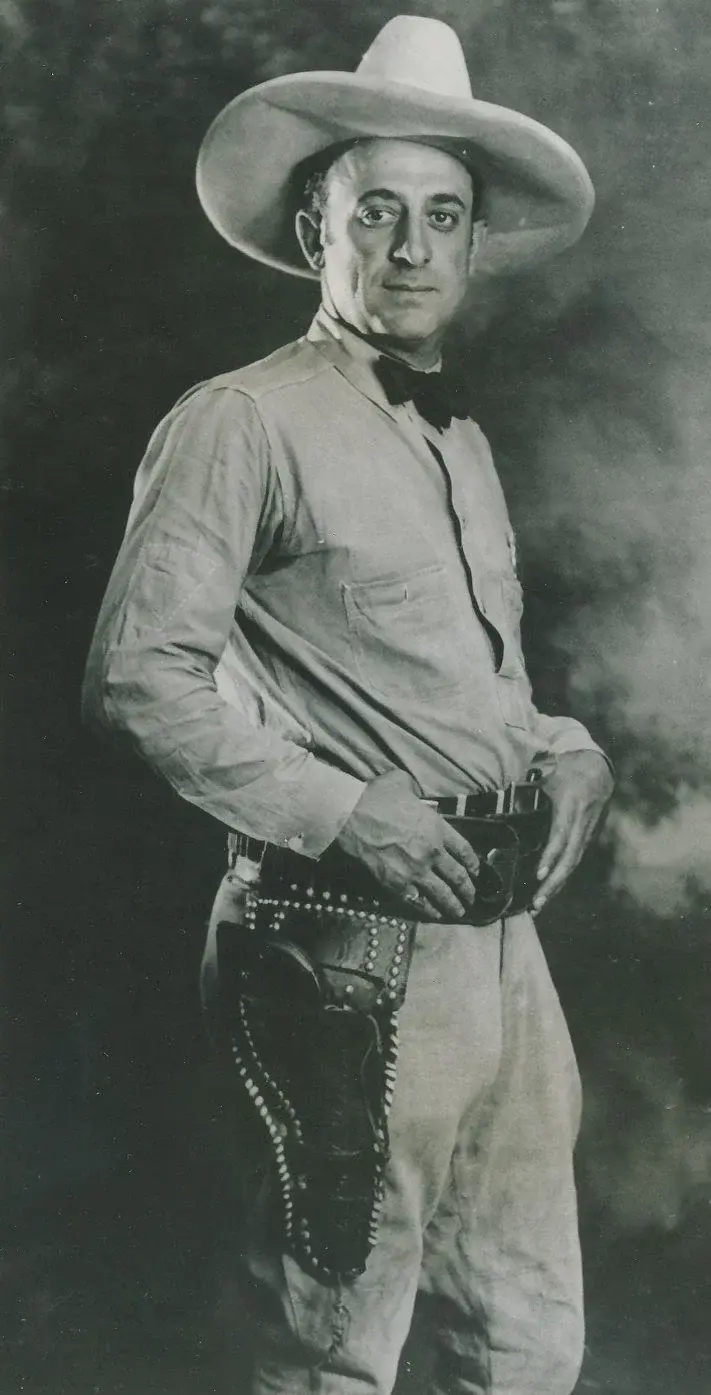
In the popular imagination, the name Capone still conjures images of Chicago speakeasies, machine guns, and political corruption. Yet while the world learned to recognise Al Capone as the face of organised crime in Prohibition era America, his eldest brother was quietly building a reputation that could not have been more different. On horseback rather than behind bulletproof glass, armed with a badge rather than bribery, Richard James ‘Two Gun’ Hart made his living hunting criminals across the Midwest and American West.
It was one of the strangest sibling contrasts of the twentieth century. One brother embodied the criminal possibilities of modern America. The other tried to resurrect an older moral universe altogether, one shaped by frontier justice, military discipline, and personal reinvention. Hart’s life was not merely the inverse of Al Capone’s. It was a sustained act of self creation, maintained for decades through secrecy, performance, and a rigid sense of right and wrong that eventually bent under the weight of family loyalty.
From Vincenzo Capone to James Hart
Richard Hart was born Vincenzo Capone in Italy in 1892, the first child of Gabriele and Teresina Capone. Like many Italian families of the period, the Capones emigrated to New York City in search of economic stability and social mobility. They settled into the dense immigrant neighbourhoods where opportunity existed alongside prejudice, and where ethnic identity could shape the limits of one’s future.
As the family grew, so did the contrast between Vincenzo and his younger siblings. While boys like Alphonse drifted into street fights and neighbourhood gangs, Vincenzo sought distance from the city altogether. He spent long stretches on Staten Island, where open land and horse stables offered respite from Brooklyn’s congestion.
Author Jeff McArthur, whose 2015 biography Two Gun Hart: Law Man, Cowboy and Long Lost Brother of Al Capone remains the most comprehensive account of Hart’s life, describes a boy who felt out of place in the urban immigrant experience.
“He avoided the life of the hoodlums and went across the bay to Staten Island where the homes and shops were separated by grassy fields and woods where he could wander and forget the crowded metropolis from which he came.”
Horses became an obsession. So did the romantic mythology of the American West, reinforced by travelling Wild West shows that passed through New York. Buffalo Bill Cody and Pawnee Bill offered a vision of manhood and identity far removed from the limitations imposed on Italian immigrants in eastern cities.
Anti Italian prejudice and the necessity of reinvention
At the turn of the twentieth century, Italians occupied an ambiguous position in American society. They were often treated as racially suspect, politically untrustworthy, and socially undesirable. Outside major cities, Italian surnames could actively block access to employment, housing, and public office. Reinvention was not uncommon among immigrants, but Hart would take it further than most.
By the time Vincenzo left home as a teenager, he was already experimenting with identity. He adopted the name James, and later Hart, a surname almost certainly inspired by Western film star William S. Hart. This was not a casual choice. It allowed him to move through American institutions that might otherwise have excluded him.
One day, without warning, he disappeared.

A sudden departure and a family left guessing
According to McArthur, Vincenzo left New York abruptly, escorting his eight year old brother Al to the ferry before telling him he could not come any further. A year later, a letter arrived from Kansas. Vincenzo was travelling with a circus.
The reasons for his departure remain unclear. Family stories offered competing explanations. One suggested he had killed someone while protecting his brothers and fled to avoid retribution. No evidence has ever supported this claim. Another story involved a violent argument with his father over Vincenzo’s attempts to teach himself the violin, ending with the instrument smashed over his head.
Whatever the truth, the effect was decisive. Vincenzo Capone ceased to exist. In his place emerged James Hart, a young man determined to shed not only his name but his past.
Reinvention through war
Hart joined the Miller Brothers Ranch Wild West Show, absorbing not only performance skills but the physical confidence that would later define his law enforcement style. When the show toured Europe, he stayed behind in Illinois and enlisted in the United States military under the name James Richard Hart, claiming he had been born in Indiana and worked as a farmer.

His military career was substantial. He served in Mexico during the pursuit of Pancho Villa, then in Europe during the First World War. Rising to the rank of lieutenant, Hart became a military policeman and earned the Distinguished Service Cross for extraordinary heroism in action, an award given to just over five thousand American servicemen out of roughly two million.
The army gave Hart legitimacy, discipline, and distance from his origins at precisely the moment his younger brother was beginning to attract police attention in Chicago.
Homer, Nebraska, and the making of a lawman
After the war, Hart did not return east. He travelled to Homer, Nebraska, a small town overlooking the Missouri River, and passed himself off as half Native American, a calculated choice in an era when Italian ancestry could provoke suspicion or hostility.
Within weeks of arriving, Hart rescued several residents during a flash flood. Among them was Kathleen Winch, whom he later married. He never told her the truth about his family.
Homer soon appointed him town marshal. The role allowed Hart to combine military authority with the frontier lawman persona he had been constructing for years. When Prohibition began, his background made him an unusually qualified federal agent.
“Richard’s training as a town marshal, combined with his experience in the military, prepared him well for the work he would do as a Prohibition officer,” McArthur writes. “He was more qualified than most officers in the same job, few of whom had much experience at all.”
Prohibition enforcement and the performance of authority
Prohibition enforcement across the United States was inconsistent and often corrupt. Many agents were poorly trained, politically appointed, or underpaid. Bribery was common, turnover high. Hart stood out because he treated enforcement as both a profession and a performance.
He wore cowboy boots with spurs, a wide brimmed hat, and carried two pearl handled pistols. He rode his horse Buckskin Betty through town even though he owned a car. He went undercover, chased moonshiners, and occasionally forced arrested prisoners to assist in further raids.

“When situations got overly heated, Richard used his boxing, sharp shooting, and even his acrobatics,” McArthur writes. “Whether it was flips or handstands on his horse, shooting a target from a couple hundred yards, or boxing anyone who would enter the ring with him, Hart took every opportunity to display his many talents.”
Newspapers eagerly chronicled his exploits. Some colleagues admired him. Others, particularly his superiors, viewed him as reckless. Hart disliked paperwork, ignored procedure, and repeatedly tested institutional patience.
The Bureau of Indian Affairs and moral complexity
Hart’s reputation eventually brought him work with the Bureau of Indian Affairs. Alcohol abuse was widespread on reservations, shaped by poverty, displacement, and federal neglect. Hart approached the role with intensity but also with a degree of cultural engagement unusual for the time. He learned tribal languages and assisted local police with issues beyond alcohol enforcement.

This period exposes the complexity of his character. Hart believed deeply in law and order, yet operated within systems that frequently harmed the people they claimed to protect. Locals began calling him “the Coyote” for his speed and cunning.
Brothers on opposite sides of America
By the 1920s, Hart’s law enforcement world collided with his brother’s criminal one. Chicago tolerated gangsters through machine politics and selective enforcement. Rural enforcement, by contrast, remained uncompromising.
A Chicago photographer named Tony Berardi later claimed to have met Hart and Al together in 1924. Capone reportedly introduced his brother as a Prohibition officer in Nebraska.
“Apparently proud of his brother, Al revealed no animosity toward him,” McArthur writes. “Richard, on the other hand, seemed in awe of the situation.”
The brothers reportedly agreed to stay out of each other’s territories.
The Lincoln bank robbery and a quiet intervention
On 17th September, 1930, six men robbed the Lincoln National Bank in Nebraska, escaping with $2.7 million in cash and bonds. The theft threatened the state’s financial stability. Hart suspected associates of his brother were involved.
According to McArthur, Hart contacted Al and persuaded him to intervene. Though Capone opposed bank robberies, loyalty prevailed. The bonds were returned, depositors reimbursed, and the crisis quietly resolved.
Soon after, Al Capone began serving an eleven year sentence for tax evasion.
Loyalty, perjury, and the limits of reinvention
The Great Depression strained Hart’s family finances. Support increasingly came from his brothers. Over time, Hart revealed his true identity to his wife and children. His son Harry later remarked, “It didn’t mean piddly damn to me.”
In 1951, Hart was called before a grand jury investigating property owned by his brother Ralph. Hart testified that the property belonged to him, accepting responsibility for any taxes owed.
“Richard had in essence perjured himself,” McArthur writes, “but he had done it for a family that was there for him when representatives of that law let him down.”
For a man who had built his identity on legality and moral clarity, the moment marked a profound ethical rupture.

Final years and legacy
Hart returned to Homer in declining health. He still dreamed of becoming a Western film actor, but time was not on his side. He died at home on 01st October, 1952.
He was buried overlooking the town he had served. His gravestone bears no reference to Capone.
Just Richard J. Hart.
His life remains a study in contradiction: an Italian immigrant who erased his origins, a lawman who broke the law for family, and a man who understood that identity in America could be shaped as much by performance as by birth.


