

Claudine Longet, the Singer Who Shot Her Olympian Boyfriend, Has Died at 84

On a cold evening in Aspen on 21st March, 1976, a single gunshot shattered the stillness of one of America’s most exclusive ski towns. By the time emergency services arrived, Olympic skier Vladimir “Spider” Sabich was dying, and Claudine Longet, once known for whisper soft bossa nova songs and elegant television appearances, was about to become the central figure in one of the most controversial celebrity trials of the 20th century.
This is not a story with a neat arc. It drifts between the glamour of 1960s television studios, the intimate social world of the Kennedy family, the cocaine soaked après ski culture of 1970s Aspen, and a criminal case that many felt revealed more about privilege and procedural failure than about truth. Claudine Longet’s life sits at the intersection of fame, intimacy, gender, and a justice system struggling to deal with celebrity.
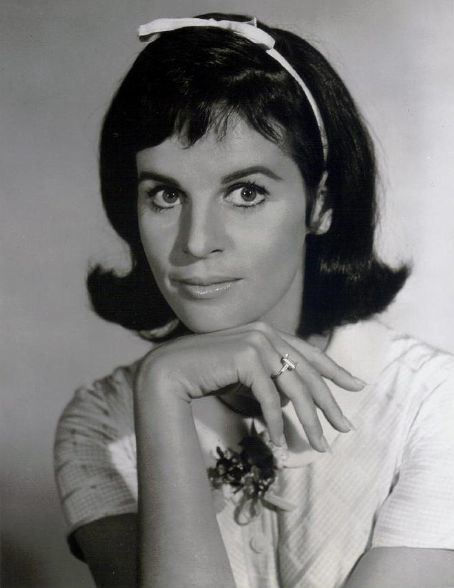
Paris Beginnings and an Early Life on Stage
Claudine Longet was born Claudine Georgette Longet in Paris on 29th January, 1942. Growing up in post war France, she gravitated early towards performance, particularly dance. As a teenager she appeared on French television and performed in clubs catering to tourists, developing a poised, restrained stage presence that would later define her public image.
Her career trajectory changed decisively when she joined the Folies Bergère revue in Las Vegas. By the age of 18, Longet was performing as a lead dancer at the Tropicana Resort and Casino, an environment that placed young European performers directly into the orbit of American entertainment royalty.
It was here, in 1960, that chance intervened.
Meeting Andy Williams and Entering American Celebrity Life
Longet met Andy Williams after her car broke down on a Las Vegas road. Williams, already a major recording star and television personality, stopped to help. She was 18. He was 32. Within a year, they were married.
They wed on 15th December, 1961, in Los Angeles, and Longet was quickly absorbed into the American entertainment industry. Williams’ hugely successful programme The Andy Williams Show became both a professional platform and a social gateway. Longet appeared frequently, often framed as the elegant French wife whose soft voice and calm delivery stood apart from the brashness of American pop.
The marriage produced three children, and for a time Longet’s career and domestic life advanced together. She became a familiar presence in Hollywood without ever projecting ambition. Her appeal lay in understatement.
Television Roles and a Distinctive Musical Career
Longet’s acting career followed a typical route for performers of the era. She appeared in popular television series including McHale’s Navy, Combat!, Twelve O’Clock High, Hogan’s Heroes, The Rat Patrol, and Alias Smith and Jones. These were rarely leading roles, but they placed her consistently in front of American audiences.

Her breakthrough came in 1966 with an appearance on Run for Your Life, where she performed a bilingual English and French version of Antônio Carlos Jobim’s “Meditation”. Among those watching was Herb Alpert, who soon offered her a recording contract with A&M Records.
Between 1966 and 1970, Longet released five albums. Her debut Claudine peaked at number 11 on the Billboard charts and was certified gold. Subsequent albums such as The Look of Love and Love Is Blue also charted strongly. Her work leaned heavily on atmosphere rather than vocal power, shaped by arranger Nick DeCaro. Longet sang softly, almost conversationally, a style that appealed strongly to adult contemporary listeners.
Film Success and The Party
In 1968, Longet appeared opposite Peter Sellers in The Party, directed by Blake Edwards. The film became a box office success, and Longet’s performance, along with her rendition of “Nothing to Lose”, reinforced her image as an international sophisticate rather than a conventional Hollywood star.
By the late 1960s, Longet occupied a curious cultural space. She was not a headline grabbing celebrity, but she was everywhere. Television, records, films, and high profile friendships sustained her visibility.
Friendship with the Kennedys and a Front Row Seat to History
Longet and Williams were close friends of Robert F. Kennedy and his wife Ethel Kennedy. Their social lives overlapped through homes in Bel Air, Palm Springs, New York City, and Idaho.
On the night of 4th June, 1968, Longet and Williams were watching Kennedy’s California primary victory speech at the Ambassador Hotel when he was shot. They rushed to Good Samaritan Hospital and remained there for more than 24 hours as doctors fought to save his life.

Longet attended Kennedy’s funeral at St Patrick’s Cathedral on 8th June, 1968. A widely circulated image showed Williams consoling her during the service. The couple travelled on the funeral train to Washington DC alongside Kennedy family members as crowds gathered along the tracks. Later, Longet and Williams named their son after Robert Kennedy, binding the friendship permanently into their family history.
Separation, Divorce, and a Life in Transition
By 1970, the marriage between Longet and Williams had deteriorated. They legally separated that year and divorced in January 1975. Williams later said, “We never stopped being friends. We just didn’t want to be married anymore.”
Longet received a substantial divorce settlement and gradually withdrew from the entertainment industry. Later recordings attracted less attention, and a planned third album was never released in full. Her public presence softened and then faded.
It was during this period of retreat that she met the man who would bring her back into the spotlight in the most catastrophic way possible.
Enter Spider Sabich and the World of Aspen
In 1972, Longet met Vladimir Sabich, universally known as Spider, at a celebrity ski race in Bear Valley, California. Sabich was young, charismatic, and widely regarded as one of America’s most promising skiers. He was also deeply embedded in Aspen’s fast moving social scene.

Aspen in the 1970s had become a magnet for wealth, fame, and indulgence. Once a quiet mining town, it had transformed into a playground for celebrities, financiers, and athletes. Cocaine circulated openly, parties were constant, and personal boundaries were often thin.
Longet soon relocated to Aspen, spending increasing amounts of time at Sabich’s chalet. Friends described their relationship as intense and volatile. Jealousy, arguments, and alcohol and drug use were frequent topics in later accounts. Sabich, accustomed to a bachelor lifestyle, was reportedly uneasy with the domestic expectations Longet brought with her.
The Shooting on 21st March, 1976
On 21st March, 1976, Sabich returned home after skiing. According to trial testimony, he had stripped to his underwear and was preparing to shower when Longet entered the room carrying a Luger style pistol.
A single shot struck Sabich in the abdomen.
Police officer William Baldrige arrived to find Sabich slumped and gravely wounded. He was pronounced dead while being transported to hospital. Longet told police the gun discharged accidentally as Sabich was showing her how it worked.
The explanation immediately divided opinion.
A Trial Defined by Errors and Image
Longet was charged with reckless manslaughter. When the trial opened in 1977, it quickly became clear that the prosecution faced severe limitations. Investigators had taken Longet’s blood without a warrant, revealing cocaine in her system, and seized her diary without authorisation. Both were ruled inadmissible.
The gun itself had been mishandled by non specialists, damaging its evidentiary value. With much of its case excluded, the prosecution relied heavily on the autopsy report, which suggested Sabich was bent over and facing away from Longet when shot.
The defence argued the gun’s safety mechanism was faulty and the firing mechanism overly lubricated, making accidental discharge plausible.
Longet’s image also played a role. Soft spoken, petite, and carefully dressed, she contrasted sharply with popular stereotypes of violent offenders. One juror later remarked, “I don’t think she’s a threat to society.”
After four days of testimony, the jury convicted her of negligent homicide.
Sentencing, Backlash, and Silence
Longet was sentenced to 30 days in jail and fined $250. The judge allowed her to choose when to serve her sentence, and she served most of it on weekends so she could remain with her children.
Public reaction was swift and angry. The backlash intensified when Longet vacationed with her defence attorney, Ronald Austin, shortly after sentencing. The two later married.
The Sabich family filed a civil suit that was settled out of court with a confidentiality clause preventing Longet from ever discussing the killing or the settlement. Reports suggested she had begun drafting a book, which was permanently abandoned.
Claudine Longet's Death in 2026
Longet died on 14 May 2026 at the age of 84. Her death was announced by her nephew, Bryan Longet, in a social media post, writing that her "light, elegance, talent and kindness" would continue on through the memories she left behind. No cause of death was disclosed. She's survived by her three children with Andy Williams and had remained married to her defence attorney, Ronald Austin, since 1985.
She never gave another public interview after 1977, and the confidentiality agreement she signed with Sabich's family meant she legally couldn't discuss the shooting or the case for the rest of her life, regardless of what she may have wanted to say. Her story survives largely through cultural echoes that outlasted her silence: a satirical Rolling Stones song, a Saturday Night Live sketch, and periodic true crime retellings that kept returning to the same unresolved question. Was it a tragic accident, or a killing obscured by privilege, image, and procedural collapse? Longet took whatever she actually knew to her grave without ever answering it.


