


Johnny Cash At Folsom Prison: The Concert Documented by Jim Marshall
Updated: Oct 7

There is a moment early in “Folsom Prison Blues” where Johnny Cash delivers a line that has followed him ever since: “I shot a man in Reno just to watch him die.” It sounds cold, almost theatrical, the sort of thing that fixes an artist firmly in the outlaw tradition. Yet the reality behind Cash’s relationship with crime, punishment, and imprisonment was far more complicated, and far more human, than the persona suggested.
By the time audiences heard that line echoing through prison halls in the late 1960s, Cash had already spent years thinking about incarceration, not as a backdrop for a song, but as a social problem that few people seemed willing to examine closely.
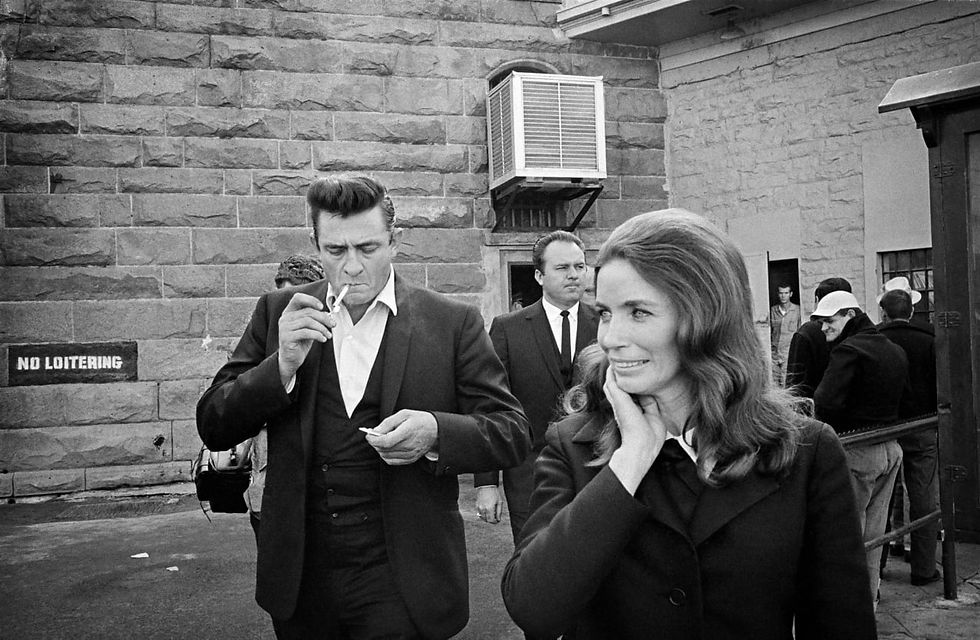
A Song Born from Observation, Not Experience
Despite the conviction in his voice, Cash never lived the life he described in “Folsom Prison Blues.” He had not killed a man, nor served time beyond minor arrests. The song itself was inspired much earlier, in the early 1950s, when a young Cash, then a radio operator in the United States Air Force, watched a documentary titled Inside the Walls of Folsom Prison.
The film left a lasting impression. It introduced him to a world that most Americans rarely saw firsthand, one shaped by routine, confinement, and a system that seemed to do little to change the men within it. From that point, prisons became more than a lyrical device. They became a subject he returned to repeatedly.

Early Prison Performances and Growing Connections
Cash’s first prison performance came in 1957 at Huntsville State Prison in Texas. It was not a one-off novelty. Over the next three decades, he would perform dozens of such shows across the United States, often without payment, fitting them into an already demanding touring schedule.

What distinguished these visits was not just the performances themselves, but what happened around them. Cash spent time speaking directly with inmates, sitting in basic surroundings and listening to accounts of violence, survival, and regret. These were not brief exchanges. They were, by most accounts, long conversations that shaped his understanding of prison life.
As one account later noted, inmates shared stories of “fights, sexual assault and murder” from institutions across the country. For Cash, these encounters reinforced a belief that prisons were not rehabilitating people in any meaningful sense.

The Broader Context of the 1960s
Cash’s views developed during a period when the American prison system was coming under increased scrutiny. By the 1960s, there was a growing recognition among academics and reformers that incarceration often failed to reduce reoffending.
Biographer Michael Streissguth later explained it plainly: “They were merely training inmates to be better criminals.” Recidivism rates remained high, and former prisoners faced a combination of stigma, limited opportunities, and psychological trauma upon release.
Cash absorbed these ideas and translated them into his music. His song “San Quentin” is less ambiguous than “Folsom Prison Blues.” It directly challenges the system, suggesting that prison does not correct behaviour but instead deepens alienation. The lyrics reflect a frustration not just with individuals, but with the structure itself.

Faith, Sympathy, and the Idea of Redemption
At the centre of Cash’s thinking was a belief in redemption. This was tied closely to his religious convictions, but also to his personal sense of empathy. His younger brother Tommy once remarked that Cash “always identified with the underdog.”
That identification extended naturally to prisoners. Cash saw them not simply as offenders, but as individuals shaped by circumstance, many of whom were capable of change if given the chance. This perspective distinguished him from other performers who might have adopted an outlaw image for artistic effect but stopped short of engaging with the real lives behind it.
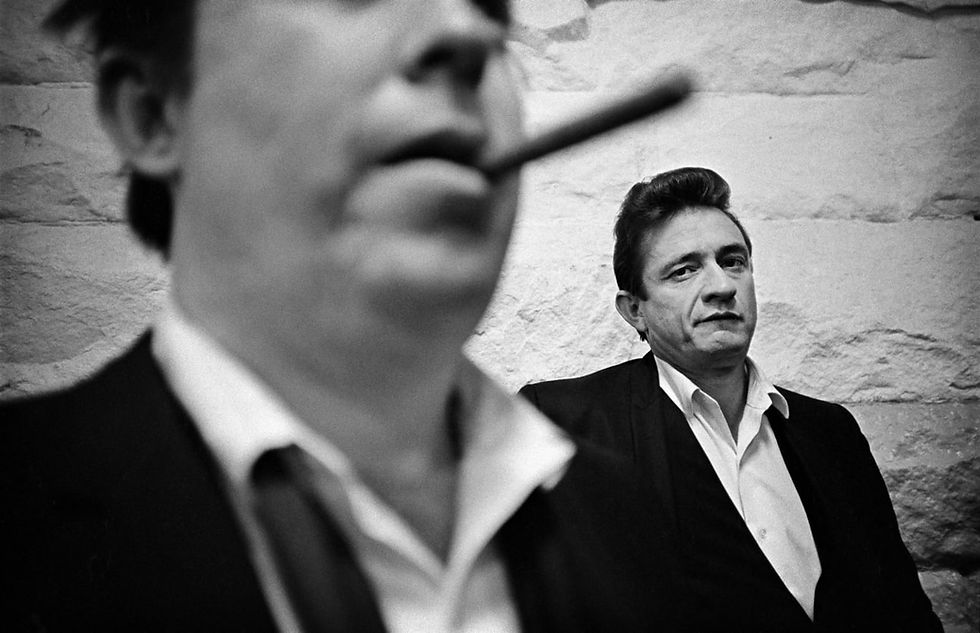
Folsom and San Quentin: Career Turning Points
By the late 1960s, Cash’s career was in decline. His personal life was unstable, shaped by substance misuse and missed performances. It was during this period that he proposed recording a live album inside a prison, a risky idea from a commercial perspective.
The result was At Folsom Prison (1968), followed by At San Quentin (1969). Both albums were immediate successes and are now considered among the most significant live recordings in popular music. Their impact was not just musical. They captured an atmosphere that could not be replicated in a traditional venue.
The audience response, audible throughout the recordings, was part of that impact. The prisoners were not passive listeners. They reacted to the material with a recognition that mainstream audiences could not fully share. Cash’s credibility among inmates, built over years of visits and conversations, gave the performances a level of authenticity that extended beyond the songs themselves.

Advocacy Beyond the Stage
Cash’s involvement with prison issues did not end with performances. He used his visibility to support reform efforts, donating proceeds from his prison albums and speaking publicly about the need for change.
In 1972, he appeared before the United States Senate Committee on the Judiciary, addressing a subcommittee focused on prison reform. He argued for better conditions, more meaningful rehabilitation, and a system that recognised the humanity of those incarcerated. Around the same time, he met with President Richard Nixon to discuss these concerns directly.
This level of engagement placed Cash in a broader movement for reform during the civil rights era, when questions about justice, inequality, and institutional treatment were increasingly part of public debate.

The Story of Glen Sherley
One of the most revealing episodes in Cash’s relationship with prisoners centres on Glen Sherley, an inmate at Folsom Prison. Sherley had written a song titled “Greystone Chapel,” which described life inside the institution.
Cash performed the song during the Folsom concert, bringing it to a much wider audience. He later helped Sherley secure an early release, even petitioning then governor Ronald Reagan on his behalf. For a time, Sherley appeared to represent the possibility of rehabilitation that Cash believed in.
However, the outcome was more complicated. After his release, Sherley struggled to adjust to life outside prison. He fell back into harmful patterns, and his relationship with Cash deteriorated. In 1978, Sherley killed a man and then took his own life.
Cash paid for his funeral. The episode appears to have affected him deeply. It challenged the idea that redemption, while possible, was not guaranteed, and that the transition from prison to society could be as difficult as incarceration itself.

A Gradual Withdrawal
Following Sherley’s death, Cash withdrew from prison performances. While he continued charitable work and maintained contact with inmates, he no longer returned to perform inside correctional facilities.
This shift marked the end of a significant chapter in his career. The prison concerts had defined not only his public image but also his engagement with a wider social issue. Their absence signalled a more cautious approach in his later years.
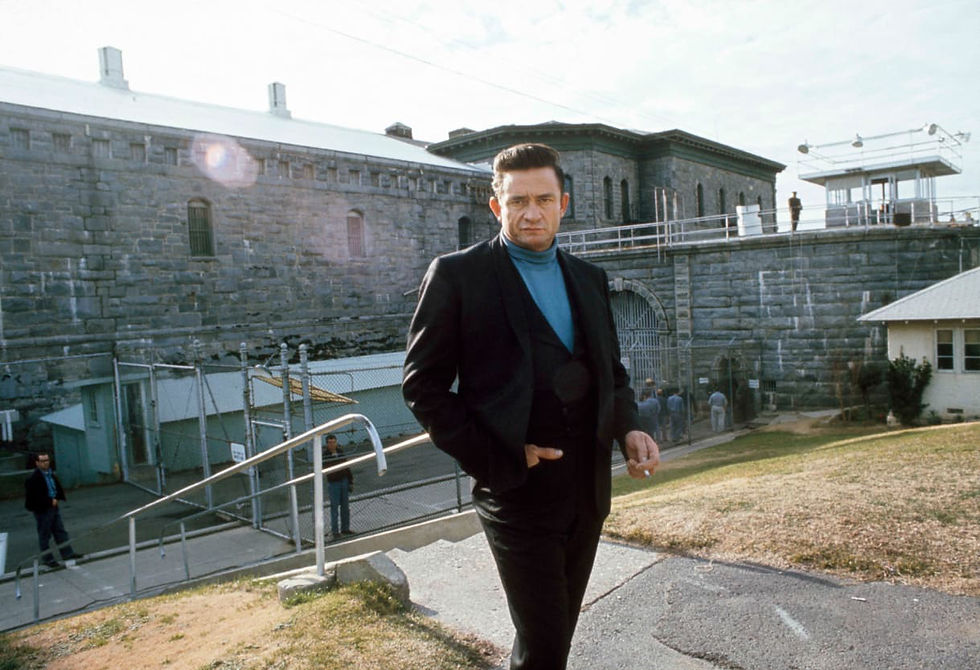
Beyond the Outlaw Image
It is easy to reduce Johnny Cash to the image created by songs like “Folsom Prison Blues.” The black clothing, the deep voice, and the stark lyrics all contribute to a recognisable persona. Yet this image only tells part of the story.
Cash’s engagement with prisons was not rooted in performance alone. It developed over decades, shaped by observation, personal interaction, and a broader awareness of systemic issues. He understood that the line between offender and outsider was not always as clear as it seemed.
He once reflected on this ambiguity, noting that people often judged others without considering how easily circumstances might have been different. That perspective informed both his music and his actions.

Legacy
Today, Cash’s prison recordings remain central to his legacy. They are studied not just as musical achievements, but as documents of a particular moment in American cultural and social history.
They capture a time when questions about justice and reform were becoming more visible, and when an artist with significant influence chose to engage directly with those issues. Cash did not offer simple solutions, but he did something that was, in many ways, more significant. He listened.
And in doing so, he created a body of work that continues to resonate, not because of its outlaw imagery, but because of its recognition of something more enduring: the complexity of human behaviour, and the possibility, however uncertain, of change.


