The Marquis, the Island, the Diary, and the Deal: The Casati Stampa Murders and Everything That Followed

On the morning of 30 August 1970, the servants at a luxury penthouse on Via Giacomo Puccini in Rome heard three shots, then two more, then silence. When they finally opened the door, they found three bodies on the living room floor. The Marchese Camillo Casati Stampa di Soncino had shot his wife Anna Fallarino and her lover Massimo Minorenti before turning the shotgun on himself. By nightfall the story was all over the Italian press. Within days it had become something else entirely.
What began as a crime report became a national scandal. Then a psychological case study. Then a legal circus. Then, quietly, a property deal that would change Italian political history. More than fifty years on, the Casati Stampa murders remain one of Italy's most compulsively strange stories, and most of the details are still rarely told in English.

The Girl from Amorosi
To understand what happened in that apartment, you have to start with Anna Fallarino, because almost nobody does. Every account of this case eventually fixes on the Marquis and his peculiarities. Anna gets treated as a backdrop. She wasn't.
She was born in 1929 in Amorosi, a small town in the province of Benevento, in Campania. Her father was a clerk, her mother a housewife, and there wasn't much of anything. The war made it worse, and a flood finished the job. Poverty in rural southern Italy in the 1940s wasn't romantic. Anna decided early that she was getting out.
She moved to Rome and tried for a film career. It didn't take. Her only real screen appearance was a small part in a comedy called Totò Tarzan, and that was that. But she was striking, smart, and utterly determined, and Rome in the postwar years was a city where a woman with those qualities and no money could still find a way up if she was willing to be strategic about it.
Her first husband was a wealthy engineer named Giuseppe Drommi. He bought her furs, jewellery, and the right introductions. She climbed. At a party, a playboy bothered her and Drommi and another man both stepped in to defend her. The other man was Camillo Casati Stampa di Soncino, Marquis of Casate, heir to one of the oldest noble families in Milan. They became lovers.
What happened next required considerable paperwork. Both were married. Getting out of those marriages required annulments from the Tribunale della Rota Romana, the Vatican's highest appellate court. These weren't quick or cheap. One account puts the annulment cost at a billion lire. They got them. They married civilly in 1959 and in a religious ceremony in 1961.

Anna had made it. She was a marchesa. She had the title, the penthouse overlooking Villa Borghese, a private island, and a social life that moved through the highest circles in Rome. What she hadn't fully understood yet was the precise nature of the bargain she'd struck.
The Green Diary
Camillo Casati Stampa was, by multiple accounts, impotent. He was also, by the evidence he left behind, a dedicated voyeur. From the earliest days of their marriage, he had been inviting men to have sex with his wife while he watched, photographed, and took notes.
Police found over 1,500 photographs in the apartment. They also found a notebook bound in green satin. It's been called 'the green diary' ever since, and its contents made Italian tabloids delirious for months.
Camillo selected the men personally. They were young, physically attractive, and invariably from lower social classes. Workers, soldiers, men picked up outside bars. He paid them, arranged the encounters, watched, and then wrote it all down. One translated excerpt reads: 'Today Anna drove me crazy with pleasure. She made love to a toy soldier so effectively that from afar I too participated in her joy. You cost me thirty thousand lire, but it was worth it.'
According to accounts that emerged after the murders, on their wedding night Camillo had called a waiter to their hotel room and asked him to sleep with his new bride. The whole structure of their marriage had been built on this arrangement from the very beginning.
What's significant about this, psychologically, is control. Camillo wasn't absent from these encounters. He choreographed them. He chose the men. He watched. He documented. He was the director of something he couldn't participate in directly, and as long as he held the controls, everything was functioning as he'd designed it.
He also reportedly arranged a breast augmentation surgery for Anna to make her more attractive to the men he invited. By all accounts she had made her own peace with the arrangement. Whether that peace was willing, strategic, or simply the learned pragmatism of a woman who'd grown up with nothing and wasn't going back, nobody can say.
The system held for years. Then, in January 1970, Anna met Massimo Minorenti at a party.
Massimo Minorenti
Minorenti was twenty-five years old, the same age gap that separated him from Anna as separated Anna from Camillo. He was handsome, reportedly charming, involved in far-right political circles, had briefly appeared in pornographic films, and worked as an escort for wealthy older women. He was, in other words, almost exactly the type Camillo habitually selected.
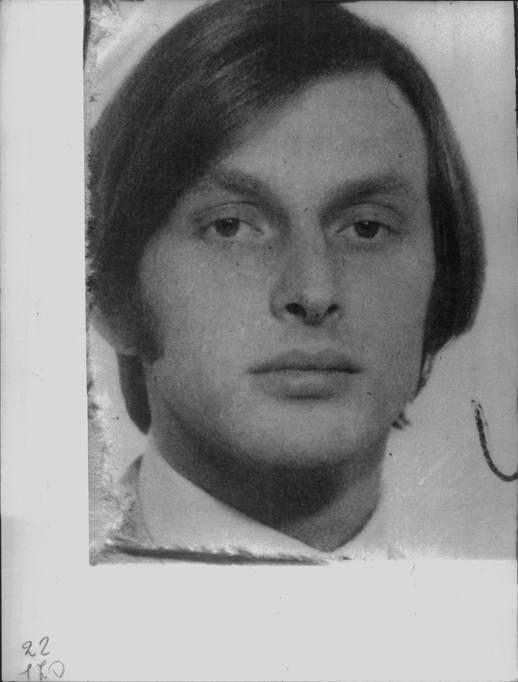
Camillo noticed him too. By some accounts, the Marquis arranged the introduction himself, inviting Minorenti into the rotation he'd maintained for fifteen years. But something went wrong this time. Anna and Massimo fell in love. Or something close enough to love that it produced the same result.
The meetings continued, but now without Camillo's knowledge or supervision. Anna was seeing Minorenti privately, on her own terms, in her own time. The encounters weren't staged for an audience any more. For a man who had built his entire erotic life around observation and control, this was not a minor development.
On 29 August 1970, Camillo was at the Marzotto family estate in Valdagno for a hunting weekend. He called his wife that evening. She told him she'd be spending the evening with some friends, including Minorenti, who needed a loan to open a car dealership. The loan story was either an excuse or an attempt at cover, and it didn't work.
In the early hours of 30 August, Camillo went out to the hunting fields. He shot nearly two hundred ducks. Then he got in his car and drove back to Rome.
Via Puccini
He arrived at the apartment in a visibly distraught state. He told the servants not to disturb him. He went into the living room where Anna and Massimo were waiting. He was carrying his 12-gauge Browning shotgun.
He fired three shots at Anna. She was killed instantly. Minorenti tried to shield himself behind a small table. It didn't help. Two shots. Then Camillo turned the gun on himself.
The servants heard the shots. They called the police, then called Anna's sister. When the door was opened, all three were dead on the floor of a penthouse overlooking the pine forests near Porta Pinciana.

The investigation confirmed the obvious quickly enough. What it then uncovered over the following weeks was everything else: the photographs, the green diary, the fifteen years of orchestrated encounters, the island, the parties, the mirror room. Italian tabloids went into a sustained frenzy. The green diary was quoted at length. The photographs were another matter.
In a detail that says something uncomfortable about the Italian press in 1970, police officers reportedly slipped Camillo's private photographs of Anna to journalists. The erotic images he'd taken of his wife over the years, found during the investigation, were published in the crasser tabloid outlets within days of the murders. The Claudine Longet case in America a few years later would show a similar pattern of media sensation overwhelming the actual human cost of a violent death, but the Italian press in 1970 outdid almost anything that came before it. Anna Fallarino had been shot dead in her own living room, and her private photographs were on sale in Roman newsagents within weeks, bound into instant-book paperbacks alongside accounts of the case.
The Island That Nobody Lives on Anymore
For years before the murders, the Casati Stampas had a summer base that made their Rome apartment look restrained. Zannone is a small island in the Pontine archipelago, off Italy's western coast between Rome and Naples, about twenty kilometres from Ponza. It has no permanent population, a lighthouse, and the kind of dramatic, rocky coastline that makes it look untouched by anything.
Camillo leased it from the Italian state in the 1960s and built a villa on the highest point of the island, above ancient Roman ruins. The villa was illegal. Nobody said anything.
The parties held there were, by all accounts, extraordinary. If you've read about the Happy Valley Set in Kenya and the debauchery those British aristocrats got up to in the 1930s while nobody looked too closely, Zannone operated on similar principles. Dukes, barons, countesses, billionaires, celebrities and members of Roman and Milanese society made the trip. There was heavy drinking. There was group sex. The parties apparently went on until morning. Anna swam naked with guests in the sea below. And the villa was said to contain a hidden mirror room where the Marquis could observe from concealment whatever was happening on the other side.
The island was common knowledge to the locals. Fishermen talked about it. Nobody complained. This was not a secret operation so much as an open one that the Italian establishment chose, collectively, not to notice.
After 1970, Zannone reverted to the state and was absorbed into the Circeo National Park. The villa became a ruin. The last caretaker died in the early 2000s. Today the island is inhabited by mouflon wild sheep and visited by day-trippers from Ponza who come for the swimming and stay for the tour guides' stories about what used to happen there. The ruined villa sits on the summit looking out over the Tyrrhenian Sea and slowly falling apart. By the 2020s, Rome's crime tour operators had added the Via Puccini apartment to their routes.
The Will, the Autopsy, and the Inheritance
Camillo had left everything to his wife. This was, under Italian law, about to create a serious problem.
The autopsy determined that Anna had died before Camillo. She expired first, by a matter of minutes. Under the terms of the will, she therefore inherited the entire estate in that brief window. Then Camillo died, and the estate passed immediately from Anna's now-dead hands to her heirs. Since she had no children and Camillo's will made no provision for this scenario, the fortune went sideways out of the Casati Stampa family entirely.

Anna's relatives, led by her sister, contested this furiously. They argued that Camillo had died first. The courts disagreed. The estate, valued at over 2.4 billion lire (roughly 26 million US dollars in today's terms), passed to Camillo's only legitimate child: Annamaria, his daughter from his first marriage to Letizia Izzo.
Annamaria was nineteen years old. She had just lost both her father and her stepmother on the same morning. She was suddenly one of the wealthiest young women in Italy and completely alone.
She married a count, Pierdonato Donà delle Rose, and left for Brazil. She left her legal affairs in the hands of a family friend, Senator Giorgio Bergamasco, who became her guardian. Among Bergamasco's associates was a young Roman lawyer named Cesare Previti. It was an arrangement that would ultimately prove as catastrophic for Annamaria as it would lucrative for the men around her, and it has uncomfortable echoes of the way the murder of Maurizio Gucci later exposed how dangerous the intersection of Italian aristocracy, lawyers, and inherited wealth could be.
The Villa, the Lawyer, and Silvio Berlusconi
The Casati Stampa estate included vast landholdings in Lombardy. Among its assets was Villa San Martino in Arcore, a former Benedictine monastery rebuilt in the neoclassical style, 147 rooms, a library of ten thousand volumes, an art gallery, extensive parkland with stabling and roe deer. It was not a house. It was a small estate.
Traumatised and living in South America, Annamaria put Previti in charge of disposing of it. In 1973, under financial pressure from inheritance taxes running at 800 million lire a year, she agreed to sell. She gave explicit instructions: the sale was to cover the building only. The artworks, the furniture, the library, and the surrounding land were specifically excluded.
Previti found a buyer. His name was Silvio Berlusconi.
Berlusconi was at the time a property developer who had recently built the Milano 2 residential complex and was looking to reinvent himself as something grander. He needed a country seat. Previti, who had also previously acted for the Fallarino family in the inheritance dispute, arranged the deal at 500 million lire.
The figure was, by most accounts, a fraction of the property's actual value even stripped of its contents. What made it worse was what was included. Despite Annamaria's explicit instructions, the sale included the artworks, the furniture, the ten-thousand-volume library, and the surrounding land. Berlusconi moved into Villa San Martino in 1974, six years before the final payment was settled, and that payment was made not in cash but in shares of a Berlusconi satellite company whose value proved impossible to realise.
Annamaria, who was also later ordered by an Italian court to pay 160 million lire in compensation to Massimo Minorenti's family for her father's actions, appears never to have returned to Italy. The deal was challenged in courts repeatedly and written about at length in Italian investigative journalism. Berlusconi and Previti both denied wrongdoing. Berlusconi lived at Villa San Martino for decades.
The library that Annamaria specifically excluded from the sale was catalogued on Berlusconi's behalf by a newly hired librarian: Marcello Dell'Utri, who would later become one of Berlusconi's most senior political allies and was ultimately convicted of external participation in the Sicilian Mafia.
The Red Brigades Footnote
In 1968, a young man from the Marche region applied for a job at Sit Siemens in Milan. He needed a letter of recommendation. It was provided by Anna Casati Stampa, who had met him at a social gathering where he presented himself as a young man with right-wing convictions. She vouched for him. His name was Mario Moretti. He got the job. He used the cover it provided to study and organise. In 1978, as the operational leader of the Red Brigades, he directed the kidnapping of former Italian Prime Minister Aldo Moro. Moro was held for fifty-four days and murdered. Moretti later confessed to firing the shots that killed him.
Whether Anna knew what Moretti was or would become is unknown. There's no evidence she had any idea. But the fact that the marchesa whose husband was photographing her sex life on a private island in the Tyrrhenian Sea also unwittingly helped ease one of Italy's most dangerous political terrorists into position is the kind of detail that suggests this story isn't finished unsettling people yet.
It also puts the Casati Stampa affair into a very specific Italian context. This was a world in which the Vatican's own security apparatus would face murder within its walls, in which aristocrats and lawyers and property developers and terrorists were all orbiting the same small universe of power, and in which the institutions that should have been watching any of it consistently chose to look elsewhere.
What Remains
Zannone is now part of a protected natural park. The ruined villa on its summit is inaccessible and deteriorating. The island's only inhabitants are wild sheep.
Villa San Martino in Arcore remained Berlusconi's primary residence until his death in 2023.
Annamaria Casati Stampa, as far as can be established from public record, has spent most of her adult life outside Italy. She has declined to comment on the various accounts of her father's case and the sale of her inheritance.
The Via Puccini apartment in Rome is included on crime tourism walking routes.
The green diary has never been published in full.
And Anna Fallarino, the girl from Amorosi who climbed all the way to a title and a private island and a life that would have been unimaginable in the village where she was born, is remembered primarily, when she's remembered at all, as the wife of the man who shot her.
Sources
1. Wikipedia: Casati Stampa murders. https://en.wikipedia.org/wiki/Casati_Stampa_murders
2. Wanted in Rome: The dark past of Italy's 'orgy island'. https://www.wantedinrome.com/news/the-dark-past-of-italys-orgy-island.html
3. CNN Travel: Zannone, Italy's forbidden 'orgy island'. https://edition.cnn.com/travel/article/italy-zannone-orgy-isle/index.html
4. Emadion: The crime Casati Stampa, rough nobility. https://emadion.it/en/homicides/murderers/killer-men/the-crime-casati-stampa-rough-nobility/
5. Notizie.it: Anna Fallarino in Casati Stampa, a red light wife. https://www.notizie.it/en/anna-fallarino-in-casati-prints-a-red-light-wife/
6. Goldmark Art: Kill Your Darlings, Sex and Violence in Michael Rothenstein's Prints. https://www.goldmarkart.com/blogs/discover/michael-rothenstein-sex-violence
7. Pilloledistoria.it: Casati Stampa, la villa di Arcore e Silvio Berlusconi. https://www.pilloledistoria.it/7275/storia-contemporanea/casati-stampa-la-villa-di-arcore-e-silvio-berlusconi
8. Brogi.info: Chi di casa ferisce, la villa di Arcore e la giovane erede truffata. https://www.brogi.info/2010/08/chi-di-casa-feriscela-villa-di-arcore-e.html
9. Wikipedia: Villa San Martino, Arcore (Italian). https://it.wikipedia.org/wiki/Villa_San_Martino_(Arcore)
10. Wikipedia: Mario Moretti. https://en.wikipedia.org/wiki/Mario_Moretti
11. Justapedia: Casati Stampa murders. https://justapedia.org/wiki/Casati_Stampa_murders
12. Pagani, Malcolm (4 August 2018): Sesso, voyeurismo e sangue, quando il delitto Casati Stampa sconvolse l'Italia. Vanity Fair Italy.