When Gunfire Reached the House Floor: The 1954 Puerto Rican Nationalist Attack on the US Capitol
Updated: Mar 13

On the afternoon of 1 March 1954, the public gallery of the United States House of Representatives felt calm and routine. Visitors leaned forward from their seats above the chamber floor, listening as legislators debated immigration policy and the Mexican economy. There was nothing remarkable about a well dressed woman standing up from the Ladies’ Gallery, nor about three men rising beside her. What followed, however, would echo across the United States and Puerto Rico for decades and become one of the most startling political acts ever carried out inside the American legislature.
The shots that shattered the chamber
At approximately 2.30 pm, four Puerto Rican nationalists opened fire from the public gallery onto the floor of the House. The woman was Lolita Lebrón, born Dolores Lebrón Sotomayor. As the first shots rang out, she unfurled a Puerto Rican flag and shouted “¡Viva Puerto Rico libre!” Thirty rounds were fired from semi automatic pistols. Five members of Congress were hit, one seriously. All survived.
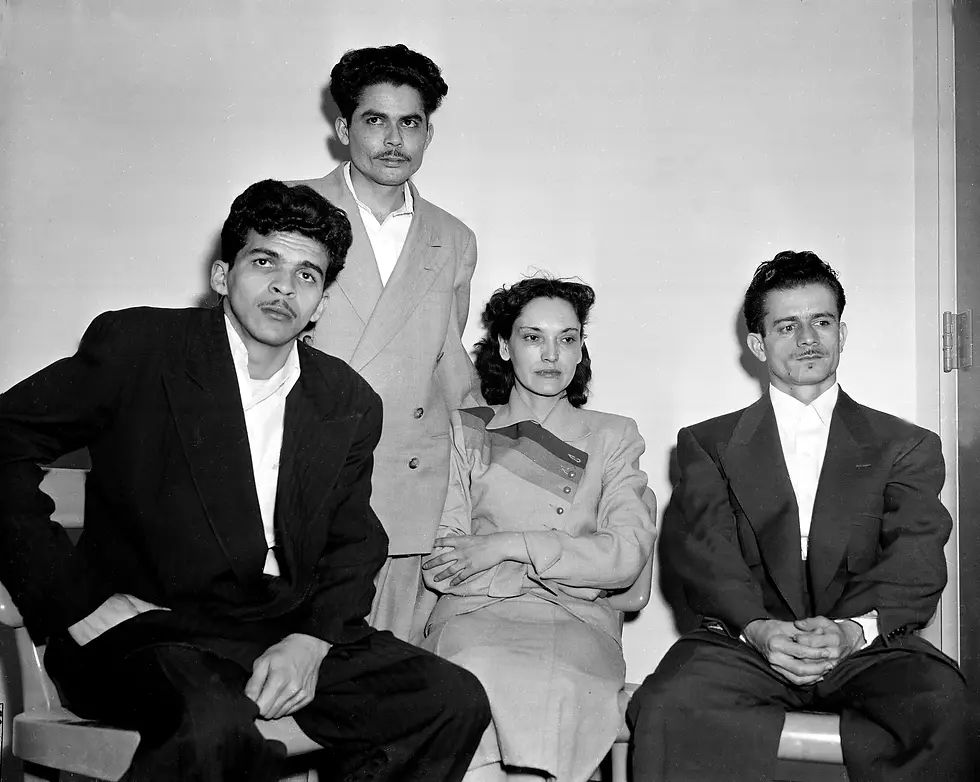
For Americans watching newsreels that evening, the image was shocking. Gunfire inside the chamber of the United States House of Representatives felt unimaginable. For Puerto Rican communities in New York, Chicago, and on the island itself, the moment landed very differently. To some, it was reckless violence. To others, it was a desperate cry after decades of political frustration.
The four attackers were immediately arrested. Lebrón reportedly told police,
“I did not come to kill anyone. I came to die for Puerto Rico.”
Puerto Rico’s unresolved status
To understand why four people were prepared to die inside the United States Capitol, it is necessary to step back more than half a century. Puerto Rico became a possession of the United States in 1898 after the Spanish American War. Although Puerto Ricans were granted US citizenship in 1917, the island remained in a constitutional grey zone. Residents could not vote in presidential elections, and ultimate authority over defence and foreign policy rested in Washington.

Political opinion on the island fractured early. Some supported independence. Others favoured statehood. A third camp argued for autonomy within the United States. These divisions hardened during the first half of the twentieth century, particularly after the founding of the Puerto Rican Nationalist Party in 1922.
Nationalists argued that Spain had already granted Puerto Rico autonomy in 1897 and therefore had no legal right to transfer sovereignty to the United States the following year. They regarded US rule as colonialism by another name. Their most influential leader was Pedro Albizu Campos, a Harvard educated lawyer whose speeches blended anti imperial politics with a fierce moral rhetoric.

Revolt and repression in the 1950s
Tensions exploded in October 1950 when the Nationalist Party launched uprisings across the island. In towns such as Jayuya and Utuado, armed rebels attacked police stations and declared a Free Republic of Puerto Rico. The response was swift and overwhelming. Puerto Rican police, backed by the National Guard and US military forces, crushed the revolts. Bombers were used against Jayuya. Dozens were killed or wounded.
That same year, two Nationalists attempted to assassinate President Harry S Truman at Blair House in Washington while the White House was under renovation. One attacker and a police officer were killed. The surviving gunman was sentenced to life in prison.

When Puerto Rico’s status was put to a plebiscite in 1952, voters were offered limited autonomy as a Commonwealth or continued direct rule. Independence was not on the ballot. Most Nationalists boycotted the vote, which passed with overwhelming support. For activists like Lebrón, the result confirmed that political avenues were closed.
Lolita Lebrón before Washington
Lebrón was born on 19 November 1919 in Lares, a mountain town in western Puerto Rico steeped in nationalist memory. Lares had been the site of the 1868 uprising against Spanish rule known as El Grito de Lares. The rebellion failed, but its symbolism endured.
The daughter of a coffee plantation foreman, Lebrón grew up poor. As a teenager, she became a single mother. In 1940 she left her young daughter with relatives and moved to New York, hoping to find work and stability. What she encountered instead was grinding poverty and open racism. She worked long hours as a seamstress in Manhattan’s garment district for little pay. She later recalled signs in bars reading, “No blacks, no dogs, no Puerto Ricans.”
“They told me it was a paradise,” she said in a later interview. “This was no paradise.”
In New York, Lebrón became active in Puerto Rican nationalist circles. She was deeply influenced by Albizu Campos, corresponding with him while he was imprisoned. By the early 1950s, she believed that only a dramatic act could force the world to confront Puerto Rico’s political status.

Planning the attack
In 1954, Lebrón joined with Rafael Cancel Miranda, Andrés Figueroa Cordero, and Irvin Flores Rodríguez to plan an action in Washington. The original idea involved multiple targets, but Lebrón argued that a single, symbolic strike would be more effective. They chose 1 March to coincide with the Interamerican Conference in Caracas, hoping Latin American delegates would take notice.
The group bought one way train tickets from New York. They did not expect to return.
On the morning of the attack, they travelled from Manhattan to Washington and walked from Union Station to the Capitol. Security was minimal by modern standards. A guard asked whether they carried cameras, not weapons. They took seats in the Ladies’ Gallery above the House chamber.
As representatives debated below, Lebrón gave the signal. The group recited the Lord’s Prayer. Then she stood, unfurled the flag, and shouted for a free Puerto Rico.
Chaos on the House floor
Most of the thirty shots were fired by Cancel Miranda. Lebrón later insisted she aimed at the ceiling. Figueroa’s gun jammed. Five congressmen were wounded, including Alvin Morell Bentley of Michigan, who was hit in the chest. House pages helped carry him from the floor as stunned lawmakers took cover behind desks.
The attackers made no attempt to flee. They were arrested within minutes.
Police found a handwritten note in Lebrón’s handbag. It read, “Before God and the world, my life I give for the freedom of my country. This is a cry for victory in our struggle for independence.”
Arrests and reprisals
The reaction was immediate and severe. In Washington, the four Nationalists were charged with attempted murder and other offences. In Puerto Rico, police raided Albizu Campos’s home the next morning, firing tear gas and bullets into the building. He was arrested, despite investigators later finding no evidence that he had ordered or even known about the attack.
Albizu Campos was returned to prison under sedition laws. His health deteriorated badly in custody. In 1956 he suffered a stroke that left him paralysed and unable to speak. He died in 1965, shortly after his release.
Trial and sentences
The Washington trial began on 4 June 1954 under intense security. A jury of seven men and five women was empanelled anonymously. Lebrón and her co defendants were the only witnesses for the defence. She repeated that she had not intended to kill anyone.
The verdict was swift. All four were convicted. Lebrón was acquitted of intent to kill but found guilty of assault with a deadly weapon. The judge imposed the maximum sentences. Seventy five years for each of the men. Fifty years for Lebrón.
Later that year, the group faced a second trial in New York on charges of seditious conspiracy. They received additional six year sentences. The four were sent to different prisons: Figueroa Cordero to the federal penitentiary in Atlanta; Lebrón to the women's prison in Alderson, West Virginia; Cancel Miranda to Alcatraz, in San Francisco Bay; and Flores Rodriguez to Leavenworth, Kansas, where Oscar Collazo was incarcerated following his involvement in the attempted assassination of President Harry S Truman in 1950

Prison, faith, and reflection
The night after the attack, Lebrón later said, “Jesus came to me.” She became deeply religious in prison and remained so for the rest of her life. She also experienced disturbing visions and spent eight months in a psychiatric hospital during her incarceration.
Despite her transformation, she never disavowed the political cause behind the attack. What she did renounce was violence. “I want to be remembered for promoting peace,” she said in later years. “True change comes only through peaceful means.”
Release and return
In 1977, Figueroa Cordero was released early due to terminal illness. He died two years later. In 1979, President Jimmy Carter commuted the sentences of Lebrón, Cancel Miranda, and Flores Rodríguez, citing humanitarian reasons. At the time, there were widespread reports that the decision was linked to the release of US intelligence agents held in Cuba, although the administration denied any formal exchange.
When the three returned to Puerto Rico on 10 September 1979, they were greeted by thousands of supporters. Banners reading “Welcome Lolita” lined the streets of San Juan. For many, she had become a symbol of resistance. For others, her actions remained deeply controversial.

A later life in protest
Lebrón lived quietly but remained politically active. In 2001, aged 81, she was arrested again after cutting through a fence at the US naval base on Vieques, protesting its use as a bombing range. She served sixty days in jail. When released, she walked hand in hand with actor Edward James Olmos. The bombing range was later closed.
She continued to speak about Puerto Rican independence until her final days. According to her niece, shortly before her death she asked, “Is no one doing anything for the independence of this country?”
Lolita Lebrón died of heart failure after respiratory complications. She was survived by her husband, Dr Sergio Irizarry, and a sister. Her two children had predeceased her.
Legacy of 1 March 1954
The Capitol attack forced the United States to confront a reality it preferred to ignore. Puerto Rico’s status was not settled. It was, and remains, contested, emotional, and unresolved. For Americans of the Cold War era, the shooting was framed as terrorism, often with insinuations of communist influence. For many Puerto Ricans, Lebrón became a complicated icon, compared by some to revolutionary figures like Che Guevara, by others criticised for bringing violence into a democratic space.
What cannot be denied is that on one rainy afternoon in 1954, four people succeeded in focusing the world’s attention on a small Caribbean island and its unfinished political story.
Sources
https://www.washingtonpost.com/history/2024/03/01/puerto-rican-nationlists-attack-capitol-january-6/