

Convict Leasing: How Forced Prison Labour Replaced Slavery in America
Updated: Mar 19

Officially, slavery in the United States ended in 1865. Legally, that is true. Socially and economically, the transition was far less clear cut. In the decades that followed emancipation, Southern states quietly constructed a new system that preserved forced labour while appearing to comply with constitutional law. That system was convict leasing.
Rather than chains and auctions, it relied on courts, fines, and prison sentences. Rather than enslavers, it empowered sheriffs, judges, and private corporations. The result was a form of coerced labour that proved just as brutal and, in some cases, even more lethal than the slavery it replaced.
From emancipation to incarceration
Convict leasing did not originate after the Civil War, but the war transformed its scale and purpose. Louisiana had leased incarcerated labour as early as 1844, yet it remained a limited practice until slavery was abolished. When enslaved people were emancipated in 1865, Southern economies faced a crisis. Plantations, mines, and railroads had been built on unpaid labour. State governments were nearly bankrupt.
The Thirteenth Amendment abolished slavery and involuntary servitude, but it included a crucial exception permitting forced labour as punishment for crime. Southern legislatures quickly recognised that this clause offered a legal route to restore coerced labour.
What followed was not an increase in criminal behaviour, but an expansion of criminalisation.

Black Codes and the criminalisation of freedom
During Reconstruction from 1865 to 1877, Southern states passed Black Codes designed to regulate the lives of newly freed Black Americans. These laws restricted movement, employment, and personal autonomy. Vagrancy statutes criminalised unemployment. Changing employers without permission became illegal. Minor infractions carried heavy fines.
Poverty itself was effectively outlawed.
The arrest machinery was finely tuned. Sheriffs and constables were often paid through fees tied to arrests and convictions. Judges collected court costs. Counties received payments when incarcerated people were transferred to state custody. Arrests increased during planting and harvest seasons, when labour demand peaked.

Trials were brief. Legal representation was rare. Many convictions lasted minutes. Fines were set deliberately beyond reach. Failure to pay resulted in imprisonment, and imprisonment became a pipeline into forced labour.
Leasing human beings for profit
By the late nineteenth century, convict leasing was deeply embedded in Southern governance. States leased incarcerated people to private companies operating farms, coal mines, turpentine camps, lumber operations, and railroad projects. Contractors paid the state a monthly fee per person, sometimes as little as nine dollars.
The economic incentives were overwhelming. Alabama derived around ten percent of its total state revenue from convict leasing in 1883. By 1898, that figure had risen to nearly seventy three percent. Leasing generated almost four times the cost of prison administration.

Oversight was minimal. Record keeping was poor. Corruption was common. Some states lost track of who had been sentenced and where they had been sent. Contractors assumed full control over discipline, housing, food, and medical care.
Unlike enslaved people before the war, leased convicts were considered disposable.
Violence, disease, and disposability
Conditions in leasing camps were brutal. Workdays were long, quotas relentless, and punishments severe. Whippings were routine. Starvation was used as discipline. Medical care was rudimentary or entirely absent.
Disease spread rapidly. Tuberculosis, pneumonia, dysentery, and malaria were common. Mining accidents and industrial injuries were frequent. Those unable to work were beaten, abandoned, or replaced.
In some camps, annual mortality rates exceeded twenty percent. These figures were higher than those recorded on many antebellum plantations, where enslavers at least had a financial incentive to preserve long term labour. Under convict leasing, death was cheaper than care.
Historian Douglas A. Blackmon later described the system as slavery by another name. Men who were legally free were compelled to labour without pay, bought and sold through contracts, and controlled through extraordinary physical violence.
Northern prison labour and Southern extremes
Forced prison labour was not unique to the South. Northern states had long employed incarcerated people in workshops within prison walls. At Auburn Prison, a system of silent industrial labour had been generating profits since the early nineteenth century.
Initially framed as moral discipline rather than economic exploitation, the Auburn system spread nationwide by the 1830s. Prison made goods entered commercial markets, offsetting operational costs.
The critical difference lay in control and race. In the North, labour remained largely under state supervision. In the South, incarcerated people were handed wholesale to private enterprise. Black Americans were overwhelmingly targeted. By the 1880s, between eighty and ninety percent of incarcerated people in the South were Black.
Children in the convict leasing system
Children were not exempt. Black boys as young as eight or nine were arrested for vagrancy or petty theft and sent into leasing camps. Some were orphans. Others had parents who were themselves incarcerated.
Children performed the same work as adults under the same punishments. Malnutrition, exhaustion, and untreated illness led to especially high mortality rates. Reform efforts largely ignored Black children, focusing instead on white juveniles. Their suffering was normalised and rarely documented.

Voices from inside the camps
Surviving testimonies are rare, but some voices endured. Ezekiel Archey and Ambrose Haskins, leased to the Pratt Mines in Alabama, submitted a petition to Reginald Dawson of the Alabama Board of Inspectors of Convicts.
They described racial discrimination, denial of family visits, chronic food shortages, and impossible work quotas. Black prisoners, they wrote, were punished for the actions of white prisoners while denied the same privileges. They did not ask for release. They asked for recognition of unequal treatment.
Their account offers a rare glimpse into the daily mechanics of racial control within convict leasing.
Women, punishment, and sexual violence
Although the system primarily targeted Black men, Black women were also swept into convict leasing. Charged with vagrancy, theft, or so called crimes against morality, they were forced into agricultural, industrial, and domestic labour.

Ella Gamble’s case illustrates the cumulative violence women endured. Convicted of murder in 1884 while pregnant, she spent nearly twenty years leased to private companies. She laboured under repeated floggings, endured sexual abuse, suffered untreated childbirth injuries, and deteriorated physically long before her release.
Teenage Carrie Massie’s experience in Georgia exposes the routine sexual violence of leasing camps. Despite nominally separate female quarters, guards routinely assaulted women. Torture methods such as water cure enforced obedience. Camp officials behaved as though they owned both labour and bodies.
Industrial growth built on prison labour
Convict leasing was central to the industrialisation of the post Civil War South. Railroads expanded rapidly using leased labour. Coal and iron mining surged, particularly in Alabama, where prison labour fuelled the rise of Birmingham.
Turpentine camps in Florida depended almost entirely on incarcerated workers. Logging operations functioned similarly, often in remote locations where oversight was nonexistent and escape nearly impossible.
Entire regional economies were built on coerced prison labour. Prosperity and incarceration were inseparable.

Resistance and retaliation
Resistance existed, though success was rare. Some attempted escape and faced brutal punishment when caught. Others slowed work, feigned illness, or sabotaged equipment. These acts were dangerous and often met with violence.
The Coal Creek War of 1891 in Tennessee was a rare instance where free labourers challenged convict leasing, recognising it as a threat to wages and safety. Prison stockades were attacked, and incarcerated people were freed. The conflict ultimately led Tennessee to abandon convict leasing on 1st of January, 1894.
The slow politics of abolition
Despite mounting evidence of abuse, states resisted reform. Leasing generated nearly four times the cost of prison administration. Ending it meant confronting both financial dependency and racial power structures.
Public outrage finally gained traction after the death of Martin Tabert, a white man beaten to death in a Florida labour camp after a vagrancy conviction. Press coverage in 1924 shocked the nation. Florida ended convict leasing soon after.
Alabama, the most dependent state, outlawed leasing in 1928. Federal tolerance effectively ended with Circular No. 3591 issued on 12th of December, 1941. The practice became politically indefensible, though never formally abolished nationwide.

What replaced convict leasing
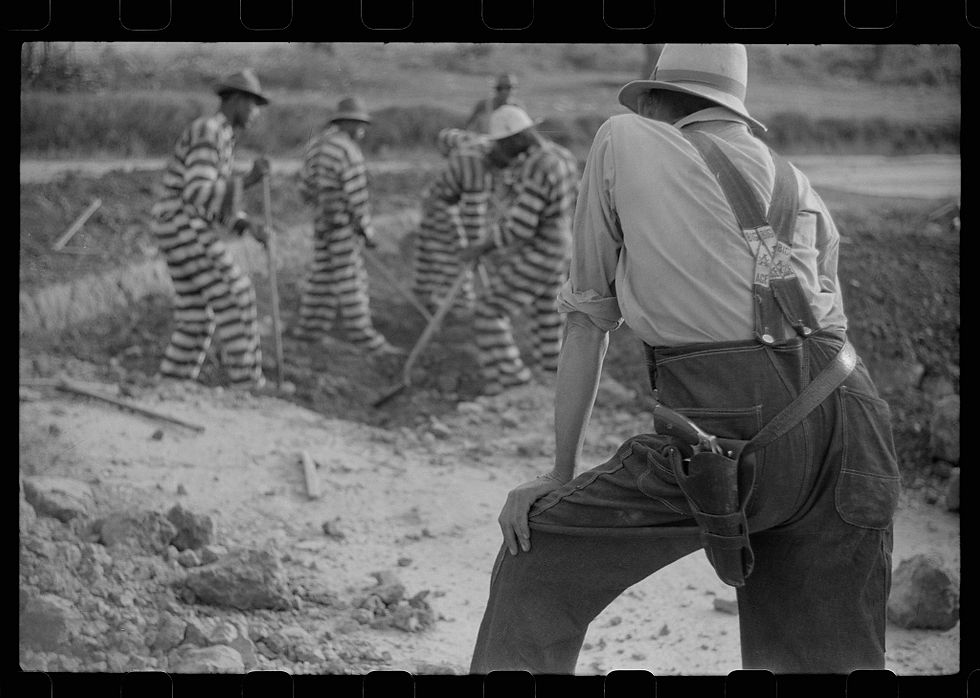
Convict leasing did not disappear. It evolved. Chain gangs, prison farms, and industrial prisons replaced private contracts. In places such as Angola Prison in Louisiana, formally known as the Louisiana State Penitentiary, the state itself became the lessee, operating vast agricultural enterprises worked by incarcerated people.
Sociologist Frank Tannenbaum observed that incarceration was not an alternative to slavery, but its reorganisation. The legal framework remained intact.
In 2024, researchers studying modern prisons found that violence and exploitation often continue because institutions deliberately downplay or forget their own history. Harmful practices are treated as normal procedure, and links to older systems like convict leasing are ignored. Projects such as the Lone Rock Stockade Project work to uncover what has been buried, showing how local wealth and development were built using racialised prison labour.
A report by the American Civil Liberties Union (ACLU) found that incarcerated workers in the US produce at least $11bn in goods and services annually but receive just pennies an hour in wages for their prison jobs.
Why this history still matters
Convict leasing was not a historical anomaly. It was a calculated response to emancipation, designed to preserve labour exploitation and racial hierarchy through the justice system.
Its decline did not dismantle its foundations. Prison labour remains legal under the same constitutional exception. The legacy is visible in modern incarceration patterns, labour practices, and racial disparities.
The story does not end in the nineteenth century. It explains why the present looks the way it does.


