

When Hungary Rose: The 1956 Revolution and the Shadow of Soviet Rule

There are moments in history when a people rise not because they believe they will win, but because they can no longer bear to lose themselves.Hungary, October 1956, was one of those moments.
What began as a student protest in Budapest became a national cry for freedom, a desperate, brilliant act of defiance against Soviet domination. The Hungarian Revolution of 1956 was crushed in blood, but its spirit endured, carried in the hearts of the 200,000 who fled their homes and in the memories of those who stayed behind under the heavy boot of repression.
To understand why that revolution mattered (and why it still does) we have to understand the years of fear, surveillance, and silence that led to it.
Living Under Moscow’s Shadow
After the Second World War, Hungary was promised freedom but handed servitude. Soviet troops, who had marched in to drive out the Nazis, simply stayed. By 1949, Hungary had become a “People’s Republic” in name, but in truth it was a satellite, a small nation orbiting the immense gravity of Moscow.

Mátyás Rákosi, the party boss hand-picked by Stalin, ruled with a mixture of calculation and paranoia. He called himself “Stalin’s best pupil” and earned the nickname “Little Stalin.” Under his rule, life was stripped of privacy, comfort, and trust. Every conversation could be overheard. Every home could be searched.
The ÁVH, Hungary’s secret police, did not simply enforce the law, they defined it. An estimated 50,000 agents and informants monitored every aspect of daily life. Farmers who resisted collectivisation, writers who criticised the party, and even loyal Communists who expressed admiration for Yugoslavia’s independence were labelled “enemies of the people.”
Between 1948 and 1953, around 700,000 Hungarians were imprisoned or sent to labour camps. Families were torn apart; many were deported to remote regions or vanished into the Soviet Gulag. The fear was so deep that even children learned to watch what they said at the dinner table.
Economically, Rákosi’s Hungary mirrored Stalin’s Soviet Union, heavy industry was prioritised at the expense of food and daily essentials. The countryside was stripped of independence as the state forced peasants into collectives. Wages stagnated, prices rose, and rationing became the norm. The gap between the regime’s slogans and the people’s reality was vast.
The Cracks Begin to Show
After Stalin’s death in 1953, the Kremlin’s new leader, Nikita Khrushchev, denounced his predecessor’s excesses. His “secret speech” in February 1956 admitted what millions had always known: Stalin had ruled through brutality and fear.
Hungary listened closely. For the first time in years, the air seemed to loosen. Writers and students began to talk openly about reform. The Petőfi Circle, named after the 19th-century poet of freedom, became a symbol of intellectual defiance. Debates about censorship, wages, and Soviet domination drew thousands of listeners.
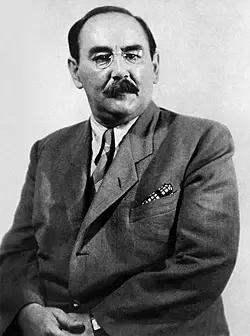
When the regime tried to silence them, the discontent only deepened. By the autumn of 1956, the mood in Hungary had shifted from frustration to determination. Ordinary people wanted an end to lies. They wanted Imre Nagy, a reformist Communist who had previously opposed Rákosi’s harsh collectivisation, to return to power. Above all, they wanted the Russians gone.
The Night the Statue Fell
On 23 October 1956, thousands of students and workers gathered in Budapest to march for reform. They carried banners demanding “Russians Go Home” and “We Want Free Elections.” As the crowd swelled, it turned toward City Park, where a 24-foot bronze statue of Stalin towered over the capital.
That statue had been erected only five years earlier, inscribed with the words: “To the Great Stalin from the grateful Hungarian people.” But the gratitude had long since soured.
The demonstrators looped ropes around Stalin’s neck and shoulders, melted the knees with welding torches, and pulled the monument down. The head was dragged through the streets and dumped before the National Theatre. For many, this was not vandalism, it was liberation made visible.

Later that night, students marched to Radio Kossuth, demanding that their 16-point reform programme be broadcast. The state-controlled station refused, and the ÁVH arrested the delegation who had entered to negotiate. Outside, the crowd grew restless. Shots rang out.
No one knows who fired first. What is certain is that Hungary’s revolution had begun.
An Army Torn Between Orders and Conscience
When the first tanks of the Hungarian People’s Army rolled into the capital, the soldiers did not open fire. Many refused to attack their own countrymen. Some even handed over weapons to the protesters.
As fighting broke out around the radio building and spread through the city, small groups of civilians formed resistance units. The largest gathered around the Corvin Cinema, led by a mix of students, factory workers, and defected soldiers. Among them was Colonel Pál Maléter, a tank officer ordered to defend the barracks. He instead joined the people, using his tanks to hold off Soviet troops.
Imre Nagy was reinstated as Prime Minister amid the chaos. He called for calm, believing that negotiation with Moscow was possible. Within days, Soviet troops briefly withdrew from Budapest, and the city rejoiced. For a moment, it seemed as though the impossible had happened, that a small nation had stood up to an empire and won.

The Illusion of Freedom
The respite was short-lived. Even as Soviet forces appeared to retreat, fresh divisions began crossing Hungary’s borders from Ukraine and Romania. Moscow was preparing for a second strike.
On 1 November, Nagy declared Hungary’s neutrality and announced plans to withdraw from the Warsaw Pact. He appealed to the United Nations for protection and support. But the world’s attention was elsewhere — focused on the Suez Crisis unfolding in the Middle East.
To the Soviets, Nagy’s declaration was unforgivable. If Hungary left the Warsaw Pact, it could inspire other nations to follow. On 4 November, at dawn, the Soviet army returned, this time in overwhelming numbers.

Operation Whirlwind: The Crushing of a Nation
The code name was Operation Whirlwind. The plan was simple and brutal: to seize Budapest before dawn and crush the revolution completely. Over 1,000 Soviet tanks and 60,000 troops rolled into Hungary. Artillery and air strikes pounded residential areas.
Hungarian resistance fighters, many armed with little more than rifles and Molotov cocktails, fought street by street. The Corvin Cinema, once a symbol of unity, became a smoking ruin. Whole districts were flattened. Soviet tank crews fired blindly into apartment blocks where snipers were suspected to hide. Civilians, including women and children, were caught in the bombardment.
By 8 November, organised resistance had been annihilated. The Hungarian Army, unprepared and leaderless, could do little. Some soldiers joined the rebels, but most were overwhelmed or ordered to surrender.

The Price of Defiance
Budapest became a city of ghosts. The air stank of smoke, petrol, and grief. Thousands lay dead or missing. Official figures later admitted to around 2,500 Hungarian deaths, but witnesses and historians believe the real toll was far higher. More than 20,000 were wounded, and entire neighbourhoods were reduced to rubble.
Imre Nagy sought asylum in the Yugoslav embassy but was later tricked into leaving under false assurances of safe passage. He was captured, taken to Romania, and eventually executed in 1958 after a secret trial. His final words before his hanging were calm and defiant:
“I am convinced that sooner or later the true cause for which I have fought will prevail.”
Colonel Pál Maléter and journalist Miklós Gimes were executed alongside him. Thousands more were imprisoned, tortured, or deported to the Soviet Union. Those caught aiding the resistance were hanged from lampposts as a warning. The new puppet government, led by János Kádár, was installed under Soviet protection. Hungary was back under Moscow’s control.

The Flight of 200,000
As Soviet tanks rolled through the streets, the world’s eyes turned briefly to the small villages along Hungary’s western border. For weeks, thousands of men, women, and children trudged through freezing mud and snow, carrying what they could on their backs. They were heading for Austria.
The exodus was staggering. Around 200,000 Hungarians fled, nearly two percent of the country’s population. Entire families crossed minefields and rivers by night, dodging patrols, sometimes guided by sympathetic farmers. “We didn’t know where we were going,” recalled one survivor, “only that we had to go.”
Austria, still recovering from its own postwar struggles, opened its borders. Refugee camps filled within days. From there, the displaced Hungarians scattered across the world: to the United States, Canada, the United Kingdom, Australia, and beyond. Many rebuilt their lives from nothing, forming close-knit Hungarian communities that kept the memory of 1956 alive.
The Silence That Followed
Inside Hungary, silence returned, enforced by fear. Schools rewrote history, describing the revolutionaries as “fascist counter-revolutionaries.” Photographs were destroyed. Those who had fought or even spoken in sympathy with the uprising learned to stay quiet or face imprisonment.
The Kádár regime ruled for decades, alternating between repression and cautious reform. Although life gradually improved economically in the 1960s and 70s, the psychological wounds of 1956 never healed. Families whispered stories of fathers who had “disappeared,” of friends shot in the streets, of the night the tanks came.
The uprising became an unspoken truth, something everyone knew but no one dared to discuss openly until the late 1980s. When the Soviet bloc finally collapsed in 1989, Imre Nagy’s body was reburied with full honours in Budapest’s Heroes’ Square. Over 200,000 people attended the ceremony, standing in the same city where, thirty-three years earlier, the same number had fled.

A Revolution Remembered
Today, 23 October is a national holiday in Hungary, a day of remembrance and pride. Wreaths are laid at statues, old resistance flags are flown, and the names of the dead are read aloud. But it is not just about mourning. It is about the endurance of spirit.
The Hungarian Revolution of 1956 was more than a failed uprising. It was a declaration of humanity, a statement that even under tyranny, people will fight for the right to speak, to assemble, and to live freely. Though crushed militarily, the revolt changed the course of the Cold War, exposing the cracks in Soviet authority and inspiring movements for freedom across Eastern Europe.
One Hungarian refugee, years later, said simply:
“We did not lose. We showed that we were still alive.”
And that, perhaps, was the true victory.

Sources
Paul Lendvai – One Day That Shook the Communist World: The 1956 Hungarian Uprising, Princeton University Press, 2008.
Charles Gati – Failed Illusions: Moscow, Washington, Budapest, and the 1956 Hungarian Revolt, Stanford University Press, 2006.
Victor Sebestyen – Twelve Days: Revolution 1956, Weidenfeld & Nicolson, 2006.
Johanna Granville – The First Domino: International Decision Making During the Hungarian Crisis of 1956, Texas A&M University Press, 2004.
Csaba Békés – Hungary’s Cold War: International Relations, 1945–1956, Central European University Press, 2022.
László Eörsi – The Hungarian Revolution of 1956: The Resistance and its Heroes, Corvina Books, 2016.
George Mikes – The Hungarians: A Thousand Years of Victory in Defeat, André Deutsch, 1957.
UN Refugee Agency (UNHCR) – The 1956 Hungarian Refugee Crisis and the Birth of Modern Refugee Policy (2006). Available at: https://www.unhcr.org/hungary-1956
Hungarian National Museum – 1956 Oral History Collection. Available at: https://mnm.hu
1956 Institute Archive and Oral History Center – Revolution of 1956 Digital Archive. Available at: https://www.rev.hu
Wilson Center Digital Archive – Hungarian Revolution of 1956 Collection. Available at: https://digitalarchive.wilsoncenter.org/collection/74/hungarian-revolution-1956
Fortepan – Hungarian Revolution of 1956 Photographic Archive. Available at: https://fortepan.hu
BBC History – The 1956 Hungarian Revolution. Available at: https://www.bbc.co.uk/history/hungary1956
Time Magazine – “Budapest Rising,” 12 November 1956.
The Guardian – “Budapest 1956: When Students Defied the Tanks,” 23 October 2016. Available at: https://www.theguardian.com/world/2016/oct/23/budapest-1956-hungary-revolution-students-defied-tanks
The Economist – “Hungary’s 1956 Revolution: The Fire That Still Burns,” 22 October 2006.
Smithsonian Magazine – “The Forgotten Courage of Hungary’s 1956 Rebels.” Available at: https://www.smithsonianmag.com
United Nations General Assembly – Report of the Special Committee on the Problem of Hungary (A/3592), 1957.
CIA Historical Review Program – Hungary 1956: The Full Story of the Hungarian Revolution, declassified 1996.
Encyclopaedia Britannica – Hungarian Revolution of 1956. Available at: https://www.britannica.com/event/Hungarian-Revolution-1956
Europeana Collections – Hungarian Revolution of 1956, photographs and artefacts. Available at: https://www.europeana.eu/en/collections/topic/108-hungarian-revolution
Radio Free Europe/Radio Liberty – 1956 Eyewitness Accounts Archive, Hoover Institution, Stanford University.
The New York Times – “Hungarian Revolt Crushed by Soviet Might,” 5 November 1956


