

Tempest Anderson: the Yorkshire Doctor Who Chased Volcanoes
Updated: Mar 13

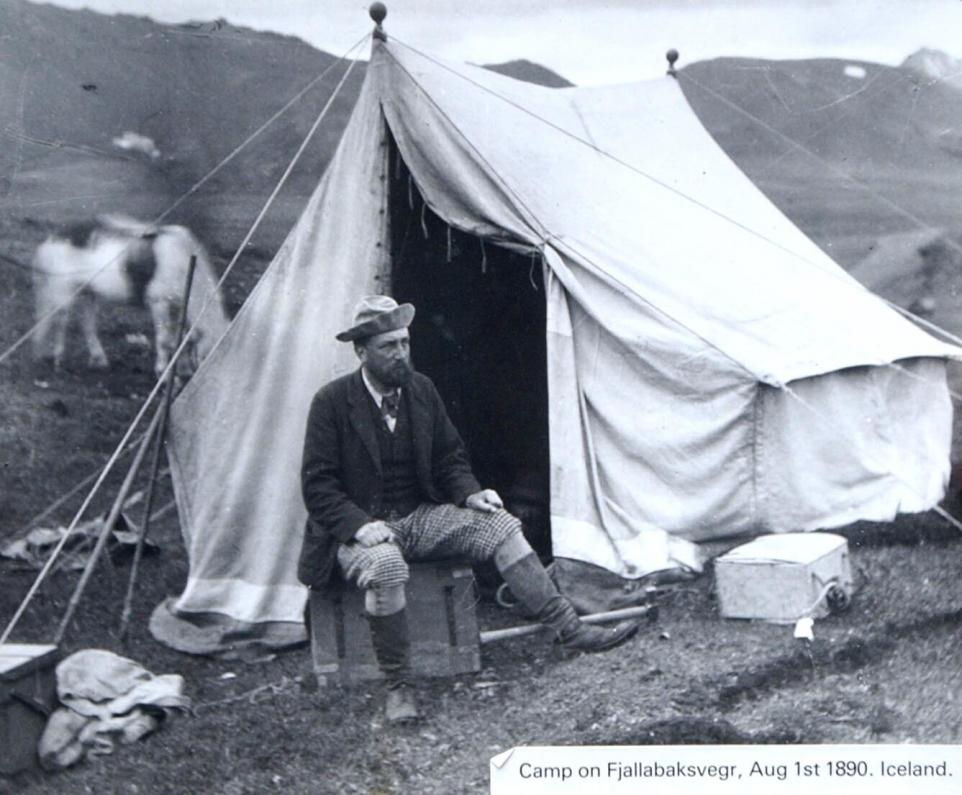
In August 1890, somewhere in the remote interior of Iceland, a bearded man sat on an upturned crate outside a small field tent. A horse grazed behind him. He wore long leather boots, checked breeches, a waistcoat thick enough for northern winds, and a soft hat pushed back from a weather beaten face. The photograph feels composed but practical, as if taken during a brief pause rather than a moment of rest. The man was Dr Tempest Anderson of York, and he was waiting for a volcano to erupt.
By that point, Anderson was already fifty years old. He was not a professional explorer, nor was he trained as a geologist. He was a practising eye surgeon with a busy medical life in York, a city better known for its medieval streets and Minster than for global adventure. Yet from the early 1880s until his death in 1913, Anderson would spend much of his life travelling to some of the most difficult and dangerous environments on earth. His aim was simple and unusual. He wanted to observe volcanoes as closely as possible and record what he saw with a camera.
Today, Anderson is remembered as a pioneer of volcanic photography and one of the earliest scientists to help describe what we now call pyroclastic flows. In his own time, however, he was something more like a public educator. Through illustrated magic lantern lectures, he brought images of erupting mountains, devastated towns, and distant cultures to audiences across Britain. For Edwardian crowds, his photographs were often their first glimpse of the wider world.
Yet volcanology was only one chapter in a life that seems almost too full for one person.
A York upbringing and a restless mind
Tempest Anderson was born in Stonegate, York, on 11th of May 1846. His father, William Anderson, was a respected surgeon and served as Sheriff of York. The unusual first name Tempest was inherited from a prominent West Yorkshire family line, but Anderson spent much of his life living up to it in spirit if not intention.
He was educated at St Peter’s School in York before studying medicine at University College London. He specialised in ophthalmology, the treatment of diseases of the eye, at a time when the field was developing rapidly. After qualifying, he returned to York and built a formidable medical career. Over the years he served as surgeon at the York Eye Institution and York County Hospital, consulting physician to Bootham Park Hospital, prison medical officer, and surgeon to the Great Northern Railway.
Despite this steady professional success, Anderson appears to have been constitutionally incapable of sticking to one field. Alongside his medical work, he developed a deep interest in photography at a time when the medium was still technically demanding and physically cumbersome. He invented several medical instruments, patented a railway safety signalling system, and designed a panoramic camera with a revolving lens. He published studies on prison sanitation and reform after visiting French prisons, and wrote on drainage and town planning.
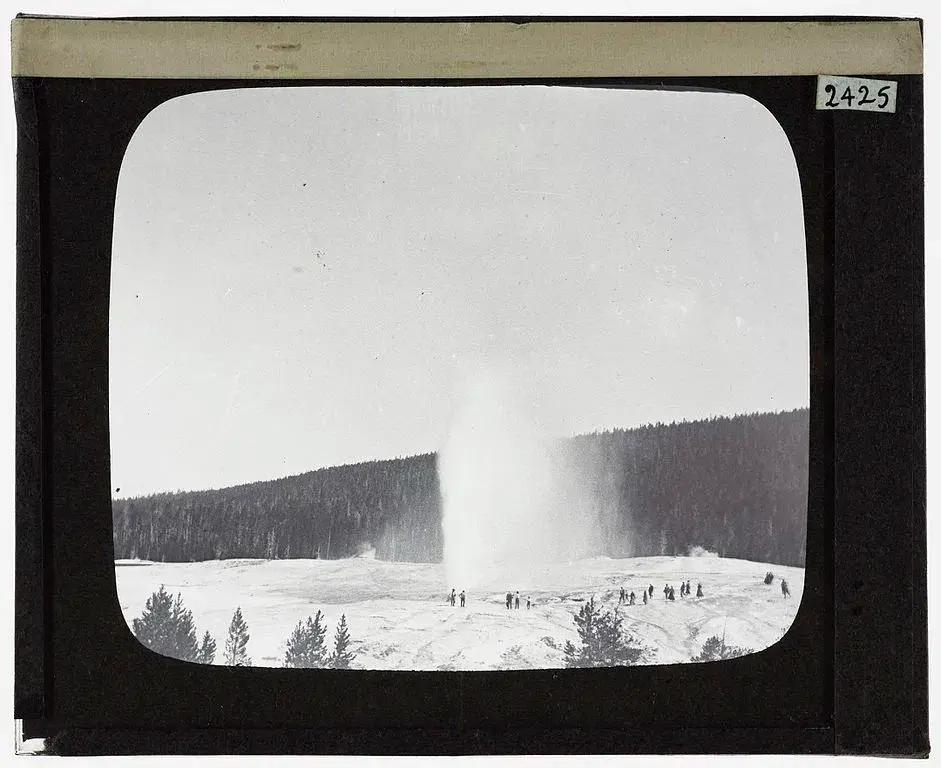
He also climbed mountains. Anderson was a keen Alpinist, and it was through long walking holidays in the Alps that he developed an amateur interest in geology. Rocks, strata, and erosion fascinated him. Volcanoes, when he finally turned his attention to them, combined everything he seemed to value: science, physical exertion, travel, and spectacle.
Choosing volcanoes at mid life
In 1883, at the age of forty three, Anderson decided he needed a new intellectual challenge. He later wrote that his limited leisure could not be filled with reading or social life. He wanted something active. Volcanology appealed precisely because it was under researched and physically demanding. As he put it, it offered exercise in the open air in districts that were often remote and picturesque.
From the outset, Anderson approached volcanoes as an observer rather than a thrill seeker. He did not rush blindly into danger, though he often came close to it. He climbed slopes, camped near craters, and waited patiently for activity. When eruptions occurred, he recorded them with a clarity that surprised even experienced scientists.
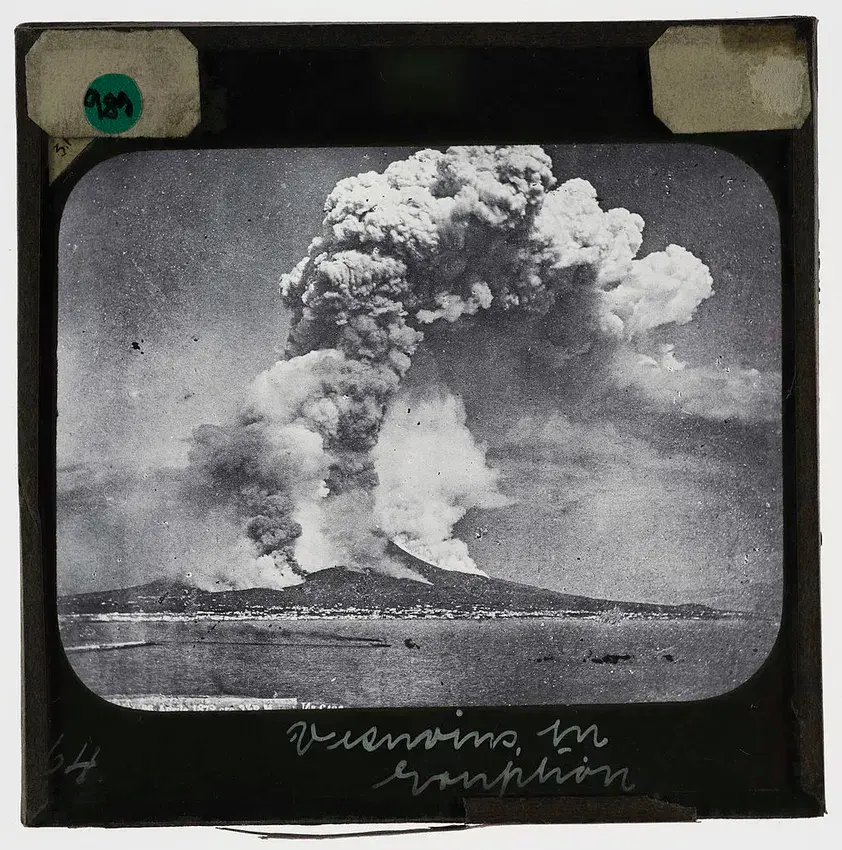
His earliest trips were relatively close to home. He visited the volcanic regions of the Eifel in Germany, the Auvergne in France, and southern Italy. He studied Vesuvius, Etna, Stromboli, and the Lipari Islands, gradually extending his journeys as his confidence grew.
By 1890, he was ready for something more ambitious.
Iceland and the beginning of serious fieldwork
Anderson’s 1890 expedition to Iceland marked a turning point. Travel to Iceland in the nineteenth century was difficult, slow, and often uncomfortable. Roads were sparse, weather unpredictable, and accommodation basic. Anderson embraced all of it. He travelled with heavy photographic equipment, including glass plate cameras that required careful handling and long exposure times.
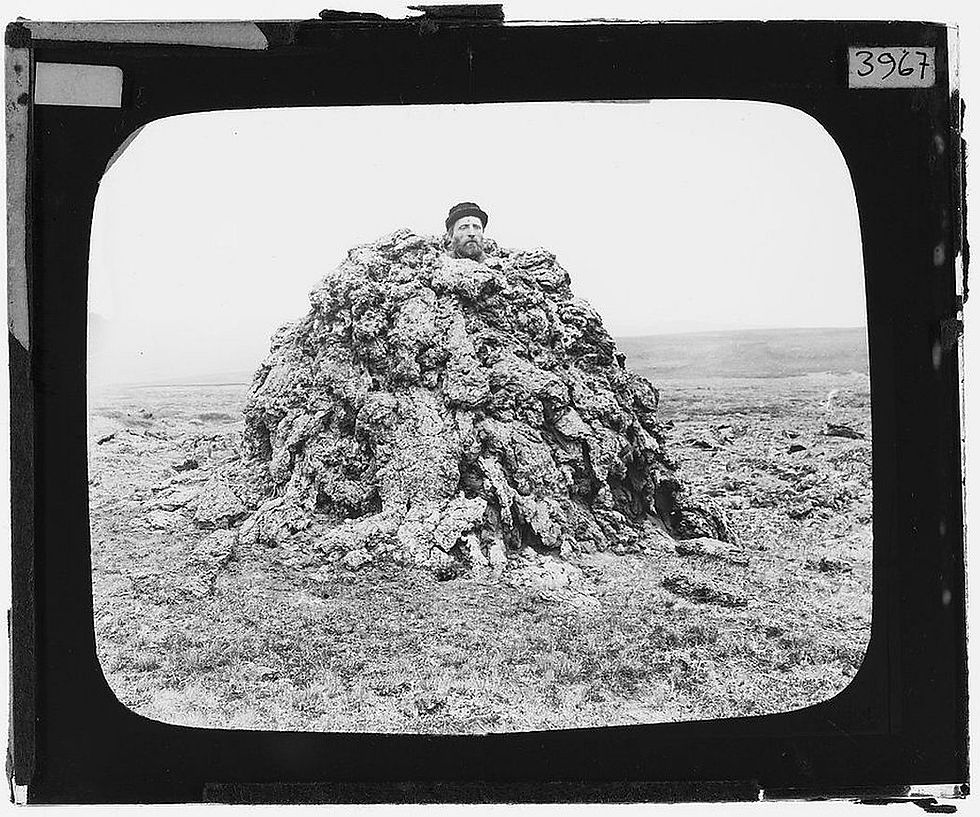
The photographs from this trip show not just volcanoes but camps, tents, horses, and local guides. They reveal a man interested in process as much as result. Iceland established his reputation as a serious amateur scientist, capable of producing useful observations under challenging conditions.
From there, his travels expanded rapidly. Over the next two decades, Anderson visited the Canary Islands, North America, Central America, the Caribbean, South Africa, Hawaii, Samoa, New Zealand, Indonesia, and the Philippines. He often kept two suitcases permanently packed in his bedroom in York, one for warm climates and one for cold, ready to leave at short notice if volcanic activity was reported.

Photography as scientific evidence
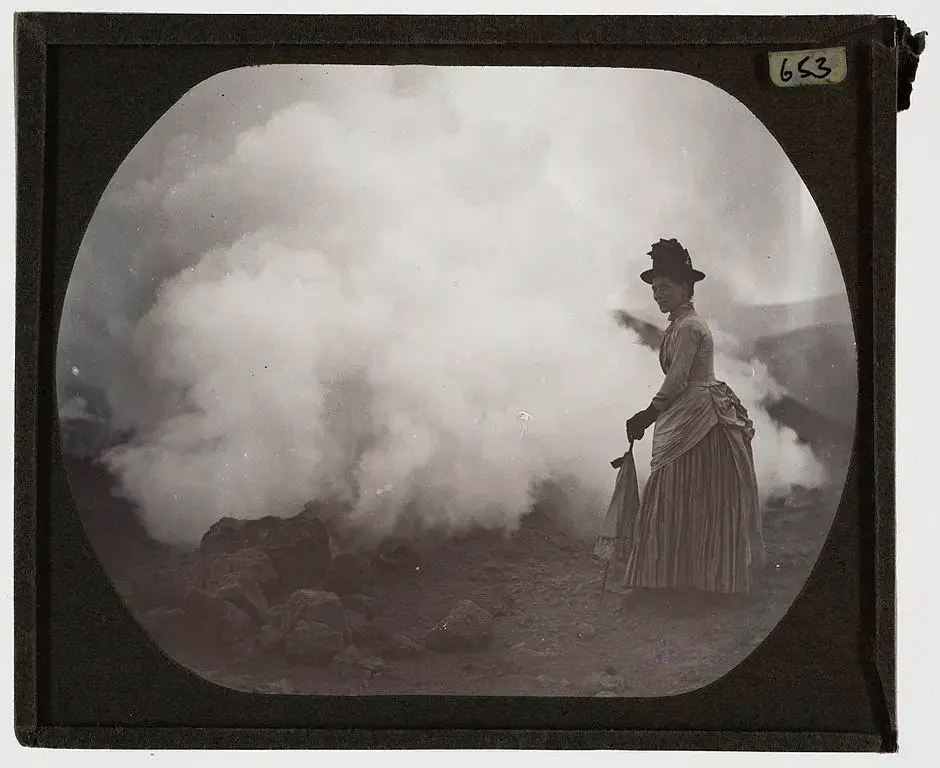
Anderson’s most important contribution was visual. At a time when photography was still treated by many scientists as illustrative rather than evidential, he insisted on its analytical value. His glass plate photographs captured eruption columns, lava flows, ash deposits, and damaged landscapes with remarkable precision.
He also photographed people. Indigenous communities, port towns, plantation workers, and sailors all appear in his images. While these photographs reflect the assumptions of their time, they also provide an invaluable record of places on the brink of profound change.
Back in Britain, Anderson used these images in magic lantern lectures for institutions such as the Yorkshire Philosophical Society, where he later served as president. Audiences packed halls to see his slides. For many, he was their guide to a world beyond Europe. One later curator described him as the David Attenborough of his day, translating distant environments into something intelligible and compelling.
The catastrophe of 1902 in the Caribbean
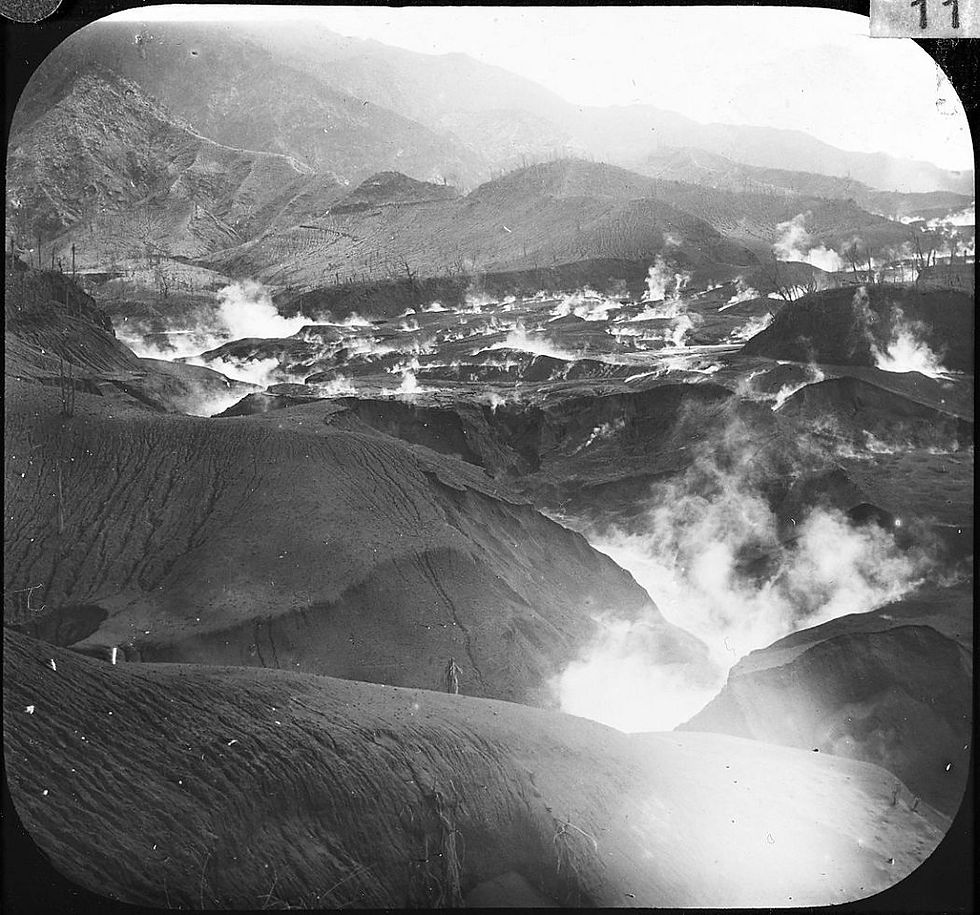
Anderson’s most significant journey took place in the summer of 1902. That year, catastrophic eruptions devastated the Caribbean islands of Martinique and St Vincent. On 08th of May 1902, the eruption of Mont Pelée destroyed the town of Saint Pierre, killing an estimated 30000 people in minutes.
Although Anderson was an amateur, his reputation was such that the Royal Society commissioned him to travel to the region and study the aftermath. He arrived at a time when the volcano remained active and dangerous.
On the 9th of July 1902, Anderson and fellow scientists were aboard a small yacht, the Minerva of Grenada, off the coast of Martinique. As dusk fell, they watched unusual clouds forming on the volcano’s slopes. What followed was one of the most vivid eyewitness descriptions of volcanic phenomena ever recorded

Anderson described a dark, globular cloud rolling rapidly downhill, accelerating as it moved. Realising the danger, the crew hurriedly raised anchor and sailed away. The cloud expanded, filled with internal lightning, and swept across the bay. Moments later, red hot avalanches of volcanic material poured down the mountain, reaching the sea within minutes.
The language Anderson used is striking for its calm precision. He compared the flow to an Alpine snow avalanche, identical in movement but lethal in temperature. Despite the fear experienced by the sailors, Anderson focused on observing shape, speed, colour, and behaviour.
These observations proved crucial. Although similar events had occurred before, including the destruction of Pompeii in AD 79, they had not been properly understood. Anderson’s descriptions helped scientists recognise pyroclastic flows as distinct volcanic phenomena: fast moving, ground hugging clouds of superheated gas, ash, and debris capable of obliterating entire settlements.
A broader scientific vision
In later years, Anderson returned repeatedly to southern Italy and the Caribbean. During a trip in 1906 to 1907, he combined fieldwork in Martinique and St Vincent with visits to Mexico, Guatemala, and the International Geological Congress in Mexico City.
His work in Guatemala included studies of the aftermath of the 1902 eruption of Santa María volcano, which killed around 5000 people. Anderson compared patterns of destruction, ash deposition, and vegetation recovery across different regions. He was particularly interested in how volcanic material altered ecosystems, enriching soils and reshaping landscapes.
This holistic approach reflected his medical training. He treated volcanoes almost as patients, observing symptoms, progression, and recovery. His notes often read like clinical case studies applied to mountains.
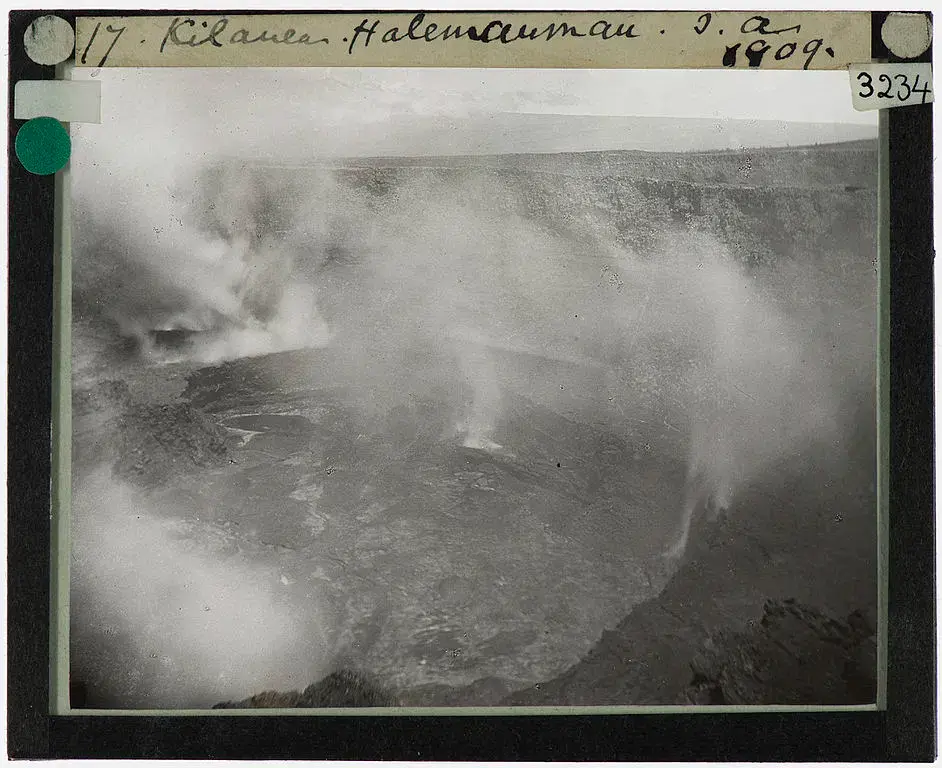
In 1909, Anderson undertook an enormous Pacific voyage, visiting New Zealand, Samoa, and Hawaii before crossing North America to attend a scientific meeting in Winnipeg. Even in his sixties, he showed little inclination to slow down.
Final journey and death at sea
Anderson’s final expedition took place in 1913, when he travelled to Indonesia and the Philippines to observe volcanic activity. On the return journey, he fell seriously ill aboard ship while crossing the Red Sea. He suffered from heat apoplexy and enteric fever and died at sea on 26th of August 1913, aged sixty seven.

He was buried at Suez, far from the city where he had spent most of his life. News of his death caused widespread distress in York. Tributes poured in from medical colleagues, scientists, and civic leaders. A plaque was placed in York Minster in his memory.
One colleague had warned him years earlier that his pursuits might cost him his life. Anderson reportedly accepted the risk without hesitation.
A legacy in York
Today, Anderson’s name is not widely known outside specialist circles. Yet his legacy remains visible for those who know where to look. The Tempest Anderson Hall, funded by him in 1912, is still used at the Yorkshire Museum. His former medical practice at 23 Stonegate bears a plaque marking his achievements.

Most importantly, his photographs survive. Thousands of glass plates are held by the Yorkshire Museum, forming a remarkable visual archive of global volcanology at the turn of the twentieth century. They show not just eruptions, but preparation, waiting, aftermath, and recovery.
Anderson never married and left no direct descendants. His true legacy lies in images and observations that helped transform the scientific understanding of volcanic behaviour. For a Victorian doctor from York, that is a quietly extraordinary achievement.


