


The Daily Mail, Lord Rothermere And Their Fondness For Hitler.
Updated: Mar 12

Before the Daily Mail became a fixture of tabloid celebrity nonsence, before it was sold as a voice of 'common sense patriotism', it was something more radical and far more experimental. It was a mass persuasion machine built for a new age, designed not simply to inform but to steer. In the turbulent years between the two world wars, that machinery would repeatedly align itself with authoritarian movements at home and abroad, often with startling enthusiasm. At the centre of that story was a man whose name suggested inherited authority but concealed its modern origins. Lord Rothermere was not born a peer. He was born a Harmsworth, and the reinvention of that name tells us much about how the Daily Mail came to see fascism not as a threat, but as an attractive solution.

From Harmsworth to aristocracy
The Harmsworth brothers rose in an era when newspapers became industrial products. Cheap paper, expanding literacy and urban concentration meant influence could be manufactured at scale. Alfred Harmsworth understood this first, turning the Daily Mail into a fast moving, emotionally driven publication aimed at millions rather than thousands. His younger brother Harold Harmsworth absorbed that lesson fully.
But commercial success alone did not guarantee political legitimacy. Titles solved that problem. Alfred became Lord Northcliffe in 1904. Harold followed, becoming Baron Rothermere in 1914 and Viscount Rothermere in 1919. These were not decorative honours. They allowed press proprietors to move seamlessly among ministers, diplomats and monarchs while maintaining direct control over public opinion.
When Northcliffe died in 1922, Rothermere inherited not just the Daily Mail, but its self conception. The paper spoke with the confidence of authority, even when pushing ideas far outside democratic consensus.
The Daily Mail as ideology, not reportage
By the mid 1920s, the Daily Mail was selling around two million copies a day. Its editorial tone was increasingly prescriptive. It did not merely report events. It instructed readers how to interpret them. Democracy, compromise and pluralism were treated with suspicion. Order, hierarchy and decisive leadership were praised.
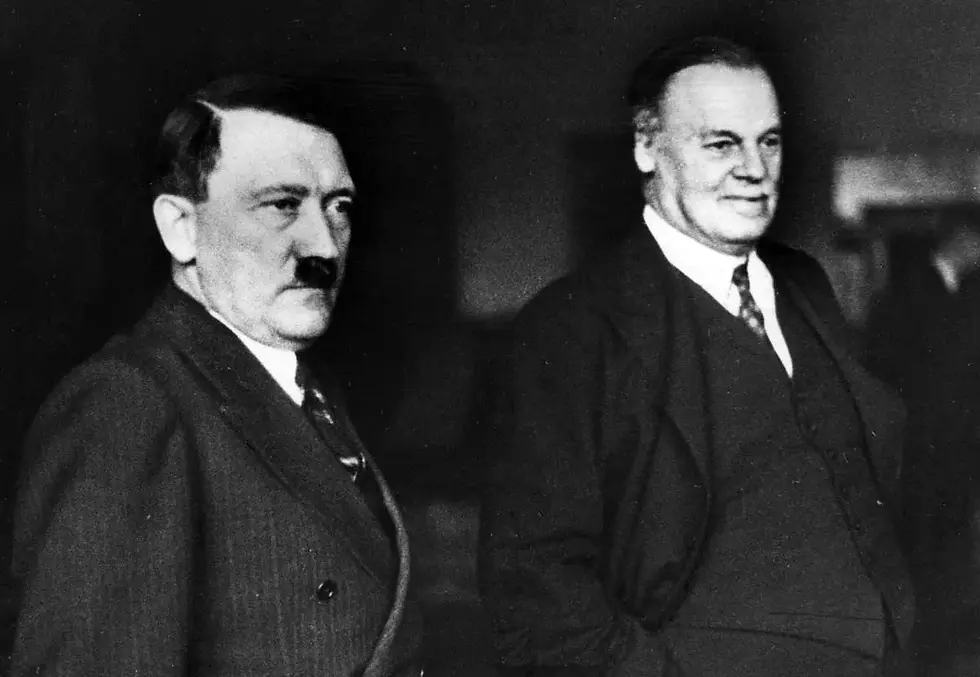
This outlook made the paper unusually receptive to authoritarian movements. Fascism was not initially framed as extremism, but as efficiency. Violence was downplayed. Antisemitism was ignored or excused. Parliamentary democracy was portrayed as weak, indecisive and corrupt.
In 1931, Stanley Baldwin publicly confronted this reality. He accused the Daily Mail and the Daily Express of acting as “engines of propaganda” serving the private interests of their owners. His most famous warning, that this represented “power without responsibility”, was not abstract. It was aimed squarely at Rothermere and the paper he controlled.
Fascism at home: Mosley and the blackshirts
The Daily Mail did not merely flirt with British fascism. For a period, it actively promoted it. In the early 1930s, Rothermere aligned himself with Oswald Mosley and the British Union of Fascists. This support was editorial, visual and cultural.

Mail journalists reportedly arrived at work wearing black shirts. Coverage of Mosley was sympathetic, often admiring. The nadir came with the infamous headline “Hurrah for the Blackshirts”, an article that explicitly urged young men to join Mosley’s movement. It was not an opinion piece tucked away in the back pages. It was a declaration from one of Britain’s most powerful newspapers.
The paper framed fascism as modern, energetic and patriotic. Its violence was minimised. Its antisemitism was ignored. Only when street clashes and public disorder became impossible to sanitise did Rothermere withdraw his backing. The retreat was tactical, not moral.
Fascism abroad: Hitler as statesman
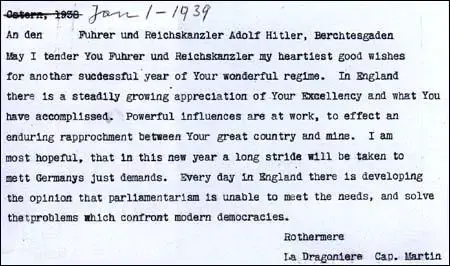
If the Daily Mail’s support for Mosley was brazen, its enthusiasm for Adolf Hitler was sustained and systematic. After the Nazi electoral breakthrough of September 1930, the paper presented Hitler not as a demagogue but as a national restorer. Rothermere wrote that the Nazis “represent the birth of Germany as a nation”. This coverage continued even as the nature of the regime became unmistakable. The Daily Mail welcomed Hitler’s rise to power in 1933, reassuring readers that German democracy would not be missed if stability followed. After the Night of the Long Knives in 1934, when more than 100 political opponents were murdered, the paper declared that Hitler had “saved his country”.

The reward was access. The Daily Mail published exclusive interviews with Hitler throughout the decade. Rothermere and his son were guests at Nazi social events. Hitler was repeatedly described as cultured, refined and moderate. His antisemitism was treated as either exaggerated or irrelevant.
Princess Stephanie and ideological reinforcement
Rothermere’s views were reinforced by his relationship with Princess Stephanie von Hohenlohe, whom he met in Monte Carlo in 1927. She was a committed Nazi sympathiser and later intelligence asset. According to FBI files, she deliberately cultivated Rothermere, appealing to his monarchism and his hostility to Bolshevism.

Under her influence, the Daily Mail ran editorials attacking the Treaty of Versailles, arguing that Germany and Hungary had been unjustly treated and that authoritarian restoration was inevitable. Rothermere openly campaigned for the restoration of monarchies across Central Europe, presenting fascism as a temporary corrective rather than a permanent danger.

The Mail versus the truth
What makes the Daily Mail’s record particularly stark is that alternatives existed. Journalists such as Sefton Delmer and Philip Stephens reported honestly from Germany, despite arrest and expulsion. Cartoonist David Low mocked fascism relentlessly, enraging both Berlin and appeasers in London.
The Daily Mail chose a different path. It dismissed reports of Nazi violence as hysteria. It accused critics of exaggeration. It framed antisemitic persecution as incidental. This was not ignorance. It was editorial choice.

Collapse and reinvention
Even after Kristallnacht in November 1938, when synagogues were destroyed and tens of thousands of Jews were sent to camps, the Daily Mail continued to praise Hitler as “a great gentleman” and “a man of rare culture”. That position became impossible once war broke out.
The paper pivoted instantly to aggressive patriotism. Rothermere panicked. Fearing exposure of his correspondence with Hitler, he left Britain voluntarily, dying in Bermuda in November 1940. The Daily Mail survived him, its editorial memory carefully selective.
The Harmsworth name vanished. The title remained. And the lesson endured. A newspaper that once cheered fascism could reinvent itself without ever fully accounting for its past.
Unfortunately, The Daily Mail is still going.


