

Clara Maass; The Nurse Who Died Volunteering For Medical Experiments To Study Yellow Fever.

In the summer of 1898, while U.S. troops were stationed in the sweltering heat of Cuba during the Spanish-American War, Colonel Theodore Roosevelt fired off a blunt warning in what became known as the Round-Robin Letter. He wrote:
“Hardly a man has yet died from it. But the whole command is so weakened and shattered as to be ripe for dying like rotten sheep, when a real yellow-fever epidemic instead of a fake epidemic, like the present one, strikes us, as it is bound to do if we stay here at the height of the sickness season, August and the beginning of September.”
Roosevelt wasn’t exaggerating. Soldiers expected to face danger from Spanish gunfire, but their deadliest enemies were invisible: malaria and yellow fever. During the conflict, more U.S. servicemen died of disease than combat. In Cuba, the mosquito-borne killers spread with alarming speed, filling field hospitals and terrifying commanders who knew the sickness season could decimate entire units.
The Deadly Puzzle of Yellow Fever
At the turn of the 20th century, the cause of yellow fever was still mysterious. Many believed it spread through “miasma”(bad air) or contaminated clothing. Others suspected direct human contact. But doctors working in Cuba, including U.S. Army Surgeon General George Sternberg and Chief Sanitary Officer Major William Gorgas, had started to consider a radical theory put forward by a Cuban physician named Carlos Finlay: that mosquitoes were to blame.

To test it, the U.S. Army formed the Yellow Fever Commission, led by Walter Reed and joined by Jesse Lazear and Henry Rose Carter. They set out to prove or disprove Finlay’s hypothesis through experiments that would now be considered highly dangerous, even unethical. Volunteers, some paid, others motivated by patriotism, allowed themselves to be bitten by infected mosquitoes.
Jesse Lazear himself became one of the first casualties. While working in Havana in September 1900, he was bitten by an Aedes aegypti mosquito carrying yellow fever. He developed the illness and died at just 34 years old. His death gave weight to the mosquito theory but left the commission shaken.
Clara Maass: A Nurse Who Answered the Call
One of the most remarkable figures to step into this dangerous work was Clara Louise Maass. Born on 28 June 1876 in East Orange, New Jersey, she was the eldest of ten children in a poor German-American family. With few opportunities, Clara pursued nursing, partly out of duty to support her family. She became one of the first graduates of the Christina Trefz Training School for Nurses at Newark German Hospital.

By her early twenties, Maass was already serving as a contract nurse with the U.S. Army. She worked in field hospitals during the Spanish-American War and later in the Philippines during the Philippine-American War, where she contracted dengue fever. Though weakened, Maass returned to the United States and continued her career.
Her dedication caught the attention of Major William Gorgas in Havana. Gorgas was desperate for trained nurses to support ongoing medical experiments and sanitation efforts in Cuba. When he reached out for volunteers in 1901, Clara didn’t hesitate.
A Dangerous Experiment
By the time Maass arrived in Havana, the mosquito theory was gaining acceptance, but doctors still hoped that controlled infections might provide immunity. Under the supervision of Dr. John Guiteras, researchers designed a series of experiments. Volunteers would be bitten by infected mosquitoes with the expectation that a mild case of yellow fever might act like a vaccine.

Maass was the only woman, and the only American, in this group of 19 test subjects. Over several months in 1901, she allowed herself to be bitten seven times. In June, she developed a mild case of the illness. Because it was so slight, doctors doubted she had gained any true immunity.
On 14 August 1901, Maass volunteered again. Four days later, Clara developed full-blown yellow fever. Her condition worsened rapidly. On 24 August, at just 25 years old, she died in Havana.
Her sacrifice proved decisive. Doctors concluded that intentional infection was far too dangerous and abandoned the practice. While her death was tragic, it marked a turning point in the understanding of how yellow fever spread, and how not to fight it.
Keeping Clara’s Memory Alive
Clara was first buried in Havana, but her remains were returned to the United States in 1902. Without the efforts of Leopoldine Guinther, superintendent of Newark Memorial Hospital, Clara’s story might have faded. Guinther championed her memory, ensuring that her sacrifice was recognised.
In 1952, Newark German Hospital, where Clara had trained, was renamed Clara Maass Memorial Hospital. Today, it stands as Clara Maass Medical Center, part of RWJBarnabas Health, a living tribute to a nurse who gave her life in the name of science and service.
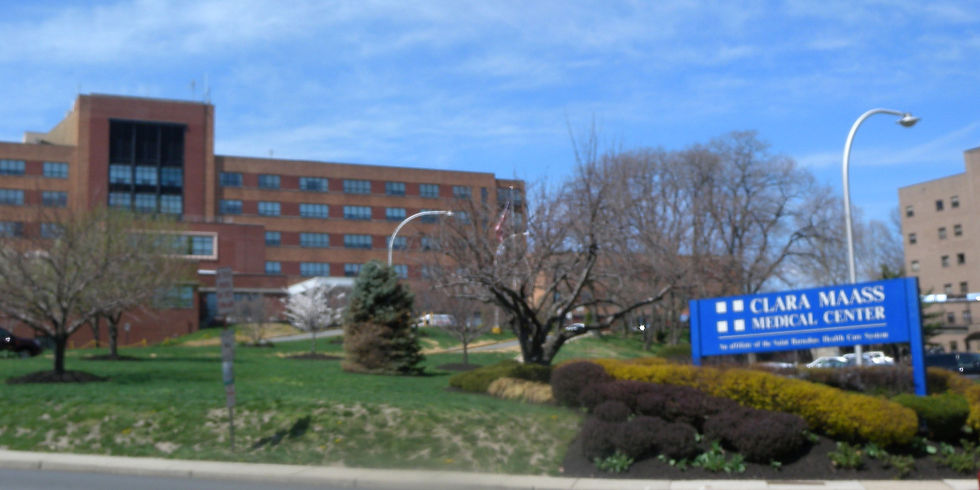
Her legacy is more than a hospital name. Clara Maass is remembered as one of the very few women to volunteer for such dangerous experiments and one of the youngest to lose her life in the pursuit of medical progress. Her death underscored the risks that medical workers and nurses have long taken, quiet, often overlooked acts of heroism that save countless lives.
A Lasting Impact
The research Clara was part of eventually helped confirm the role of Aedes aegypti mosquitoes in yellow fever transmission. With this knowledge, Major William Gorgas launched massive mosquito eradication campaigns in Havana and later in Panama, paving the way for the successful completion of the Panama Canal.
Clara’s sacrifice, tragic as it was, contributed to one of the great breakthroughs in public health. Her story also highlights the human cost of medical discovery—a reminder that progress is often written in lives as much as in research papers.
Sources
Clara Maass Medical Center History: https://www.rwjbh.org/clara-maass-medical-center/about/history
Walter Reed Army Medical Center Archives: https://www.army.mil/article/129274
U.S. Army Yellow Fever Commission Records, National Library of Medicine: https://profiles.nlm.nih.gov/spotlight/bg
Theodore Roosevelt’s Round-Robin Letter (1898): https://www.loc.gov/item/00694169/
Crosby, Alfred W. The American Plague: The Untold Story of Yellow Fever, the Epidemic That Shaped Our History. Oxford University Press, 2006.


