

The Habsburg Jaw: How Centuries of Royal Inbreeding Destroyed an Empire
Updated: Aug 4

There is a moment in European history that still makes readers pause. A simple joke, thrown out by a peasant during the reign of Charles V, has echoed for centuries. As the story goes, Charles, the powerful ruler who controlled a vast stretch of Europe, sat in a hall filled with visitors. His famously pronounced Habsburg jaw gave him difficulty closing his mouth fully. A peasant, emboldened by drink or mischief, supposedly muttered, “Better keep your mouth shut, Your Majesty, before the flies think it is summer again.”
It is one of those historical anecdotes that lodges in the imagination. The joke is crude, but its staying power reveals something human beneath the layers of royal ceremony and political dominance. Everyone could see that the Habsburgs looked different. Everyone wondered why.

The answer lay in a centuries long experiment in dynasty building, where royal marriages were not celebrated unions but strategic arrangements. For most of Europe’s monarchies, marriage was a tool for diplomacy. For the Habsburgs, it became something closer to a closed circuit. And as scientists now show, the consequences played out on the bodies of generations of rulers.
This is the story of the Habsburg jaw. It is also the story of what happens when a family tries too hard to keep its power contained within its own blood.
A Dynasty Built on Marriages Rather Than Wars
European royal houses intermarried for centuries. It was not unusual. Even in the twentieth century, Queen Elizabeth II married her third cousin. Monarchies used marital alliances to build networks of influence. But the Habsburgs pushed this tradition to the furthest extreme.
When the Spanish branch of the Habsburg family ruled from 1516 to 1700, they organised eleven marriages. Nine of those eleven took place between close relatives.
This was not casual or coincidental. It was deliberate policy. The Habsburgs understood that their grip on Spain was powerful but strategically fragile. Their empire stretched across Europe and into the New World, but internally it relied on unity between different territories that did not always coexist naturally. One way to consolidate control was to keep the line as undiluted as possible.
Marry within the dynasty. Keep bloodlines tight. Maintain power.
It seemed logical at first. In reality it planted the seeds of the dynasty’s downfall.

From the Alps to the Spanish Throne
Although the Spanish Habsburgs officially began ruling Spain in 1516, the family’s origins traced back much earlier to the thirteenth century in present day Switzerland. Their climb up the European ladder was methodical. From small territories in the Alpine region, they positioned themselves through a combination of political marriages and strategic warfare until, by the late Middle Ages, they had embedded themselves in the highest levels of European nobility.
A turning point came in 1496 when Philip I of Burgundy married Joanna of Castile. This union brought the family into the Spanish royal line. When their son, Charles, inherited both the Austrian and Spanish branches of the family, he became Charles V, ruler of an empire so vast it was said that the sun never set on it.
Charles ruled over lands that included Spain, parts of Italy, territories throughout the Low Countries, and the sprawling Spanish colonies. With such far reaching authority, he became the most powerful monarch of his age. Yet within his own body was a hint of what was to come. He already displayed the pronounced Habsburg jaw.
It was more than a quirk of appearance. It was a hereditary sign of what centuries of closed circle marriages could produce.
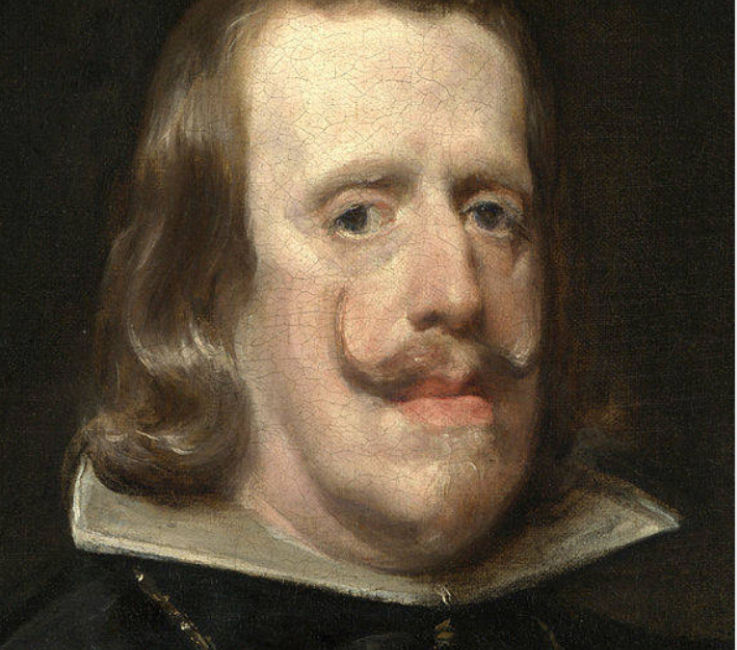
A Dynasty’s Defining Feature The Habsburg Jaw
The Habsburg jaw, also known clinically as mandibular prognathism, resulted from one generation after another marrying close relatives. It created a distinctive physical look: an extended lower jaw, a prominent chin, and a forward thrust of the lower lip.
In portraits, this feature is unmistakable. One only needs to look at the paintings of Charles V, Philip II, or later Philip IV to see the gradual intensification of this inherited trait. Artists of the period did not aim for unflattering realism, yet the jaw could not be disguised.
The Habsburg jaw became almost emblematic of the dynasty. Foreign envoys remarked upon it. Playwrights mocked it. Even centuries later, without knowing a face’s identity, art historians can often identify a Habsburg by the shape of the jaw alone.

Marie Antoinette, who descended from the Austrian Habsburgs rather than the Spanish branch, was noted for having a “projecting lower lip”. She was celebrated for her beauty and charm, yet the faint imprint of the family trait still appeared. It became part of the visual language of her legacy. Portraits often show a slight pout, which some contemporary observers described without malice but with mild curiosity.
Still, no member of the family exhibited the physical consequences of inbreeding as drastically as Charles II of Spain.
Charles II The Most Tragic Habsburg
When Charles II inherited the Spanish crown in 1665, he was only a child. He was also the end point of two centuries of close kin marriages.
His father, Philip IV, had married his own niece. This made Philip simultaneously both father and great uncle to his son. The genetic consequences were severe. Modern researchers have calculated Charles’s inbreeding coefficient at an extraordinarily high level, comparable to that of a child whose parents are siblings.

Charles II received the lifelong nickname “El Hechizado”, meaning “the hexed one”. Many in Spain believed he was cursed. Some blamed witchcraft. Others believed that the sins of previous rulers had somehow manifested physically. But the reality was scientific. The dynasty had over concentrated its gene pool.
The French ambassador tasked with assessing Charles as a potential match for a French princess reported bluntly, “The Catholic King is so ugly as to cause fear and he looks ill.”
From a young age, Charles struggled to walk, swallow, speak, and digest food. His jaw was so large and stretched that he could barely chew. He suffered seizures, chronic infections, and severe developmental delay. He did not utter his first words until age four. He was intellectually impaired throughout his life.
Modern researchers have calculated Charles's inbreeding coefficient at 0.254, roughly four times higher than what you'd see from first cousin parents, and comparable to a child whose parents were siblings.
The final tragedy was political. Charles could not produce an heir. This single fact ensured the collapse of the Spanish Habsburg dynasty.

He died in 1700 at the age of 39. An autopsy report, whose authenticity remains debated but whose details were widely circulated, supposedly claimed his body contained “no blood, a heart the size of a peppercorn, and a head full of water”.
Whether literal or exaggerated, the message was clear. The dynasty that ruled a global empire could not survive itself.
Why Did the Habsburgs Continue Marrying Their Own Kin
It is easy in hindsight to wonder why no one intervened. But in the sixteenth and seventeenth centuries, royal families viewed genetics through a very different lens. Bloodline meant legitimacy. Legitimacy meant stability. Stability meant control.
Royal houses feared the dilution of their authority if they married outsiders. Marrying within the family kept their power centralised.
There were also religious considerations. Many Catholic families preferred matches with relatives because they ensured that children would remain within the faith. And of course, political alliances were more predictable when everyone involved was already related.
In essence, the Habsburgs believed they were preserving their dynasty. In reality they were undermining it generation by generation.
The Biological Cost of Power
The consequences of inbreeding in royal families were not limited to physical appearance. Intermarriage increased the likelihood of recessive genetic conditions emerging. This was seen in other European dynasties.
Queen Victoria unknowingly carried the recessive gene for haemophilia, which she passed into several royal houses. The condition spread through her descendants and affected generations of European royalty, including the Romanovs.
Among the Habsburgs, the jaw was the most visible marker, but it was not the only problem. High childhood mortality, fertility issues, mental health conditions, and developmental disabilities occurred at statistically significant rates.
The End of the Spanish Habsburg Line
Charles II’s death without an heir in 1700 triggered the War of the Spanish Succession, a massive conflict that reshaped European politics. Although Habsburg influence continued in Austria, the Spanish branch vanished entirely.

Historians generally agree that the extreme pattern of inbreeding was a decisive factor in the dynasty’s collapse. Experts often describe Charles II as a case study in the biological consequences of prolonged consanguinity.
In trying to keep power within the family, the Habsburgs created conditions that ensured power would slip from their hands.
It is one of the clearest examples in history of how political ambition can collide with biological reality.
Legacy and Modern Scientific Research
Today, the Habsburg jaw remains a subject of scientific curiosity. Researchers studying historical genetics have used portraits, written accounts, medical records, and statistical modelling to understand how traits were passed down.
A 2019 genetic analysis published in Annals of Human Biology directly linked the degree of mandibular prognathism to measurable levels of inbreeding.
Even now, when we look at portraits from the period, we are not simply observing artistic style. We are witnessing the slow accumulation of genetic pressure. It is a rare example of how history and biology intersect. A dynasty once shaped by power, ambition, diplomacy, and imperial might is remembered partly through the outline of human bone.
Conclusion
The story of the Habsburg jaw is not a tale of mockery or scandal. It is a reminder that even the most powerful families in Europe were vulnerable to the basic laws of biology. Intermarriage may have strengthened political alliances, but it undermined the very bodies of the kings and queens entrusted with ruling vast territories.
In an age when the sun never set on the Habsburg empire, the dynasty wielded extraordinary influence. Yet the empire they built with strategy and ambition ultimately faltered through decisions made in their most intimate rooms. In marrying only each other, they protected their lineage and simultaneously sealed its fate.
Sources
Henry Kamen, Spain 1469 to 1714 A Society of Conflict (Routledge, 2005).
John Lynch, The Hispanic World (Thames and Hudson, 1992).
Geoffrey Parker, The Grand Strategy of Philip II (Yale University Press, 1998).
C. M. Woolf, “The Habsburg Jaw and Other Deformities” Journal of Medical Biography.
Richard Lodge, The Story of the Habsburgs (T. Fisher Unwin, 1915).
J. H. Elliott, Imperial Spain 1469 to 1716 (Penguin History, 2002).


