

Lizzie Borden Murders: The Suspects Police Overlooked
Updated: Sep 2

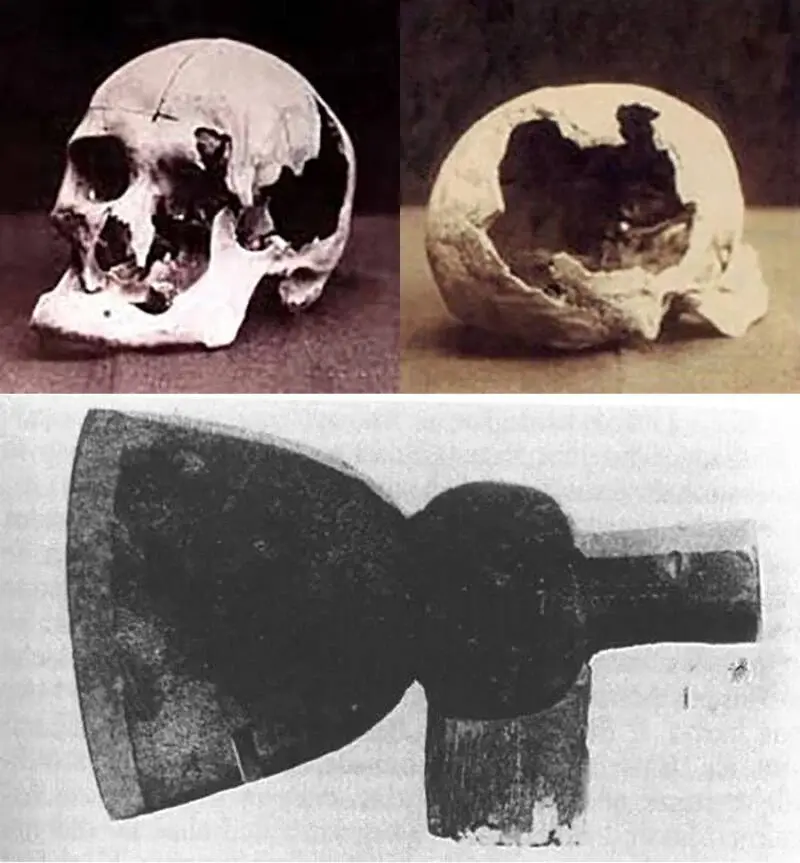
On the morning of August 4th, 1892, somebody walked into the Borden house on Second Street in Fall River, Massachusetts, and killed Andrew and Abby Borden with a hatchet. Abby took nineteen blows to the head. Andrew took eleven, and one of them split his eyeball in half. Ninety minutes after the jury sat down to deliberate, they came back with a verdict: not guilty. Lizzie Borden, the Bordens' younger daughter, walked out of the courtroom a free woman, and she stayed free until she died in 1927.
That's the version everyone knows. What gets left out is just how strange the rest of the household was that week, and how many other people had a reason to want Andrew Borden dead.
Quick Answers
Was Lizzie Borden ever convicted? No. An all male jury acquitted her in June 1893 after roughly ninety minutes of deliberation. No one else was ever charged, and the case remains officially unsolved.
What was the strongest evidence against her? Her inquest testimony and a witness account of her trying to buy poison the day before the murders, both ruled inadmissible before the trial began, plus a dress she burned three days after the killings.
Were there other suspects? Yes. Her sister Emma, an uncle named John Morse, the family's live-in maid Bridget Sullivan, and a wave of immigrant labourers police rounded up first all had unresolved questions attached to their accounts.
Why did the case become so famous? Partly the brutality, partly the class angle, and partly because a composed, respectable Victorian woman being acquitted almost entirely on the strength of her image raised uncomfortable questions the trial never really settled.
A House Full of Grudges
Andrew Borden was rich, and he made sure nobody around him forgot it wasn't going to be spent on them. He owned property across Fall River and sat on the boards of several banks, yet the family lived in a house without indoor plumbing on the wrong side of town, the kind of address that embarrassed people with Borden money in an era when Gilded Age wealth and scandal went hand in hand more often than people like to admit. Lizzie and her older sister Emma wanted to move to The Hill, where the rest of the town's wealthy families lived. Andrew refused, year after year.

Andrew's second wife, Abby, made things worse. Lizzie and Emma's mother had died when Lizzie was two, and Andrew remarried within three years. Both sisters called Abby "Mrs. Borden" rather than mother, and the relationship soured further in 1887, when Andrew transferred a house to Abby's sister. Lizzie and Emma demanded, and got, a property of equal value as compensation. After that, the sisters mostly stopped eating meals with their parents.
The week before the murders, the whole household came down with violent vomiting. Abby was convinced someone had poisoned them and told a neighbour as much. Bridget Sullivan, the family's live in maid, later testified the sickness started after a dinner of leftover swordfish, warmed over, with bread Bridget had bought herself. A doctor blamed the mutton that had sat out in the summer heat. But the day before the murders, a Fall River pharmacist named Eli Bence told police a woman matching Lizzie's description had tried to buy prussic acid, a deadly poison, claiming she needed it to clean a sealskin cape. He refused to sell it to her without a prescription. The defence later got Bence's testimony excluded from the murder trial entirely, on the grounds that an attempted poisoning had nothing to do with a hatchet killing. The jury never heard about it.

The Maid Who Knew More Than She Said
Bridget Sullivan was a 25 year old Irish immigrant who'd worked for the Bordens for nearly three years. On the morning of the murders, she was washing windows outside when Abby was killed upstairs sometime around 9:30. She let Andrew in through the front door around 10:45, after he'd been out running errands, and was resting upstairs in her own room when he was murdered on the sitting room sofa less than half an hour later.
Sullivan's story never wavered, but parts of it raised eyebrows. She testified that nothing unusual happened that morning, a claim that's hard to square with two people being hacked to death in the same house she was cleaning. She also told police Lizzie had mentioned Abby received a note calling her away to visit someone who was sick, a note nobody ever found, sent by a person who never came forward.
Writer the Lizzie Borden Society has pointed out a simpler explanation than involvement: a domestic servant's livelihood depended entirely on references. Casting doubt on the household that employed her could have ended her career. Investigators also found a pail of bloodstained rags in the basement. Sullivan said she knew nothing about them. Lizzie told police they were menstrual cloths, and in 1892, that was answer enough to end the questioning.

The Burned Dress
Three days after the murders, with reporters camped outside and police still searching the house, Lizzie's close friend Alice Russell walked into the kitchen and found her feeding a dress into the stove. It was a cheap blue Bedford cord housedress, the same one Sullivan said Lizzie had been wearing the morning of the killings. Lizzie told Russell, “I am going to burn this old thing up; it is covered with paint,” and kept feeding it into the flames while her sister Emma, washing dishes nearby, called over for her to go ahead and burn it.
The timing didn't sit well with the grand jury when Russell described it under oath. Investigators had already searched the house and clothes press once, but a dress could easily have been folded away or hidden inside another garment on the same hook; multiple dresses were reportedly crowded onto single nails in the closet. Whatever was actually on it, the dress was gone before anyone in authority got a proper look, and Russell's testimony about watching it burn was enough to tip the grand jury toward an indictment that had initially stalled.

The Labourers Police Suspected First
Fall River in 1892 had a large Portuguese and Irish immigrant population, many working in the textile mills Andrew Borden partly financed and was known as an unsympathetic landlord toward. The same rigid class lines shaped how respectability and suspicion got handed out across America in this period, something Goldie Williams' case a few years later shows just as starkly from the other side of the law.
When police first arrived at the murder scene, their instinct wasn't a domestic killing, it was a robbery committed by an outsider, despite the fact that nothing in the house had been stolen. A Portuguese farmhand named Antonio Auriel was hauled in from a local saloon that afternoon. He had a solid alibi and no connection to the family, and he was released within hours, but he wasn't the only one swept up that way. Historian Cara Robertson has noted that Lizzie never once tried to point police toward an immigrant labourer, despite the fact that an accusation along those lines would likely have been believed without much pushback given the prejudices of the time.
Emma Borden, the Sister Who Was Conveniently Away
Emma was nine years older than Lizzie and, by most accounts, carried the deeper grievance against Abby. She remembered their birth mother more clearly and had promised her, at twelve years old and at her mother's deathbed, that she'd look after Lizzie for the rest of her life. Neither sister was ever permitted to court seriously, and by their early forties both faced a future as unmarried women entirely dependent on their father's money.

Emma had been staying with friends in Fairhaven, around fifteen miles away, for two weeks before the murders and wasn't in Fall River that day. Writer Frank Spiering floated a theory in 1984 that Emma slipped back into town, committed the murders herself, and relied on Lizzie's composure and reputation to carry them both through suspicion. There's no real evidence Emma left Fairhaven that morning, and the theory has never gained much traction among historians, but it persists because Emma, by her own admission, had more reason to hate Abby than anyone else in the house.
Uncle John, the Man With a Suspiciously Good Memory
John Morse, brother of Lizzie and Emma's deceased mother, arrived from Iowa the night before the murders without luggage and stayed over unannounced. He'd done small scale livestock dealing with Andrew for years and had a reputation as someone who was, depending who you asked, simply a hard bargainer or something closer to a hustler. He had breakfast with Andrew and Abby the morning of the murders, left around 8:45, and gave police an account of his movements that was almost too detailed: he remembered the trolley car number, the conductor's hat badge, and exactly how many priests rode alongside him.
When Morse returned to the house after the killings, witnesses said he walked calmly around to the backyard and paused to pick a pear off a tree before going inside, seemingly unbothered by the crowd that had already gathered. It was enough to get him followed by an angry mob for a while. Andrew's brother in law, George B. Fish, later told reporters flatly that Lizzie and Morse had arranged the murders together and paid someone else to do the killing, motivated, in Fish's telling, by nothing more complicated than wanting Andrew and Abby gone.
Why August 4th, Specifically
One detail rarely makes it into shorter retellings of this case: Fall River police strength was thin that particular Thursday because of the Rocky Point clam bake, an annual outing that pulled a large share of the local force out of the city. Whoever killed Andrew and Abby Borden either got lucky with the timing or knew the schedule well enough to count on it. A break in earlier that summer, in which jewellery and cash went missing from the house, had also given Lizzie an unusual amount of familiarity with how seriously, or not, local police treated reports of trouble at the Borden address.
A Trial Decided Almost As Fast As It Started
Lizzie's trial in June 1893 lasted fourteen days. The prosecution's strongest evidence, her inquest testimony and the attempted poison purchase, was ruled inadmissible before the jury heard a word of it. No bloodstained clothing was ever found on her, no murder weapon was conclusively tied to her hands, and fingerprinting, although gaining traction in Europe, wasn't trusted by Fall River police, who never tested the hatchet found in the basement for prints at all. An all male jury acquitted a composed, well dressed, churchgoing woman from a respectable family in roughly ninety minutes.

She never spoke publicly about the murders again. She and Emma used Lizzie's inheritance to buy a house on The Hill, the address they'd wanted for years, and named it Maplecroft. The sisters lived there together until a falling out in 1905 that neither one ever mentioned the cause of, and they never spoke again. Both women died in 1927, Lizzie first by nine days, and were buried beside the father she was accused of killing. It's a pattern that crops up again nearly a century later in the Candy Montgomery axe murder case, another acquittal built on a defendant's wholesome image carrying more weight with a jury than the physical evidence did.

So Who Did It
Nobody has ever proven it wasn't Lizzie. The case remains officially unsolved, and most historians, including the Lizzie Borden Society archive, still consider her the most likely suspect simply on the strength of opportunity and the burned dress. But the inquest testimony that might have settled the question was thrown out before trial, the murder weapon was never definitively identified, and at least four other people in her immediate orbit, a maid with a story that doesn't quite hold together, a sister with motive and a thin alibi, an uncle with a suspiciously precise memory, and a town's worth of labourers police were eager to blame, all had something to explain that morning too.
That's likely the real reason the case has stayed famous for over a century. It isn't really a mystery about who swung the hatchet. It's a mystery about how a town, a police force, and eventually a jury decided who deserved the benefit of the doubt, and who didn't.
Frequently Asked Questions
Did anyone else ever get charged with the Borden murders?
No. Several people, including Bridget Sullivan, Emma Borden and John Morse, were floated as alternative suspects over the decades, but none was ever formally charged. The case remains officially unsolved.
What happened to Lizzie Borden after the trial?
She and Emma bought a house on The Hill in Fall River, the wealthy neighbourhood their father had always refused to move to, and named it Maplecroft. They lived there together until a falling out in 1905 ended their relationship for good. Lizzie died in 1927, nine days before Emma.
Was the murder weapon ever identified?
Not conclusively. A hatchet head found in the Borden basement was presented at trial, but it was never definitively tied to the killings, and Fall River police didn't test it for fingerprints.
You Might Also Like
The wealth and appearances that shaped this case run through plenty of Gilded Age scandals. See Evelyn Nesbit: The Girl on the Velvet Swing and the Gilded Age Scandal That Shook America for another case where class and image did as much work as the evidence.
For the closest modern parallel to an acquittal built on personal image, read Candy Montgomery: The Chilling Case of Love, Betrayal, and a Grisly Axe Murder in Small-Town Texas.
To see how the same era's rigid class and respectability lines played out from the other side of the law, see Goldie Williams: The Defiant Face of Vagrancy, Race and Respectability in 1890s America.


