

Through a Northern Lens: Michael Kay’s Manchester Photographs of the Early 1970s
Updated: Mar 19

There is a certain kind of magic in rediscovering a city through the eyes of someone who photographed it before most of us were born. Michael Kay’s images of Manchester in the early 1970s do exactly that. They reveal a place caught between decline and renewal, a place shaped by soot and spirit, hardship and humour. Above all, they show the people who lived through it.
Michael Kay has been photographing people since his student days, guided by what he calls a “keen eye for character”. His new book, documenting Manchester at the start of the 1970s, pulls readers into a world of slum clearances, corner pubs, stoic residents, and the subtle glow of everyday resilience. What sets his work apart is not only the rich tonal depth of the film he used, but the fact that these scenes have almost entirely vanished from the modern cityscape.
This is an intimate tour through one of Britain’s great urban transformations, told through the lens of a young photographer who simply wandered the streets with a lot of curiosity.

A Welsh Beginning and a Manchester Calling
Michael grew up in Snowdonia, surrounded by mountain landscapes and small communities where everyone knew each other. His move to Manchester in 1970 to study photography at Manchester Polytechnic marked a dramatic shift. He traded the rugged stillness of North Wales for a city where the pavements hummed with activity, where derelict streets stood beside new concrete developments, and where the social contrasts were impossible to ignore.
Manchester Polytechnic’s photography course was prestigious. Among Michael’s contemporaries were Martin Parr, Daniel Meadows and the late Brian Griffin, all of whom would go on to shape British visual culture. Those early years were a mix of experimentation, darkroom fumes, and tutors encouraging students to step outside, observe, and document what was right in front of them.
Michael did exactly that. Between 1970 and 1973 he took his camera everywhere. The results would eventually become the backbone of his professional portfolio and, decades later, the foundation of his book.


Walking the Streets with a Camera
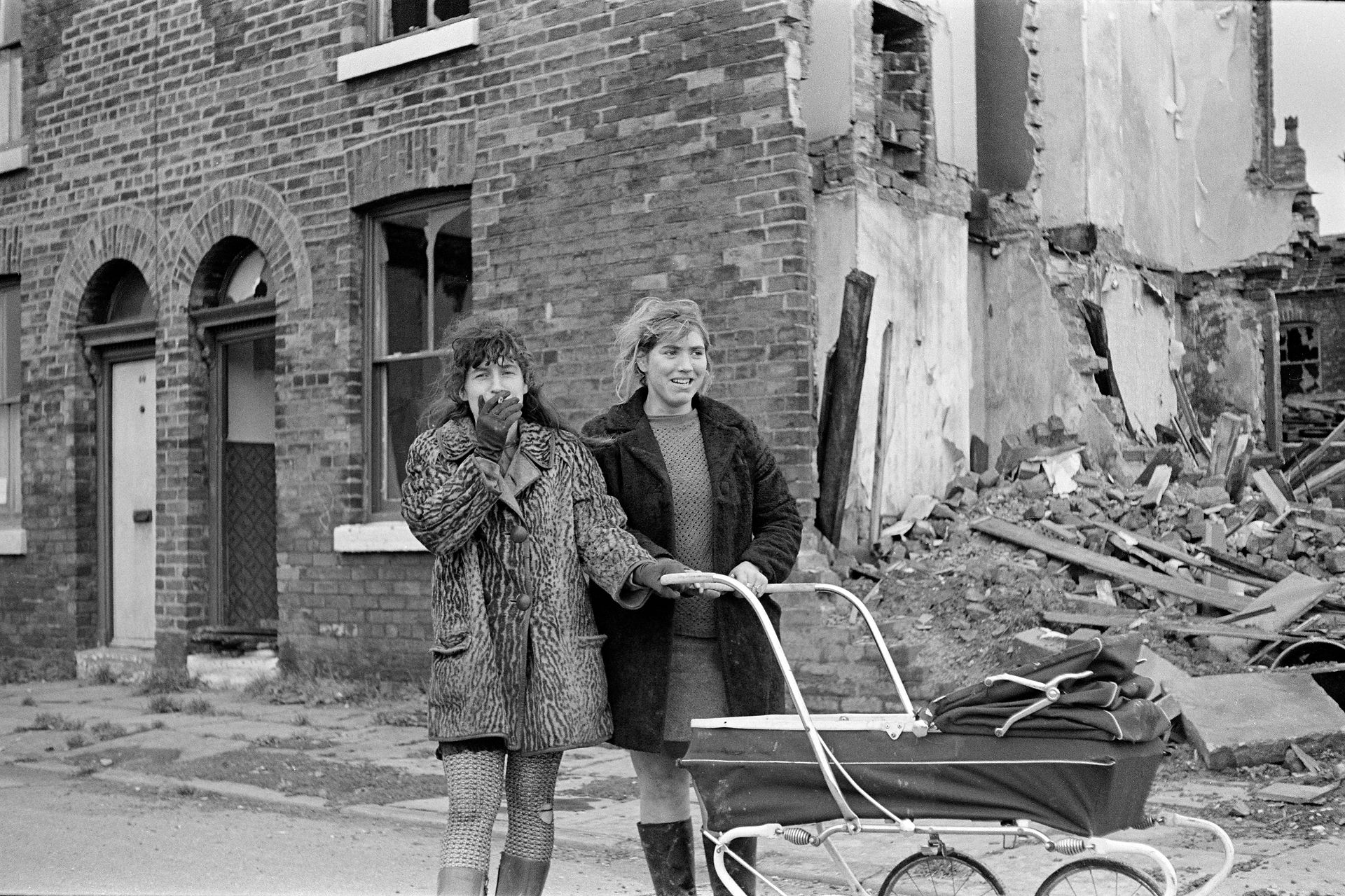
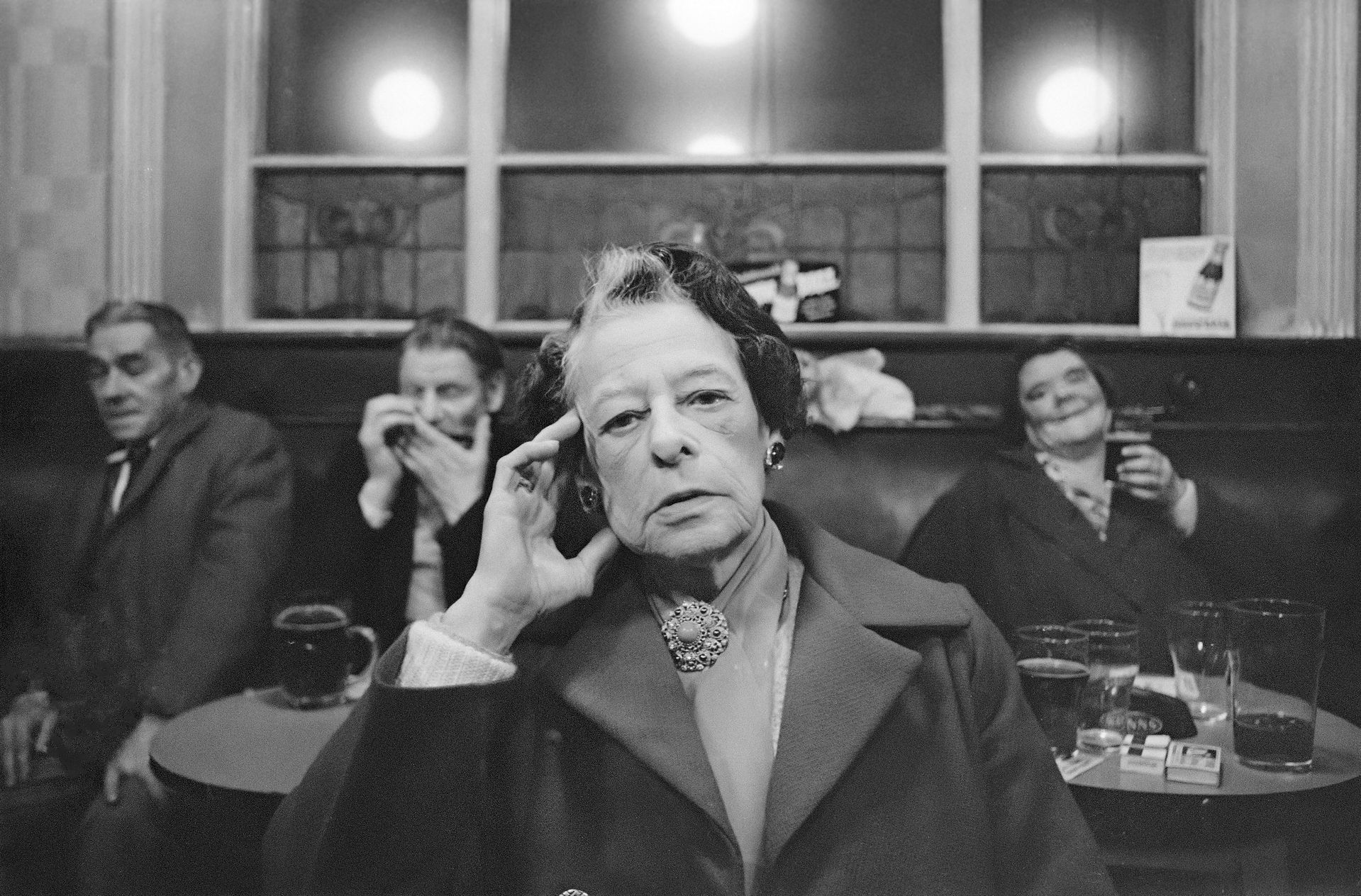
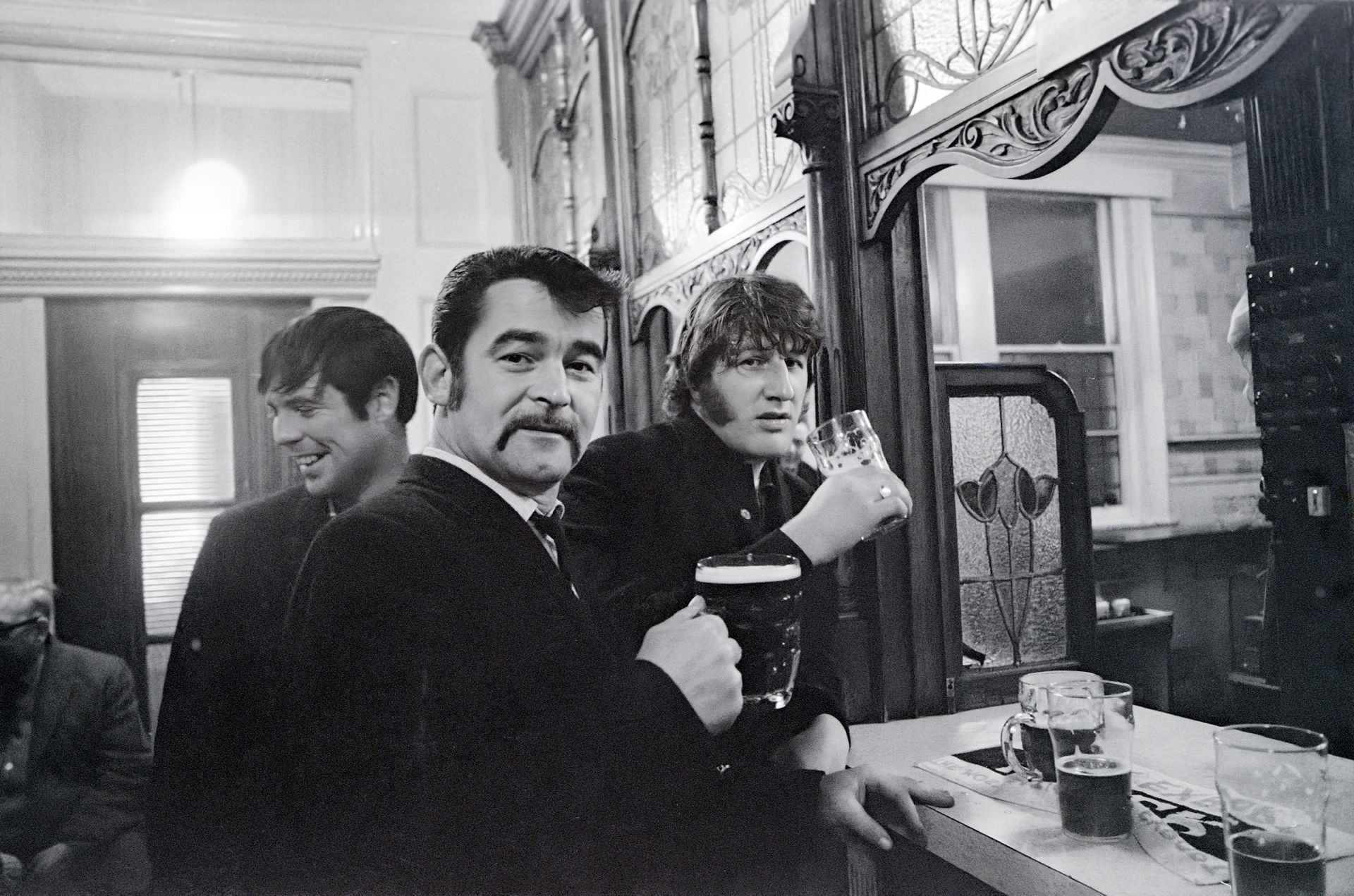
Michael’s projects as a student included a wide range of themes that reflected the city’s daily rhythms. He photographed “Life amongst the slum clearance areas”, captured the fireside glow of “Bonfire Night”, covered “Armed Forces Day in Platt Fields”, and spent an unforgettable evening inside the Birch Villa pub in Rusholme.
His approach was simple. He walked, he looked, he asked permission when he needed to, and he waited for people to reveal themselves as they were. In the Birch Villa he recalls:
“I just walked in with my camera and asked if I could take some photos of the clientele. No one seemed to mind, and I felt quite safe in there. I was there for a couple of hours and it was full of characters.”
The photographs taken in that pub have become some of his most celebrated. They capture warm chatter, raised glasses, quiet contemplation and the slightly chaotic energy of what he calls “a proper Manchester boozer”. Many of those pubs are long gone, replaced by student flats, supermarkets or apartment blocks. Through Michael’s lens, they survive.


A City on the Brink: Poverty and Regeneration
To look at Michael’s photographs is to understand the contradictions of Manchester in the early 1970s. On one hand, the city was struggling. Industry was declining, jobs were vanishing, and large swathes of inner Manchester deteriorated faster than local councils could intervene. He describes the atmosphere plainly:
“The city was poor, poverty was rife, and gloom hung heavy in the air.”
Yet the 1970s were also a moment of enormous state ambition. Manchester’s council leaders launched regeneration programmes designed to drag the city into a modern future. Victorian terraces were bulldozed, streets disappeared under the rubble of demolition crews, and entire communities were uprooted with the promise of better housing.
Michael stood there with his camera, watching the old city crumble while the new one struggled to take shape.
Down Comes Moss Side
One of the most dramatic scenes of his project was Moss Side, where whole districts were reduced to brick piles as part of the city’s urban renewal plan.
Fifty years ago Moss Side was a patchwork of ageing Victorian homes that were deemed unfit for habitation. Council leaders opted to tear them down and construct modern council estates, with Hulme’s notorious Crescents rising in the distance. At the time the Crescents were hailed as the most ambitious public housing development in Europe. They were designed to house more than thirteen thousand people, inspired by Georgian architecture and built with the belief that modern concrete living would improve quality of life.
Instead the complex quickly deteriorated. Infestations of cockroaches, mice and even feral dogs spread through the blocks. Water ingress, poor insulation and faulty construction led to widespread structural problems. Social isolation, crime and a lack of green space made everyday life in the Crescents extremely difficult. Within a few years thousands of residents sought alternative accommodation.
Michael’s photographs show the area before the Crescents reached their lowest point, but the warning signs are already visible. Streets are half gone, homes are boarded up, and children stand outside front doors that will soon be demolished.
Today, Hulme is a completely different place. After millions of pounds in investment the area is seen as safe and lively, with parks, university housing and cultural centres. Michael’s images remain an important record of what came before.


Playing in the Rubble
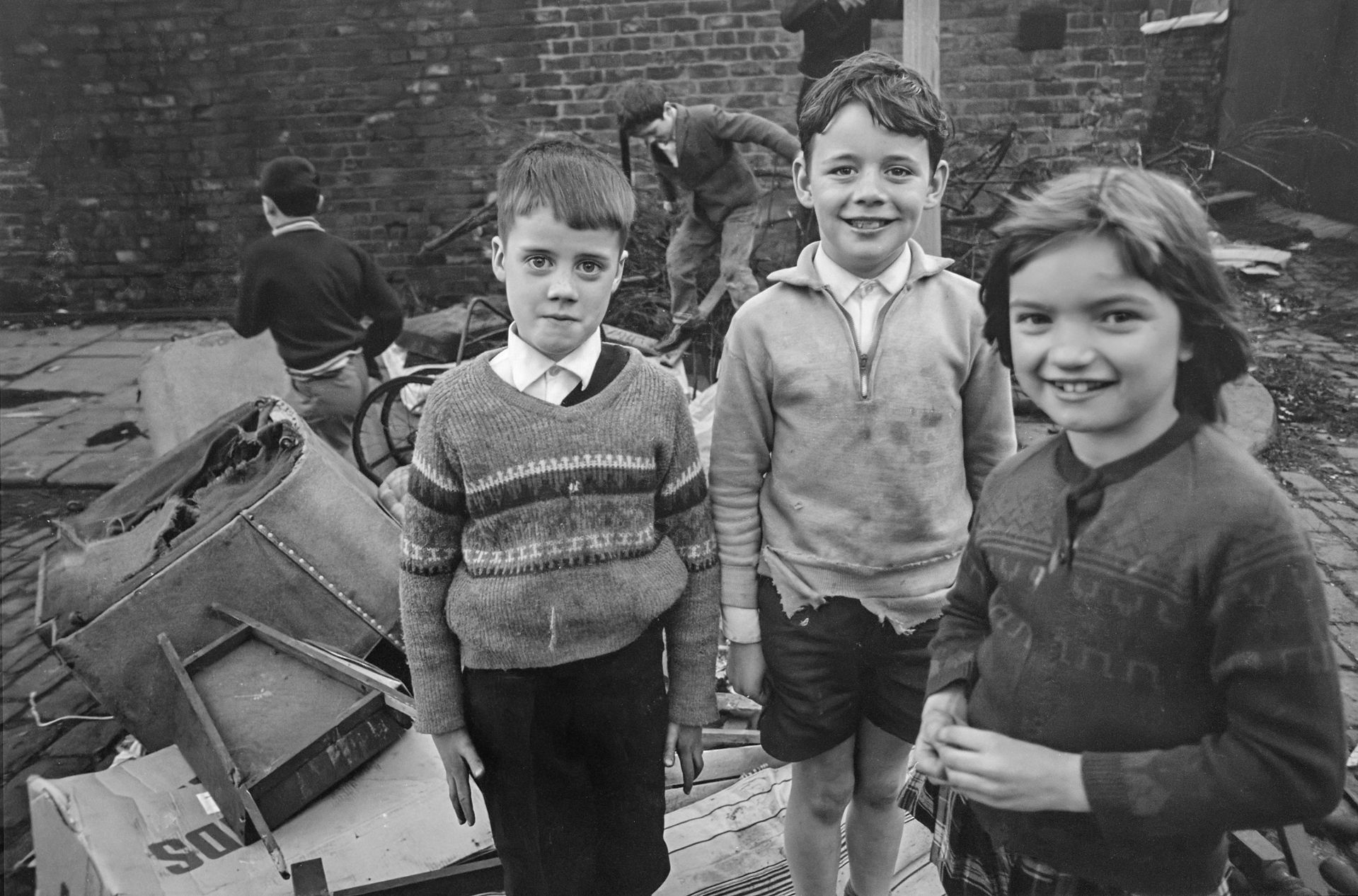
Despite the bleak economic reality of 1970s Manchester, Michael often found joy and resilience in the most unexpected scenes. One recurring sight was children turning demolition sites into playgrounds. He remembers it vividly:
“The children played amongst the rubble and seemed happy. I’d love to know what became of this young lad.”
These moments are significant. They remind us that even in the toughest circumstances, communities found ways to carry on. Children climbed bricks, explored hollowed out homes and created games from the debris of urban renewal. Adults stood nearby talking over the noise of construction. Life continued in the gaps left by bulldozers.
His photographs of these children are among the most striking. They combine innocence with the scars of a city in transition, forming a powerful visual metaphor for Manchester’s journey during those years.



From Manchester to London: A Career in Focus
After completing his studies in 1973, Michael moved to London, a city then booming with creative opportunity. He eventually opened his own photography studio, working across editorial commissions, advertising and portraiture. The gritty streets of Manchester remained a formative influence, shaping how he approached subjects throughout his career.
His new book, featuring many of the images taken during those early years, is a careful archive of a city that would soon look entirely different. It speaks not only to the past, but to the enduring power of observational photography.
Through wide streets and narrow back lanes, frozen pubs and collapsing tenements, Michael captured a Manchester on the brink of transformation. His work stands as a quiet reminder that history is not only in grand buildings or political speeches, but in the faces of the people who lived through it.
Sources
A Snapshot in Time: Photographer Shares Images Captured in 1970s Manchester
New License Ready Images: Michael Kay Collection (PhotoArchiveNews)
Hulme Crescent: Bohemian Dream and Utopian Failure (I Love MCR)
Designing Out Crime: The Rise and Fall of Hulme Crescents (MetroStor)
Hulme Crescents: A Case Study in Manchester’s Post Slum Clearance Experiment (Retrospect Journal)
Urban Regeneration in Manchester: Hulme (Tutor2U)
Manchester After Engels: History of the Present (Places Journal)


