

The Jarrow March: 200 Men, 291 Miles and the Petition Parliament Shrugged Off

On the morning of 5 October 1936, around 200 unemployed men walked out of a shipbuilding town on the Tyne and set off for London, 291 miles away. They carried a petition in an oak box, marched in step behind a mouth organ band and had a dog with them. Twenty-six days later they reached Marble Arch in the pouring rain. Four days after that, Parliament gave their petition a few minutes and moved on to other business.
The Jarrow March, or the Jarrow Crusade as the men themselves called it, is now the best-known protest of the 1930s in Britain. At the time it won them nothing. The government wouldn't meet them, the Labour Party kept its distance and, when the men got home, their dole had been cut for the weeks they'd been away. This is the story of what actually happened, including the bits that tend to get tidied up.
Quick Answers
What was the Jarrow March? A protest walk from Jarrow to London by about 200 unemployed men, asking the government to bring work back to the town.
When did it happen? It left Jarrow on 5 October 1936 and reached London on 31 October. The petition was presented on 4 November.
How far did they walk? 291 miles by the stage-by-stage route, though you'll see anything from 280 to 300 quoted.
Why did they march? Palmers shipyard had closed and around three in four of the town's workers were out of a job.
Who led it? Councillor David Riley was chief marshal. The town's Labour MP, Ellen Wilkinson, walked much of the route and presented the petition.
Was the Jarrow March successful? Not at the time. The Prime Minister refused to meet the men and no work was promised. Its influence came later.
Did the marchers lose their dole? Yes. Benefits were reduced on the grounds that men on a march weren't available for work.
Who was the last Jarrow marcher? Cornelius Whalen, the last man to walk the whole route, died in September 2003.
Why Jarrow? The Town That Was Murdered
Jarrow was a one-company town. Palmers had opened its shipyard there in 1851 and over the next eighty years launched more than 1,000 ships. The place grew around it, from about 3,800 people in 1850 to 35,000 by 1891. Many of them had come over from Ireland or down from Scotland for the work, and the town picked up the nickname Little Ireland.

Then the orders dried up. The last ship built at Palmers, the destroyer HMS Duchess, went down the slipway on 19 July 1932. The firm collapsed, and in 1934 the yard was bought by National Shipbuilders Security, a body set up by the industry itself in 1929 to buy up struggling yards and shut them for good. Palmers was dismantled and a ban was placed on shipbuilding on the site for forty years.
That's the reason you'll see the closure dated to anything from 1931 to 1934. The work stopped, the company failed and the yard was sold in separate stages. Either way the result was the same. In Wilkinson's own words to the Commons, where 8,000 people had once been employed, only 100 now had work, and that was on a temporary scheme. Estimates of the unemployment rate run from 70 to 80 per cent.
There was one hope left. An American entrepreneur, T. Vosper Salt, proposed a modern steelworks on the Palmers site. The existing steel firms of the north-east saw a rival and the scheme was squeezed until it died. When a deputation from the town went to see Walter Runciman, the President of the Board of Trade, he told them that "Jarrow must work out its own salvation". It was that sentence, as much as anything, that put 200 men on the road.
Wilkinson later wrote a book about the place and gave it the title that has stuck ever since: The Town That Was Murdered.
Ellen Wilkinson and the Idea of a Crusade
Ellen Wilkinson had won Jarrow for Labour in 1935. She was a small, red-haired former Communist from Manchester, one of only a handful of women in the Commons, and she had no patience at all. But the march wasn't her project alone, and it wasn't a Labour one. The decision was taken on 20 July 1936 by Jarrow Borough Council, with all parties on board, and both the Labour and Conservative agents were sent ahead down the route to arrange beds and meals.

That cross-party backing was the whole point. Hunger marches organised by the Communist-led National Unemployed Workers' Movement had been tramping to London since the 1920s, and respectable opinion wrote them off as revolutionary stunts. Jarrow wanted no part of that. The organisers called it a Crusade to mark the difference, and David Riley, the council chairman who became chief marshal, insisted throughout that it was non-political.
A fund was opened with a target of £800. It raised nearly double that. More than 1,200 men volunteered and, after medical examinations, 200 of the fittest were picked. A Ministry of Labour report sent to the Home Office on 26 September, now in the National Archives, sets out the plan in detail, down to the motor ambulance and the field kitchen. The authorities were watching from the start, and Special Branch kept an eye on the march all the way to London.
Setting Off the Day After Cable Street
The timing is one of those coincidences that sums up the decade. On Sunday 4 October 1936, the East End of London blocked Oswald Mosley's Blackshirts at the Battle of Cable Street. The next morning, at the other end of England, the Jarrow men went to church.

They were blessed at Christ Church by the Bishop of Jarrow, James Gordon, and then formed up outside the Town Hall. Many were veterans of the First World War and they marched like it, in ranks and in step, 50 minutes on the road and 10 minutes' rest in every hour, starting at 8.45 each morning. A bus went ahead with the cooking gear and blankets. Medical students from London hospitals volunteered to travel with them and treat their feet.
At the front went the blue and white banners reading Jarrow Crusade. Behind them came two men carrying the petition, bound in blue leather and kept in an oak box with gold lettering. A mouth organ band kept the pace up, and Wilkinson, when she was with them, led the singing. There was also a dog. A black Labrador travelled with the column as its mascot and turns up in the press photographs from Harrogate. Most accounts give its name as Paddy.
The Jarrow March Route, Day by Day
The march was planned in 22 stages with five rest days, timed to reach London just before the new session of Parliament opened on 3 November.
Date (1936) | Stage | Miles |
5 October | Jarrow to Chester-le-Street | 12 |
6 October | Chester-le-Street to Ferryhill | 12 |
7 October | Ferryhill to Darlington | 12 |
8 October | Darlington to Northallerton | 16 |
9 October | Northallerton to Ripon (weekend rest) | 17 |
12 October | Ripon to Harrogate | 11 |
13 October | Harrogate to Leeds | 15 |
14 October | Leeds to Wakefield | 9 |
15 October | Wakefield to Barnsley | 10 |
16 October | Barnsley to Sheffield | 13 |
17 October | Sheffield to Chesterfield (rest day) | 12 |
19 October | Chesterfield to Mansfield | 12 |
20 October | Mansfield to Nottingham | 14 |
21 October | Nottingham to Loughborough | 15 |
22 October | Loughborough to Leicester | 11 |
23 October | Leicester to Market Harborough | 14 |
24 October | Market Harborough to Northampton (rest day) | 17 |
26 October | Northampton to Bedford (rest day) | 21 |
28 October | Bedford to Luton | 19 |
29 October | Luton to St Albans | 10 |
30 October | St Albans to Edgware | 11 |
31 October | Edgware to Marble Arch | 8 |
Total | 291 |
How they were received depended entirely on the town, and not in the way you'd guess. Matt Perry, the Newcastle University historian whose book The Jarrow Crusade: Protest and Legend is the standard account, found that local Conservatives were about as likely to help as local Labour parties. In Harrogate, hardly a hotbed of socialism, the men were fed by the Rotary Club and put up by the Territorial Army. In Nottingham the city's manufacturers handed out clothing and underwear.
The best-loved story comes from Leicester, where the bootmakers of the Co-operative Society sat up through the night mending the marchers' boots for nothing. The worst comes from Market Harborough the following day, where nobody from the council turned out and the men are said to have slept on the stone floor of an unfinished building. At Northampton they crossed paths with another column heading for London, a march of blind workers.
For some of the men the march was the best they'd eaten in years. Perry's research into the individual marchers turned up one, James Walters, who put on eight pounds on the road. Another, William Cameron, had all his teeth taken out along the way.

Who Was Against the Jarrow March?
Quite a lot of people, and this is the part the later legend leaves out.
The Labour Party. Wilkinson left the march in its first days to speak at the party conference in Edinburgh, hoping for backing. She didn't get it. The national leadership and the TUC had told local branches not to help marches of the unemployed, for fear of Communist involvement, and a delegate attacked her for sending hungry and badly clothed men to walk to London. Riley said the marchers felt they'd been stabbed in the back.
The Church, mostly. The Bishop of Durham, Hensley Henson, denounced the march as revolutionary mob pressure. Under that kind of fire the Bishop of Jarrow wrote to The Times on 17 October to say his blessing hadn't meant he approved.
The government. The Cabinet issued a statement while the men were still on the road, saying marches caused needless hardship to those who took part and that grievances should go through Parliament. Wilkinson called it crocodile tears.
Lewis Mates, reviewing Perry's book, lists the myths it takes apart: that the march was a success, that everybody supported it, that organised labour rallied round and that the rich men who backed it did so out of kindness. None of those holds up well.

London: Marble Arch in the Rain
The column reached Marble Arch on Saturday 31 October, mouth organs still going, in steady rain. The next day there was a rally in Hyde Park. The Communist Party, which was holding its own unemployment demonstration there, gave up its platform for an hour so the Jarrow men could be heard. The police put the crowd at 3,000. The journalist Ritchie Calder, who had been covering the march, put it at 50,000, which tells you something about crowd estimates.
Stanley Baldwin, the Prime Minister, declined to see a deputation. He'd already told the Commons on 29 October that unemployment in Jarrow was falling. Wilkinson pointed out that the figures only looked better because Jarrow's had been lumped in with South Shields. Privately, by her account, Baldwin suggested she'd do better to go out and preach socialism. Runciman she summed up as "a figure of ice".
One London artist caught the mood rather well. Thomas Cantrell Dugdale painted the marchers arriving as seen from inside a smart drawing room, with a well-dressed couple glancing down at them through the window. It now hangs in the Museum of the Home. If America's picture of the Depression is Dorothea Lange's Migrant Mother, Britain's is a line of men in flat caps and capes.

A Few Minutes in Parliament
On the afternoon of Wednesday 4 November, Ellen Wilkinson rose in the Commons and presented the petition. It asked, in the stiff language these things require, that "work should be provided for the town without further delay". It was followed straight away by a second, much bigger petition of more than 68,000 signatures from the rest of Tyneside, presented by the Conservative MP for Newcastle North, Sir Nicholas Grattan-Doyle.
Petitions aren't debated, so that was that. The only exchange came at question time. Runciman told the House there were 1,185 unemployed shipyard workers and 818 unemployed general labourers living in Jarrow and that the position had improved. James Chuter Ede, the Labour MP for neighbouring South Shields, asked whether he knew the government's complacency was seen as "an affront to the national conscience".
The same page of Hansard has a detail that rarely makes the retellings. Wilkinson asked Baldwin exactly how many messages of support for Jarrow he'd received. He had the answer ready: 66 resolutions and eight letters from public bodies, and from members of the public one telegram, five postcards and eight letters. Somebody in Downing Street had been counting postcards.
Most of the marchers weren't even in the building. Perry's account has Wilkinson arranging for the bulk of them to be taken on a boat trip down the Thames that afternoon, so there'd be no scene in the gallery. A week later, on 11 November, Clement Attlee forced a debate on Baldwin's refusal to meet the unemployed marchers then in London. Baldwin said he was sticking to precedent.
Going Home, and the Dole
The men went back by special train and, the council's own history notes, arrived home on Guy Fawkes Day to a hero's welcome. Calder remembered that some of the wives had to borrow clothes from neighbours to come out and meet them.
Then came the insult. The Unemployment Assistance Board ruled that because the men had been on the road they hadn't been available for work, and their benefit was cut accordingly. The rumour had been going round since the first week of the march, when a local paper reported the men were worried their wives and children wouldn't be paid that week.
Not all of them got over it. Thomas Dobson, a 45-year-old marcher deep in debt, died of heart failure eight weeks after he got back. And within a month Riley and three other councillors had walked out of the Labour Party in disgust to form their own group. All four went back eventually. One of them, Joe Symonds, ended up as a Labour MP.
Did the Jarrow March Achieve Anything?
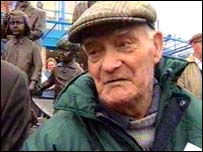
In the short term, almost nothing, and the men who'd done the walking were the first to say so. Cornelius Whalen, the last survivor to have gone the full distance, told an interviewer that it hadn't made a ha'porth of difference. He still kept his admission ticket to the London workhouse where they'd slept until the day he died.
What work did come to Jarrow came from elsewhere. Sir John Jarvis, a Surrey MP who had more or less adopted the town, set up a ship-breaking business on the old Palmers site. Among the vessels cut up there was the White Star liner Olympic, sister ship of the Titanic. A furniture factory and some metal works followed, employing a few hundred men, and a steel plant finally opened shortly before the war. Rearmament did the rest. As one marcher put it forty years on, it took the war to bring the jobs back.
The real effect was slower and harder to measure. The march had shown comfortable southern England what the distressed areas looked like, in the form of 200 polite, disciplined, visibly underfed men. That picture stayed in people's heads through the war and into the 1945 election. Wilkinson became Minister of Education in the Labour government that followed, the first woman to hold the job, and died in office in February 1947.
By then the Labour Party, which had wanted nothing to do with the march in 1936, had decided it was rather proud of it. Jarrow banners appeared on its election posters in 1950, and Labour leaders have been invoking the Crusade ever since.
The Numbers Nobody Agrees On
If you've read more than one account of the Jarrow March you'll have noticed the figures wobble. Here's why.
How many marchers? About 200 were chosen. The official roll has 185 names and a Special Branch report counted 207. A handful dropped out ill and were replaced along the way.
How far? 291 miles if you add up the stages. Parliament's own website says 282. Others round it to 300.
How many signatures? Most sources say about 11,000. Historic England and Parliament say 12,000. One or two say 10,000.
How bad was unemployment? Anywhere from 70 to 80 per cent, depending on the year and on whether you count the town or the wider district.
Was it English? Perry makes the point that most of the marchers were of Irish or Scottish descent, which sits awkwardly with the way the march was later sold as a very English sort of protest.
How Jarrow Remembers It
The town has never let go of the march. A bronze group called The Spirit of Jarrow, by the sculptor Graham Ibbeson, has stood in the shopping centre since 2001, and there's an earlier relief by Vince Rea, a Jarrow artist born in the year of the march. Alan Price took Jarrow Song into the charts in 1974. The route was walked again for the fiftieth anniversary in 1986, when Jarrow once more had some of the worst unemployment in the country, and again in 2011.
The last living link went on Boxing Day 2012 with the death of Con Shiels, aged 96. He hadn't been one of the 200, but his father was the march's cook and he had walked the final stretch into London beside him. The men of the Selma to Montgomery marches walked into the history books within months. The men of Jarrow had to wait a generation, and most of them didn't live to see it.
You Might Also Like
Sources
UK Parliament, Living Heritage, The Jarrow Crusade
Hansard, House of Commons, 4 November 1936, Jarrow
Hansard, House of Commons, 11 November 1936, Unemployed Marchers' Petition
The National Archives, Jarrow Crusade (Ministry of Labour report, MEPO 2/3097)
Historic England, Heritage Calling, People and Protest: The Story of the Jarrow March
Newcastle University, Co-Curate, Jarrow March, 1936
Matt Perry, Newcastle University, The Jarrow Crusade 80 Years On: The Marchers
Lewis Mates, Durham University, Debunking Myths: Review of Matt Perry, The Jarrow Crusade: Protest and Legend
Matt Perry, The Jarrow Crusade: Protest and Legend (University of Sunderland Press, 2005)
Tribune, Remembering the Jarrow Crusade
Art UK, Immortalising the Jarrow Crusade
Inner Temple Library, 80th Anniversary of the Jarrow March
Historic UK, The Jarrow March
Marble Arch London, From Jarrow to Marble Arch: The Jarrow Crusade
South Tyneside Council, Jarrow Crusade
Shields Gazette, The Story of the Jarrow March: A First Look 90 Years On
John D. Clare, The Jarrow Crusade (contemporary source extracts)
Your Family Historian, The Jarrow March
Friday Night Boys (reproducing the Shields Gazette, 1996), Cornelius Whalen: The Last Jarrow Marcher


