The Battle of Passchendaele: How the Canadians Took a Village That No Longer Existed

By the morning of 6 November 1917 there wasn't much of Passchendaele left to capture. The church was a heap of brick, the houses were stains in the mud and the fields around them had been shelled so many times that the craters overlapped. The British Army had been trying to reach this spot for more than three months. When Canadian infantry finally went in at 6am that Tuesday, they had the ruins in their hands in under three hours.
It was the moment Field Marshal Sir Douglas Haig had been waiting for. It let him wind down the Third Battle of Ypres, better known as the Battle of Passchendaele and one of the most argued-over offensives of the First World War. It also proved a Canadian general right about something he'd have much preferred to be wrong about.
Quick Answers
What happened on 6 November 1917? The 1st and 2nd Canadian Divisions attacked at 6am and the 27th (City of Winnipeg) Battalion took what was left of Passchendaele village within three hours.
Was that the end of the battle? Nearly. A final Canadian push on 10 November cleared more of the ridge, and the offensive was then called off.
How many Canadians were lost? Around 16,000 killed and wounded out of roughly 100,000 who took part, including more than 4,000 dead.
How many casualties were there overall? Nobody agrees. Estimates run from 250,000 to more than 310,000 for the British Empire and from 220,000 to 260,000 for Germany.
Who won the Battle of Passchendaele? The Allies took the ridge, so it's a victory on paper. Strategically it failed, because none of Haig's bigger aims were met.
How many prisoners were taken? Haig's official despatch counted 24,065 Germans captured between 31 July and 10 November.
Did the Allies keep Passchendaele? No. The ridge was given up within days in the spring of 1918 and wasn't retaken until 28 September that year.
Why Was the Battle of Passchendaele Fought?
The Third Battle of Ypres opened at 3.50am on 31 July 1917. Haig's plan was to break out of the cramped Ypres Salient, take the low ridges that overlooked it and push on to the railway junction at Roulers. Beyond that lay the Belgian coast and the German submarine bases at Ostend and Zeebrugge, which the Passchendaele Museum lists as the real prize. Passchendaele itself was only a small farming village on the last of those ridges, about five miles from where the attack started.
The fight wasn't only on the ground, either. A few miles to the south, just over three weeks before the offensive began, Manfred von Richthofen had been shot in the head in a dogfight near Wervik, a wound that may have changed him for good.

Why Was Passchendaele So Muddy?
The preparatory bombardment used around 3,000 guns and more than four million shells. That wrecked the German front line. It also wrecked the ditches and drains that kept reclaimed Flemish farmland from turning back into bog, and then the weather joined in. Ypres recorded 127mm of rain in August, roughly double the normal figure, and Britain's own military forecasters at the Met Office later rated it one of the wettest spells in 75 years.
Rain alone doesn't explain it. The low ground between the ridges was drained farmland, kept workable by a network of ditches and channels, and the water table sat only just below the surface. Three years of fighting had already knocked that system about. The 1917 bombardment finished it off and left thousands of craters with nowhere to drain to. Ground could look dry on top and be soup underneath.
September was dry and the British made real progress with short, heavily supported attacks. Then on 4 October the rain came back. Crown Prince Rupprecht of Bavaria, commanding the German armies opposite, wrote in his diary on 12 October that the rain was "our most effective ally". That same day the New Zealand Division attacked uncut wire below the village and suffered about 2,700 casualties in a few hours, with 843 men officially listed as killed. It's still the worst single day in New Zealand's military history.
George Pearkes, who won the Victoria Cross here as a major with the 5th Canadian Mounted Rifles, said in a CBC interview decades later that the infantry were expected to advance 100 yards every eight minutes. He also remembered what happened to wounded men who slid into the shell holes. They "would have been drowned or suffocated by the clammy mud".

Arthur Currie Didn't Want the Job
By early October the Australians and New Zealanders were spent, and Haig turned to the Canadian Corps. Its commander, Lieutenant-General Sir Arthur Currie, was a former estate agent from Victoria, British Columbia, whose men had taken Vimy Ridge in April and Hill 70 in August. He went to look at the ground, wrote in his diary that the battlefield looked bad and tried to get out of it.
He didn't think the place was worth the price, and he put a number on that price: 16,000 Canadian casualties. Haig overruled him, though he had to go and make the case to Currie in person. What Currie got in return was a set of conditions that most corps commanders wouldn't have dared ask for. The Vimy Foundation lists them: the Canadians wouldn't serve under General Sir Hubert Gough's Fifth Army, they'd get extra artillery and Currie would plan the attack himself. He also insisted nobody would move until he was ready and that his men wouldn't be left sitting on the ridge once they'd taken it.

Two Weeks to Build a Battlefield
Vimy had taken three months to plan. Currie had about 14 days. His engineers and pioneers spent them laying plank roads and light railway track across the swamp, draining what they could and dragging guns forward onto timber platforms so they wouldn't sink. Dead men and animals from the earlier attacks had to be cleared first.
Some of the detail is surprisingly modern. Telephone cable was buried six feet down to survive shellfire, troops rehearsed on full-size replicas of German pillboxes and maps were handed down to ordinary soldiers instead of stopping with the officers. All of it was done in the open, under German guns and aircraft, and the Canadian Military Journal puts the cost of the preparation alone at about 1,500 men before a single objective had been attacked.
Wheeled transport was useless past a certain point, so shells went up on the backs of horses and mules. Getting the wounded back was worse. A stretcher that needed two bearers on firm ground could need six or eight here, and a man who slipped off the duckboards into a flooded crater could drown before anyone reached him. It's the same landscape that produced the war's mercy dogs, trained to find the wounded where people couldn't.
The Canadian Plan: Four Bites at the Ridge
Currie broke the job into four limited attacks, each one stopping to let the guns catch up. The first went in at 5.40am on 26 October with the 3rd and 4th Divisions. The opening barrage was reportedly loud enough to be heard in London. Men advanced from crater to crater towards the pillboxes on Bellevue Spur and the seven battalions in the first wave took 2,481 casualties between them.
The second attack followed on 30 October. Gunners had worked out that direct hits on a concrete pillbox, a word this war gave us, did very little, so they aimed just in front to undermine the foundations and tip them over. That day the Seaforth Highlanders of Canada took Crest Farm, a fortified position on the southern edge of the village which the Australians had reached on 12 October but couldn't hold. Canadian patrols got into Passchendaele itself and came back out.
Among the dead on 30 October was Private Alex Decoteau of the 49th (Edmonton) Battalion, shot by a sniper while working as a runner. Decoteau had been Canada's first Indigenous police officer and had run the 5,000 metres at the 1912 Stockholm Olympics. While training in England he'd won a five-mile race in front of George V, who gave him his own gold pocket watch as a prize. He's buried in Passchendaele New British Cemetery, where more than three-quarters of the graves are unidentified.

6 November 1917: The Capture of Passchendaele Village
For the third attack Currie swapped in fresh troops, the 1st and 2nd Canadian Divisions. They went over at 6am on 6 November. The 2nd Division had the village, and the 27th (City of Winnipeg) Battalion was inside the ruins and holding them before 9am. To the north the 1st Division had a harder morning. One company walked into a bog and got stuck, and the hamlet of Mosselmarkt had to be held against counter-attacks, but by the end of the day the Canadians had the village and the high ground around it.
Two Victoria Crosses were won that morning. Private James Peter Robertson of the 27th, a 34-year-old Canadian Pacific Railway engineer from Pictou County in Nova Scotia, was watching his platoon get cut down in front of uncut wire by a single machine gun. He ran round the flank, got in among the crew and killed four of them, then carried the gun forward and turned it on the Germans who were retreating. Later the same day he went out under fire to fetch two wounded snipers. He got the first one in. He'd nearly made it back with the second when a shell killed him. He's buried at Tyne Cot, and the Canadian Coast Guard has a patrol vessel named after him.

Corporal Colin Barron of the 3rd Battalion did something similar at a strongpoint called Vine Cottage, crawling up to a machine-gun nest with Mills bombs, finishing the job with a bayonet and then using a captured gun on the men running away. Barron survived the war and served again in the next one.
Also out there with the 1st Battalion was Corporal Francis Pegahmagabow, an Ojibwa scout and sniper from Parry Island in Ontario. He spent the attack keeping contact between units on the flanks and guiding reinforcements who'd got lost into the right positions, which earned him a bar to his Military Medal. He'd add a second bar in 1918.
The Canadians weren't alone on the ridge. British units attacked alongside them that month, and one of the men wounded at Passchendaele in November 1917 was a private from Leamington Spa called Henry Tandey, who'd go on to win the VC, DCM and MM and then get lumbered with a story about sparing Hitler.
10 November and the End
The fourth and last attack went in at 6.05am on 10 November, in heavy rain, to push the line along the ridge to the north. It gained a little more ground and that was that. The Germans still held the northern end of the ridge. Haig had the name he needed for the newspapers, and the offensive was closed down.
Canadian casualties for the fortnight came to 15,654 by the most commonly quoted count. Currie had said 16,000. Nine Canadians won the Victoria Cross and around 1,000 Canadian bodies were never found.
The Nine Canadian Victoria Crosses at Passchendaele
Nine VCs in a fortnight is a lot for one corps. Two of the nine men didn't survive the actions they were decorated for.
Name | Unit | Date | What he did |
Pte Tommy Holmes | 4th Canadian Mounted Rifles | 26 Oct | Knocked out a pillbox with grenades and brought in 19 prisoners |
Lt Robert Shankland | 43rd Battalion | 26 Oct | Held the foothold on Bellevue Spur and went back for reinforcements |
Capt Christopher O'Kelly | 52nd Battalion | 26 Oct | Led the advance that took 284 prisoners and 21 machine guns |
Lt Hugh McKenzie | 7th Canadian Machine Gun Company | 30 Oct | Killed leading a charge on a pillbox |
Sgt George Mullin | Princess Patricia's Canadian Light Infantry | 30 Oct | Took a pillbox and a sniper post on his own |
Pte Cecil Kinross | 49th Battalion | 30 Oct | Charged a machine gun alone and killed its crew of six |
Maj George Pearkes | 5th Canadian Mounted Rifles | 30 Oct | Wounded, but took Vapour Farm and held it with a handful of men |
Cpl Colin Barron | 3rd Battalion | 6 Nov | Bombed and bayoneted the machine-gun crews at Vine Cottage |
Pte James Peter Robertson | 27th Battalion | 6 Nov | Took a machine gun single-handed, then was killed rescuing the wounded |
How Many Died at Passchendaele?
The honest answer is that nobody knows. You'll often read that each side lost more than 200,000 men at Third Ypres. That's safe enough as far as it goes, but the real figures have been fought over for a century and they depend on who's counting, what counts as wounded and which dates you use.
Who's counting | British Empire | German |
275,000 | 220,000 | |
300,000 | 260,000 | |
310,000+ | 260,000 | |
250,000 to 275,000 | 220,000 |
Those are casualties, which means killed, wounded, missing and captured added together. For the dead alone, the Commonwealth War Graves Commission commemorates more than 76,000 from the battle, and over half of them have no identified grave.
Even the Canadian figure moves around. The War Museum and the National Army Museum both give 15,654, History of War has 15,634 and the Vimy Foundation says 16,404. German numbers are shakier still, because the German army didn't count lightly wounded men the way the British did, and historians have been adjusting the totals up and down ever since.
The prisoner count is firmer. Haig's despatch of 25 December 1917 reported 24,065 Germans captured between 31 July and 10 November, along with 74 guns.
Then there are the men who simply vanished. Roughly 42,000 of the British Empire dead were never recovered, swallowed by the mud or blown apart, which is why the Tyne Cot Memorial and the Menin Gate are covered in names instead of standing over graves. After the war the army tried to keep track of where bodies were being found, and the results were plotted on the grim body density maps used by the exhumation teams.

Did a General Really Weep at the Edge of the Mud?
The most repeated Passchendaele story has a senior staff officer driving up towards the front after the battle, seeing the swamp for the first time and bursting into tears. "Good God, did we really send men to fight in that?" he's supposed to have said. His companion replied that it was worse further up.
It's usually pinned on Lieutenant-General Sir Launcelot Kiggell, Haig's chief of staff. The trouble is where it comes from. The story first appeared in David Lloyd George's war memoirs in the 1930s, with no name attached, and Lloyd George loathed Haig and had every reason to make his headquarters look out of touch. Kiggell's name wasn't added until 1954, in a biography of Lloyd George, and later retellings swapped in other generals altogether. It might have happened. Nobody's ever produced a witness.
Lloyd George's wider verdict, that Passchendaele was "one of the greatest disasters of the war", was at least his own opinion and he put his name to it. He was also Prime Minister at the time and could have stopped it.
Who Won the Battle of Passchendaele?
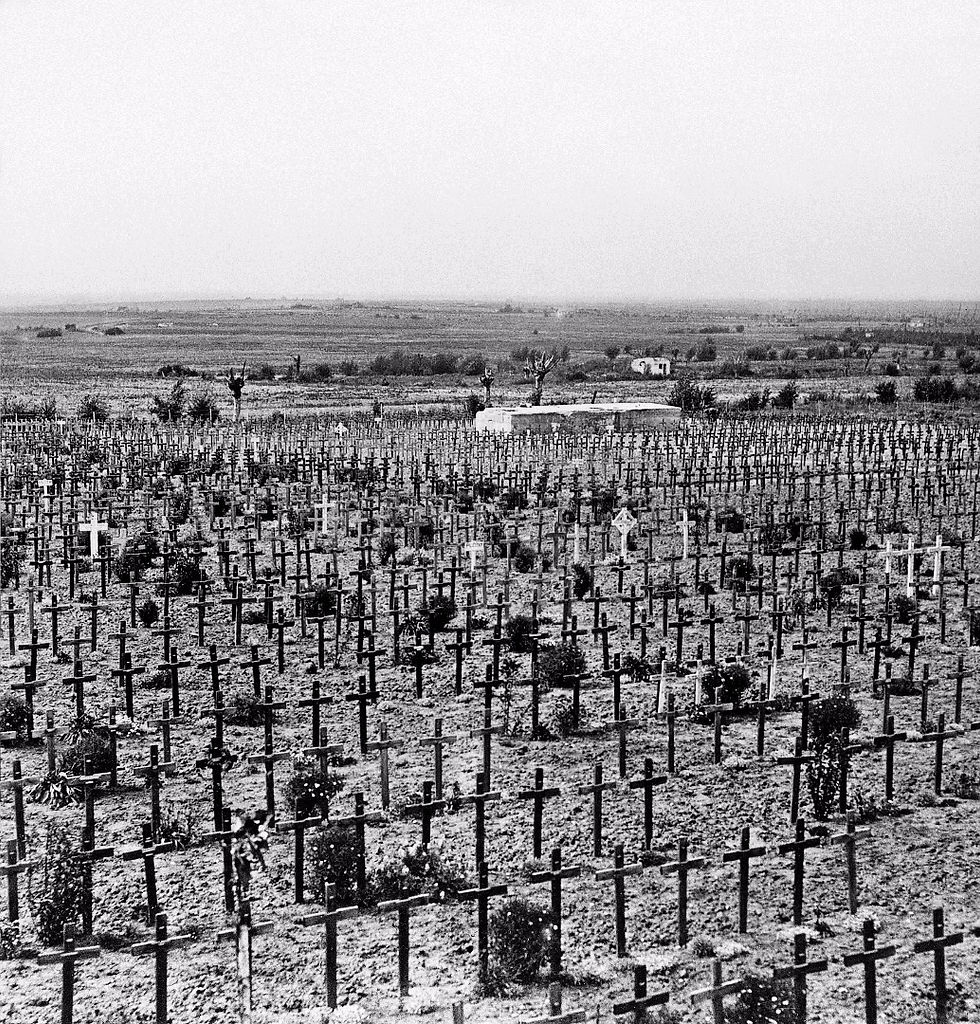
On paper, the Allies did. They took the ridge and held it through the winter. By almost any other measure it was a failure. The breakthrough never came, the Belgian ports stayed German and the Imperial War Museum's own summary is that the offensive failed to achieve Haig's objectives.
Then there's the part that makes Passchendaele so hard to defend. When the Germans launched their spring offensives in 1918, the British line around Ypres was stretched too thin to hold a bulge that stuck out towards Passchendaele. The ridge was abandoned, and ground that had taken more than three months and several hundred thousand casualties to win was gone in about three days.
Passchendaele stayed in German hands until 28 September 1918, when Belgian troops took it back in a single day at the start of the final Allied advance. The war ended six weeks later. Winston Churchill, who'd been Minister of Munitions while the shells were being fired, called the whole thing "a forlorn expenditure of valour and life without equal in futility".
Haig's defenders have always argued that the battle ground down the German army at a time when the French were in no state to fight, and that's not a silly point. But on the morning the Canadians went into the ruins, the war still had a year and five days left to run, right up to the minute Henry Gunther was killed at 10.59am on 11 November 1918.

Is the 2008 Film Passchendaele Accurate?
If you've come here from the film, it's Paul Gross's Passchendaele (2008), which he wrote, directed and starred in. It cost close to $20 million, a record for a Canadian production at the time, and the battlefield was built on the prairie at Canadian Forces Base Suffield in Alberta. Gross based it on his grandfather, Michael Dunne, who served with the 10th Battalion and fought in the battle.
Historians Tim Cook and Christopher Schultz went through it for the journal Canadian Military History in 2010 and their verdict was mixed. The mud, the exhaustion and the small habits of men in the line ring true. The plot doesn't hold up as well. The hero's journey from Vimy to shell shock to Calgary and back to the front is squeezed into an impossible timeline, and the film has the 10th Battalion recruiting in Calgary after it had gone overseas. The climax, with a soldier strung up on a cross of duckboards, borrows from the wartime rumour of a crucified Canadian, which was investigated and never proved.
Passchendaele Today
The village was rebuilt after the war and is spelled Passendale these days. Soldiers at the time had their own version, "Passion-dale", the valley of suffering. Siegfried Sassoon gave the place its epitaph in a single line of a 1918 poem, "I died in hell".
The Canadian memorial stands at Crest Farm on a road called Canadalaan, a plain granite block with a clear view along the road to the rebuilt church. Tyne Cot, just down the ridge, is the largest Commonwealth war cemetery in the world. It holds 11,956 graves, fewer than 4,000 of them identified, and the wall behind it carries the names of another 35,000 men who have no known grave. And the ground still isn't finished with 1917. Farmers around Ypres turn up more than 100 tons of unexploded shells every year.

Battle of Passchendaele FAQ
Is the Battle of Passchendaele the same as the Third Battle of Ypres? Yes. Third Ypres is the official name for the whole offensive from 31 July to 10 November 1917. Strictly speaking, the First and Second Battles of Passchendaele were only its last two phases, on 12 October and from 26 October to 10 November, but the village's name ended up attached to the lot.
How do you pronounce Passchendaele? English speakers say PASH-en-dale. The modern Flemish spelling, Passendale, is closer to PAH-sen-dah-luh.
Where is Passchendaele? In West Flanders in Belgium, about seven miles north-east of Ypres. It's now part of the municipality of Zonnebeke.
Can you visit the battlefield? Yes. The Passchendaele Museum in Zonnebeke has reconstructed trenches and a dugout, and it's open daily from 10am to 5.30pm except between 5 December and 31 January. A walking route of about 3km links it to Tyne Cot, where the visitor centre is free. Check times before you travel.
You Might Also Like
Sources
The Canadian Encyclopedia: Canada and the Battle of Passchendaele
The Canadian Encyclopedia: Passchendaele, Remembrance of Things Past
Australian War Memorial: Rain and Mud, the Ypres-Passchendaele Offensive
FirstWorldWar.com: Sir Douglas Haig's 4th Despatch, 25 December 1917
Forces News: Passchendaele, Britain's Most Controversial WW1 Battle
Imperial War Museums: What You Need to Know About the Third Battle of Ypres
CBC Archives: The Treacherous Passchendaele Ground Was an Enemy Itself