

Travel with Amal: The 17-Day Hijacking of TWA Flight 847
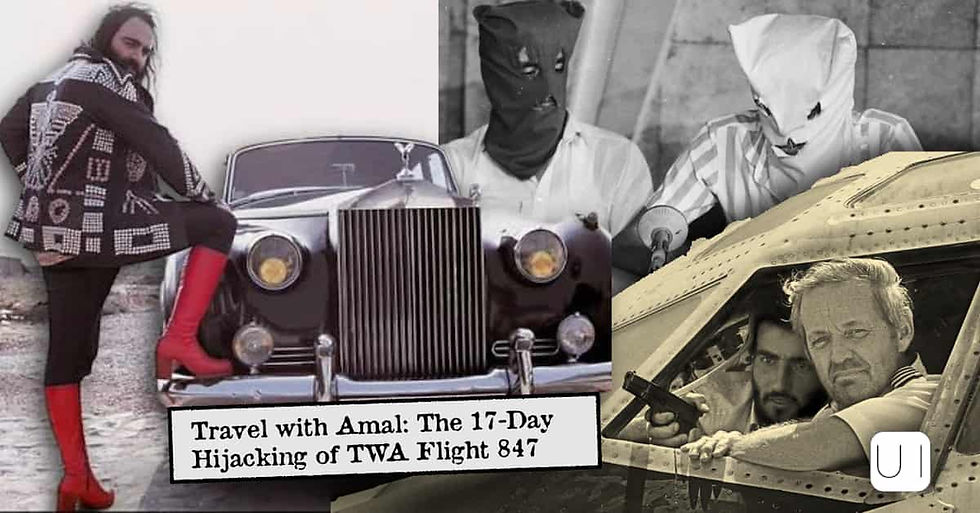
On the morning of 14 June 1985, Egyptian-Greek pop star Demis Roussos boarded TWA Flight 847 at Athens International Airport. He was 39 years old, travelling with his wife Pamela, and had sold somewhere north of 60 million records. He was one of the most recognisable voices in Europe. By that evening, he was sitting on a hijacked plane in war-torn Beirut, grenade pins being bitten between a terrorist's teeth a few rows ahead of him, listening to a US Navy diver being beaten to death in the front of the cabin.
TWA 847 became the defining hostage crisis of the 1980s. It ran for 17 days, crossed the Mediterranean six times, and was watched obsessively by a global television audience. It also gave the press one of the decade's most absurd subplots: a famous, rotund Greek singer in flowing robes, trapped somewhere between a Hezbollah hijacking and a press conference, telling journalists his captors were 'very nice people.'
The Men Who Took the Plane
Flight 847 was a Boeing 727 operating a Cairo to San Diego route, with stops including Athens, Rome, and Boston. It had 139 passengers and eight crew when it left Athens at 10:10 a.m. Twenty minutes into the short hop to Rome, two young Lebanese men stood up from their seats.

Mohammed Ali Hammadi, 21, and Hassan Izz-Al-Din, 22, had exploited a gap in Athens airport's security by boarding from the transit lounge rather than the main terminal, where checks were tighter. Hammadi carried a 9mm pistol. Izz-Al-Din held multiple hand grenades with the pins already removed, keeping the handles compressed. He held the loose pins in his mouth, between his teeth.
Anyone in the cabin who understood what they were looking at would have grasped the situation immediately: if the man with the grenades relaxed his grip for any reason, the flight was over.
A third hijacker, Ali Atwa, had been due to join them but was denied boarding because the flight was full. He was arrested at Athens airport shortly after the plane left, a detail that would become significant later. The two men who did make it on board ran up the aisle, screaming, and forced their way into the cockpit. Flight service manager Uli Derickson was dragged by her hair. Captain John Testrake and his crew were pistol-whipped. The plane banked east.
Beirut and the First Atrocity
The hijackers demanded to land in Beirut. Beirut's air traffic control refused, killed the runway lights, and moved vehicles and blockades onto the tarmac to prevent it. Testrake, a gun pressed to his head, relayed their position to the tower: 'He has pulled a hand-grenade pin and he is ready to blow up the aircraft if he has to. We must, I repeat, we must land at Beirut. We must land at Beirut. No alternative.'
The controllers relented. The plane landed and 19 passengers were released in exchange for fuel. Among those who remained on board was Demis Roussos, who was Greek and therefore not an immediate target of the hijackers' specific hostilities, though a celebrity in a confined metal tube full of armed men isn't exactly a comfortable position either.
The hijackers then ordered the plane to Algiers, where a further 20 passengers were let go. Then back to Beirut, and this is when the killing happened. The hijackers had been systematically identifying and beating military passengers throughout. Robert Stethem, 23, was a US Navy Seabee diver from Waldorf, Maryland, returning home from an underwater repair assignment in Greece. He was travelling in civilian clothes, but his passport gave him away.
Stethem was bound, blindfolded, and beaten for hours in the front of the aircraft. According to witnesses and later testimony, he refused throughout to cry out, understanding that if the plane stayed on the ground a rescue attempt remained possible, and that screaming might get the hijackers the compliance from the control tower they were demanding in exchange for stopping. He was beaten so badly he could later only be identified by his fingerprints. Testrake, when asked afterwards about Stethem, said simply: 'He was the bravest man I've ever seen in my life.' Eventually, one of the hijackers shot Stethem in the right temple and threw his body from the aircraft door onto the tarmac. Then shot him again.

Twelve additional armed terrorists boarded the plane in Beirut. Seven American passengers with names the hijackers judged to sound Jewish were removed and taken to a Shia prison in the city. The plane left again with 119 people on board.
Uli Derickson: The Woman Who Held It Together
In any account of TWA 847, Uli Derickson deserves her own section. The lead flight attendant was the single most important person in preventing the death toll from being far higher than it was, and she did it largely through the unlikely advantage of speaking German.
Neither hijacker spoke much English, but Hammadi spoke German, and Derickson had grown up in Germany. That shared language gave her a channel of communication that nobody else on the plane had. She used it constantly: negotiating, pleading, intervening when passengers were being beaten. On one occasion she physically stepped between a hijacker and a passenger he was pointing a gun at. The passenger later said she saved his life.
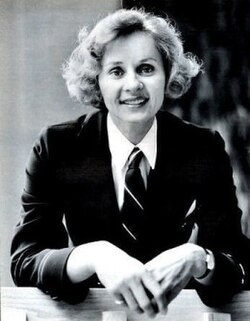
When the plane stopped in Algiers and the ground crew refused to refuel without payment, the hijackers threatened to start killing hostages. Derickson put the fuel on her own Shell Oil credit card. Six thousand gallons, charged at $5,500, later reimbursed. The hijackers also asked her to collect all passengers' passports and identify which belonged to Jewish travellers. She collected them, but hid the ones she thought might put passengers at risk. She couldn't protect everyone, but she protected as many as she could.
Derickson was also asked at one point to calm a hijacker by singing a German ballad he requested, which she did. The spectacle of a flight attendant singing German folk songs to a Hezbollah operative while 130 hostages sat terrified around them is, in its way, a precise summary of the surreal quality of the entire 17 days. She returned to flying for TWA a few months after the crisis ended. She died of cancer in 2005 at 60.
Demis Roussos: Birthday Cake and a Fateful Press Conference
Roussos had turned 39 a few days before boarding the flight, though some sources place his 40th birthday as occurring during the hijacking itself, which would make it one of the more memorable birthday settings in recorded history. Either way, he was on the plane, he was famous, and that combination made him useful.
During the period on the ground in Beirut, other hostages recognised him and asked him to sing. According to later accounts, he did. There was reportedly a birthday cake at some point. The details are hazy, partly because the broader situation was one in which a man had just been shot and thrown off the plane, but the image of Demis Roussos giving an impromptu performance for both his fellow hostages and their armed captors has lodged itself in the popular memory of the crisis.
Roussos was held for five days before being released on 19 June, along with two American nationals, after negotiations led by Nabih Berri, the leader of the Amal movement and a minister in the Lebanese government, who had been positioning himself as a moderating influence between the hijackers and the outside world. His release was linked to the Greek government freeing Ali Atwa, the third hijacker who'd been arrested at Athens airport. Greece handed Atwa over; the hijackers handed over Roussos and the two Americans.

At the press conference following his release, Roussos sat next to Berri and told waiting journalists that his captors had been 'very polite, very nice to me.' The quote made headlines around the world, and not entirely without context. Roussos was Egyptian-Greek, not American or Israeli, and had been treated accordingly. He'd also spent five days in a situation where survival instincts tend to shape one's public statements. In later interviews he was more considered, describing his sadness at seeing children of ten or twelve holding real rifles and speaking about the experience as genuinely traumatic. But the 'nice people' quote was the one that followed him. The spectacle of a celebrity hijacking generating its own surreal media narrative wasn't unique to 1985, but TWA 847 was its most sustained example.
His Louis Vuitton luggage, which he'd bought in Paris as a gift for Pamela, survived the ordeal intact. Both pieces were later restored at the Louis Vuitton atelier and kept packed away by Pamela at the family home for decades. They came up for auction in 2026.

Seventeen Days, One Camera, One Cockpit Window
The broader hostage crisis continued for twelve days after Roussos was freed. The remaining 40 American male passengers were taken off the plane and dispersed across different locations in Beirut, making any military rescue operation practically impossible. Beirut in 1985 was a city in the middle of a civil war, divided between militia factions, with no functioning satellite dish and videotapes that had to be driven under fire to Damascus before they could be broadcast.
Despite those obstacles, the crisis became a media event of the first order. Like D.B. Cooper's hijacking two decades earlier, Flight 847 captivated audiences in a way that little else could. On 20 June, ABC News scored what was described as the most remarkable journalistic moment of the crisis: reporter Charles Glass negotiated access to the plane and filmed an interview with Captain Testrake through the open cockpit window. The resulting image, Testrake speaking to camera with a gun pressed near his head by a young Hezbollah guard who, it was later noted, may have primarily wanted to be on television, became the defining photograph of the crisis.

Nabih Berri ran his own parallel media operation from Beirut, holding regular press conferences and effectively positioning Amal as the responsible adults in the situation, a strategy that served his political ambitions considerably. Journalists who covered it dubbed the flight 'Travel with Amal,' a joke that captures the strange media-saturated quality of the whole affair.
The Resolution and Its Aftermath
The remaining hostages were released on 30 June 1985, after 17 days, following negotiations that involved the US, Syria, Israel, and Lebanon. Israel released over 700 Lebanese Shia prisoners in the weeks that followed. Washington and Tel Aviv both denied this was a direct exchange. Few believed them.
The ringleader hijacker, Mohammed Ali Hammadi, was arrested at Frankfurt airport two years later carrying liquid explosives in his luggage. Within days of his arrest, two German citizens were kidnapped in Lebanon in a transparent attempt to discourage extradition. It worked: Germany tried Hammadi domestically, convicted him of Stethem's murder, and sentenced him to life. He was paroled in December 2005 after serving 19 years and returned to Beirut. The US has repeatedly requested his extradition. Lebanon has repeatedly declined.

Imad Mughniyeh, believed to have been the senior Hezbollah figure behind the operation, was placed on the FBI's Most Wanted Terrorists list after 9/11. He was assassinated by a car bomb in Damascus in February 2008, widely attributed to Israeli intelligence. Hassan Izz-Al-Din and Ali Atwa remain on the FBI list and at large.
Robert Stethem is buried at Arlington National Cemetery. A US Navy destroyer, the USS Stethem, was commissioned in his memory in 1995. The Attempted assassination of Pope John Paul II in 1981 is another example of a 1980s terrorist act where the perpetrators escaped lasting justice for years, but the TWA 847 case remains particularly stark: the man convicted of murdering a 23-year-old American serviceman spent fewer years in prison than Stethem had been alive.

Demis Roussos died in Athens in January 2015, aged 68. His obituaries mentioned the hijacking in the second or third paragraph, which is both entirely understandable and also a little strange: most people don't have 'survived a Hezbollah hostage crisis' anywhere in their life story at all, let alone as a footnote.
Sources
1. TWA Flight 847, Wikipedia: https://en.wikipedia.org/wiki/TWA_Flight_847
2. Hijacking of TWA Flight 847, FBI Famous Cases: https://www.fbi.gov/history/famous-cases/hijacking-of-twa-flight-847
3. Robert Stethem, Wikipedia: https://en.wikipedia.org/wiki/Robert_Stethem
4. How Uli Derickson Saved 152 Passengers, All That's Interesting: https://allthatsinteresting.com/uli-derickson-twa-flight-847
5. How Media-Hungry Terrorists Pulled Off the Wildest Hijacking, The Daily Beast: https://www.thedailybeast.com/how-media-hungry-terrorists-pulled-off-the-wildest-hijacking-of-all-time-on-flight-twa-847/
6. The Story of How Singer Demis Roussos Ended Up Being Held Hostage in Lebanon, The961: https://the961.com/demis-roussos-hostage-lebanon/
7. Demis Roussos' Louis Vuitton Trunks from Plane Hijacking Head to Auction, The National Herald: https://www.thenationalherald.com/demis-roussos-louis-vuitton-trunks-from-plane-hijacking-head-to-auction/
8. Robert Stethem, Navy Seabee Foundation: https://www.seabee.org/heritage/memorials/uss-robert-d-stethem/
9. TWA Flight 847 Hijacked, History.com: https://www.history.com/this-day-in-history/june-14/twa-flight-847-is-hijacked-by-terrorists
10. TWA Flight 847 Hijacking, Dan Rather Journalist: http://danratherjournalist.org/anchorman/breaking-news/twa-flight-847-hijacking.html
11. Stethem v. Islamic Republic of Iran, Center for Justice and Freedom: https://thecjf.org/cases/stethem/


