


The Kidnapping And Indoctrination Of Heiress, Patty Hearst
Updated: Oct 6

On February 4, 1974, a 19-year-old newspaper heiress named Patricia Hearst was dragged out of her Berkeley apartment by a small, self-styled revolutionary group calling itself the Symbionese Liberation Army. Nineteen months later she was arrested for armed robbery, having spent part of that time recording propaganda tapes under a new name and part of it robbing a bank at gunpoint. The basic shape of that story is well known. What tends to get left out is almost everything that happened after her 1975 arrest: a judge who died mid-case, a psychiatric battle that pitted MK-ULTRA-adjacent research against a genuine POW expert, and a group of former radicals who spent the next quarter century living as ordinary suburban parents before the FBI, a forensic sculptor and a parking ticket finally caught up with them.
Quick answers
• Who kidnapped Patty Hearst? The Symbionese Liberation Army, a small far-left group of about 8 to 10 members led by escaped convict Donald DeFreeze, most of the rest former Berkeley-area radicals.
• Why was she kidnapped? The SLA initially wanted her family's political weight used to free two jailed members, then shifted to ransom, demanding a food giveaway program that eventually totaled around $6 million.
• Did she really join her kidnappers? She took the name "Tania" and took part in an armed bank robbery, but a jury rejected her brainwashing defense and convicted her anyway in 1976.
• What happened to her and the SLA afterward? Hearst's sentence was commuted in 1979 and she was pardoned in 2001, while several surviving SLA members lived under aliases for decades before being arrested in 1999 and 2002.
The night two strangers came to the door
The abduction happened at apartment 4, 2603 Benvenue Street in Berkeley, around 9pm. According to the trial and investigative record later laid out in Jeffrey Toobin's book American Heiress, SLA member Angela Atwood knocked first, posing as a woman with car trouble. When Hearst's fiance, Steven Weed, opened the door, Donald DeFreeze and Bill Harris forced their way in behind her.
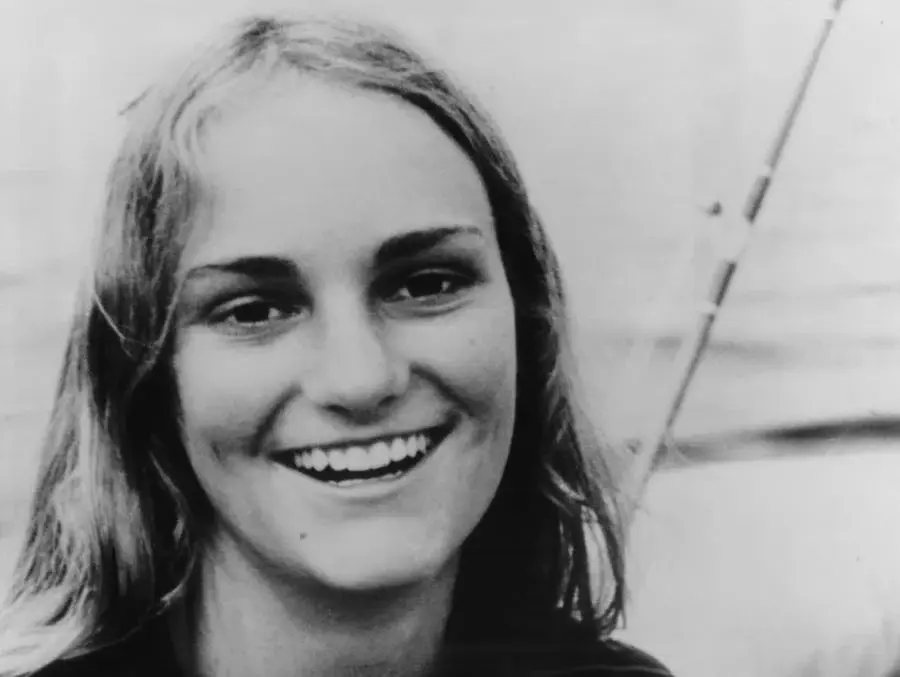
DeFreeze struck Weed with an improvised weapon, and when Weed lunged at Harris he was thrown to the ground and fled over a back fence rather than continuing the fight, a detail that complicates the braver, more heroic version of that night sometimes implied in softer retellings. Atwood chased Hearst into the kitchen at gunpoint while Camilla Hall waited outside as the getaway driver. Hearst was bound with nylon cord but struggled hard enough that her gag and blindfold kept slipping loose. A neighbor, Steven Suenaga, tried to intervene and was tied up and beaten with a rifle for his trouble, while another neighbor and three of her friends who witnessed the abduction from across the street had shots fired at them as they fled, though nobody was hit.
Who the Symbionese Liberation Army actually were
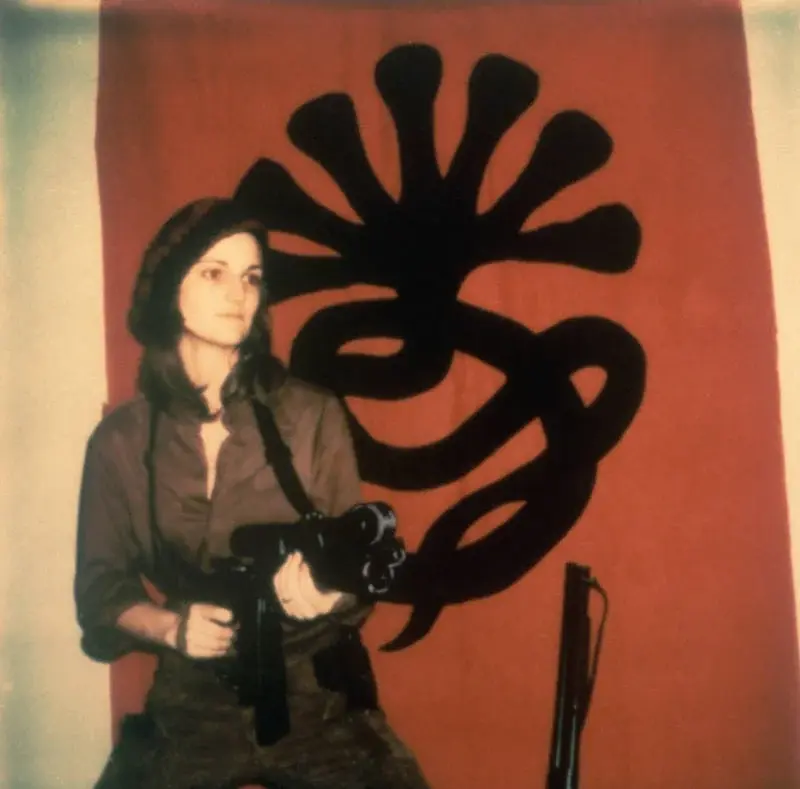
The name itself was Donald DeFreeze's own coinage, built from "symbiosis." His manifesto described the group as "a body of dissimilar bodies and organisms living in deep and loving harmony," and its seven-headed cobra emblem represented seven principles borrowed directly from Kwanzaa, unity, self-determination, collective work and responsibility, cooperative production, purpose, creativity and faith, given Swahili, Spanish and English names. DeFreeze also claimed the cobra symbol itself was tens of thousands of years old, a claim with no historical support whatsoever. The group grew out of a prison education program at Vacaville called the Black Cultural Association, reportedly connected to a UC Berkeley extension course taught by a man named Colston Westbrook, who brought student volunteers into the prison to meet inmates including DeFreeze.

A long-circulating theory, first published in the magazine Argosy and republished many times since, alleges DeFreeze had a history as a police informant and that Westbrook had intelligence-community ties, which would make the SLA's formation far murkier than a simple prison radicalization story. This remains an unproven, decades-old allegation rather than confirmed history, and even the original piece that raised it admitted its sourcing was incomplete. Over its short life the group had roughly ten members in total, including several rarely named in shorter retellings: Nancy Ling Perry, Patricia "Mizmoon" Soltysik, Camilla Hall, Willie Wolfe, Angela Atwood, Bill and Emily Harris, Joe Remiro, Russell Little, and later recruits Kathleen Soliah, Michael Bortin, James Kilgore and Wendy Yoshimura, an explosives specialist who'd already gone underground in 1972 after police found weapons and explosives in a garage she'd rented under a false name.
The killing the SLA got its own reasoning wrong about
Before Hearst was ever taken, the SLA had already killed someone. On November 6, 1973, Oakland schools superintendent Marcus Foster was shot with bullets that had been hollowed out and packed with cyanide, and his deputy, Robert Blackburn, was also hit and survived. The SLA claimed it killed Foster because he supported a proposed student photo ID program, but Foster had actually opposed that program, meaning the group's own stated motive for the murder was factually backwards. Joseph Remiro was convicted of the killing and given a life sentence, and remains in prison to this day. Russell Little's original conviction, by contrast, was overturned on appeal in 1979 over a flawed jury instruction, and he was acquitted at retrial, a detail that rarely survives into shorter accounts that treat both men as equally convicted.

A ransom that kept climbing
The SLA's first communique, essentially a hostage notice describing Hearst as under "arrest," went out over Berkeley radio station KPFA on February 7, 1974, followed by further tapes and letters on February 12. As proof of custody, the group included one of Hearst's own stolen credit cards. The ransom demand itself grew in stages rather than being one fixed number: the SLA initially wanted a food distribution program worth $2 million, $500,000 from Randolph Hearst personally and $1.5 million from the Hearst Foundation, then escalated days later, threatening to cut off contact unless the Hearst Corporation added another $4 million within 24 hours, bringing the total demanded to roughly $6 million. Most retellings just quote one of those two figures rather than explaining that the number climbed.
Fifty eight days in a closet, more or less
The oft-repeated claim that Hearst spent 57 or 58 straight days locked in a closet is more myth than precise history. At trial, she testified she was held in a closet roughly five to six feet by three feet at the first safe house in Daly City, initially bound, blindfolded and in darkness, and unable to eat normally for around ten days. When the group moved to a second safe house on Golden Gate Avenue in San Francisco in mid-March, she was transported inside a garbage can in a car trunk and held in another closet, where she was made to record propaganda tapes with DeFreeze present.
Added together, her trial testimony describes something closer to a month to six weeks of actual closet confinement across two locations, not one unbroken 58-day stretch. The 58-day figure more likely tracks the gap between the kidnapping on February 4 and her April 3 tape announcing she'd chosen to stay and fight as a member of the SLA under the name "Tania." She also later testified that Bill and Emily Harris physically abused her, including being struck in the eye more than once, over the year and a half that followed the bank robbery, a separate period from the initial captivity.
The Hibernia Bank robbery
On April 15, 1974, the SLA robbed the Sunset District branch of San Francisco's Hibernia Bank, taking $10,692.51, worth close to $68,000 today. The robbery produced the case's most famous image: security camera footage of Hearst standing in the lobby holding an M1 carbine while DeFreeze and others carried out the raid and Camilla Hall waited outside as the getaway driver. Two bystanders were shot and wounded during the group's escape. The footage gave the FBI its first hard visual evidence tying Hall specifically to the SLA, since her face matched existing employment and school photographs. In a small, almost unbelievable footnote, J.O. Tobin, a friend of Hearst's and the son of Hibernia Bank's own president at the time, later personally lobbied President Carter for her clemency.
The shootout that ended the group
The SLA's collapse traces back to an oddly small incident. On May 16, 1974, Bill Harris was tackled by a security guard while allegedly shoplifting a bandolier from an Inglewood sporting goods store, and Hearst, waiting outside in a van, opened fire to cover his escape. A parking ticket left near the store led the FBI and LAPD straight to the group's safe house on East 54th Street the very next day. Roughly 500 law enforcement officers surrounded the building, tear gas was thrown inside, and the house caught fire while the SLA members inside kept shooting even as it burned around them. Sources differ on the exact number of rounds exchanged, estimates range from around 5,000 to as many as 9,000, so it's fairer to describe it as a range than a single precise figure.

Six SLA members died in the fire and gunfight: Donald DeFreeze, Nancy Ling Perry, Patricia Soltysik, Camilla Hall, Angela Atwood and Willie Wolfe, who had also become Hearst's romantic partner within the group. Hearst and the Harrises survived only because they were staying elsewhere after the shoplifting incident, and reportedly watched the entire raid live on television from a motel near Disneyland in Anaheim. The broadcast itself made television history: cameraman Ray Hernandez, working with reporter Bob Simmons and cameraman Rich Brito, used one of the first portable shoulder-mounted minicam setups, tethered to a 1,000-foot cable, to broadcast live for two and a half hours straight, staying on air until 2am. The coverage is widely credited with pushing American newsrooms toward live minicam reporting and helped create a new Emmy category built specifically around it.

The trial that turned into a fight over brainwashing
Hearst's defense, led by F. Lee Bailey, rested almost entirely on a theory of "coercive persuasion," the idea that prolonged captivity had actually overridden her free will. Three psychiatrists testified for the defense. Dr. Louis Jolyon West of UCLA concluded she'd developed a childlike dependency on her captors; Dr. Robert Jay Lifton of Yale, the era's leading academic authority on POW brainwashing, argued her ordeal was in some ways worse than what he'd documented in actual prisoners of war, given how long she'd spent blindfolded; and Dr. Martin Orne of the University of Pennsylvania told the court flatly that "Miss Hearst simply did not lie." It's worth noting, with appropriate care, that West's own research background included well-documented ties to the CIA's MK-ULTRA-era mind control studies, an irony some later commentators have pointed out without it changing the substance of his trial testimony. The prosecution countered with its own psychiatrists: Dr. Joel Fort, a veteran of hundreds of trials, argued Hearst was simply predisposed to radicalism, describing what he called a "velcro theory" of her personality sticking to whatever cause was nearest, while Dr. Harry Kozol of Massachusetts's Bridgewater treatment center also testified against the brainwashing theory.

The jury sided with the prosecution, and the defense wasn't helped by a piece of physical evidence prosecutors used against it: at her 1975 arrest, Hearst was still carrying an Olmec-style monkey figurine that Willie Wolfe had given her, a sentimental keepsake that cut against her own trial claim that Wolfe had assaulted her. Judge Oliver Carter presided over the trial and the guilty verdict on March 20, 1976, but suffered a fatal heart attack that June, before he could sentence her. His successor, Judge William H. Orrick Jr., ultimately handed down her seven-year sentence that September, a detail most retellings skip entirely by implying one judge handled the case start to finish.
What actually happened to her afterward
President Jimmy Carter commuted Hearst's sentence in 1979 after less than two years served, and President Bill Clinton granted her a full pardon in 2001, one of his final acts in office. Support for clemency crossed the usual political lines in a way that undercuts any simple partisan reading of the case, drawing figures as different as Cesar Chavez, Ronald Reagan, John Wayne and William F. Buckley. Opposition existed too, and came from a striking name: Robert Mueller, then the U.S. Attorney in San Francisco and decades away from his own turn as FBI director and special counsel, argued against her pardon application, writing that Hearst had always presented herself as "a person above the law" who felt her wealth and social position put her beyond accountability despite the jury's verdict. After her release, Hearst married Bernard Shaw, a police officer who had been hired as her bodyguard during trial preparations and later became head of security for the Hearst Corporation. They had two daughters, Lydia and Gillian. Hearst wrote a memoir, Every Secret Thing, in 1982, later adapted into a 1988 film, and went on to appear in four John Waters films: Cry-Baby, Serial Mom, Pecker and Cecil B. Demented.
The SLA members who vanished for decades
This is the part of the story most retellings leave out entirely, and it's arguably the most remarkable thread in the whole case. Several surviving SLA members simply disappeared into ordinary American life for the better part of thirty years. Kathleen Soliah rebuilt herself as Sara Jane Olson, a doctor's wife and mother of three in St Paul, Minnesota, until her arrest on June 16, 1999. She was wanted for planting pipe bombs under two LAPD patrol cars outside an IHOP in August 1975, devices packed with roughly 120 nails each that failed to detonate only because a clothespin trigger's metal contacts closed slightly off center. She eventually pleaded guilty and was sentenced to 20 years to life, and after being paroled in 2009 was briefly released a year early because of a sentencing miscalculation, intercepted at Los Angeles International Airport and sent back to finish her corrected term within days.
Bill and Emily Harris also built ordinary lives after their own 1970s prison terms, Bill working as a law office receptionist and later a private investigator while coaching youth soccer in Oakland, Emily working as a computer programmer and later at the Disney Channel. Both were arrested in January 2002, along with Michael Bortin, a flooring contractor in Portland married to Soliah's sister, and charged over the April 21, 1975 killing of Myrna Opsahl, a 42-year-old mother of four shot during an SLA bank robbery in Carmichael, California while depositing church receipts. All pleaded guilty to second-degree murder that November: Emily Harris received 8 years, Bill Harris 7, Bortin 6 and Olson 6 concurrent with her existing sentence.
The very last SLA fugitive, James Kilgore, spent almost 27 years on the run, teaching English at the University of Cape Town in South Africa under the alias Charles William Pape, before forensic sculptor Frank Bender's age-progressed bust of him aired on America's Most Wanted and led to his arrest in November 2002 through a joint operation involving South African police, Interpol, the State Department and the FBI. Wendy Yoshimura, the group's explosives expert, was never charged in the Opsahl case and declined an offer of immunity in exchange for testifying against her former comrades.
A case that keeps getting revisited
The story's 50th anniversary in early 2024 brought a small wave of fresh attention. Author Roger Rapoport published Searching for Patty Hearst, a novelized attempt to reconcile the case's many conflicting accounts, and gave interviews discussing his own belief that DeFreeze was likely a police informant, though he stops short of calling him a full government agent. That same year, Bill Harris gave an on-record interview revisiting the shoplifting incident that ultimately led police to the SLA's final safe house. Older coverage, including CNN's 2018 docuseries The Radical Story of Patty Hearst, remains the more heavily viewed treatment, but the 2024 anniversary cluster is the most recent genuine wave of new material on the case.
Further reading on the site
Hearst's case sits alongside a small cluster of other headline-grabbing kidnappings from the same turbulent decade. The Kidnapping of John Paul Getty III covers another wealthy family's refusal to pay a ransom just a year earlier, with far grimmer results. The Girl in the Box tells the story of Colleen Stan, another California captivity case that raises similar questions about coercion and control. And for another kidnapping carried out by an ideologically driven group rather than a lone criminal, there's The Kidnapping, Ransom and Murder of Aldo Moro, in which Italy's Red Brigades made a very different set of demands and a much deadlier choice.


