

The Real Story Of John Wojtowicz And The Bank Robbery That Inspired ‘Dog Day Afternoon’
Updated: Aug 3

John Stanley Wojtowicz, a name that may not be immediately recognizable, became infamous for orchestrating a dramatic bank robbery in Brooklyn, New York, in 1972. This event later inspired the critically acclaimed film “Dog Day Afternoon,” starring Al Pacino. Wojtowicz’s story is one of desperate love, social challenges, and a dramatic brush with crime.
Early Life and Background
John Wojtowicz was born on March 9, 1945, in New York City. He grew up in a traditional, working-class family in Brooklyn. After graduating from high school, Wojtowicz enlisted in the U.S. Army in 1965, serving in Vietnam. His time in the military was marked by discipline, but it also exposed him to different cultures and experiences that would shape his future decisions. During basic training, he had his first gay encounter with “a hillbilly by the name of Wilbur,” which was a significant and formative experience for him.
Upon returning from Vietnam, where he had survived a traumatic rocket attack on his base, Wojtowicz struggled to adjust to civilian life. He married Carmen Bifulco in 1967, and they had two children together. However, his marriage became strained due to his burgeoning realization of his bisexuality, which eventually led to their separation. Wojtowicz then became involved in New York’s gay community, where he met Ernest Aron (later known as Elizabeth Eden).

The Motivation Behind the Crime
The driving force behind Wojtowicz's infamous bank robbery was love, but the full story is more complicated and more poignant than that single word suggests. His partner, Elizabeth Eden, was a transgender woman who desperately wanted gender affirming surgery. In 1972, that surgery was not only prohibitively expensive but also almost impossible to access in the United States. Few surgeons performed the procedure, insurance never covered it, and the handful of clinics that did exist charged sums that were entirely out of reach for a working class New Yorker like Wojtowicz.
Eden had already attempted suicide once, a fact Wojtowicz would later cite as the moment he decided he had to find the money by any means necessary. He settled on the only solution he could see: rob a bank. It was a reckless, poorly conceived plan built entirely on desperation rather than criminal expertise, and it shows in how the robbery actually unfolded.
The Bank Robbery
On August 22, 1972, John Wojtowicz, along with Salvatore Naturile (known as “Sal”) and Bobby Westenberg, attempted to rob a Chase Manhattan Bank branch in Gravesend, Brooklyn. Wojtowicz had met both Sal and Westenberg at a gay bar, and he convinced them to join him in the heist. The trio was far from professional, as evidenced by their chaotic approach to the crime.
Initially, they drove around New York looking for a bank to rob. At their first target, they accidentally dropped their shotgun, causing it to go off, but they managed to flee. At the second bank, Westenberg ran into a friend of his mother’s, leading them to call off the attempt. They finally decided on a Chase Bank in the Gravesend section of Brooklyn, inspired by recently watching 'The Godfather' they passed a note to the bank employee saying "this is an offer you can't refuse"
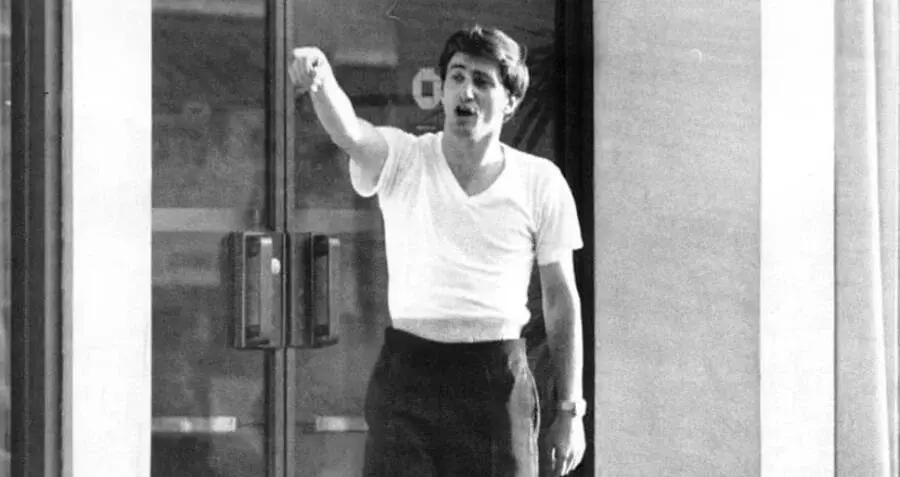
The robbery quickly turned into a 14-hour standoff with police, FBI agents, journalists, and snipers. Around 2,000 spectators, including Wojtowicz’s own mother, gathered in the sweltering summer heat to watch the drama unfold. One journalist on the scene described it as a “full-blown show.”
Wojtowicz eagerly embraced his role as the ringleader. He ordered pizza for his hostages, paid the delivery guy with wads of cash taken from the bank, and even tossed more stolen money into the cheering crowd outside. His actions endeared him to the hostages, who began to see him less as a threat and more as a desperate man with a purpose. Teller Shirley Ball later recalled, “I realized that he was friendly…had a purpose for robbing the bank…he thought he would be in and out.”

However, the situation was far from an in-and-out job. As the hours dragged on, tensions rose. At one point, New York Daily News reporter Robert Kappstatter got the interview of a lifetime when he called the bank on a whim and Wojtowicz himself answered. Caught off guard, Kappstatter opened the conversation with a casual “so, how’s it going?” to which Wojtowicz snapped back, “How do you think?”

Arrest and Imprisonment
The standoff ended when FBI agents convinced Wojtowicz to surrender, promising that he and Sal would be safely transported to an airport for a flight out of the country. It was a ruse. The man behind the wheel was FBI agent James Murphy, and the car was trailed by dozens of patrol cars the whole way. As soon as they arrived at the airport, Murphy shot and killed Naturile, and Wojtowicz was arrested on the spot.
Wojtowicz was subsequently charged with multiple crimes, including bank robbery and kidnapping. He was sentenced to 20 years in prison and first released on parole in 1978 after serving five years. Parole violations sent him back twice more, in 1984 and 1986, before his final release in April 1987, the same year Eden died.

Life After Prison
After his release, Wojtowicz lived a relatively quiet life. He capitalized on his notoriety, at times selling the rights to his story and consulting on the film "Dog Day Afternoon," which brought him some financial benefit. The movie depicted Wojtowicz as a sympathetic character driven by love, a portrayal that garnered him a unique form of celebrity.
Wojtowicz continued to express his love and dedication to Eden, who received her surgery with the help of the money from the film. Unfortunately, Eden passed away from AIDS-related complications in 1987, the same year Wojtowicz was released from prison.
The film itself became a genuine critical success, grossing over $50 million against a $4 million budget and picking up six Oscar nominations, including one for Al Pacino as Best Actor. Frank Pierson won for Best Adapted Screenplay. None of that box office success stopped Wojtowicz from feeling shortchanged. He'd been paid $7,500 for the rights to his story plus a promised 1 percent of the film's net profits, and he came to believe Warner Bros. had never paid him what he was owed.
A Marriage, a Lawsuit, and a Fight That Outlived Him
While still in prison, Wojtowicz married a fellow inmate, George Heath, who worked as his jailhouse lawyer, in a 1974 prison ceremony. Heath went on to represent Wojtowicz's interests in a royalty dispute with Warner Bros. that dragged on for nearly four decades. Wojtowicz believed the studio had breached its deal to pay him a percentage of the film's profits, and the legal fight over that claim continued for years after Dog Day Afternoon's release, through his final release from prison, and remarkably, straight through his own death in 2006. New York's Human Resources Administration placed a lien on his estate, including his ongoing royalty payments, to recover the public assistance benefits he'd lived on for years, and Heath kept fighting on his late husband's behalf regardless. A New York appeals court didn't finally put an end to the litigation until 2011, five years after the man at the center of it had already died.
A Strange Kind of Fame
Wojtowicz's relationship with his own story remained complicated for the rest of his life. While imprisoned, he was granted permission to watch Dog Day Afternoon itself, after reportedly threatening the warden that he would start a riot if refused. He was allowed to see it under guard, alongside other inmates. He later described the experience as moving, but he was furious about how the film had handled certain details, particularly around his marriage to Eden and the portrayal of his mother. He wrote an angry letter to the culture editor of the New York Times, accusing the film of distorting the truth.
After his final release in 1987, Wojtowicz settled back into his old neighbourhood, living with his mother and surviving largely on welfare. He never escaped the shadow of the robbery, not that he seemed to want to. At one point he applied for a job as a security guard at a Chase bank, reportedly telling the manager, "I'm the guy from Dog Day Afternoon, and if I'm guarding your bank, nobody's going to rob the Dog's bank." He did not get the job.
He spent his final years much as he had spent the years before, on the margins, broke, and instantly recognisable to anyone who knew the film. John Wojtowicz died of cancer on 2nd January 2006, aged 60.

Legacy
John Wojtowicz's story is a complex blend of crime, love, and the quest for acceptance. His desperate actions highlighted the lengths to which he was willing to go to support his partner, against a backdrop of a society struggling to understand and accept LGBTQ+ individuals. His story lives on, immortalized in "Dog Day Afternoon" and remembered as a peculiar chapter in the history of American crime. His life and actions, though criminal, evoke a mix of sympathy and reflection on the challenges faced by marginalised individuals and the extremes of human emotion.
Wojtowicz wasn't the only man to turn a moment of crisis into must-watch television. A decade later in France, a robbery defendant named Georges Courtois would do the same thing from inside a courtroom, taking his own trial hostage and demanding cameras be brought in so he could put the judges themselves on trial.


