

The 1976 Chowchilla Kidnapping: When 26 Children And 1 Adult Were Buried Alive

On the afternoon of Thursday 15 July 1976, 55 year old school bus driver Frank Edward Ray collected 26 children from Dairyland Elementary School in the farming town of Chowchilla. The pupils had spent the day at the Chowchilla Fairgrounds swimming pool as part of a summer excursion organised by the school. For most of the children it had been an ordinary outing, the kind they looked forward to every year, and Ray was the familiar figure who ensured they reached home safely.
As the bus made its way along a quiet rural road bordered by orchards and grazing land, Ray noticed a white van parked across the road ahead. He slowed, thinking the driver might move, but the van remained fixed in place. As soon as he stopped the bus, three men stepped out, each wearing nylon stockings pulled tightly over their faces. Before any of the children could understand what was happening, one of the men climbed the stairs of the bus and pointed a gun at Ray. Another ordered the children to stay silent. A third took Ray's place at the steering wheel and began to drive. Ray attempted to reassure the frightened children, quietly saying, "Stay close now. We will be all right."

The hijacking was quick. The bus was forced off its usual route and taken along isolated back roads where no one was likely to witness what was unfolding. Years later, several local farm workers reported that they had seen the strange procession of the yellow bus followed by a van, but at the time nothing seemed unusual enough to prompt an alert.
Inside the Stifling Heat of the Vans
The three abductors were young men from well known families in the Bay Area. They were twenty four year old Frederick Newhall Woods and his associates James and Richard Schoenfeld. Although their families were wealthy, all three men had accumulated considerable debt. They had spent months planning a crime they believed would solve their financial problems. They had studied bus schedules, scouted rural locations and purchased supplies under false names.

The men forced Ray and the children into two vans that had been carefully modified for the kidnapping. The windows were painted black, the interiors were lined with crude soundproofing and there were no seats. The children were packed onto the floor where the heat rose quickly. It was a Central Valley summer, with temperatures well above thirty degrees, and the enclosed vans became difficult to breathe in. Several children fainted. Others wept quietly, too afraid to speak. The journey that should have lasted a few hours stretched into almost twelve as the abductors avoided main roads and potential police checkpoints.
Ray continued to reassure the children whenever he could. One pupil later remembered hearing him say through the van wall, "Keep talking to each other. Keep your minds awake." His calmness in those hours became a crucial anchor for the terrified group.
A Buried Trruck in a Livermore Quarry
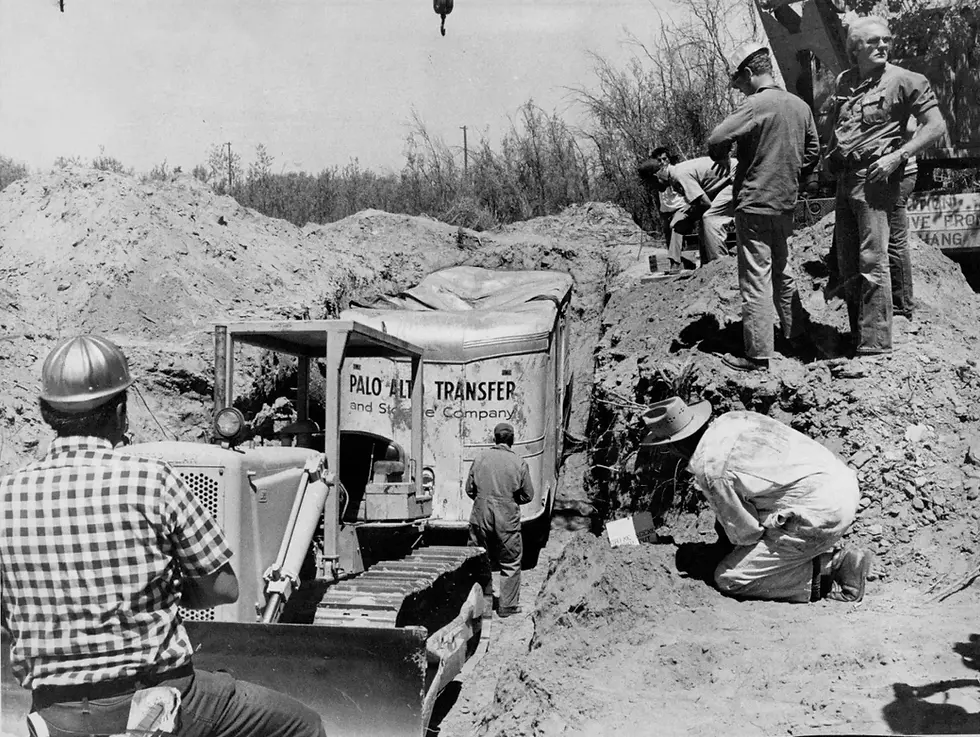
The vans finally reached their destination in the early hours of 16 July. It was a remote section of the California Rock and Gravel Quarry in Livermore, a site owned by Woods’ father. Hidden among mounds of earth was a large truck trailer that the kidnappers had transformed into an underground chamber. Weeks earlier they had excavated a deep pit using heavy equipment from the quarry, lowered the trailer into it and covered the top with sheet metal and layers of earth to disguise the structure.

The kidnappers forced the children and Ray down a ladder into the buried trailer. The interior had been fitted with mattresses, makeshift ventilation pipes, limited food, water and a crude toilet. It was clear that the abductors believed they would hold their captives for an extended period while they negotiated a ransom. They meticulously recorded the name and age of every child on individual Jack in the Box hamburger wrappers, a detail that later became one of the most haunting elements of the case.
Inside the trailer, the conditions deteriorated quickly. The roof began to sag under the weight of the earth above. Dirt fell through gaps in the metal sheeting and several of the children believed the ceiling would collapse on top of them. The air was thick and difficult to breathe. There was very little food, and the milk provided spoiled in the oppressive heat.

Fear, Darkness and the Beginning of a Plan
As the hours passed, the fear intensified. Many of the children were too frightened even to use the makeshift toilet. Some cried through the night. Ray, who was exhausted and drenched in sweat, continued to comfort them. One eleven year old recalled Ray saying, If there is a way out, we will find it. He never stopped thinking of solutions.
What the abductors did not know was that their victims were already looking for a way to escape. Among the children was fourteen year old Michael Marshall, tall, strong and resolute. He had listened to Ray’s instructions throughout the ordeal and had begun to study the ceiling and the position of the hatch where they had been lowered. If they could reach it, they might be able to force it open.
How Fourteen Year Old Michael Marshall Helped Them Escape
Ray gathered the older children, including Michael, and devised a plan to stack beds and mattresses to form a platform beneath the roof. It was the only way to reach the hatch. The group worked in near silence, lifting heavy mattresses despite the cramped space. As the structure grew taller, Ray encouraged Michael to climb onto the top and test whether the hatch could be shifted.
The hatch was covered by metal sheeting weighed down by two one hundred pound industrial batteries. Michael pushed at the metal plate, but at first it did not budge. Ray urged him not to give up. Using a length of wooden slat that had broken off from the interior structure, Michael wedged it into a narrow gap he had found. With considerable force he began to pry the sheeting upward. Dirt poured down into the trailer and several children screamed, convinced the ceiling was collapsing. Ray kept his voice steady, telling them to breathe and stay together.

Michael continued to push until he managed to dislodge the metal plate. The batteries slid aside and the gap widened enough for him to scrape away the packed earth above. It took nearly an hour to create an opening large enough to climb through. Once Michael pulled himself out, Ray handed the younger children up one by one. Approximately sixteen hours after they had been imprisoned underground, Ray and all twenty six children emerged into the dawn light.
Reaching Safety
The group was dehydrated, filthy and exhausted. They had no sense of where they were, although Ray suspected they were in a quarry. They began to walk until they reached the guard shack located near the entrance. The guard, seeing a procession of dirt streaked children and a weary bus driver approaching, was momentarily unsure if he was dreaming. When he realised what had happened, he radioed for help.
Alameda County sheriffs arrived quickly. The children were taken to Santa Rita Jail because it was the closest facility with medical staff available at that hour. Doctors and emergency personnel treated them for dehydration, heat exhaustion and cuts. Several still had dirt in their hair and clothing from their emergence from the underground trailer. The sheriffs collected statements and listened carefully as the children described the abductors.

Back in Chowchilla, parents had spent the night searching fields, barns and irrigation canals, terrified that their children had drowned or had been lost in the orchards. When news arrived that the children and their driver were alive, the town erupted into tears, relief and disbelief. Hundreds of townspeople flooded the streets, embracing each other as though welcoming the children home was a collective act.
The Ransom That Was Never Delivered
The abductors had expected to telephone in a request for a five million dollar ransom. However, the kidnappers were unable to place the call because the Chowchilla police switchboard had been overwhelmed by frantic parents and national news organisations. When the men eventually awoke from a sleep, they turned on the news and discovered that their captives had freed themselves. Their plan had collapsed before they could even issue their demand.
The Investigation and Capture of the Kidnappers
The FBI quickly turned its attention to the Woods family quarry after discovering that one of the vans used in the abduction had been purchased by Woods. When investigators searched the Woods family estate, they uncovered detailed notes, maps, receipts for the purchase of the trailer and vans, draft ransom letters, fake identification papers and the Jack in the Box wrappers listing each child's name and age. It was an overwhelming volume of evidence.

The search also revealed plans for a ransom drop that Woods and the Schoenfelds had designed with a surprising level of detail. They intended to have the money dropped from an aircraft into the Santa Cruz Mountains and retrieve it under cover of darkness. They had even purchased a Cadillac and painted it with flat black spray paint to serve as a getaway vehicle.
Arrest warrants were issued immediately. Richard Schoenfeld surrendered after eight days. James Schoenfeld was found in Menlo Park two weeks later. Woods fled to Canada but was arrested by the Royal Canadian Mounted Police soon afterwards.
Trial, Conviction and the Long Legal Aftermath
All three men pleaded guilty to kidnapping for ransom and robbery. They refused to plead guilty to the charge of causing bodily harm because that charge carried a mandatory sentence of life in prison without the possibility of parole. A trial on the bodily harm count followed. The jury found them guilty, and the judge imposed the mandatory sentence. It was, in that sense, a very different legal path to the one taken in the kidnapping of Barbara Jane Mackle, a strikingly similar case from Georgia eight years earlier in which a lone student heiress was buried alive in a purpose-built box, though Mackle's case ended in a paid ransom and a quicker resolution than Chowchilla's.
Years later, an appellate court overturned the bodily harm conviction, ruling that the cuts and bruises suffered by the children did not meet the legal definition of serious physical injury. The three men were resentenced to life with the possibility of parole.

Richard Schoenfeld was released in 2012. James followed in 2015. Woods, who repeatedly minimised his actions and amassed multiple disciplinary violations while in prison, had his parole denied many times. It emerged that he had been secretly running businesses from inside prison and retained access to a significant family trust. After prolonged legal argument and intervention by state officials, Woods was finally granted parole in 2022.

The Legacy of Ed Ray
Ed Ray was celebrated as a hero, although he never considered himself one. When asked about the ordeal, he simply said, "I had children in my care. It was my duty to protect them." His modesty endeared him even more to the families of Chowchilla. The children he saved remained grateful for the rest of their lives, many visiting him decades later with their own families to thank him. Ray died on 17 May 2012, and in his honour the town renamed its Sports and Leisure Park as Edward Ray Park. Every year on his birthday, 26 February, Chowchilla observes Edward Ray Day.

The Lifelong Impact on the Children
Although the escape ended the physical danger, the psychological wounds endured for decades. Studies of the children revealed significant trauma. Many suffered nightmares about burial and abduction. Others developed severe phobias, including fear of cars, fear of darkness, fear of the wind or even fear of household appliances. Several struggled with depression, substance use or difficulties in adulthood. A few encountered the criminal justice system after exhibiting controlling or violent behaviour, shaped by unresolved trauma from their buried captivity. Survivor Larry Park later told CBS News: "By the time I was 21, I was using meth. I was smoking crack." Survivor Jennifer Brown Hyde put it plainly too: "When you've gone through something that's so traumatic, it's hard to go back and be a normal kid again." A similarly long shadow followed Colleen Stan, held captive in a different part of California only a year later, whose case shows just how much captivity trauma can outlast the physical ordeal itself, regardless of how short or long the imprisonment actually was.
One survivor described the experience years later as something that never leaves you. "You grow older, but the feeling of being buried alive stays somewhere in your mind."

An Unusual Motive
Among the most unexpected revelations to emerge during the investigation was the curious detail that the kidnappers had planned to use part of the ransom money to restore the Rengstorff House, a Victorian landmark in Mountain View. Woods had been fascinated by the house since childhood. For investigators, the idea that a crime of this magnitude had been designed partly to support a restoration project added another strange layer to an already extraordinary case. It puts the Chowchilla kidnappers in an odd category of financially desperate but strangely idealistic criminals, not unlike the political calculation behind the kidnapping and murder of Aldo Moro, though the comparison only goes so far. Moro's kidnappers were ideologues pursuing a political goal. Woods and the Schoenfelds were three men in debt who happened to also want to save an old house.
Sources:
1. New York Times: "26 Children Seized in California Escape From Burying Van", July 17, 1976. https://www.nytimes.com/1976/07/17/archives/26-children-seized-in-california-escape-from-burying-van-van-is.html
2. New York Times: "Bus Driver Describes Escape From Buried Van", July 18, 1976. https://www.nytimes.com/1976/07/18/archives/bus-driver-describes-escape-from-buried-van.html
3. Washington Post: "How 26 Kidnapped Children Dug Themselves Out", July 1976.
4. California Court of Appeal: People v. Woods. https://law.justia.com/cases/california/court-of-appeal/3d/108/19.html
5. California Court of Appeal: People v. Schoenfeld. https://law.justia.com/cases/california/court-of-appeal/2012/c070550.html
6. California Governor's Office: Governor Newsom Denies Parole for Frederick Woods, 2022. https://www.gov.ca.gov/2022/03/25/governor-newsom-denies-parole-for-frederick-woods/
7. BBC News: How 26 Children Escaped Being Buried Alive by Kidnappers. https://www.bbc.com/news/magazine-35406374
8. CBS News: Remembering Chowchilla, 48 Hours. https://www.cbsnews.com/news/the-kidnapping-of-26-california-children-and-their-bus-driver/
9. CNN: The Kidnapped Children Who Climbed Out of a Grave. https://edition.cnn.com/2016/07/15/us/chowchilla-kidnapping-survivors/index.html
10. ABC30 Fresno: Interview with Survivor Jennifer Brown Hyde, 2022. https://abc30.com/chowchilla-kidnapping-survivor-jennifer-brown-hyde-parole-hearing/11679635/


