

The Kidnapping of John Paul Getty III: Inside One of History’s Most Shocking Ransom Cases

In November 1973, an envelope arrived at the offices of an Italian newspaper. Inside was a lock of reddish hair and a human ear. The accompanying note read: "This is Paul's ear. If we don't get some money within 10 days, then the other ear will arrive. In other words, he will arrive in little bits." The ear belonged to sixteen-year-old John Paul Getty III, grandson of J. Paul Getty, at the time the richest private citizen on Earth. His grandfather had already been refusing to pay a ransom for four months. He would go on negotiating for several more weeks after the ear arrived, and when he finally agreed to pay, he made sure to pay only the portion he could write off on his taxes.
Kidnapping at Piazza Farnese
In the bustling, bohemian centre of Piazza Farnese in Rome, where expatriates, artists, and socialites mingled, 16-year-old John Paul Getty III was a familiar face. Known for his rebellious spirit and carefree lifestyle, Paul had carved out a niche for himself in the city's underground scene. On 10 July 1973, his life took a sudden turn. At around 3 AM, Paul was abducted by members of the 'Ndrangheta. This crime syndicate, known for kidnapping for ransom, had set their sights on a particularly lucrative target, Paul was an heir to the Getty oil fortune, one of the most substantial in the world.
According to later accounts, Paul had gone out to a newsstand to buy a comic book that night when he was struck, blindfolded, and bundled into a car. He was driven south, eventually ending up chained in a remote cave in the Calabrian mountains, the traditional stronghold of the 'Ndrangheta.
Two days after his disappearance, his mother Gail received a ransom note assembled from words cut out of magazines, along with a letter in Paul's own handwriting: "Dear Mummy, since Monday I have fallen into the hands of kidnappers. Don't let me be killed."
The Getty Wealth—and the Curse of Its Legacy
The story of the Getty family fortune begins with J. Paul Getty, the family patriarch and one of the wealthiest men of his time. He amassed a vast fortune through the Getty Oil Company, a business empire he built in the 1950s. Known for his frugality as much as his wealth, J. Paul Getty famously lived in a mansion in Surrey, UK, where he installed a payphone to avoid paying for guests' calls. A committed Anglophile, Getty spent most of his later years in the United Kingdom, effectively distancing himself from his American family.
To put his fortune in context: in 1957, Fortune magazine named Getty the wealthiest living American. By 1966, the Guinness Book of Records declared him the world's wealthiest private citizen, with an estimated worth of $1.2 billion, somewhere north of $11 billion in today's money. He was, by any measure, one of a tiny handful of men on the planet who could have paid the ransom for his grandson without noticing the dent.
John Paul Getty Jr., Paul's father, also inherited a love for the British Isles, though his temperament diverged sharply from his father's. Known for his philanthropy and less rigid ways, Getty Jr. spent time working for Getty Oil Italiana in Rome, which provided a base for young Paul's upbringing. However, Getty Jr. and Paul's mother, Gail Harris, divorced when Paul was just a child, leaving Gail with primary responsibility for raising their son.

A Troubled Youth in Rome
Growing up amidst the glamour and indulgence of Rome’s social circles, Paul was a character as unpredictable as he was charismatic. Raised largely without the direct oversight of his father, Paul adopted a bohemian lifestyle. He was expelled from several prestigious schools, once after staging a stunt inspired by the Manson Family murders, painting hallways and unnerving school authorities. His wild antics didn’t stop there—by age 15, he was frequently seen at nightclubs, associating with left-wing activists, and engaging in reckless behaviour, including selling art and jewellery to fund his lifestyle.
During one protest, he even threw a Molotov cocktail and was arrested, earning him a reputation among his friends and family as something of a loose cannon. His behaviour, though alarming, was typical of the rebellious youth of the time. However, it was this lifestyle that ultimately made him vulnerable, leading him directly into the hands of his captors.

A Ransom Demand Met with Indifference
Shortly after Paul’s disappearance, Gail Harris, his mother, received a chilling call from his captors, demanding $17 million for his release. She was a single mother who had long been divorced from Getty Jr. and had no means of accessing such an enormous sum. When she explained this to the captors, they reportedly instructed, “Get it from London,” implying that she should turn to Paul’s grandfather for the funds.
Paul’s father, who had also struggled to keep up with his son’s wayward behaviour, tried reaching out to his own father, J. Paul Getty Sr. However, the response from the oil magnate was as dismissive as it was shocking:
“I have 14 other grandchildren, and if I pay one penny now, then I will have 14 kidnapped grandchildren.”
Getty Sr. was unmoved by the pleas, insisting that paying the ransom would encourage further abductions.
He later expanded on his reasoning publicly, framing it almost as a matter of principle against global terrorism: "Acceding to the demands of criminals and terrorists merely guarantees the continuing increase and spread of lawlessness, violence and such outrages as terror-bombings, skyjackings, and the slaughter of hostages that plague our present-day world."
Adding to the surreal nature of the event, there were whispers within the family and even among police that the young Getty may have orchestrated his own kidnapping, in part to access his grandfather's wealth. Given Paul's history of attention-seeking stunts, including reportedly joking to friends in the past about staging "the perfect kidnapping," both the local Italian police and members of his own family took this theory seriously for months. It was a genuine factor in the family's slow response, not merely background gossip. The theory only collapsed entirely after the kidnappers grew frustrated enough to start mutilating their hostage, by which point no one seriously doubted the abduction was real.

Brutal Treatment in Captivity
Paul's ordeal was as brutal as it was prolonged. The 'Ndrangheta, known for their ruthlessness, kept him chained in a remote cave in the Calabrian mountains. Here, he endured regular beatings and torture. The conditions were deplorable, and Paul's captors had no qualms about letting him suffer to add pressure on his family. As the months wore on and the family showed no sign of paying, his treatment grew steadily worse: his captors took away his radio and killed a small bird he had adopted as a companion in the cave.
Months passed with no response from his grandfather, and the captors grew increasingly impatient. In November, three months into the ordeal, they cut off Paul's ear and attempted to mail it, along with a lock of his hair, to an Italian newspaper. Even this gruesome escalation took weeks to have its intended effect: the delivery itself was delayed nearly three weeks by an Italian postal strike, meaning the family's leverage and Paul's suffering both dragged on even longer than the kidnappers had planned. When the envelope finally arrived, it carried the now-infamous note: "This is Paul's ear. If we don't get some money within 10 days, the other ear will arrive. In other words, he will arrive in little pieces." This shocking act finally jolted J. Paul Getty Sr. into action.
The Ransom is Paid, but With Conditions
At last, Getty Sr. relented and agreed to pay the ransom. However, the notorious penny-pincher struck a bargain with the kidnappers, reducing the payment from $17 million to roughly $2.9 million. Even then, the deal was structured with characteristic precision: Getty agreed to personally cover only $2.2 million of the total, because that was the maximum amount his accountants advised would qualify as a tax-deductible casualty loss under the tax code of the time. The remaining balance was structured as a loan to his own son.
Even then, he only provided this amount on loan to his son, J. Paul Getty Jr., insisting that he pay it back with a 4% interest rate. Despite the money finally being secured, Paul's freedom came at a painful cost—both financially and emotionally.
On 15 December 1973, Paul was finally freed, found abandoned at a petrol station near Lauria, in the province of Potenza, just days after his 17th birthday and five months after his abduction began. His ear was permanently mutilated, a stark reminder of the horrors he had endured. At his mother's suggestion, he called his grandfather to thank him for paying the ransom. Getty Sr. refused to come to the phone.
Psychological Toll and the Struggle for a Normal Life
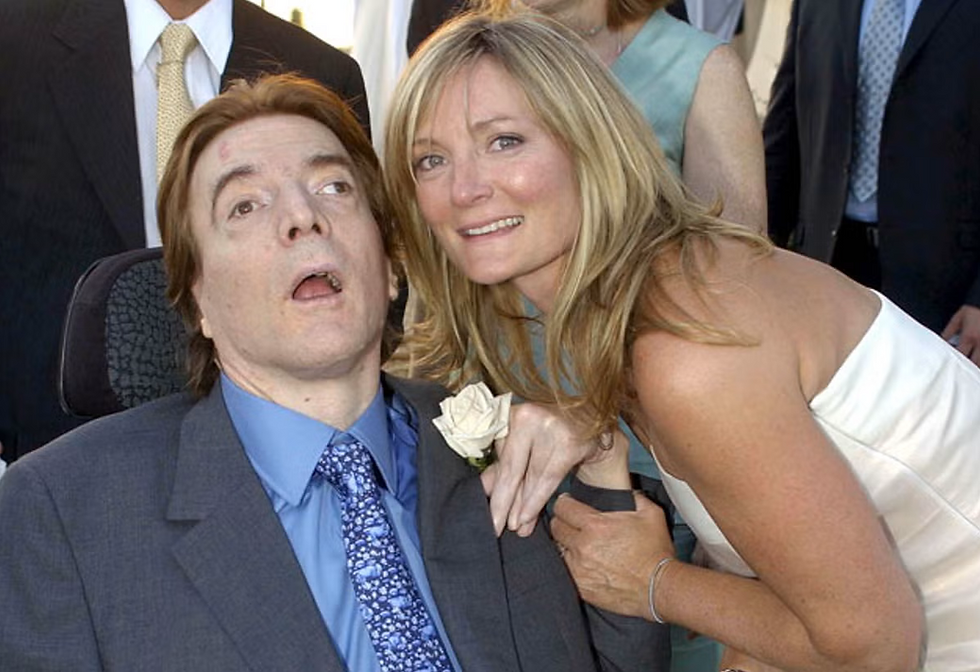
While his physical injuries slowly healed, Paul's mental scars were far deeper and more enduring. The kidnapping left him psychologically shattered, and he soon sought solace in drugs and alcohol. Friends and family noted how the experience seemed to drain his vitality, leading to destructive coping mechanisms. By 1981, his dependence on these substances culminated in a catastrophic event—after consuming a combination of Valium, methadone, and alcohol, Paul suffered liver failure and a stroke, leaving him a quadriplegic and partially blind at just 25 years old.
His godfather, Bill Newsom, poignantly recalled the lasting impact of Paul's trauma, saying,
"Everything was gone. Everything except his mind."
The Getty wealth provided for his medical needs, transforming his Beverly Hills home into a private medical facility. But no amount of money could restore his former self.
The Legal Fallout and the Public's Fascination
In the years that followed Paul's release, Italian authorities pursued those responsible for the kidnapping. Nine individuals were arrested, among them several high-ranking members of the 'Ndrangheta, including Girolamo Piromalli and Saverio Mammoliti. However, due to the influence and resources of the crime syndicate, only two of the kidnappers were ever convicted, while the rest, including both Piromalli and Mammoliti, were acquitted for lack of evidence. Most of the ransom money was never recovered.
It wasn't the only American kidnapping-for-ransom case to grip the public that decade. In 1968, twenty-year-old college student Barbara Jane Mackle was abducted in the US and held buried alive underground for 83 hours while her family negotiated her release. The Getty case stood apart for the scale of the family's wealth, the brutality of the mutilation, and the public spectacle of a billionaire haggling over his own grandson's life.
This high-profile case brought global attention not only to the Getty family but also to the brutal realities of organised crime in Italy. For the public, the kidnapping became emblematic of the darker side of wealth and privilege. Paul's story, tragic and complex, highlighted the strains and conflicts within one of the world's richest families.
Paul's Legacy and Final Years
In 1977, Paul underwent plastic surgery to partially reconstruct the ear his kidnappers had severed. He married Martine Zacher in 1979, and the couple had a son, Balthazar Getty, who would go on to become a recognisable actor and model in his own right, appearing in films and on television from the 1990s onward. Paul's 1981 stroke left him needing full-time care for the rest of his life, but Balthazar and the wider family remained close to him throughout.
John Paul Getty III passed away in 2011 at age 54, leaving behind a legacy tainted by the violence and trauma of his youth. His life, shaped by both unimaginable wealth and profound suffering, became a cautionary tale, a stark reminder that privilege does not shield one from pain. His kidnapping exposed the divisions and dysfunction within the Getty family, and decades later it was dramatised twice more for a new generation, in Ridley Scott's 2017 film All the Money in the World and the 2018 television series Trust.
His grandfather, the man who refused to pay, died in 1976, three years after the kidnapping, having never fully reconciled with the grandson whose ear he'd let a crime syndicate mail to a newspaper rather than open his chequebook a few months sooner.
Sources:
1. The Guardian — Obituary: John Paul Getty III. https://www.theguardian.com/world/2011/jul/18/john-paul-getty-iii
2. The New York Times — John Paul Getty III, Kidnapping Victim, Dies at 54. https://www.nytimes.com/2011/07/12/world/europe/12getty.html
3. Time Magazine — How the Getty Kidnapping Changed the World. https://time.com/5068192/getty-kidnapping-history/
4. Wikipedia: John Paul Getty III. https://en.wikipedia.org/wiki/John_Paul_Getty_III
5. Wikipedia: J. Paul Getty. https://en.wikipedia.org/wiki/J._Paul_Getty
6. Rolling Stone — The True Story Behind 'Trust'. https://www.rollingstone.com/culture/culture-news/john-paul-getty-iii-the-true-story-behind-trust-203954/
7. Smithsonian Magazine — The Getty Kidnapping. https://www.smithsonianmag.com/history/the-getty-kidnapping-12370335/


