

The Chilean Coup of 1973: The Rise of Pinochet and the Shadows of CIA Involvement
Updated: 1 day ago

On 11 September 1973, Chile's air force bombed its own presidential palace. By the time the smoke cleared, the country's democratically elected president was dead, a general nobody had really worried about was in charge, and a set of secret files in Washington already showed the CIA had been trying to stop this exact outcome for three years, only to end up helping to cause it. The coup that put Augusto Pinochet in power for the next seventeen years wasn't a sudden event. It was the end point of a campaign that started with a different killing entirely, one most retellings of this story skip straight past.
Chile's coup gets told a lot, but usually as a broad outline: Allende, socialism, economic crisis, coup, Pinochet, thousands dead. What's often left out is just how specific and documented the CIA's involvement actually was, right down to handwritten notes from the Oval Office, and how much of the regime's brutality ran through people, places and decisions that rarely make it into the standard version.
Quick answers
Did the CIA actually plan the 1973 coup?
Not directly, no, but it spent three years working to create the conditions for one. Declassified documents show the CIA tried to block Allende's inauguration in 1970, funded opposition groups and strikes throughout his presidency, and was in regular contact with the officers who eventually carried out the coup, even though the final operation was run by the Chilean military itself.
How did Salvador Allende die?
Officially, by suicide, using an AK-47 that Fidel Castro had given him as a gift, as Chilean troops closed in on the presidential palace. A 2011 exhumation confirmed the gunshot wounds were self-inflicted, though a forensic dispute over the exact sequence of events has never fully gone away.
How many people were killed or disappeared under Pinochet?
Chile's official truth commissions have documented over 3,200 people killed or forcibly disappeared and around 40,000 tortured during the seventeen-year dictatorship, though families and human rights groups believe the real number of victims is higher.
Was Pinochet ever prosecuted?
Not fully. He was arrested in London in 1998 on a Spanish warrant but released on health grounds. He died in 2006 while facing hundreds of separate charges, having never been convicted of a single one, though a 2004 discovery of over a hundred secret bank accounts finally got him stripped of his legal immunity in Chile.

Salvador Allende and Chile's Democratic Road to Socialism
Salvador Allende was a physician who'd spent 25 years in Chilean politics before he was elected president in 1970, on his fourth attempt, as the candidate of a left-wing coalition called Popular Unity. He was Chile's first Marxist head of state and one of the only ones in history to reach power through an open, multi-party election rather than a revolution. His plan for getting there, and staying there, was built entirely around legality: nationalise copper, redistribute land, take major industries into state hands, all through Congress and the courts rather than around them.
It didn't stay calm for long. Inflation spiralled, shortages produced a black market, and Chile's business class and much of its middle class turned hard against him. By 1973 truckers, shopkeepers and even some traditionally left-leaning unions were striking against a socialist government, which tells you how bad things had got. What the live version of this story rarely mentions is how much of that pressure had outside help.
The CIA's First Move Wasn't the Coup, It Was an Assassination
Most retellings of 1973 start the CIA's involvement with the coup itself. It actually starts three years earlier, within days of Allende's election win, with a covert programme codenamed Track II. Nixon wanted Allende stopped before Chile's Congress could formally confirm him as president that October, and the plan settled on was to kidnap the constitutionalist head of the Chilean army, General René Schneider, since his loyalty to the constitution was the main thing standing between the plotters and a coup. Declassified cables reviewed decades later by the National Security Archive show CIA officers known as "false flaggers" met repeatedly with Chilean military plotters to arrange it.
The kidnapping attempt, on 22 October 1970, went wrong. Schneider's car was rammed, and when he pulled his own pistol to defend himself the assault team opened fire. He died three days later. It's easy to read that as an accident rather than an assassination, but the CIA's own after-action reports showed no remorse over the outcome and the agency openly credited the resulting chaos with helping set a coup climate in Chile. Schneider's death didn't stop Allende's confirmation, but it's the clearest evidence there is that Washington's Chile playbook started with a killing, not a summit.

"Make the Economy Scream": Three Years of Covert Pressure
Eleven days after Allende's election, Nixon met CIA director Richard Helms for fifteen minutes in the Oval Office. Helms's own handwritten notes from that meeting, later declassified, record Nixon's instructions almost verbatim: $10 million available, more if needed, full-time job, best men available, a 48-hour deadline for a plan of action, and four words that became the defining phrase of the whole campaign, "make the economy scream." The full note, preserved by the National Security Archive, is blunter than the phrase alone suggests: Nixon wanted no involvement traced to the US embassy and was explicit that he didn't care about the risks.

What followed was years of covert funding for opposition media, bribes to Chilean congressmen, and financial backing for the very strikes that helped paralyse Allende's economy, including the October 1972 truckers' strike that crippled the country for weeks. National security adviser Henry Kissinger framed the stakes to Nixon in stark terms: a successful elected Marxist government in Chile would send exactly the wrong signal to the rest of Latin America and beyond. None of this proves the CIA built the 1973 coup brick by brick. What it proves is that by the time the Chilean military moved, the ground had already been worked for three years.
A Reluctant General Joins the Plot
Augusto Pinochet is remembered today as the face of the coup, but for most of 1973 he wasn't seen as a threat at all. He'd built a reputation as a strict constitutionalist, the kind of career soldier who stayed out of politics, and he'd only recently been promoted to commander-in-chief of the army after General Carlos Prats resigned under pressure from right-wing officers. Even a failed coup attempt in June 1973, an episode known in Chile as the Tanquetazo, when a single tank regiment tried and failed to storm the presidential palace, didn't change Pinochet's public posture.
That changed on 9 September, just two days before the coup, when Pinochet finally joined the conspiracy that had been building around him for months. His late arrival turned out to matter enormously, since it meant the officers who'd been planning the takeover needed the army's most senior man on board, and once he was in, his seniority put him at the head of the junta almost automatically.

11 September 1973: The Day La Moneda Burned
The coup began before dawn, with the navy seizing the port city of Valparaíso while army and air force units moved on Santiago. Air force jets bombed pro-Allende radio stations to cut off his ability to rally support, and by mid-morning the military had surrounded La Moneda, the presidential palace, with tanks and troops. Pinochet and the other junta leaders gave Allende an ultimatum: leave the country on a plane they'd provide, or the palace would be bombed.
Allende refused. In his last radio broadcast, transmitted from inside the burning palace on a station the military hadn't yet managed to silence, he told Chileans he wouldn't resign and that history would judge those who'd betrayed their oaths. Hawker Hunter jets then bombed La Moneda directly, something that had never happened to a South American presidential palace before. By early afternoon the building was on fire and Allende's supporters had been overwhelmed.

The Gun Fidel Castro Gave Him: Allende's Final Act
Allende died inside La Moneda around noon, and the weapon involved is one of the strangest details in the whole story. It was an AK-47 that Fidel Castro had personally given him years earlier, engraved with a dedication from one revolutionary to another. According to Dr Patricio Guijón, one of the few witnesses inside the palace at the time, he stepped away for a moment, looked back into the room and saw Allende's body driven upward by the impact of the weapon firing. A 2011 exhumation and forensic review, ordered after decades of speculation that he'd been executed rather than taken his own life, confirmed the fatal wounds were self-inflicted.
That hasn't fully settled it. Forensic pathologist Luis Ravanal has argued for years that the crime scene photos show no blood on Allende's collar or clothing, which would be expected if he'd fired the rifle while still alive and upright, and that a second, smaller wound suggests a different weapon may have been involved first. Castro himself spent decades telling a more heroic version, that Allende had died fighting Pinochet's troops with the rifle rather than turning it on himself. Allende's own family, including his lawyer daughter, has continued to press for the AK-47 itself to be located and returned, petitioning the Chilean army decades after it was seized when the palace fell.
Pinochet Takes Total Power
The junta had initially agreed to rotate its leadership among the four service chiefs. Pinochet didn't wait long to end that arrangement. He suspended the constitution, dissolved Congress, and within a few years had elevated himself first to "supreme chief of the nation" and then president, ruling largely by decree for the next decade and a half. Chile's long tradition of military neutrality, the same tradition that had made Pinochet look like a safe bet in the first place, was gone almost overnight.

The Caravan of Death: Executions in the Coup's First Weeks
Some of the regime's worst violence happened before Pinochet had even properly settled into power. Starting on 30 September 1973, less than three weeks after the coup, he sent General Sergio Arellano Stark on a tour of military garrisons across Chile by Puma helicopter, with orders described only as coordinating criteria between local commanders and the new junta. What actually happened became known as the Caravana de la Muerte, the Caravan of Death. At stop after stop, Arellano's squad pulled political prisoners, most of whom had already turned themselves in voluntarily and posed no threat, out of their cells at night and executed them, sometimes machine-gunning entire groups at once. By the time the caravan finished its route on 22 October, it had killed at least 75 people and, by some counts, as many as 97.
One of the men it was meant to intimidate was General Joaquín Lagos, the officer in charge of the northern city of Antofagasta, who resigned in disgust the morning after discovering Arellano's squad had executed 56 prisoners behind his back. Officers judged not brutal enough were themselves punished or removed. The point, according to testimony later gathered by Chile's own human rights institute, wasn't only to eliminate Allende supporters. It was to terrify the military's own ranks into line just as much as it terrified the public, making clear from the very first weeks exactly what kind of regime this was going to be.

Estadio Chile: The Torture and Murder of Víctor Jara
One of the coup's most infamous individual victims is the folk singer Víctor Jara, and his story shows exactly how quickly the new regime turned on artists and intellectuals. Jara was rounded up on 12 September, the day after the coup, along with thousands of others at the State Technical University, and taken to Estadio Chile, a sports stadium in Santiago turned overnight into a makeshift detention centre holding around 5,000 people. Over the following days his captors broke his hands and wrists, reportedly while mockingly telling him to play guitar for them. On 15 or 16 September he was machine-gunned, his body found with 44 bullets in it. Fellow prisoners later testified he defiantly sang a line from the protest song Venceremos even after the beatings began.
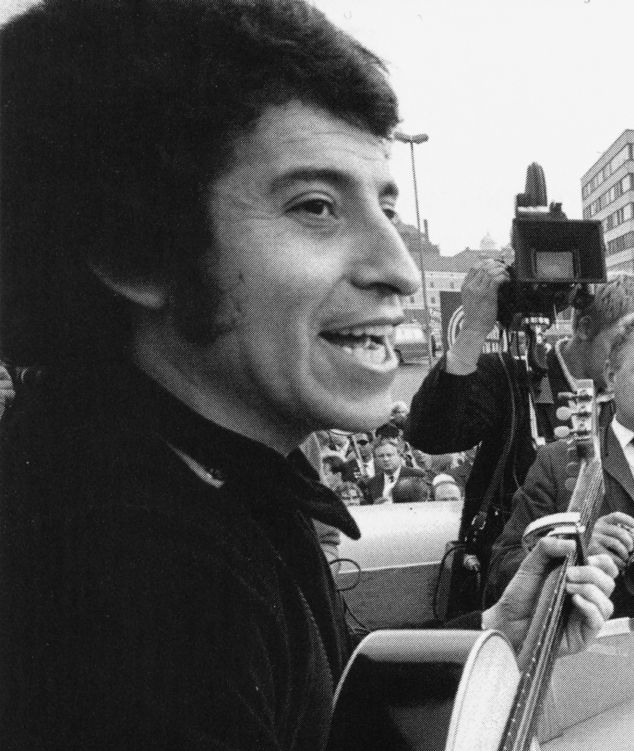
Justice took decades. A former Chilean army officer, Pedro Pablo Barrientos, who'd been living quietly in Florida for years, was finally found liable for Jara's torture and killing in a 2016 US civil trial under the Torture Victim Protection Act, with a jury awarding the family $28 million in damages. Chilean courts convicted nine former soldiers over the killing in 2018. Estadio Chile itself was renamed Estadio Víctor Jara in 2004, a small piece of the story that rarely makes it into shorter accounts of the coup.
DINA, Colonia Dignidad and the Machinery of Terror
Pinochet's secret police, the National Intelligence Directorate, or DINA, became the main engine of the repression that followed. It's estimated that around 40,000 people were tortured under the dictatorship, run through more than a thousand clandestine detention sites across the country, with thousands more killed or disappeared entirely.
One of the strangest and darkest of those sites wasn't a military base at all. Colonia Dignidad was an isolated, heavily fenced German colony in southern Chile, founded in 1961 by Paul Schäfer, a former Nazi medic who ran the settlement as a cult and sexually abused children there for decades. In exchange for tax breaks and protection from prosecution over his own crimes, Schäfer let DINA use Colonia Dignidad's underground tunnels as a secret torture and detention centre. Survivors and former DINA agents have described electric shock torture and executions carried out there, with bodies later exhumed and reportedly cremated on Pinochet's own orders. The Chilean government only began the process of expropriating the site from its remaining residents in the 2020s, more than sixty years after it was founded.

Operation Condor: Killing Opponents Abroad
Pinochet's regime didn't confine its violence to Chile. Operation Condor was a coordinated campaign among the intelligence services of Chile, Argentina, Brazil, Paraguay, Uruguay and Bolivia to hunt down and eliminate political opponents no matter where they'd fled to, and DINA's very first kill under that campaign was a general, not a civilian.
Carlos Prats had been Pinochet's own predecessor as army commander, the constitutionalist general whose resignation in August 1973 cleared the last real obstacle to a coup. Prats fled to Buenos Aires immediately after the coup rather than join it. On 30 September 1974, DINA chief Manuel Contreras had him and his wife Sofía Cuthbert killed by a remote-detonated car bomb outside their apartment. The man who built and triggered it was Michael Townley, an American expatriate working for DINA, who according to documents later published by the National Security Archive had spent weeks in Argentina tracking the couple's movements before the attack. It took until 2008, more than three decades later, for a Chilean judge to hand Contreras a double life sentence for the killings.
Townley went on to build the bomb that killed Orlando Letelier, Chile's former ambassador to the US and a prominent critic of the regime, along with his American colleague Ronni Moffitt, when DINA agents planted it under his car in Washington, DC in 1976. It remains one of the only acts of state-sponsored terrorism ever carried out on US soil by a foreign government, and by the time it happened, DINA had already proven with Prats that no distance and no exile was safe from it.
Two Americans Caught in the Purge
The coup killed two US citizens too, and their story became famous largely through a Hollywood film. Charles Horman, a 31-year-old freelance journalist and documentary filmmaker, and Frank Teruggi, a 24-year-old activist and writer, were both seized by the Chilean military within days of the coup and executed at the National Stadium, another mass detention site in Santiago. Horman's father spent years trying to establish what had happened to his son and came to believe US officials in Santiago had known about the killing early on and helped cover it up. That version of events was dramatised in the 1982 Costa-Gavras film Missing, starring Jack Lemmon, which the State Department publicly objected to at the time.
A retired Chilean general, Pedro Espinoza Bravo, was eventually convicted as the mastermind behind both killings, a verdict a Chilean court upheld on appeal, and a 2011 declassified State Department memo acknowledged the US government may have played some role, witting or not, in Horman's death.

The Chicago Boys and the "Miracle" That Wasn't Quite a Miracle
The economic side of Pinochet's Chile is often mentioned only in passing, but it's central to the regime's legacy. A group of Chilean economists, many trained at the University of Chicago under professors like Arnold Harberger and inspired by Milton Friedman's free-market theories, became known as the Chicago Boys. Pinochet handed them control of the economy in 1975, after a year and a half of indecision, and they imposed what Friedman himself called "shock treatment": steep public spending cuts, mass privatisation, and the near-total removal of trade barriers and labour protections. Friedman personally visited Chile and met Pinochet in 1975 to make the case for it directly.

The immediate results were brutal. Industrial production fell 28 percent in 1975 alone and GDP contracted by nearly 13 percent that year, before a longer recovery that Friedman later celebrated as the "Miracle of Chile." The description hasn't aged well. A second, deeper crash in 1982 wiped out much of the earlier progress, and Nobel laureate economist Amartya Sen later dismissed the whole episode as far from the success it was billed as. What's rarely mentioned is how directly the economic experiment and the repression were connected: this radical restructuring of an entire economy was only possible because a dictatorship had already crushed the unions and political opposition that would otherwise have fought it.
The Vote Pinochet Never Thought He'd Lose
By the mid-1980s Pinochet was confident enough in his own legacy, and in the economic growth the Chicago Boys had eventually produced, to call a plebiscite in October 1988 on whether he should stay in power for another eight years. He'd written the rules of the vote himself, in a 1980 constitution designed to keep him in office. He expected to win. Instead, a coalition of opposition parties ran a famously upbeat "No" campaign built around a rainbow logo and hopeful, almost cheerful, adverts rather than fear, using the small amount of nightly television time the constitution guaranteed them.
The "No" side won with just under 56 percent of the vote. Documents later declassified and published by the National Security Archive show Pinochet had secretly prepared plans to use violence to annul the result if he lost, but once his own junta colleagues, including the air force and police chiefs, publicly acknowledged the "No" victory on national television, he had no path left to override it. He stepped down as president in 1990, though he stayed on as army commander for years afterward.

Arrest, Secret Bank Accounts and an Unfinished Reckoning
The push for legal accountability took a genuine turn in 1998, when Pinochet was arrested in London on an international warrant issued by Spanish judge Baltasar Garzón. It was the first time a former head of state had been detained abroad on human rights charges, and it briefly looked like a real breakthrough. British authorities released him eighteen months later on grounds of ill health, and he returned to Chile to a hero's welcome from supporters, having avoided a full trial.
Pinochet had a powerful ally fighting his corner throughout the ordeal: Margaret Thatcher. She'd hosted him for tea at her own home just two weeks before his arrest, and once he was in custody she went public, demanding his release and calling the arrest a "judicial kidnapping." Her reasoning traced back to the Falklands War. Chile had quietly backed Britain against Argentina in 1982, and Thatcher never hid the fact that she felt Britain owed Pinochet for it, writing that he'd "done so much to save British lives." Files declassified decades later suggest that debt went further than public gratitude, pointing to an informal understanding from the 1980s that Britain would help Pinochet with medical treatment if he ever needed it, in return for that wartime support. When the Home Secretary finally released him on health grounds in 2000, plenty of observers saw that old promise being quietly honoured rather than a neutral medical judgement.
What finally cracked his legal shield wasn't a human rights case at all. A 2004 US Senate investigation into Riggs Bank, a Washington institution that had served as Pinochet's personal banker, uncovered more than a hundred secret accounts held under false names, including passports for aliases like "Daniel López" and "José Ramón Ugarte." The Washington Post's coverage of the report detailed how Riggs had helped move his money even while his assets were supposedly frozen under a worldwide court order. Confronted with hard evidence he'd been secretly cashing large cheques at the exact moment he was arguing in Chilean courts that dementia made him unfit to stand trial for human rights crimes, judges finally stripped his immunity to face fraud and tax evasion charges. He died in December 2006, aged 91, having never been convicted of anything, with hundreds of separate criminal cases against him still open.

The Future President Whose Family Was Torn Apart by It
One of the dictatorship's victims went on to lead the country that had persecuted her. Air Force General Alberto Bachelet was one of the officers who refused to back the coup, and was arrested the same day it happened. Over the following months he was repeatedly interrogated and tortured at the Air Force War Academy, at gunpoint, blindfolded and forced to remain motionless for hours at a time. He died in prison in March 1974 of a heart attack a later forensic investigation attributed to that treatment. Chile finally charged two retired colonels over his death in 2009, thirty-five years after it happened.

His daughter, Michelle Bachelet, was a 23-year-old medical student and secret socialist activist at the time. In 1975 she and her mother were themselves arrested and held for weeks at Villa Grimaldi, one of DINA's main torture centres, where Bachelet was blindfolded, tied to a chair for long stretches and told her mother would be executed if she didn't cooperate. Both survived and went into exile. Michelle Bachelet returned to Chile after the dictatorship fell and was elected the country's first woman president in 2006, going on to serve two separate terms and later become the UN's High Commissioner for Human Rights, a job she once described simply as unfinished business.
The Legacy Today
Chile returned to democracy in 1990, but the coup's fingerprints are still visible everywhere in the country's politics, from the economic model the Chicago Boys built to the ongoing search for the roughly 1,100 people still officially classified as disappeared. Forensic teams are still trying to match unidentified remains to DNA samples from families who've been waiting more than fifty years for an answer.
Chile's coup also sits inside a much bigger pattern of Cold War era US intervention in foreign governments, one that goes well beyond Latin America. Two decades earlier, the CIA had run a strikingly similar playbook against Iran's elected prime minister in the 1953 coup that toppled Mohammad Mossadegh, and Chile's own DINA produced some of the dictatorship's most feared and disturbing figures, including Íngrid Olderöck, the DINA torturer known as the Woman of the Dogs. The CIA's record in the region wasn't limited to Chile either, since the agency was also behind a string of attempts to remove a very different Latin American leader, and on the other side of that Cold War divide, Fidel Castro himself, the man who gave Allende the rifle he died with, survived hundreds of separate assassination attempts of his own.
What sets Chile apart is how thoroughly documented it all is. Thanks to a two-decade declassification effort, this isn't a coup built on rumour and suspicion. It's one where you can read the actual handwritten notes from the Oval Office meeting where it started.

Sources
2. CIA, Helms Notes, "Meeting with President on Chile," 15 September 1970 (National Security Archive)


