The Oz Obscenity Trial: How a Magazine Made by Schoolkids Ended Up at the Old Bailey
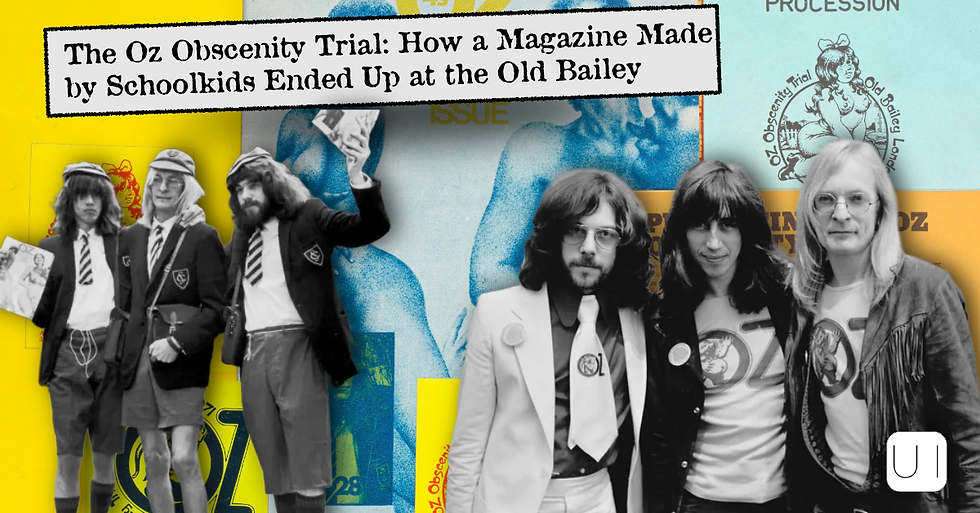
In the summer of 1971, three men sat in London's Old Bailey facing years behind bars over a magazine that teenagers had put together. The Oz obscenity trial ran for six weeks, the longest obscenity case in British legal history, and it turned a scruffy underground publication into the centre of a genuine culture war. By the time it was over, the case had pulled in John Lennon, a Rumpole of the Bailey creator, forced prison haircuts, and a Lord Chief Justice personally sending a clerk out to buy hardcore pornography as evidence. It's a strange, telling story about just how uneasy 1970s Britain was with its own counterculture.
A Magazine That Let the Kids Take Over
Oz started life in Australia in 1963 before its founder, Richard Neville, relaunched it in London in 1967 alongside Jim Anderson and artist Martin Sharp. It became one of the defining underground magazines of the psychedelic era, mixing politics, satire and countercultural art with a loose, anything goes editorial approach that regularly needled the establishment.
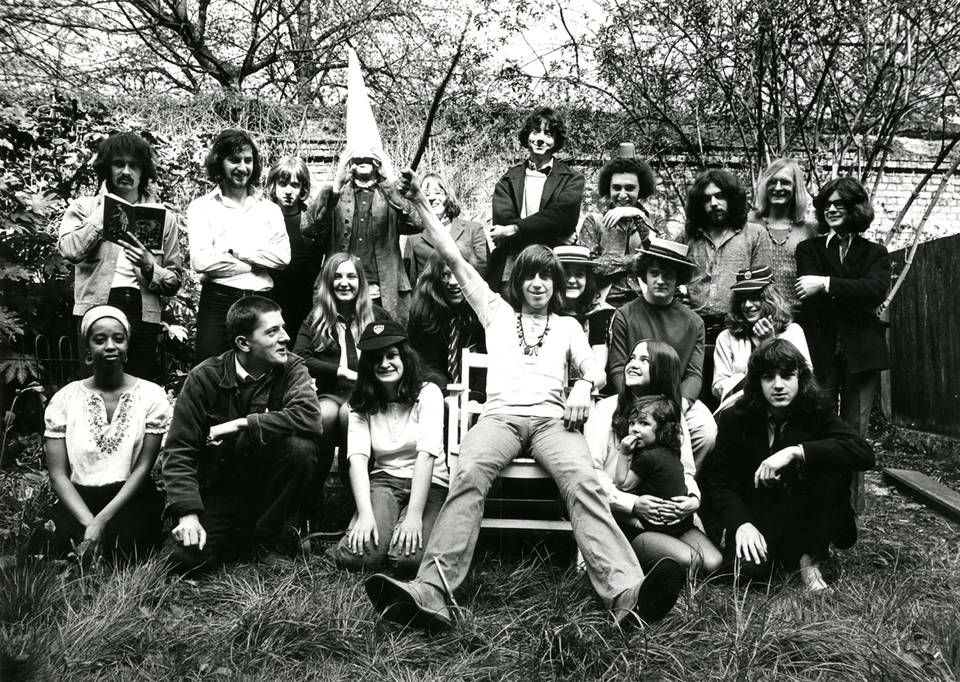
At a New Year's party in 1969, Neville reportedly turned to Anderson and admitted he was starting to feel old and boring. Whatever the exact truth of that story, the magazine's response was to run a classified advert in its February 1970 issue inviting any reader under eighteen to come and edit an upcoming issue themselves, with total editorial freedom and no pay. A group of secondary school students took them up on it.
The result, Oz issue 28, published in May 1970, became known as Schoolkids Oz. It was full of exactly the kind of provocative, sexually charged content you'd expect from teenagers suddenly handed a national magazine with no adult oversight. The most notorious piece was a cartoon adapted by contributor Vivian Berger from an existing Robert Crumb strip, which spliced the beloved children's character Rupert Bear into a sexually explicit scene. Headmasters across the country complained. The Obscene Publications Squad raided the Oz offices that August, and by the following summer, Neville, Anderson and Felix Dennis, who'd joined as a third editor, were in the dock at the Old Bailey.
Fighting for Their Lives, Legally Speaking
The charges were serious enough to be alarming even by the standards of British obscenity law. The main charge was conspiracy to corrupt public morals, a common law offence that at the time technically carried a maximum sentence of life in prison. Prosecutor Brian Leary argued the editors had deliberately set out to implant, in the words used in court, lustful and perverted desires in the minds of children, and pushed for Neville and Anderson, both of whom held Australian and American passports respectively, to be deported once convicted.
In an act of open mockery, the three defendants turned up to be formally charged dressed as schoolchildren. It set the tone for a trial that swung constantly between genuine legal jeopardy and theatre. Defending them was John Mortimer QC, who'd go on to create the Rumpole of the Bailey television series, assisted by a young junior barrister named Geoffrey Robertson, who was only just starting the career that would later make him one of Britain's most prominent human rights lawyers.

The defence called an extraordinary run of witnesses to argue for the material's artistic and social merit, including broadcaster John Peel, comedian Marty Feldman, jazz critic George Melly, and psychologist Michael Schofield. The prosecution and defence had privately agreed before the trial that Anderson's homosexuality would not be raised in court, since revealing it alongside the fact that teenagers had worked on the magazine risked making things dramatically worse for the defence given the prejudices of the era.
Rock Stars and Cartoon Bears Rally Round
The trial turned into something of a cause celebre for London's counterculture almost immediately. A group calling itself Friends of Oz formed to raise money and public awareness, producing posters, badges and t-shirts, and even commissioning artist David Hockney to create lithographs of the defendants to auction for legal fees. A ten foot papier mache effigy of Crumb's character Honeybunch Kaminski was paraded outside the Old Bailey during the trial.
John Lennon and Yoko Ono got personally involved too. They joined a march in support of the defendants outside the court and recorded a benefit single called God Save Us under the name the Elastic Oz Band, with the b-side Do the Oz, releasing it on Apple Records in July 1971 to help cover legal costs. Lennon had originally written the song as God Save Oz before deciding American listeners wouldn't understand the reference. Mick Jagger contributed his own protest song around the same period, though it was considered far too explicit to release at the time. Even the judge got a mention on tape, with Lennon calling him an old so and so on a radio spot recorded to publicise the case.

A Judge Sends His Clerk Shopping
The trial itself dragged on for six weeks through June and July 1971, becoming a genuine spectacle in the press. Judge Michael Argyle presided, and by most accounts showed little patience for the defence's arguments about artistic merit or the naivety of putting teenagers in charge of a magazine.
On 5 August 1971, the jury acquitted the three editors of the most serious charge, conspiracy to corrupt public morals, but found them guilty of the lesser obscenity offences. Judge Argyle sentenced Neville to fifteen months, Anderson to twelve, and Dennis to nine, on the basis that the court considered him, in a line that caused its own outrage, considerably less intelligent than his co-editors. All three were refused bail and sent to prison to await appeal, where they had their heads forcibly shaved, a detail that generated almost as much public anger as the sentences themselves and became one of the enduring images of the case.
The appeal came before Lord Chief Justice Lord Widgery. In a move that's become one of the more colourful footnotes in British legal history, Widgery reportedly gave a court clerk 20 pounds and sent him into Soho to buy the most explicit pornography he could find, so the judges could compare it against what had actually been printed in Oz. What the clerk came back with made the Schoolkids issue look tame by comparison. Combined with what the Court of Appeal called very substantial and serious misdirection by Judge Argyle to the jury during the original trial, the convictions were quashed entirely. All three men walked free, having spent time in Wormwood Scrubs before their release was secured.

What the Case Actually Settled
Despite everything, the Oz trial never really produced a clean legal precedent the way some obscenity cases do. The convictions were overturned on a technicality, the misdirected jury, rather than on the merits of the material itself, so the underlying question of whether Schoolkids Oz genuinely corrupted anyone was left unresolved in law. What the case did do was expose how far the British establishment was willing to go to prosecute the counterculture, and how badly that effort could misfire once it collided with a judge who overreached and a legal team willing to fight every inch of it.
Oz limped on for another couple of years after the trial before folding in 1973, its editors and its readership somewhat exhausted by the whole saga. Richard Neville went on to a long career as a writer and social commentator, Felix Dennis built an enormous publishing empire that eventually made him one of Britain's richest self made men, and Geoffrey Robertson became one of the country's leading human rights barristers, later helping adapt the trial transcripts into a BBC drama, The Trials of Oz, in 1991.
Fifty years on, the case still gets pulled out as a case study in just how seriously the British legal system was prepared to treat a cartoon of Rupert Bear, and how much cultural firepower, from Lennon to Hockney, it took to fight back.
Sources
Atlas Obscura: The Underground Magazine That Sparked the Longest Obscenity Trial in British History
Please Kill Me: 'Lustful and Perverted Desires': The Oz Trial, London, 1971
VICE: How an Iconic Zine's Indecency Trial Exposed a Web of Police Corruption
Victoria and Albert Museum: Oz Obscenity Trial Old Bailey London 1971 T-Shirt