Operation Paperclip: How America Recruited Nazi Scientists and Buried Their Pasts
Updated: Oct 21

In early May 1945 a young German pushed a bicycle up to an American sentry near the Austrian border and asked to surrender. His name was Magnus von Braun, and he'd come down the mountain on behalf of his older brother Wernher, the man behind the V-2 rocket. Within months Wernher was in the United States. Within 25 years his rockets had put Americans on the Moon.
That's the version of Operation Paperclip most people know. The other version involves an underground factory where tens of thousands of prisoners were worked and starved to death, a doctor linked to experiments at Dachau who ended up with a library named after him in Texas, and US officials who cleaned up files so the President's own rules wouldn't get in the way. Both versions are true, and that's exactly why Paperclip is still so uncomfortable to talk about.
Quick Answers
What was it? A secret US programme, run by the Joint Intelligence Objectives Agency (JIOA), that brought around 1,600 German and Austrian scientists, engineers and technicians to America after the Second World War, along with their families.
When did it run? It began as Operation Overcast in July 1945, got President Truman's formal approval in September 1946 and was still bringing people over in 1959.
Why? To grab German expertise in rockets, jets, aviation medicine and chemical weapons before the Soviet Union could, and to use it in the Cold War that everyone could see coming.
Were they Nazis? Plenty were. Wernher von Braun was a Nazi Party member and an SS officer. Truman banned active Nazis from the programme, but officials got round it by whitewashing files.
What did it achieve? Von Braun's team launched America's first satellite in 1958 and built the Saturn V that carried Apollo crews to the Moon.
Did anyone face justice? Barely. Georg Rickhey was tried and acquitted in 1947, and Arthur Rudolph left the US in 1984 rather than fight to keep his citizenship.
A List in a Toilet and a Race for Brains
The hunt for German scientists started before the war in Europe had even finished. As Allied troops pushed into Germany, specialist teams followed close behind, grabbing documents and equipment from research sites and interrogating anyone who looked useful.

The best lead turned up in March 1945 in about the least dignified place imaginable. A Polish lab technician at Bonn University found torn-up pieces of the Osenberg List, a register of scientists and engineers compiled by Nazi official Werner Osenberg, stuffed in a toilet. Major Robert Staver of US Army Ordnance used it to build his own "Black List" of people to track down and question, and Wernher von Braun's name was at the top of it.
In July 1945 the Joint Chiefs of Staff set up Operation Overcast. The official justification was that German know-how might help finish the war against Japan. In May, one colonel had cabled the Pentagon that getting the rocket men out was important for the Pacific war, according to the Jewish Virtual Library. In reality the Pacific war had weeks left to run, and the people pushing the programme were already thinking about Moscow.
So Why Was It Called Paperclip?
Nobody's completely sure, and the explanations don't line up. The best-known story is that officers attached paperclips to the files of the scientists they wanted most. Air & Space Forces Magazine gives a far less glamorous version: the Army contracts generated so much paperwork that the name came from the sheer number of clips needed to hold the dossiers together.
There's a third explanation too. The codename Overcast was supposedly dropped because "Camp Overcast" had caught on as a nickname for the place the scientists were housed, which rather defeated the point of having a secret name. Whichever is true, the new name stuck.
The Bicycle Surrender
Von Braun had been hooked on rockets since his teens in the Weimar years, when Germany went through a full-blown rocket craze that produced amateur clubs, record attempts and even a rocket-powered bicycle. By 1945 he was technical director at Peenemünde, a Nazi Party member and an SS officer who'd reached the rank of Sturmbannführer, roughly a major.
He spent the last days of the war in the Bavarian Alps with a group of Peenemünde engineers, and he was clear on one thing: he didn't want to end up with the Russians. So his younger brother Magnus cycled down to Private Fred Schneikert of the US 44th Infantry Division, who was on sentry duty near the German-Austrian border, and explained that his brother had invented the V-2 and wanted to give himself up. By the next morning Schneikert's anti-tank company was holding von Braun and several of his colleagues.
Things moved quickly after that. By late summer Washington had approved the dossiers of 127 Germans for contract work. Von Braun and the first small group sailed for America in September 1945 and were held at Fort Strong near Boston, then moved to Aberdeen Proving Ground in Maryland and finally to Fort Bliss in Texas, firing rockets at White Sands in New Mexico.
Not everyone went straight to America. Walter Dornberger, the general who'd run the V-2 programme, spent about two years as a British prisoner, part of it at Island Farm Special Camp 11 in Bridgend, South Wales, where he was reportedly an unpopular inmate. In 1947 he crossed the Atlantic anyway, as a consultant to the US Air Force.

Truman's Rule and How It Was Got Round
Truman gave the programme his formal approval in September 1946, but with a condition attached. Nobody who'd been a Nazi Party member or an active supporter of the regime was supposed to be recruited. On paper that should've ruled out a fair few of the people the military wanted most.
It didn't, because the files were changed. History.com reports that officials at the JIOA and the OSS, the CIA's forerunner, got round the directive by stripping out or whitewashing evidence of possible war crimes. Annie Jacobsen, whose 2014 book is the most detailed account of the programme so far, told NPR about Army intelligence bureaucrats rewriting dossiers while Pentagon generals decided history would need rewriting too.
The immigration paperwork needed sorting as well. The Germans had arrived as "War Department Special Employees" in military custody, not as immigrants, so legally they weren't really anywhere. The fix, in early 1950, was to process their legal residence through the US consulate in Ciudad Juárez, just across the Mexican border from Fort Bliss, so they could walk back into the United States from Mexico as properly documented arrivals. By 1953, 516 Paperclip specialists had become US citizens, along with 1,063 members of their families.

It Wasn't Just Rockets
Von Braun's rocket team gets the headlines, but they were only a slice of the total. Around 1,600 people came over in all. Wright Field in Ohio, already stuffed with captured German aircraft, took 86 aeronautical engineers. The Army Signal Corps took 24 specialists. The Bureau of Mines put seven synthetic fuel chemists to work at a plant in Louisiana, Missouri, in 1946, and 94 more recruits arrived as late as 1959
.
Herbert Wagner, who'd designed the Hs 293, the first anti-shipping glide bomb, arrived as early as May 1945. Adolf Busemann, who developed the swept wing that's now on nearly every jet aircraft, was another recruit. Wright Field alone took in more than 16,200 items of captured German material, and some of the first Germans to arrive there were put to work sorting the documents into a technical library.

Dora: The Factory Under the Mountain
This is the part of the story that was left out of the official histories for decades.
From late 1943 the V-2 was built at the Mittelwerk, an underground factory tunnelled into a hill near Nordhausen in central Germany, using prisoners from the Mittelbau-Dora concentration camp. Michael Neufeld, a senior curator at the Smithsonian's National Air and Space Museum, puts the death toll in the Mittelbau camp system at an estimated 20,000 to 25,000 of the 60,000 people sent there. By the end of the first winter, 3,000 prisoners had died in the tunnels and another 3,000 who were too sick to work had been shipped off to other camps to die. In April 1945, around 1,500 sick prisoners in Nordhausen were killed when the RAF bombed the town.
The V-2 itself killed a little over 5,000 Allied people, mostly in London and Antwerp. That means more than twice as many people died building the rocket as were killed by it.
The rocket engineers weren't just passing through. An exhibit put together at the University of Alabama in Huntsville, in the very city von Braun's team later made its home, lays out the paper trail. Arthur Rudolph, then chief V-2 production engineer, wrote a memo in April 1943 recommending the use of SS camp labour. That August, von Braun chaired a staff meeting that recommended moving production underground with camp labour. And in a memo dated 15 August 1944, von Braun described his own trip to Buchenwald to select prisoners and arrange their transfer to Dora. Production engineers were also expected to report suspected "saboteurs" to the SS, and saboteurs were hanged.
Some accusations go further and are harder to pin down. French resistance member Guy Morand testified in 1995 that von Braun ordered a prisoner to be flogged after an alleged act of sabotage, and another survivor claimed he watched prisoners being tortured. Those accounts surfaced more than half a century after the event and haven't been corroborated by other evidence (History Is Now). Von Braun later told Paris Match he felt ashamed that such things had been possible in Germany, though that only came after Dora survivors protested.
Jacobsen didn't hedge. She told NPR it was "impossible to excuse him from his Nazi past".

From White Sands to the Moon
Through the late 1940s the rocket team fired captured and rebuilt V-2s over the New Mexico desert. In 1950 the group moved to Redstone Arsenal in Huntsville, Alabama, which became the Army's missile development centre.
Their big moment came after the Soviets launched Sputnik on 4 October 1957. Von Braun and Major General John Medaris promised they could get an American satellite up within four months. On 31 January 1958, two days later than planned, a modified Jupiter-C rocket built in Huntsville carried Explorer 1 into orbit. On 1 July 1960 the team transferred to NASA's brand-new Marshall Space Flight Center, and von Braun went on to oversee the Saturn V.
When Apollo 11 lifted off on one in July 1969, the stakes were high enough that Nixon's staff had a speech ready in case the astronauts never came home. Others from Paperclip went just as far. Kurt Debus, a former V-weapons flight test director, became the first director of what's now Kennedy Space Center, and there's a crater on the Moon named after him. Von Braun was one of four former Nazis to receive NASA's Distinguished Service Medal.
Not everyone was charmed. In 1965 the satirist Tom Lehrer recorded a famously barbed song about von Braun, mocking the idea of a rocket man who didn't much care where his rockets came down. It got laughs, but it also said out loud what a lot of people preferred not to think about.


The Doctors
The rocket men at least had the excuse that their work was engineering. The aviation doctors are harder to explain away.
Hubertus Strughold is often called the father of US space medicine. During the war he ran the Luftwaffe's aviation medicine research institute, and in 1942 he attended a conference where experiments on Dachau prisoners were discussed. Those experiments included freezing people, putting them in low-pressure chambers and forcing them to drink seawater. The US Army even listed him as wanted on its 1945 Central Registry of War Criminals and Security Suspects, but he was brought to America anyway. He always denied approving the experiments and said he only found out about them after the war.
He died in 1986 with his reputation largely intact, and then it came apart in stages. In 1993 Ohio State University took his portrait down from a mural of medical heroes. In 1995 his name was set to come off the library at the School of Aerospace Medicine at Brooks Air Force Base in Texas. And in 2006 the New Mexico Museum of Space History voted unanimously to remove him from its International Space Hall of Fame, after a visitor spotted his name and alerted the Anti-Defamation League.
Walter Schreiber, an ex-Nazi general accused of complicity in medical war crimes and mentioned during the Nuremberg trials, was working at the Air Force School of Aviation Medicine at Randolph Field in Texas until early 1952. After nationwide protests the government didn't renew his contract, and by June 1952 the Jewish Telegraphic Agency was reporting that he'd left the country to an undisclosed destination. It turned out to be Argentina, and the US military helped him get there.
Then there's Theodor Benzinger, another German aviation doctor brought over after the war. Jacobsen pointed out that his New York Times obituary credited him with inventing the ear thermometer but left out his work involving concentration camp prisoners. America's own record on medical ethics wasn't spotless at the time, as the Tuskegee syphilis study shows, but importing men tied to Dachau was a step further.


The Few Who Faced Any Consequences
Georg Rickhey had been general director of the whole Mittelwerk operation, and he was the one Paperclip recruit sent back to stand trial. The Dora trial ran at Dachau from 7 August to 30 December 1947. Of the 19 defendants in the main case, 15 were found guilty and four were acquitted, and Rickhey was one of the four who walked free. The rocket engineers weren't in the dock at all.
Arthur Rudolph's turn came much later. The Justice Department's Office of Special Investigations, the unit set up to track down Nazi war criminals living in America, questioned him in San Jose in 1982 and 1983. He turned up to the first interview without a lawyer, thinking he was just helping out. In 1984 he agreed to go back to Germany and renounce his US citizenship to avoid a denaturalisation trial. The Space Review argues he did it to protect his civil service pension, which was his only income. His was the only OSI investigation of a Paperclip scientist or engineer that ended in any action.
Compare that with how other Nazis were treated in the same era. Israel kidnapped Adolf Eichmann from Argentina in 1960 and hanged him. Rudolph, who'd helped run a factory where thousands died, lost his passport and kept his pension.
The Soviets Did It Too, Overnight
America wasn't the only country shopping for German brains, and it certainly wasn't the most heavy-handed. On 22 October 1946 Soviet soldiers knocked on the doors of more than 2,000 German specialists in aerospace, nuclear research, chemicals and optics and told them they were being moved to the Soviet Union, families and all. Entire factories were dismantled and packed onto goods trains. The operation was codenamed Osoaviakhim. Most of the specialists were reasonably well treated and worked there for four to eight years, but many didn't get home until 1958.
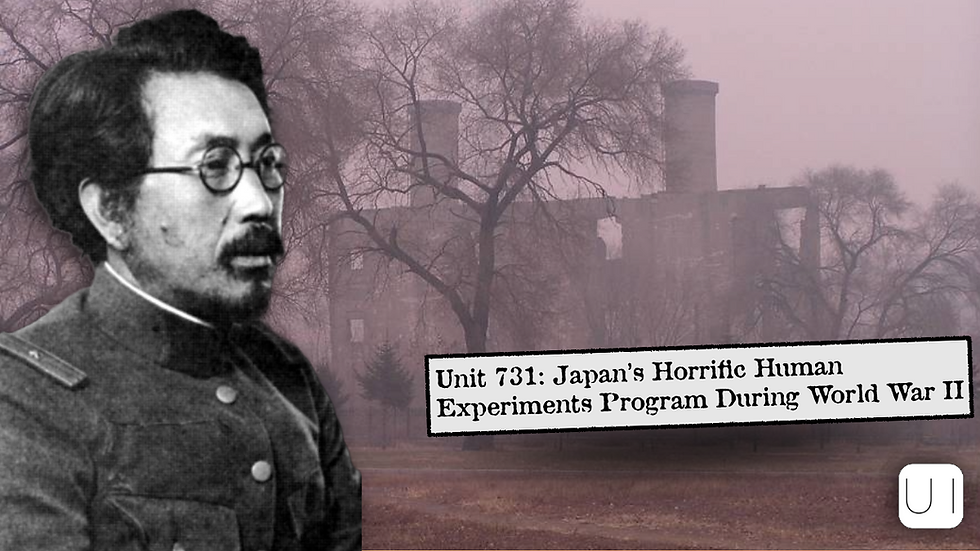
Plenty of other wartime figures found new employers once the shooting stopped. Klaus Barbie, the Gestapo chief in Lyon, worked for US Army intelligence before slipping away to South America, and commando Otto Skorzeny ended up working for Mossad. In the Pacific, the men behind Unit 731 avoided prosecution after the US took an interest in their research data. Paperclip was part of a much bigger pattern.
How the Truth Came Out
For decades the official story was a cheerful one about brilliant Germans who helped America beat the Russians into space. The cracks started showing in the mid-1980s, around the time the Justice Department went after Rudolph. Linda Hunt, a former CNN investigative reporter, spent years digging through the records and published Secret Agenda in 1991. As summarised by Kirkus Reviews, its claims include that a branch of the government deliberately blocked efforts to prosecute recruits and that the programme carried on until 1973. Hunt also alleged that some recruits were involved in chemical experiments, LSD among them, on more than 7,000 US soldiers at Edgewood in Maryland between 1947 and 1966. And she reported that the officer who ran Paperclip was later convicted of selling defence secrets to the Soviet Union.
The paper trail is still patchy. The US National Archives holds JIOA case files on more than 1,500 foreign scientists, technicians and engineers, including Rickhey, Schreiber and Rudolph. Von Braun's dossier isn't among them. It was never transferred to the archives.
Jacobsen's 2014 book picked out 21 recruits for close study. As a review in Maclean's notes, 15 of them had been committed Nazi Party members, six had stood trial at Nuremberg and one had been convicted of mass murder.
Was It Worth It?
Defenders of Paperclip argue that if America hadn't taken these men, the Soviet Union would have, and the Cold War balance could've tipped the wrong way. Critics point to the ethical cost of letting men linked to war crimes go unpunished, and in some cases rewarding them with medals and buildings named in their honour. Both arguments have weight, and the Soviets' own overnight round-up shows the competition was real.
What's harder to defend is the cover-up. Files were edited to get round the President's own ban. Survivors of Dora weren't listened to for decades. Men like Strughold collected honours that had to be stripped from them years after their deaths. The Moon landing was a genuine triumph, but it was built partly on a factory where prisoners died by the thousand, and for a long time the people who knew that chose to keep it out of the story.
Further Reading
If you want the full story, Annie Jacobsen's Operation Paperclip: The Secret Intelligence Program that Brought Nazi Scientists to America is the most detailed account of how the programme worked and who it protected. For a balanced look at its most famous recruit, Michael J. Neufeld's Von Braun: Dreamer of Space, Engineer of War is the standard biography.
As an Amazon Associate, Utterly Interesting earns from qualifying purchases.
You May Also Like
Sources
Michael J. Neufeld, Wonder Weapons and Slave Labor, Smithsonian National Air and Space Museum
University of Alabama in Huntsville, Dora and the V-2: Slave Labor in the Space Age, The Engineers
History Is Now, Wernher von Braun: Dangerous Nazi or Hero of the Space Race? Part 4
Jewish Virtual Library, The Dachau Trials: Nordhausen (Dora-Mittelbau) War Crimes Trials
Jewish Telegraphic Agency, Schreiber, Nazi Doctor, Leaves United States (3 June 1952)
J. Weekly, Name of Scientist Nixed From Library Due to Nazi Past (6 October 1995)
NBC News / Associated Press, Former Nazi Removed From Space Hall of Fame (May 2006)
The Space Review, on Arthur Rudolph and the OSI investigation
NPR, The Secret Operation to Bring Nazi Scientists to America (15 February 2014)
People's Collection Wales, Walter Dornberger and Island Farm Special Camp 11, Bridgend
History UK, Operation Paperclip: The Nazi Scientists Who Took America to Space