


The Murder of Kitty Genovese: The Truth Behind the 38 Witnesses
Updated: Oct 26

On 27 March 1964, readers of The New York Times opened their paper to a story that shocked America. "37 Who Saw Murder Didn't Call the Police", read the headline. A young woman had been stabbed to death in a quiet part of Queens, it said, while 38 of her neighbours watched from their windows over more than half an hour and did nothing.
It became one of the most famous stories of the 20th century. It was preached in sermons, taught in psychology lectures and quoted for decades as proof that city life had made people cold. There was just one problem. It wasn't true, at least not in the way the Times told it. The real story of Kitty Genovese is sadder, more human and a lot more complicated.
Quick Answers
Who was Kitty Genovese? A 28-year-old bar manager who was stabbed to death outside her apartment in Kew Gardens, Queens, in the early hours of 13 March 1964.
Who killed her? Winston Moseley, a 29-year-old machine operator who confessed after being caught during a burglary six days later. He died in prison in 2016.
Did 38 people really watch and do nothing? No. That claim came from The New York Times, and it was badly wrong. Only a handful of people saw anything, nobody saw the whole attack, and at least one neighbour went to her side.
What is the bystander effect? The theory that people are less likely to help in an emergency when others are around. Her murder made it famous, even though her case turned out to be a poor example of it.
What changed because of her death? The case helped push the US towards a single emergency number. 911 was introduced in 1968.
Who Was Kitty Genovese?
Catherine Susan Genovese was born in Brooklyn on 7 July 1935, the eldest of five children in an Italian-American family. Everyone called her Kitty. She was lively, sociable and fiercely independent, the kind of person who'd always been the one running things.

In 1954, after her mother witnessed a murder in the street, the family decided New York had become too dangerous and moved to Connecticut. Kitty, then 19, stayed behind. She had a brief marriage that was quickly annulled, and by the late 1950s she was working in bars, saving up with the dream of one day opening an Italian restaurant of her own.
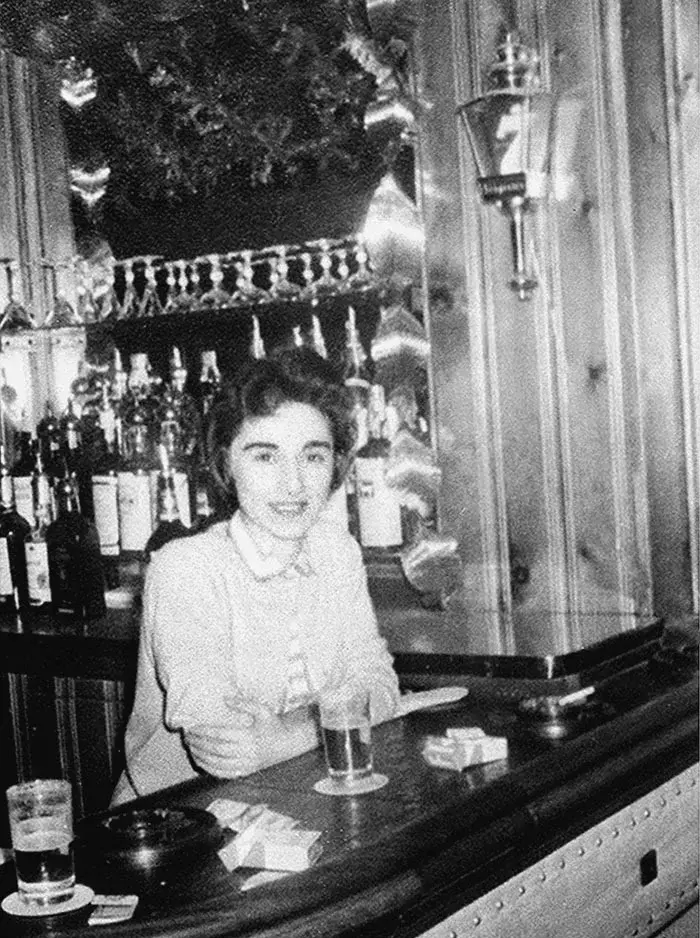
By 1964 she was managing Ev's Eleventh Hour, a bar in Hollis, Queens, often working double shifts. She shared a small apartment in Kew Gardens with her girlfriend, Mary Ann Zielonko. It was a quiet, respectable neighbourhood, the sort of place people moved to precisely because it felt safe. She was 28.
The Night of 13 March 1964
Kitty finished work at around 2.30am and drove home in her red Fiat. At a set of traffic lights she was spotted by a man in a white Corvair. His name was Winston Moseley. He was 29, married with children, had a steady job operating business machines and no criminal record. He later told police he'd gone out that night looking for a woman to kill.
He followed her home. At around 3.15am she parked at the Kew Gardens railway station car park, a short walk from her apartment, and Moseley caught up with her on the pavement. He stabbed her twice in the back.
Kitty screamed. "Oh my God, he stabbed me! Help me!" Lights went on in the flats above. One neighbour, Robert Mozer, threw open his window and shouted "Let that girl alone!" Moseley ran back to his car and drove off.
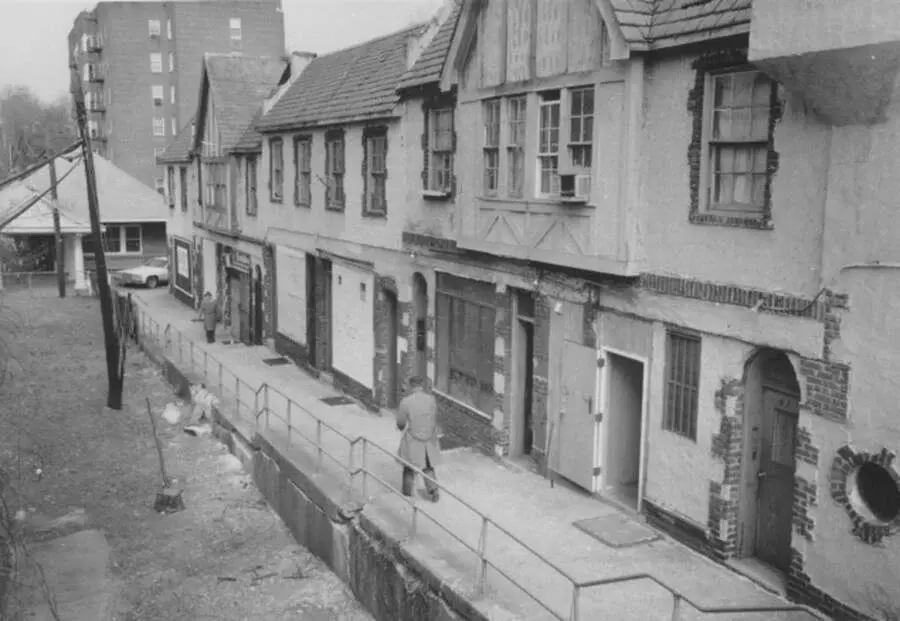
Badly hurt, Kitty staggered round the corner of the building towards the back entrance of her apartment. From the street, she'd now disappeared. To most of the people who'd heard the screams and looked out, it seemed as though whatever had happened was over.
It wasn't. About ten minutes later Moseley came back, wearing a different hat so he wouldn't be recognised. He searched the car park and the railway station, then found Kitty lying in a narrow hallway at the back of the building, just inside a door she'd been too weak to get through. He stabbed her again, sexually assaulted her as she lay dying, took $49 from her purse and left.
The Neighbour Who Didn't Look Away
One of the people who heard something was a neighbour called Sophia Farrar. When she realised what had happened, she ran out of her apartment and down to the hallway, without knowing whether the attacker was still there. She found Kitty, held her in her arms and shouted for someone to call the police.
A man in the building called Karl Ross had seen part of the second attack. He was frightened and didn't want to get involved, so he rang a friend for advice before eventually getting another neighbour to call the police. Officers arrived within minutes of that call. Kitty was put into an ambulance at around 4.15am and died on the way to hospital.
Kitty's girlfriend Mary Ann was woken by police at about 4am and told she was dead. Detectives then questioned her for hours, and for a while she was treated as a suspect.
Six Days Later
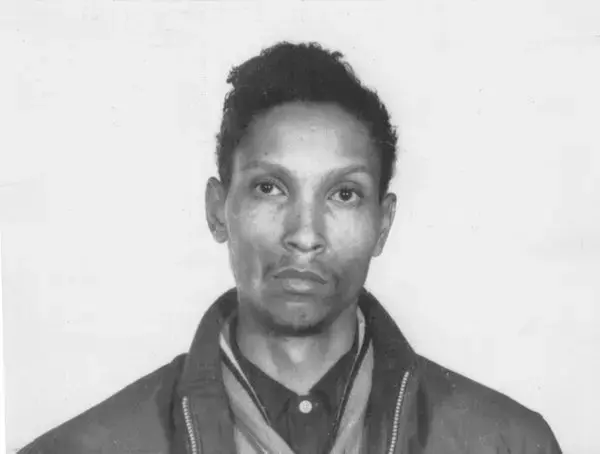
Moseley was caught almost by accident. On 19 March a neighbour in South Ozone Park spotted a man carrying a television out of a house in broad daylight. Suspicious, he let the air out of the man's car tyres and called the police. When officers picked Moseley up, a detective remembered that witnesses in Kew Gardens had reported a white car, and noticed scratches and scabs on Moseley's hands.
Under questioning, Moseley calmly confessed to killing Kitty Genovese, giving details only the killer could have known. Then he confessed to more. He admitted to the murder of Annie Mae Johnson, who'd been shot and set on fire in her home in Queens a few weeks earlier, and to the killing of 15-year-old Barbara Kralik in 1963, although another man was later convicted of Kralik's murder. He told detectives he went after women because they were easier and didn't fight back.

At his trial in June 1964 his lawyers argued he was insane. The jury didn't buy it, and on 15 June he was sentenced to death. In 1967 an appeal court ruled that his insanity claim should have been considered at sentencing, and the sentence was reduced to life in prison.

In 1968 Moseley escaped while being taken for treatment at a hospital in Buffalo. While he was on the run he committed a robbery and tried to kidnap a mother and her small child before he was recaptured. He spent the rest of his life in prison, was denied parole 18 times, and died at Clinton Correctional Facility on 28 March 2016, aged 81. By then he was New York's longest-serving inmate.

How 38 Witnesses Became a Legend
At first Kitty's murder was just another grim story in the local papers. Then, a week or so later, the Times' metropolitan editor, A. M. Rosenthal, had lunch with the city's police commissioner, Michael Murphy. Murphy told him that 38 people had seen or heard the attack and nobody had called the police. Rosenthal thought it was a story, and sent reporter Martin Gansberg to Kew Gardens.
The front-page article that followed said that for more than half an hour, 38 respectable, law-abiding citizens in Queens had watched a killer stalk and stab a woman in three separate attacks, and not one of them had called the police until she was dead. (The headline said 37, because one neighbour did eventually call.) It quoted an unnamed resident explaining, "I didn't want to get involved."
It hit a nerve. The story went around the world, Rosenthal turned it into a short book called Thirty-Eight Witnesses, and preachers, columnists and politicians used it as proof that something had gone badly wrong with modern society.
The Birth of the Bystander Effect
Two young psychologists, John Darley and Bibb Latané, were so struck by the story that they set out to test it in the lab. Their experiments, published from 1968 onwards, found that people really are less likely to step in when they think other people are around, partly because everyone assumes someone else will do it. They called it the bystander effect.
The research was solid, and the bystander effect is still taken seriously by psychologists today. But for decades Kitty Genovese's murder was the example every textbook used to explain it, sometimes called Genovese syndrome. Her name became shorthand for the idea that crowds of people will simply watch a murder and do nothing.
What Really Happened

The cracks in the story started to show quite early. Journalists at other papers pointed out problems at the time, and the prosecutor in the case later said they'd only found about half a dozen witnesses who'd seen anything useful.
In 2004, a Times reporter, Jim Rasenberger, revisited the case. Then in 2007 three British psychologists, Rachel Manning, Mark Levine and Alan Collins, picked the story apart in the journal American Psychologist. What they and others found was very different from the legend. Nobody saw the whole attack. Most people only heard screams in the middle of the night and assumed it was a drunk or a lovers' row. The first attack was stopped when a neighbour shouted at Moseley. The fatal attack happened inside a hallway, where almost nobody could see it. Some neighbours said they did call the police. And at least one person, Sophia Farrar, went straight to Kitty and stayed with her.
When Winston Moseley died in 2016, the Times itself acknowledged in his obituary that its original story had overstated the number of witnesses and what they saw, and that its reporting had been flawed.
Kitty's Real Legacy
Even if the legend was wrong, Kitty's murder did change things. It exposed how hard it was to get help in an emergency in 1960s America, when you had to know the number of your local police precinct or go through the operator. It was one of the cases that pushed the US towards a single, easy emergency number, and 911 was introduced in 1968. Her story also fed into the growth of Good Samaritan laws and neighbourhood watch schemes.
For her family, the bigger battle was to get her remembered as a person rather than a parable. Her younger brother Bill, who lost both his legs serving in Vietnam, spent more than a decade tracking down the people who'd been there that night. His film, The Witness, released in 2015, follows him as he pieces together what really happened, and even meets Moseley's son. Mary Ann Zielonko also spoke publicly about the woman she'd loved and the life they'd had together.
Fear of random violence in American cities was everywhere in the mid-1960s. Two years after Kitty's death, Richard Speck murdered eight student nurses in Chicago, and stories like these shaped how a whole generation saw city life.
Kitty Genovese was a funny, warm, hard-working 28-year-old with plans for a restaurant and a girlfriend waiting for her at home. More than 60 years on, she's still mostly remembered for a story about her neighbours that wasn't really true. The least we can do is remember her for who she was.
Suggested Reading
Want to dig deeper into the Kitty Genovese case? These are worth a look.
Kitty Genovese: The Murder, the Bystanders, the Crime that Changed America by Kevin Cook. A brilliant reconstruction of Kitty's life, the night she died and how the myth took hold.
Kitty Genovese: A True Account of a Public Murder and Its Private Consequences by Catherine Pelonero. A detailed account of the case, the trial and what happened to everyone involved.
As an Amazon Associate, Utterly Interesting earns from qualifying purchases.
You Might Also Like
Richard Speck: The Chicago Nurse Murders and What Happened to Him in Prison
The Lonely Hearts Killers: The Strange and Deadly Partnership of Raymond Fernandez and Martha Beck
Charles Whitman: The Full Story of the UT Austin Tower Shooting
Dorothy Eggers: The Headless Body, the Bunion and the Car Sold to a Cop


