Michael Fagan: The Man Broke Into Buckingham Palace And Had A Chat With The Queen
Updated: Aug 4

On the morning of 9 July 1982, a 31-year-old painter and decorator named Michael Fagan committed one of the most extraordinary security breaches in British royal history when he broke into Buckingham Palace and entered the bedroom of Queen Elizabeth II. This audacious act, known as one of the most significant lapses in royal security of the 20th century, left both the royal family and the public stunned, not least because it involved a direct encounter with the Queen herself. Fagan's movements within the palace, along with his earlier unexplained intrusion just weeks prior, exposed serious flaws in the security systems that were designed to protect the monarchy.

The Lead-Up to the Intrusion
Fagan's life in the months leading up to his notorious break-in was marked by personal turmoil. His marriage was falling apart, his wife, Christine, had recently left him and taken their children with her. He was also struggling with mental health issues, exacerbated by alcohol and, as Fagan claimed, the lingering effects of consuming magic mushrooms several months earlier. These factors likely contributed to his increasingly erratic behaviour and a sense of despair that culminated in the break-in. At the time of the incident, Fagan had already accumulated a criminal record, including convictions for petty crimes and drug offences. However, it was his fixation on Buckingham Palace, and in particular the Queen, that led him to take unprecedented action.
The First Break-In: An Unseen Intruder
What makes the 9 July 1982 break-in even more unsettling is the fact that it was not Fagan's first successful entry into Buckingham Palace. In interviews following his arrest, Fagan admitted that he had broken into the palace weeks earlier, in June 1982. On that occasion, he scaled the same 14-foot perimeter wall and climbed a drainpipe to enter through a third-floor window. Remarkably, once inside, Fagan roamed the palace with complete freedom, undetected by the palace's security team.
Fagan himself has never fully explained why he went back a second time. Asked about it decades later, the best reason he could offer was almost comically banal: he'd realised how easily he'd gotten away with it the first time and, in his own words, thought "that's naughty, that's naughty that I can walk round there."
Fagan's account of his earlier break-in is as bizarre as it is troubling. Despite triggering multiple alarms and being briefly spotted by a chambermaid, who ran off to alert security, Fagan was able to explore the palace undisturbed. Security personnel dismissed the alarms as malfunctions and did not conduct a thorough search of the premises, allowing Fagan to continue his leisurely tour of the royal residence. His movements took him through various parts of the palace, and he later claimed to have walked by the rooms of Prince Charles and Princess Diana without anyone noticing him.

During his exploration, Fagan reportedly tried out the royal thrones "like Goldilocks and the Three Bears" to test their comfort. Unable to find a toilet, he confessed to urinating in the corgis' dog food. He even spent time in Room 108, where public gifts for the soon-to-be-born Prince William were stored, drinking half a bottle of wine that had been left there. Fagan lingered in the room for some time, apparently waiting for someone to discover him. When no one came, he simply left the palace, amazed at how easily he had been able to infiltrate one of the most secure buildings in the country.
Once inside, Fagan removed his socks and sandals and began wandering the palace corridors barefoot. He carried with him a shard of broken glass from an ashtray he had smashed earlier, intending to use it to slash his wrists in the presence of the Queen, a decision that reflected his deepening mental distress. Fagan later admitted that his movements were largely aimless; he had no clear plan other than a vague notion of confronting the Queen, whom he viewed as a symbol of his struggles.
For a considerable time, Fagan wandered undisturbed through Buckingham Palace. He moved from room to room, navigating the opulent halls and passing by the rooms of various members of the royal family, including Prince Charles. Remarkably, he encountered no security personnel and triggered no alarms that would alert anyone to his presence. His undetected movements through the palace's private quarters exposed shocking lapses in the security measures meant to protect the royal family.

Entering the Queen's Bedroom
At approximately 7:15 am, Fagan reached his intended destination: the Queen's private apartments. Entering her bedroom, Fagan found Queen Elizabeth II still in bed. The moment was surreal, an uninvited, barefoot intruder standing at the foot of the monarch's bed, holding a piece of broken glass. According to Fagan, the Queen, startled but composed, asked him calmly: "What are you doing here?"
The Queen's poise in the face of such an unexpected situation was emblematic of the calm and grace for which she was well known. Initially, she attempted to summon help by pressing an emergency buzzer next to her bed. However, her first two attempts to alert the palace telephonist went unanswered, leaving her to face Fagan alone for several minutes. Some early reports claimed that the Queen engaged Fagan in conversation for 10 minutes to stall him, but Fagan himself later denied this, saying that she quickly exited the room after realising help was not immediately forthcoming.
Fagan recalled the scene in a 2012 interview with The Independent, describing how the Queen, wearing a Liberty print nightgown, left the room hurriedly: "She went past me and ran out of the room; her little bare feet running across the floor." A 2022 biography, Andrew Morton's The Queen: Her Life, offers a slightly different version again, describing the Queen grabbing the phone, shouting "Get out, get out," and fleeing the room, leaving Fagan alone and crying by the empty bed. What's consistent across every account is what happened next: the Queen managed to alert a maid, Elizabeth Andrew, who entered the room to find Fagan sitting on the edge of the royal bed and reportedly blurted out, in a broad Northern accent, "Bloody hell, Ma'am. What's he doing here?" The line apparently amused the Queen enough that she repeated it herself for years afterward.
Containing Fagan
Once the Queen had left the bedroom, Fagan was ushered into a nearby pantry by the maid. She offered him a cigarette to keep him calm while they waited for the police to arrive. Fagan himself remained oddly cooperative at this point, no longer holding the broken glass. While waiting in the pantry, a footman returned and, according to Fagan, offered him a glass of whisky from a bottle of Famous Grouse. The incongruity of the situation, an intruder sipping whisky in the Queen's pantry, was yet another bizarre element in an already extraordinary event.
It wasn't until some 15 minutes after Fagan had entered the Queen's bedroom that the police finally arrived to arrest him. He was compliant and did not resist, but the fact that he had been able to roam Buckingham Palace for so long without detection was a stunning indictment of the palace's security protocols.
Security Failures Exposed
In the aftermath of the break-in, an official Scotland Yard investigation revealed a series of critical security failures that had allowed Fagan to infiltrate the palace not once, but twice. The investigation found that alarms had been triggered during both incidents but were either ignored or dismissed as faulty, including one in the palace's Stamp Room that nobody responded to. One officer had actually spotted Fagan climbing the railings outside and radioed it in, but no one acted on the report.
Security personnel failed to communicate effectively with one another, and there were significant gaps in the physical surveillance of the palace grounds. Most alarmingly, the wiring of the emergency alarm button in the Queen's bedroom had not been fully completed, meaning that her initial calls for help went unanswered, a delay made worse by the coincidence that the corridor's night officer had just finished his shift and the on-duty footman happened to be out walking the royal corgis at the exact moment Fagan appeared.

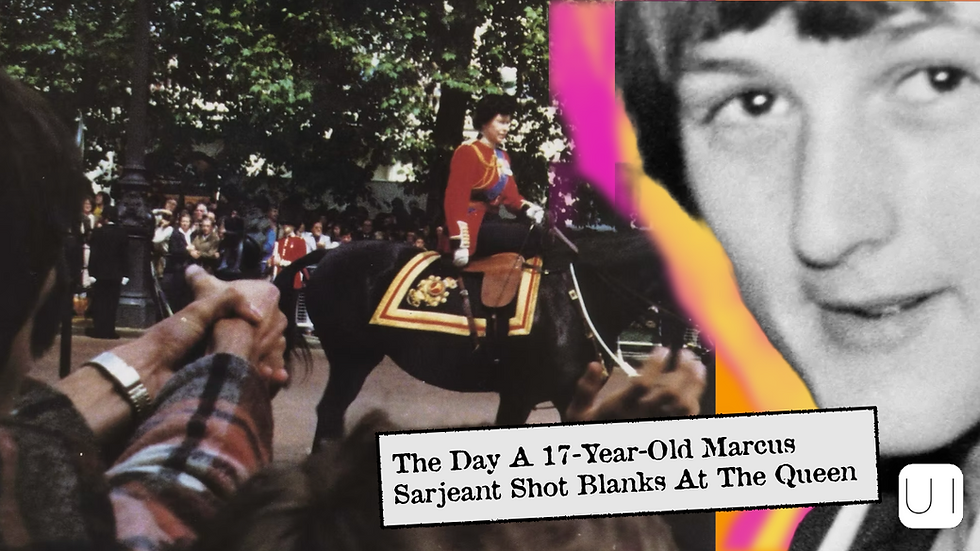
The fallout from the incident was swift and severe. Home Secretary Willie Whitelaw offered his resignation, although the Queen refused to accept it. Prime Minister Margaret Thatcher personally visited the palace to apologise for the security breach, which had occurred just a year after the Queen had faced being shot at, with blank cartridges, during the Trooping of the Colour ceremony. The public outcry over the breach prompted immediate changes in palace security, with enhanced police patrols, significant upgrades to perimeter defences, overhauled alarm technology, and a wider review of security procedures across other royal residences as well.
Fagan's Motives: A Complex Web
Michael Fagan's motives for breaking into Buckingham Palace have always been somewhat ambiguous, and his own accounts of the events have varied over time. Initially, he claimed that he had broken into the palace due to the breakdown of his marriage and a mental health crisis. He was, by his own admission, struggling with alcohol and the effects of magic mushrooms he had consumed months earlier, which he believed had impaired his mental state. His life had spiralled out of control in the weeks before the incident, and he expressed a sense of despair that culminated in his bizarre attempt to reach the Queen.
In a 1993 BBC Radio 4 interview, Fagan provided further insight into his thinking at the time. He explained that the Queen represented "all that was keeping me down and [my] lack of voice," suggesting that his intrusion was an attempt to make her understand what it felt like to be an ordinary person struggling to make ends meet. When asked whether he had wanted to be caught, Fagan agreed, saying: "Yes, just to make that statement: I am, I am…"
His family also expressed confusion over his actions. According to The Sun, Fagan had told his wife that he was visiting a girlfriend named "Elizabeth Regina" who lived in SW1, an obvious reference to the Queen. His father described him as a "royal fanatic" and suggested that Fagan's charm might have put the Queen at ease during their brief encounter.
Legal Proceedings and Later Life
In September 1982, Michael Fagan was charged with burglary at the Old Bailey, as trespassing was not a criminal offence at the time. However, after just 14 minutes of deliberation, the jury acquitted him of the charge. Fagan was subsequently committed to a high-security psychiatric hospital in Liverpool for evaluation, where he spent over three months undergoing treatment. A three-person mental health tribunal ultimately decided that he was fit for release, and in January 1983, Fagan walked free.
His release, however, sparked anger and concern among many Conservative politicians, with Prime Minister Margaret Thatcher addressing Parliament to acknowledge the public's "deep feelings of anxiety" over the case. Despite this, the Home Secretary had no legal grounds to extend his detention, as he had been acquitted of any serious criminal charges.
Fagan's Post-Break-In Fame and Subsequent Legal Troubles
Following his release, Michael Fagan experienced a brief period of notoriety, relishing the "15 minutes of fame" that came with being the man who broke into Buckingham Palace. In 1983, he capitalised on his newfound celebrity by recording a cover of the Sex Pistols' infamous punk anthem God Save the Queen with the band the Bollock Brothers. The release attracted some attention, though Fagan's fleeting fame soon faded.
Unfortunately, his life did not settle down after his royal escapade. Fagan's troubled relationship with the law continued in the years that followed. In 1984, just two years after the break-in, Fagan was arrested and given a suspended sentence following an altercation with a police officer, highlighting his continued struggles with impulsive behaviour and legal trouble. Three years later, in 1987, he was found guilty of indecent exposure after reportedly running around with no trousers in front of a woman in London.
The most serious of Fagan's later offences came in 1997, when he, along with his wife and their 20-year-old son, was sentenced to four years in prison for conspiring to supply heroin. The drug-related offence marked a low point in Fagan's life, adding to his already long list of legal transgressions.

A Brush with Death and Later Years
In July 2020, The Sun reported that Michael Fagan had suffered a serious health scare. He contracted COVID-19 during the early months of the global pandemic and subsequently had a heart attack, leaving him in a precarious medical condition. Fagan survived both the viral infection and the heart complication and has continued to give occasional interviews about his palace break-ins in the years since, expressing no regret over what he did.

The Legacy of Michael Fagan's Break-In
Michael Fagan's infamous break-in has remained a captivating story in British history, largely due to the peculiar details of his time inside Buckingham Palace and his face-to-face encounter with the Queen. The event continues to be referenced in popular culture, from documentaries to television dramas. A 2012 British TV comedy called Walking the Dogs, starring Emma Thompson as the Queen, dramatised the story decades before The Crown got to it. Most notably, in the fourth season of the Netflix series The Crown, the incident is depicted in dramatic fashion, though the actual events, according to Fagan himself, were less sensational than some of the media portrayals suggest.
At its core, the Fagan break-in is a strange blend of the personal and the political. On one hand, it is the story of an ordinary man struggling with mental health issues and personal crises, lashing out at a world he felt was indifferent to his plight. On the other hand, it is a cautionary tale about the vulnerabilities of even the most fortified institutions, and a reminder that even figures as protected as the Queen are not immune to the unpredictability of human behaviour.
Sources
2. What Happened to Michael Fagan, the Man Who Broke Into the Queen's Bedroom in 1982? — Smooth Radio