

Chrese Evans: How Stalin's Granddaughter Became a Tattooed Buddhist Antique Dealer in Portland
- Apr 15, 2024
- 8 min read
Updated: Jun 17

She's tattooed, Buddhist, punk-adjacent, and runs a little antique shop in Portland, Oregon full of incense burners and Buddhist statues. She also happens to be the granddaughter of one of the most murderous dictators in human history. Meet Chrese Evans, born Olga Peters in 1971, and probably not what you'd picture when someone says "Stalin's family."
The contrast is almost too stark to believe. While her grandfather, Joseph Stalin, transformed the Soviet Union into a military superpower through fear, gulags, and the deaths of millions, his granddaughter is quietly curating vintage spiritual artefacts in the Pacific Northwest, cooking borscht from scratch, and living exactly the kind of quiet, authentic life that Stalin's entire ideology was designed to crush.
Where is Chrese Evans Now? (2026 Update)
As of 2026, Chrese Evans remains in Portland, Oregon, where she continues to run her antique shop and live the quiet, private life she's always preferred. She hasn't sought the spotlight, but the spotlight keeps finding her — her story regularly resurfaces on social media, with viral posts on TikTok and X introducing her to new audiences who can't quite believe that Stalin's granddaughter turned out like this. She remains, by all accounts, exactly who she's always been: unbothered, Buddhist, and very much her own person.
Who Is Chrese Evans?
Chrese Evans, born Olga Margedant Peters on 21 May 1971 in San Francisco, is the youngest of three children born to Svetlana Alliluyeva, Stalin's only daughter. She's the sole child from Svetlana's third marriage, to American architect William Wesley Peters, and she grew up largely shielded from the weight of her grandfather's legacy.
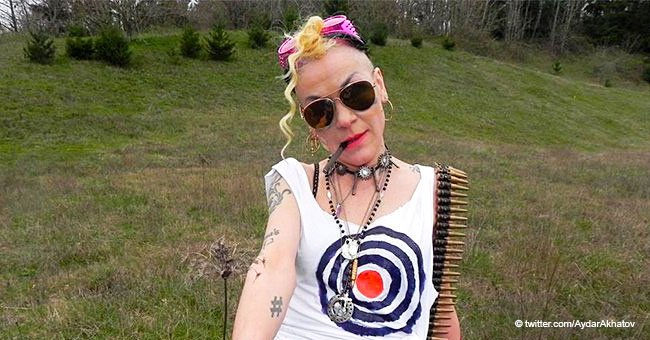
As an adult she changed her name from Olga to Chrese Evans, a deliberate step in carving out her own identity. She's bleach blonde, heavily tattooed, and has described herself as a fan of Tank Girl, the 1980s British comic strip character. She once posed with a toy machine gun slung over her shoulder in a photo that went mildly viral and sent tabloids into a frenzy. She's British-educated (more on that shortly), Portland-based, and by most accounts deeply private.
Her antique shop is less a commercial enterprise and more a personal sanctuary, stocked with Buddhist statues, Asian relics, incense holders, vintage spiritual texts, and obscure curiosities that reflect her inner life as much as her eye for objects. Friends describe her as peaceful and calm. She's also been known to do stand-up comedy and play EDM locally in Portland, which somehow feels entirely on-brand.

Her Mother's Extraordinary Story
To understand Chrese, you have to understand Svetlana, and Svetlana's story is one of the strangest of the 20th century.
Born on 28 February 1926 as Svetlana Stalina, she was the youngest child and only daughter of Joseph Stalin and his second wife, Nadezhda Alliluyeva. Her mother committed suicide in 1932 when Svetlana was just six years old, having shot herself, though the young girl was initially told she'd been ill. Stalin was reportedly devastated, and Svetlana became the apple of his eye, the one person who could reportedly make the monster melt. Winston Churchill, who met her as a young girl in Stalin's private apartments at the Kremlin in 1942, described her as "a handsome red-haired girl, who kissed her father dutifully."
But Svetlana's childhood was far from idyllic. Her first love, a Jewish filmmaker, was sent to Siberia by her father. Her brother Yakov was killed in the Second World War after Stalin refused to exchange him for a German general. She had a string of complicated marriages and an inner life that increasingly couldn't be reconciled with the regime she'd been born into.
Then, in 1966, her Indian partner Brajesh Singh died, and the Soviet authorities allowed her to travel to India to scatter his ashes. It was the opening she needed. On 9 March 1967, she walked into the United States Embassy in New Delhi and asked for asylum. The CIA helped spirit her through Italy and Switzerland. President Lyndon B. Johnson, on humanitarian grounds, agreed to admit her. Overnight, Stalin's daughter became the Cold War's most famous defector, more high-profile, some said, than even Rudolf Nureyev's leap to freedom in 1961.
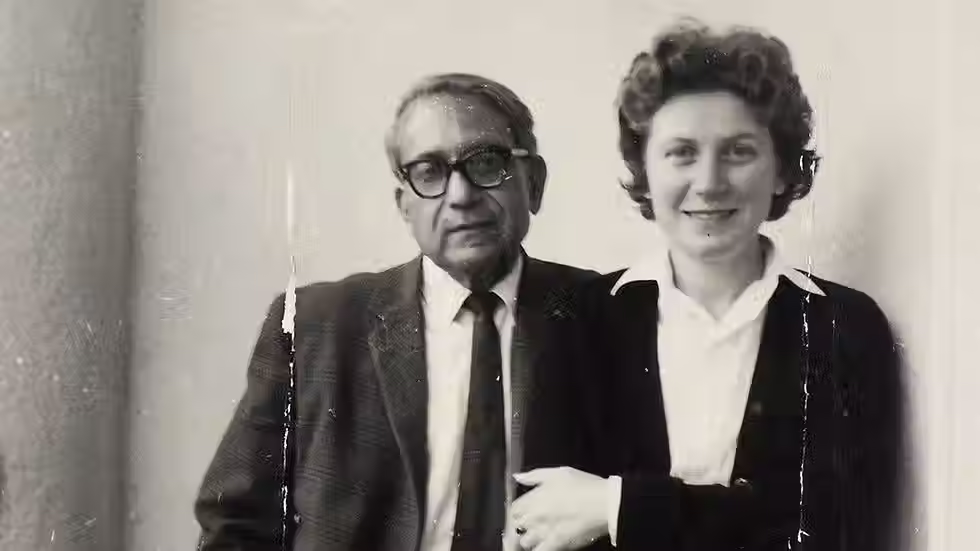
She burned her Soviet passport, became an American citizen, signed a lucrative publishing deal, and wrote *Twenty Letters to a Friend*, a bestselling memoir that gave the world its first intimate glimpse of life inside the Stalin household. A follow-up, *Only One Year* (1969), described her defection.
The Frankly Bizarre Marriage That Produced Chrese
Here's where Svetlana's story takes a genuinely strange turn. After arriving in America she began receiving letters from Olgivanna Lloyd Wright, the widow of legendary architect Frank Lloyd Wright, who ran a commune at Taliesin in Arizona. Olgivanna was convinced that Svetlana was the reincarnation of her own daughter, also named Svetlana, who had died in a car accident in 1946. She wanted the Soviet defector to marry that daughter's widower, a Taliesin architect named William Wesley Peters.
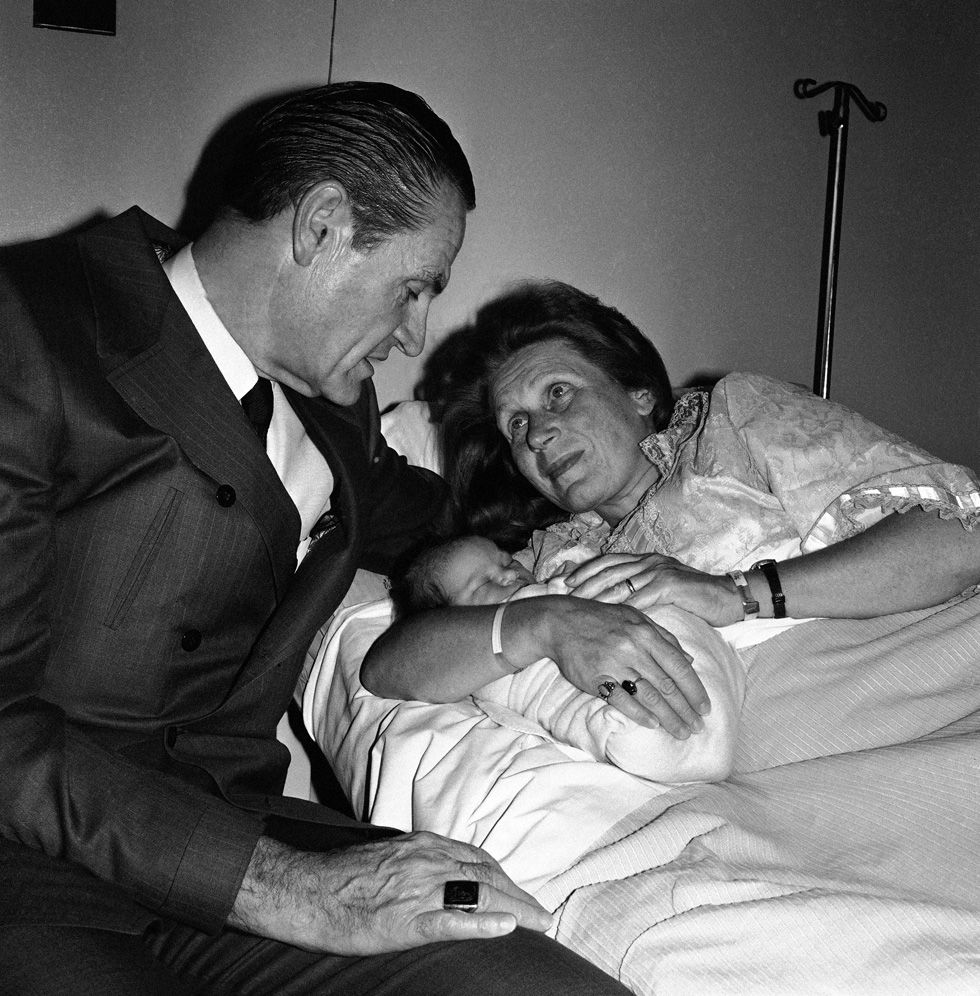
Three weeks after first visiting Taliesin West in Scottsdale, Svetlana did exactly that. She and Peters married in 1970, moved to Spring Green in Wisconsin near Wright's summer studio, and had a daughter, Olga, later known as Chrese Evans. The marriage lasted three years. It wasn't exactly a love match so much as a union arranged by a Montenegrin matriarch who believed in reincarnation, but it produced Chrese, which is something.
Peters himself was no ordinary architect. He'd been Frank Lloyd Wright's protégé, had worked on the Price Tower in Bartlesville, Oklahoma, and completed more than 120 architectural projects over his career.
Growing Up Without a Shadow
Chrese has said that she didn't really know who her grandfather was until she was a young teenager. Her mother deliberately shielded her.
"It wasn't a part of my past at all, until I was a young teenager, because she kept me very, very sheltered from it," Chrese told PBS. "She always called me American as apple pie."
When she did find out, the discovery came through her mother's guidance rather than through tabloids or history books. "Stalin for me was one of the three people who won the Second World War, Churchill, Roosevelt and him," she told the *Express*. "Then my mother asked me to listen to her. This is when I found out about his crimes."
That education came slowly. Chrese grew up partly in the US and partly in England. Svetlana moved them to Cambridge in 1982, where they shared a flat near the Cambridge University Botanic Garden, and Chrese was later educated at the Friends' School in Saffron Walden, Essex, a Quaker independent school. In 1984, in a decision that baffled observers, Svetlana denounced the West and moved herself and teenage Chrese back to the Soviet Union. One biographer records that young Olga, who spoke neither Russian nor Georgian, cried herself to sleep at nights during that period. The Soviet experiment lasted just three years before Svetlana fell out with relatives and authorities and the pair returned to America for good.
The itinerant childhood left its mark, but Chrese seems to have found her equilibrium. As an adult she settled in Portland, got into antiques, got into Buddhism, got heavily tattooed, and quietly became her own person.
The IRS Didn't Stand a Chance
After studying tax law and accounting and working at a Portland fashion boutique, Chrese had a choice: take a job with the IRS, or start her own business.
"One had the prospect of excitement, the other one was cool," she said.
She picked cool. The antique shop it was.
The business she built feels less like retail and more like an act of curation. Buddhist statues, vintage Asian artefacts, incense burners, religious relics, old books: the kind of objects that carry what she seems to feel is a kind of presence. It's a space, by all accounts, that feels almost meditative. Visitors describe it as more retreat than shop.

Borscht, Buddhism, and Belonging
Despite her thoroughly American upbringing, Chrese has never entirely let go of the Russian thread in her life. She's posted Russian New Year wishes to her followers ("May you never forget what is worth remembering, nor remember what is best forgotten") and documented her attempts to make borscht from scratch.
"Love making it," she wrote. "Feels like Mom was right next to me."
The relationship with her mother clearly defined her. Svetlana, despite the chaos of her own life, was described by Chrese as a warm, unconditional presence, a mother who was proud of her daughter even before she'd really done anything worth being proud of. As Chrese grew older, the dynamic shifted into something more like a partnership.
"Sometimes, I was doing the parenting. Sometimes, she was," she said. "We were a little bit more of an equal partnership, sort of a super duo."
Svetlana died on 22 November 2011 from colon cancer in Richland County, Wisconsin, aged 85. She was Stalin's last surviving child.
Chrese has spoken about how her mother's death paradoxically deepened her sense of faith: "I didn't really develop that sense of faith until after she passed away and that sense of her being with me. I have a sense of accomplishment that I didn't have before that I know that she left with me."
Portland Fits Her Perfectly
Portland, Oregon, quirky, independent, and slightly eccentric, is probably the one city in America where nobody blinks at a tattooed Buddhist antique dealer with a famous surname. In Portland's community of artists, seekers, and small business owners, Chrese isn't "Stalin's granddaughter." She's just another local with strong aesthetic opinions and a good eye for objects.
The *New York Post* ran a piece on her in 2016, calling her an "all-American badass." *The Independent* ran their own take, focusing on her bohemian life. These flashes of media attention come and go. Chrese doesn't seem to seek them out, and she doesn't seem particularly bothered when they arrive.
Her personal style is gothic, bohemian, and ceremonial: flowing robes and layers of silver jewellery, theatrical in a way that's entirely her own, unconnected to any legacy she didn't choose.

The Legacy She Didn't Inherit
Stalin's other descendants make for an interesting comparison. His older daughter Yekaterina (from Svetlana's first marriage) is a volcanologist working in Siberia's Kamchatka Peninsula. Svetlana's son Iosif, a cardiologist, died in Russia in 2008. Stalin's family tree scattered across continents and careers, almost as if distance from the name was an instinct.
Chrese could've written the memoir, done the documentary circuit, built a brand on the family name. She didn't. Instead she ran a small shop, performed stand-up, played EDM, made soup, and built a quiet life in the American Pacific Northwest.
Her mother spent her whole life trying to escape Stalin's shadow, living at various points in Princeton, Arizona, Wisconsin, England, India, the Soviet Union, and Cornwall, where she reportedly once subsisted on welfare in the town of Helston. Chrese absorbed the lesson. She didn't flee. She just never arrived in the shadow in the first place.
A Reminder That Destiny Isn't Genetic
Chrese Evans is a compelling figure not because of who her grandfather was, but because of who she chose to become despite it. Buddhism. Antiques. Portland. Borscht. Tattoos. Stand-up comedy. EDM. It's a life assembled entirely from personal preference, with no concession to expectation.
Her mother said it best in a defiant line that echoes through Chrese's entire story: "Wherever I go, here, or Switzerland, or India, or wherever. Australia. Some island. I always will be a political prisoner of my father's name."
Chrese Evans decided she wouldn't be.
Sources
- Daily Mail: "Tank Girl: Josef Stalin's tattooed, British-educated granddaughter" (March 2016)
- The Independent: "Joseph Stalin's granddaughter is a bohemian living in Portland, Oregon" (2016)
- New York Post: "Stalin's granddaughter is an all-American badass" (2016)
- PBS interview with Chrese Evans
- Britannica: Svetlana Alliluyeva biography
- Wikipedia: Svetlana Alliluyeva
- NPR: "Documents Show FBI Kept Tabs On Stalin's Daughter After Defection" (2012)
- CBS News: "FBI releases its files on Stalin's daughter" (2012)
- The New Yorker: Nicholas Thompson essay on Svetlana Alliluyeva (2014)
- Wisconsin State Journal / Cap Times: profile of Lana Peters (2014)
- Today.com: "Stalin's daughter Svetlana dies in Wisconsin" (2011)
- Literary Review: review of *Stalin's Daughter* by Rosemary Sullivan


