Lord of the Flies: The Classic That Almost Never Was
Updated: Sep 17

Quick answers
Why did Lord of the Flies almost never get published?
Nine publishers rejected William Golding's manuscript, then titled Strangers from Within, and a professional reader at Faber and Faber dismissed it as "rubbish and dull." A junior editor, Charles Monteith, rescued it from the reject pile almost by accident.
What inspired Golding to write it?
His service as a Royal Naval officer during the Second World War, including the D-Day landings, which left him convinced that ordinary, civilised people were capable of real barbarity given the right circumstances.
Has anything like it actually happened in real life?
Yes, and the outcome was the opposite of the book. In 1965, six Tongan boys were shipwrecked on the island of 'Ata for 15 months and survived through cooperation, not violence.
Is there a new adaptation?
Yes. A four-part BBC series adapted by Jack Thorne, filmed partly in Malaysia, premiered on BBC One and iPlayer in February 2026, its first ever television adaptation.

Today marks 72 years to the day since Lord of the Flies first appeared on British bookshop shelves, on 17 September 1954. It arrived quietly, sold modestly, and by most reasonable measures shouldn't have existed at all. Nine publishers turned it down before Faber and Faber's most junior editor rescued it, more or less by accident, from a manuscript that one of his own colleagues had already dismissed as worthless.
The brat who grew into the veteran
William Golding didn't come to his dark view of children as an outside observer. He was born in Cornwall in 1911 and later described his own childhood self bluntly: a brat who, in his own words, enjoyed hurting people. At twelve he tried and failed to write a novel. At Oxford, where his father had hoped he'd become a scientist, he switched from natural science to English literature instead, and published a slim collection of poetry the year before he graduated. It was largely ignored. Adrift for a while afterwards, drifting between settlement house work and small theatre jobs, he eventually did what his father had done before him and became a schoolmaster, teaching English and philosophy to boys at Bishop Wordsworth's School in Salisbury from 1935.
Then came the war. Golding joined the Royal Navy in 1940, and by his own account was involved in the action that sank the German battleship Bismarck, before commanding a small rocket-launcher landing craft during the D-Day invasion and the coastal operations that followed. Whatever idea he'd carried into the navy about the basic decency of civilised people didn't survive contact with what he saw. He came home in 1945, went back to the same Salisbury classroom, and started handwriting a very different kind of book on old school exercise paper, sometimes during lessons, while his pupils dutifully pretended to study. He even had a few of them counting the words on each page for him, without necessarily telling them why.
It wasn't only the war reshaping him. Golding later admitted he'd sometimes deliberately set groups of the boys in his own care against each other in class, just to watch how far the rivalry would go before someone stepped in, a real-life dry run for the descent into cruelty he was about to put on paper.
What actually happens on the island
For anyone who's only heard the book discussed rather than read it, the plot itself is worth spelling out. A plane evacuating a group of British schoolboys during an unspecified war crashes on an uninhabited tropical island, killing every adult on board. Ralph, level-headed and instinctively fair, is elected leader by the other boys, using a conch shell as a makeshift symbol of order: whoever holds it gets to speak. Piggy, overweight, asthmatic and the smartest boy there, becomes Ralph's closest ally, though the other boys mock him constantly. Jack, the head of the ship's choir, wants to hunt, and the small taste of power that comes with killing a wild pig starts to matter to him more than the signal fire the boys are supposed to be keeping alight for rescue.
From there, the group splits. Jack's hunters paint their faces, invent a rhythmic chant, and slide from playing at savagery into actually practising it. Simon, a withdrawn, almost mystical boy prone to fits, is the only one who works out that the beast the younger boys are terrified of is nothing more than a dead parachutist snagged on the mountaintop, and he's murdered by the others in a frenzy, mistaken for the very beast he was trying to explain away. Piggy is killed not long after, crushed under a boulder Jack's second-in-command rolls down a slope, and the conch he'd been holding shatters with him. By the time a Royal Navy officer finally lands on the beach, drawn by a fire the boys set trying to smoke out Ralph rather than signal for help, the island has turned into exactly the kind of place Golding was trying to warn everyone it could.
The officer's arrival carries its own dry joke at humanity's expense. He's mildly disappointed that a group of British boys couldn't manage something better than this, entirely unaware that he's just stepped off a warship, in the middle of an adult war doing exactly the same thing on a vastly larger scale.
An unlikely reworking of a Victorian adventure
At its heart, Lord of the Flies is a grim inversion of The Coral Island (1857), R.M. Ballantyne's Victorian boys' adventure in which a group of proper young Britons, shipwrecked far from home, calmly reimpose Christian order and jolly good sense on a savage wilderness. With the horror of the war still fresh, Golding found that portrayal naive to the point of dangerous fantasy. His version asked the opposite question: what if there's no civilising instinct strong enough to hold the basest urges back at all?
Rejection after rejection
By 1953, Golding had a finished manuscript, then titled Strangers from Within, and precisely no idea what to do with it beyond sending it out. Nine publishers turned it down in a row, each apparently unable to see any value in something this bleak, or unsure how anyone would ever market it. This was Britain barely a decade removed from the war, still rebuilding, not obviously hungry for a novel telling it that children were secretly capable of the same violence the country had just spent six years fighting. Golding kept sending it out anyway, tea-stained and increasingly dog-eared, until it landed at Faber and Faber, a firm better known at the time for poetry than fiction. It reached the desk of Charles Monteith, a junior editor who'd barely settled into the job.
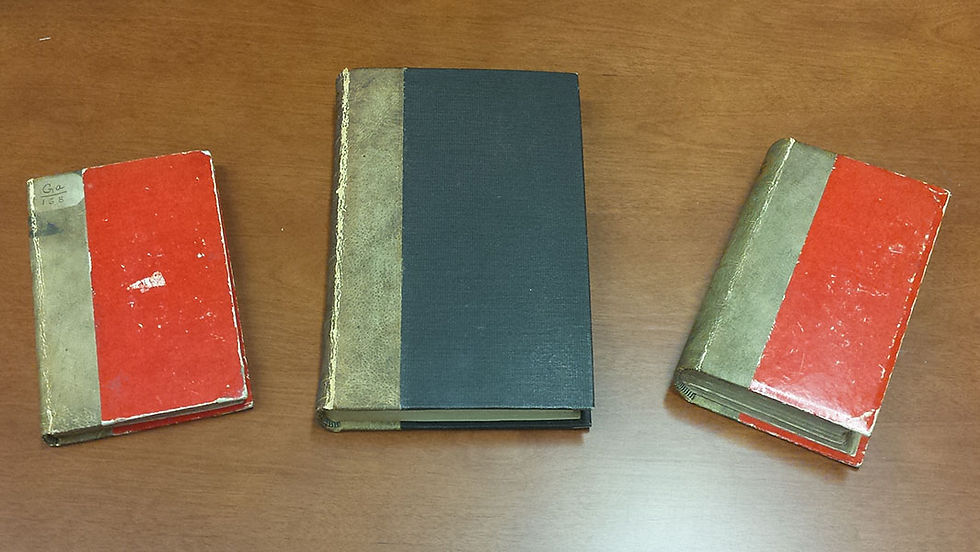
One of Faber's professional readers got to it first, and scrawled her verdict straight across the report: "Rubbish and dull. Pointless," according to Golding's biographer John Carey. By any normal logic that should have been the end of it. Monteith wasn't much more impressed on his own first look either, later describing the physical state of the thing for the BBC's Bookmark as "bound in rather depressing hairy brown cardboard." But something about it made him keep reading past the point where most editors would have given up, and by the time he'd pushed through the slow opening pages, he was genuinely caught by whatever raw, unsettling thing Golding had actually managed to put on the page underneath all that mess.
Charles Monteith's second look
Getting Faber to take the gamble was only half the job. Monteith spent months guiding Golding through a serious rewrite, cutting back a large amount of material dealing directly with nuclear war and toning down the character of Simon, who in the original draft read as far too explicitly Christlike for the book Monteith thought this could become. The old title went too, replaced with Lord of the Flies, a biblical reference to Beelzebub. According to Carey, those edits are what actually turned Golding's manuscript from a heavy-handed Christian allegory into something leaner and colder: a secular, psychological fable that didn't need any particular faith to land.
The shadow of war, and the Nazi within
Golding never hid how directly the war had shaped his view of people. In a 1980 episode of The South Bank Show, he explained what it had done to him once the full scale of Nazi atrocities became public knowledge. "I have a Nazi inside me," he said, describing the unsettling realisation that, given the right circumstances, he might have become one too. That admission runs through the whole of Lord of the Flies. It isn't a romantic castaway story. It's a flat statement that civilisation is a veneer, and that barbarity is never as far away as anyone would like to believe.
A darker admission than the war
The war wasn't the only source of that belief, as it turned out. When literary critic John Carey gained access to Golding's private papers after his death, including an unpublished memoir Golding had written for his wife to explain what he called the "monstrous" side of his own character, it revealed something considerably more troubling than wartime disillusionment: an admission that, at eighteen, Golding had attempted to rape a 15-year-old girl he'd known from music lessons in Marlborough. She fought him off and ran. It's a genuinely uncomfortable fact sitting behind a novel about humanity's capacity for cruelty, and one Carey's biography didn't shy away from including.
Slow burn to bestseller
Upon publication in the UK in 1954, Lord of the Flies received respectful reviews but sold modestly. Its bleakness puzzled readers who were still, in a very real sense, recovering from the war themselves. What actually changed its fortunes was a fairly mundane publishing decision: the 1959 American paperback from Capricorn Books came with a biographical and critical note by scholar E.L. Epstein, effectively packaging the novel as something a classroom could teach rather than just a strange British import to puzzle over. It worked. The book found a huge audience among students and the era's literary-minded counterculture, and within a few years had sold well into the millions of copies. By the early 1960s it was required reading on both sides of the Atlantic, and the royalties finally let Golding give up teaching for good. "I'm not a very systematic person," he admitted afterwards, and teaching had never suited him.
The real Lord of the Flies
In 1965, six teenage boys from a Catholic boarding school in Tonga stole a boat, got caught in a storm, and washed up on the uninhabited island of 'Ata after eight days adrift with no food or water. They stayed there for 15 months. Rather than descending into anything like Golding's fiction, they built a fire and kept it burning the entire time, grew food, set a broken leg with sticks and leaves, and settled disputes with a rule: walk to opposite ends of the island, cool off, then come back and apologise. "That's how we stayed friends," one of them, Mano Totau, later said. Dutch historian Rutger Bregman turned their story into a widely shared 2020 Guardian excerpt from his book Humankind, explicitly framing it as evidence against Golding's pessimism.
It's worth noting the story isn't a clean, uncomplicated rebuttal either. Pacific writers pointed out that Bregman's retelling centred the Australian sea captain who eventually rescued them rather than the boys themselves, and left out the specific Tongan values and survival knowledge that got them through it in the first place. Both things can be true at once: the boys cooperated rather than turned on each other, and the way that story later got told to the rest of the world had its own blind spots, not unlike the ones Golding's own island had.
A book that spawned generations of stories
Stephen King has said Lord of the Flies was "the first book with hands, strong ones that reached out of the pages," and named his fictional Maine town Castle Rock after the boys' mountain fortress in the novel. Its influence runs through Alex Garland's The Beach, the TV series Yellowjackets, and more classroom debates than almost any other twentieth-century novel.
The story keeps adapting
The book has been filmed twice for cinema, in 1963 and 1990, but its first ever television adaptation, a four-part BBC series written by Jack Thorne and directed by Marc Munden, premiered on BBC One and iPlayer on 8 February 2026, having been filmed partly on location in Malaysia. Made with the support of Golding's own family and featuring a cast of more than thirty young actors, many making their professional debuts, it's the most significant screen treatment of the novel in over thirty years.
A lifetime of stories, and a Nobel Prize
Golding refused to rest on his early fame. He went on to write The Inheritors, imagining the end of Neanderthal life, Pincher Martin, an existential ordeal on a barren rock, and The Spire, about madness and religious obsession in medieval England. In 1983, his blend of realism and myth earned him the Nobel Prize for Literature, for illuminating what the committee called the human condition in the world of today. Asked once what mattered most to him as a writer, Golding gave an answer as plain as it was timeless: a story needed a beginning, a middle and an end.
The story that refuses to die
John Carey, the biographer whose research underpins most of what's known about how close this book came to never existing, died in December 2025 at the age of 91, having spent nearly fifty years as one of Britain's most read literary critics. His work outlives him in exactly the way Golding's own book has: still assigned, still argued over, still finding readers who weren't born when a junior editor decided a tea-stained, badly bound manuscript deserved a second look. It sits comfortably alongside the site's other stories of people and groups tested by real isolation, from Shackleton's Endurance crew, who held together through months adrift on ice, to the doomed Galápagos utopia experiment of the 1930s, and the very different fate of a shipwrecked Swedish sailor who ended up ruling the island he washed up on rather than fighting over it.
Frequently asked questions
What was the original title of Lord of the Flies?
Strangers from Within. Faber editor Charles Monteith suggested the change to Lord of the Flies, a biblical reference to Beelzebub, as part of his wider revisions to the manuscript.
Did Golding base the book on real children?
Not directly, though his years as a schoolteacher, including deliberately setting boys against each other to observe the result, clearly informed how he wrote the boys' descent into violence.
Who plays the main characters in the 2026 BBC adaptation?
Winston Sawyers plays Ralph, Lox Pratt plays Jack, David McKenna plays Piggy, and Ike Talbut plays Simon, leading an ensemble of more than thirty young actors.
Did the real Tongan castaways ever meet their rescuer again?
Yes. Peter Warner, the Australian sea captain who found them, stayed close to several of the boys for the rest of his life, and hired them as crew on his own ship afterwards.
Sources
● BBC Bookmark Archive: How Lord of the Flies Was Rescued from the Reject Pile
● John Carey: William Golding: The Man Who Wrote Lord of the Flies
● William Golding official site: South Bank Show Originals: William Golding
● Fox News (via The Telegraph): Author of 'Lord of the Flies' Admits He Tried to Rape Girl
● History News Network (via The Telegraph): William Golding, Author of Lord of the Flies, 'Tried to Rape a 15-Year-Old Girl'
● ExplorersWeb: The Real Lord of the Flies
● Drama Quarterly: BBC Hails Lord of the Flies
● William Golding official site: First Look Images for Jack Thorne's Adaptation of Lord of the Flies Revealed
● The Boston Globe: John Carey, Literary Eminence Who Excoriated Snobbery, Dies at 91
● Hunts Bookshop (Faber & Faber edition listing): Lord of the Flies, with an Introduction by Stephen King
● William Golding official site: Stephen King's It and Lord of the Flies