Karl P. Schmidt: The Scientist Who Documented His Own Death
Updated: Oct 20

On the afternoon of 25 September 1957, one of the world's leading snake experts was handed a 30-inch snake nobody could quite identify. A few minutes later it bit him on the thumb. Karl Patterson Schmidt didn't go to hospital. He caught the train home, sat down with a pencil and started taking notes on what the venom was doing to him. Less than a day later he was dead, and those notes became one of the strangest documents in the history of science.
Quick Answers
Who was he? Karl P. Schmidt (1890 to 1957) was an American herpetologist and former chief curator of zoology at Chicago's Field Museum.
What bit him? A juvenile boomslang (Dispholidus typus), a rear-fanged tree snake from sub-Saharan Africa, sent over by Lincoln Park Zoo for identification.
How long did he survive? He was bitten on 25 September 1957 and pronounced dead shortly before 3pm the next day, less than 24 hours later.
Why didn't he get treatment? Nobody knows for sure. He reportedly said treatment would upset the symptoms, there was no boomslang antivenom in Chicago, and he may have thought the bite wasn't serious.
What killed him? Massive internal bleeding caused by the venom wrecking his blood's ability to clot. The cause of death was recorded as respiratory paralysis.
A Boy From Lake Forest Who Collected Snakes
Schmidt was born in Lake Forest, Illinois, on 19 June 1890. His interest in the natural world started at home. His mother was a keen amateur naturalist who used to quiz him on trees and constellations, and he and his brother collected reptiles on the family farm, according to the Science History Institute.
His route into science wasn't exactly straight. He started at Lake Forest College, then spent about six years helping run the family farm in Wisconsin before finally heading to Cornell, where he graduated in 1916 with a major in geology, not biology as is often claimed. From there he was hired as an assistant by Mary Cynthia Dickerson at the American Museum of Natural History in New York, CBS Chicago reported in a piece marking the anniversary of his death. He married Margaret in 1919, and she'd be the one by his side at the very end.

The Man Who Built the Field Museum's Reptile Collection
In August 1922 Schmidt moved to Chicago to become the Field Museum's first curator devoted entirely to amphibians and reptiles. When he arrived the collection held fewer than 8,000 specimens. By 1941, the year he became chief curator of zoology, it had grown to around 50,000. Over his career he named at least twelve genera and more than 200 species and subspecies, wrote close to 150 books and papers and eventually donated his own library of more than 15,000 titles to the museum.
He was a field man too. His collecting trips took him to Puerto Rico, Honduras, Brazil, Guatemala, Peru and Israel, and in 1932 he won a Guggenheim Fellowship to work on the amphibians and reptiles of upper Central America. One of his oddest finds was Dunn's earth snake, Geophis dunni, which he described from a specimen pulled out of a coral snake's stomach. As far as anyone knows, no second specimen has ever turned up.
He also had a taste for the dramatic. On an expedition to Belize he collected a crocodile and later wrote a booklet called Crocodile Hunting in Central America. By the 1950s he was one of the most respected names in the field. He co-wrote the Field Book of Snakes of the United States and Canada, helped write the textbook Principles of Animal Ecology, served as president of the American Society of Ichthyologists and Herpetologists and was elected to the National Academy of Sciences in 1956. His last big book, Living Reptiles of the World, co-written with his younger colleague Robert Inger, came out in 1957, the same year he died.
The Snake Nobody Could Identify
Schmidt had officially retired in 1955 but kept working at the museum as curator emeritus. On 25 September 1957 a snake arrived from Lincoln Park Zoo, which at the time was run by Marlin Perkins, the zoo director who'd become a household name presenting the TV show Zoo Parade. It was about 30 inches long and nobody at the zoo could say for certain what it was.

Schmidt thought it looked like a young boomslang, but one detail bothered him. The scale covering the snake's vent, known as the anal plate, was undivided, which isn't what you'd expect in a boomslang. He was standing chatting with Inger, fellow herpetologist Hymen Marx and a zoo man named Truett when he took the snake from Inger, in his own words, "without thinking of any precaution".
He also held it badly. Rather than gripping it right behind the head, he held it an inch or two further down the body, which left the snake free to turn and bite. It did, on the fleshy side of his left thumb. Only one fang went in properly, to a depth of about 3mm. He sucked hard at the wound, which doesn't actually do anything to remove venom.
Why a Snake Expert Underestimated a Boomslang
It's easy to look back and think Schmidt was reckless, but the boomslang's reputation in 1957 wasn't what it is now. Its fangs sit at the back of the jaw rather than the front, and the snake needs to open its mouth to something like 170 degrees to get them into you. For a long time rear-fanged snakes as a group were seen as more or less harmless to people, Scientific American notes, and the boomslang is shy and rarely bites.

That said, the warning signs were there. South African researchers had worked out by 1940 that boomslang venom was more potent than that of cobras and mambas, so it's hard to believe someone of Schmidt's standing had no idea. The other problem is that boomslang venom works slowly. Symptoms can take hours to show, so a victim can feel fine long enough to think they've got away with it, as McGill University's Office for Science and Society points out.
The Death Diary
Schmidt took the commuter train home to Homewood, about 21 miles south of the city, and started writing. What follows is a summary of what he recorded.
4:30pm to 5:30pm: Strong nausea on the train, but no vomiting.
5:30pm to 6:30pm: Violent chills and shaking, then a fever of 101.7°F (about 38.7°C). Around 5:30pm his gums started bleeding.
8:30pm: Ate two pieces of milk toast.
9pm to 12:20am: Slept well. At 12:20am he passed urine that was mostly blood.
4:30am: Drank a glass of water, then had violent nausea and threw up his undigested supper. He felt much better afterwards and slept until 6:30am.
6:30am, 26 September: Breakfast of cereal, a poached egg on toast, applesauce and coffee. Blood still in his urine and his mouth and nose still bleeding, but, as he put it, "not excessively".
That's where the diary stops. The temperature readings, the meal by meal record, the measured tone, it all reads like a lab notebook, which in a sense is exactly what it was. The Chicago Tribune published a transcript on 3 October 1957 under the headline "Diary of Snakebite Death!", and papers around the world picked the story up.
The Final Hours
By the morning of the 26th Schmidt seemed to think the worst was over. Around noon he rang colleagues at the museum to say he'd be in later. He'd already turned down medical help, and the Chicago Daily Tribune reported his reasoning as "No, that would upset the symptoms."
At around 1:30pm he vomited again and phoned Margaret. His hands had gone cold, his face was pale and he was struggling to breathe. Paramedics managed to bring some colour back to his face, but his breathing didn't recover and he lost consciousness. He was taken to hospital and pronounced dead shortly before 3pm, less than 24 hours after the bite.

The autopsy found bleeding in his lungs, eyes, heart, kidneys and brain. The venom had done exactly what boomslang venom does. It sets off a runaway clotting reaction that uses up the body's clotting factors, so the victim ends up unable to stop bleeding anywhere. His death was put down to respiratory paralysis. His Field Museum colleague Clifford Pope later wrote an account of the case for the journal Copeia.
Did He Think He Was Going to Die?
This is the part people still argue about, and the honest answer is that the sources don't agree.
One view is that Schmidt knew there was no boomslang antivenom anywhere near Chicago, expected to die and decided to get one last piece of science out of it. A Chicago hospital in 1957 would only have had antivenom aimed at rattlesnakes and water moccasins, the Science History Institute's podcast explains. Field Museum herpetologist Dr Sara Ruane told CBS Chicago that boomslang antivenom simply wasn't available in the city at the time.
The other view is that he underestimated it. The Field Museum's own history says he didn't take the bite seriously enough, and the fact that he phoned work to say he'd be in later doesn't sound like a man who thought he was dying. Biographer Charles H. Smith's entry on him says Schmidt doubted the snake could deliver a fatal dose. The diary itself, with its breakfast menu and its calm note about the bleeding, reads more like a man monitoring an unpleasant illness than one writing his last words.
It might have been a bit of both. Curiosity, a reasonable but wrong guess that a juvenile snake with one fang in couldn't kill him, and maybe a reluctance to make a fuss in front of colleagues.
What Killed Karl Patterson Schmidt? The 2017 Study
Sixty years later a team led by Davinia Pla and Juan Calvete, working with the Liverpool School of Tropical Medicine, published a paper in Biochimica et Biophysica Acta titled, rather pointedly, "What killed Karl Patterson Schmidt?" It was the first full breakdown of the proteins in boomslang venom, and they found toxins from seven different families.
The interesting bit came when they tested a North American antivenom, CroFab, against it. It managed to bind some of the boomslang's metalloproteinases, the enzymes linked to the clotting collapse that killed Schmidt. The researchers suggested that the antivenom available in 1957 might have neutralised at least part of the venom. So the man who refused treatment because it would upset the symptoms may have turned down something that could have helped, though we'll never know whether it would have been enough.

Not the Last Herpetologist to Die This Way
Schmidt's death changed how herpetologists treated rear-fanged snakes, but it didn't stop the deaths. CBS Chicago lists him alongside German herpetologist Robert Mertens, who died after a snakebite in 1975, and Joe Slowinski. In 2001 Slowinski, of the California Academy of Sciences, was bitten by a many-banded krait he'd reached for in a bag during an expedition in northern Burma. He died around 29 hours later, as Kirkus's review of his biography recounts.
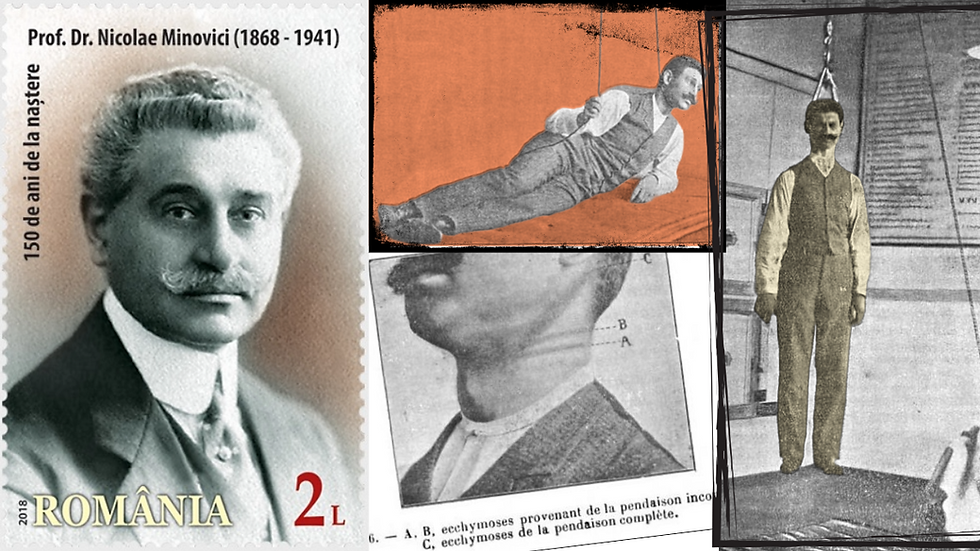
Schmidt belongs to a long and slightly unnerving line of scientists who used their own bodies as the experiment, from Nicolae Minovici, the Romanian doctor who hanged himself for science, to the nurse Clara Maass, who died after volunteering for yellow fever experiments. Even Jonas Salk tested his polio vaccine on himself and his family before it went out to the public. And if you thought handling venomous snakes was a job for experts only, America's snake-handling churches and the story of Rattlesnake Kate suggest otherwise.
How Schmidt Is Remembered
It'd be a shame if Schmidt was only remembered for the way he died. He spent 35 years building one of the great herpetology collections in the world, named hundreds of species and wrote books that introduced a generation of Americans to snakes. Plenty of species and subspecies were later named in his honour, and the collection he built is still at the heart of the Field Museum's herpetology department.
But the diary is what people come back to. It's a few pages of plain, careful notes written by a man who'd spent his whole life observing animals and, when it came to it, couldn't stop observing himself. Whether that was bravery, stubbornness or a fatal miscalculation is still up for debate, and that's probably why the story has never gone away.
Further Reading
If you want to go deeper, these are worth a look (affiliate links):
Living Reptiles of the World by Karl P. Schmidt and Robert F. Inger. Schmidt's final book, published the year he died.
The Snake Charmer: A Life and Death in Pursuit of Knowledge by Jamie James. The story of Joe Slowinski, the herpetologist killed by a krait in 2001.
Venomous: How Earth's Deadliest Creatures Mastered Biochemistry by Christie Wilcox. A readable guide to how venom actually works on the body.
You May Also Like
Sources
Science History Institute, Why Keep a Diary of a Toxic Snakebite?
The World (PRX), He documented his own death by snake bite instead of going to the hospital (2015)
Pla D. et al., What killed Karl Patterson Schmidt? Biochimica et Biophysica Acta (2017)
Charles H. Smith, Some Biogeographers, Evolutionists and Ecologists: Schmidt, Karl Patterson
McGill University Office for Science and Society, Snake Bitten