


John Cooper Clarke and Nico: The Bard of Salford's Lost Brixton Years

Picture the flat. Somewhere in Brixton in the mid-1980s, the skinniest man in British poetry is sharing a roof with the woman who sang on the first Velvet Underground album. He's the punk poet who used to open for the Sex Pistols. She's Nico, Andy Warhol's former superstar. And neither of them is writing much of anything, because both of them are on heroin.
These days John Cooper Clarke fills arenas, turns up on the GCSE syllabus and has a new book out. But for most of the 1980s he very nearly didn't make it. This is the story of the decade he lost, the strange company he kept while losing it, and how he got out the other side.

A Sickly Kid From Salford
Clarke was born in Salford in 1949 and grew up in Higher Broughton, a bookish lad who'd rather read than kick a ball about. As a child he caught tuberculosis, and that's where his long relationship with opiates started. In his memoir he describes the TB treatment at eight as his introduction to them, with morphine on tap, as one review of I Wanna Be Yours put it. Years later he told the Daily Mirror he believes those early opioids helped set up the addiction that came later.
By his teens he was a sharp-suited mod, and the mods ran on pills. He's never been shy about it. In a long chat with the Idler he cheerfully argued that amphetamines won the Second World War, which tells you something about where his head was at.
He ended up working as a lab technician at Salford Tech, writing poems on the side and reading them in working men's clubs to audiences who mostly wanted the bingo. Then punk turned up. When the Sex Pistols played Manchester's Lesser Free Trade Hall in 1976, the tiny crowd included half of Buzzcocks, most of what became Joy Division, Morrissey, Mark E Smith and a lab tech called John Cooper Clarke.
Famous, Then Gone
Punk needed a poet and Clarke fitted the bill perfectly. He supported the Pistols, the Clash and Siouxsie and the Banshees, firing out machine-gun verse at crowds who'd come to gob at guitarists. He signed to Epic and released four albums in four years, with Factory Records' Martin Hannett twiddling the knobs behind him.
The problem was that the heroin had already arrived. He kept working through the late 1970s on a mix of junk and a stubborn work ethic, but after 1982's Zip Style Method the output dried up. The BBC's notes for his Desert Island Discs episode say he wrote very little for more than a decade after that. One profile puts his whole addiction at 18 years.
He didn't stop gigging altogether, mind. Heroin costs money, so he took whatever touring came his way. The Guardian's review of his memoir paints him as Mr Reliable on the road, always available and almost always off his face.
How Nico Ended Up in Manchester
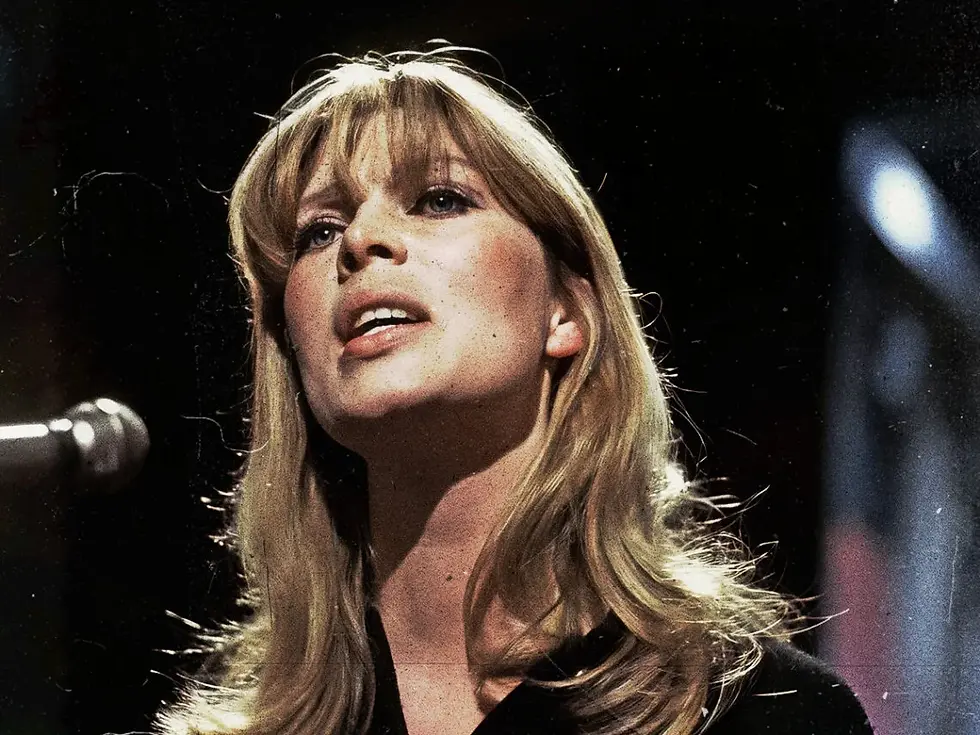
Nico's own route to that flat was just as unlikely. Born Christa Päffgen in Cologne, she'd been a model, a Fellini extra, a muse to Bob Dylan and Brian Jones, and the frosty blonde voice on The Velvet Underground and Nico. She was part of the Warhol Factory crowd (the same Warhol who once sent a rude doodle to the Moon).
By 1981 she was broke and drifting. After a gig in Manchester she admitted to the promoter Alan Wise that she'd got nowhere to go, so he put her up, and she ended up living mostly in the city for the next seven years. Julie Burchill later pointed out in the Spectator that heroin was famously cheap in Manchester at the time, which can't have hurt the appeal.
Her Manchester years weren't glamorous. She drifted between spare rooms until hosts started saying their kids were scared of her, then took a flat in Prestwich. People who knew her described days built around scoring and shooting up, in rooms with blood splattered up the walls from syringes, shared with other local users. One of them was Clarke.
The Brixton Flat
At some point the two of them moved down to London together and set up home in Brixton. Some accounts call it a flat, the Guardian's memoir review calls it a dosshouse. Either way it wasn't a love story. Burchill made a point of saying the arrangement was platonic.
They did talk about working together, though. In an NME quiz interview Clarke confirmed the pair flirted with recording an album of covers under the name Nico and Johnnie. NME's rundown of the memoir says they very nearly went through with it. It never happened, and given the state of both of them at the time, that's probably no surprise.

Clarke admired her even at her lowest. In I Wanna Be Yours he writes about how she could take over any room she walked into, however rough things had got. But he's never been keen to romanticise any of it. When the Observer's Tim Adams interviewed him, he noted that Clarke dislikes any attempt to glamorise the period and won't go into much detail.
Chet Baker, Robert Mitchum and Other Things He Doesn't Remember
The few stories he does tell are odd enough to stick. The best one is about his dealer. For a while, Clarke bought heroin from an old American guy who was just another face on the scene. Twenty years later he was watching Let's Get Lost, Bruce Weber's documentary about the jazz trumpeter Chet Baker, when he realised the man on screen was the same bloke who'd sold him gear. He'd been scoring off one of the great cool jazz players without having a clue. The Guardian's reviewer loved that he should have known it was Chet just from the way he said hi.
Jazz and the wrong side of the law have a long history, as Dizzy Gillespie and Ella Fitzgerald found out in Houston, but Baker's story was bleaker than most. He was a heroin addict for decades and died after falling from a hotel window in Amsterdam in 1988.
Then there's Robert Mitchum. Clarke told the Mirror he once met the Hollywood hard man at the flat and was so high he has no memory of it. If you want the whole decade in one line, there you go: he met Robert Mitchum and forgot.
The dark side was very real, though. Over the course of his addiction, one interviewer notes, he needed resuscitating three times.
Nico's Last Bike Ride
Nico got out first, or so it seemed. By 1988 she'd swapped heroin for methadone, her biographer Jennifer Otter Bickerdike explains, and she'd taken up cycling as part of a new health kick. Wise told Rolling Stone it had been "a year and a half since she decided heroin was no good for her." She played a concert of new material in Berlin in June, then went on holiday to Ibiza with her son Ari.
On 17 July 1988, the hottest day of the year on the island, she set off on her bike into town. Ari later recalled she'd gone to buy cannabis. At some point she fell and hit her head. A passing taxi driver found her unconscious by the roadside and got her to hospital. It was a cerebral haemorrhage, and she died the next day, aged 49.
After everything she'd survived, it was a bike ride that killed her. Wise once said she used to say "she was only two minutes from death."
Getting Clean (Reluctantly)
Clarke's own exit came slower. The BBC's programme notes say he cleaned up in the early 1990s after marrying his French wife Evie and having their daughter, Stella. The family settled in Colchester, Essex, which is where he still takes phone interviews from today.
What's refreshing is that he's never dressed his recovery up as some noble awakening. On Desert Island Discs in 2019 he told Lauren Laverne he never actually wanted to quit, and that he did it for the sake of society rather than his own health. He felt hard done by when he stopped. As he put it on the show, quoted by the Courier: "I was very much part of the problem."
The Comeback Nobody Saw Coming
Once he was clean, the world slowly came back round to him. Evidently Chickentown played over the closing scene of a 2007 Sopranos episode, a scene built around Frank Vincent's mob boss Phil Leotardo, and Clarke told the Philadelphia Inquirer the placement "100-percent jacked up my profile." Arctic Monkeys turned I Wanna Be Yours into a song in 2013, and Alex Turner had first studied Clarke's poems for his GCSEs.
The self-styled bargain-basement Baudelaire published his memoir in 2020, and in 2025 he became the first poet to headline a UK arena, playing Manchester's Co-op Live. His new collection Have It came out in September 2026 and he's touring it around the UK and Ireland right now.
Not bad for a bloke who spent the 1980s in a Brixton flat with Nico, buying gear off Chet Baker and forgetting he'd met Robert Mitchum. Of the two people in that flat, he's the one who lived to tell the story, even if he'd still rather tell you a joke.
Suggested Reading
Want the full story in his own words, or Nico's side of it? These are worth a look.
I Wanna Be Yours by John Cooper Clarke. Clarke's 2020 memoir. Funny, rambling and the best account you'll get of the Salford years, punk and the long slide into the 1980s.
Have It by John Cooper Clarke. His brand-new 2026 poetry collection, and proof the old wit's as sharp as ever.
You Are Beautiful and You Are Alone: The Biography of Nico by Jennifer Otter Bickerdike. A thorough look at Nico's life, from Cologne and the Warhol Factory to Manchester and that final summer in Ibiza.
As an Amazon Associate, Utterly Interesting earns from qualifying purchases.
You Might Also Like
Sources
About John Cooper Clarke, johncooperclarke.com
John Cooper Clarke: 'I didn't want to quit heroin', The Guardian (via inkl)
John Cooper Clarke: I didn't want to quit heroin, The Courier
John Cooper Clarke: 'My trousers? River Island or M&S. The skinniest they do', The Observer (via inkl)
I Wanna Be Yours by John Cooper Clarke review: chapter and verse, The Guardian (via inkl)
I Wanna Be Yours by John Cooper Clarke review: wry and dry, Yahoo
Punk poet John Cooper Clarke on how fame caused devastating descent into drugs, Daily Mirror (via inkl)
John Cooper Clarke's bracing new memoir 'I Wanna Be Yours': the big talking points, NME
Does Rock 'N' Roll Kill Braincells?! John Cooper Clarke, NME
Nico in Manchester: 'She loved the architecture, and the heroin', The Guardian (via inkl)
Nico: the Manchester years, life after The Velvet Underground, Loud and Quiet
Julie Burchill on Nico, The Spectator
She'll be your mirror: Who was the real Nico?, Yahoo News
Nico: You Are Beautiful and You Are Alone, Scene Magazine
Nico: 1938-1988, Rolling Stone
Nico, The Irish Times
The day Nico died, Ultimate Classic Rock
John Cooper Clarke interview, MusicRadar
John Cooper Clarke, Idler interview, Smart Street Films
A modern-day bard, inkl
John Cooper Clarke was once abducted by a fan in Switzerland, Far Out
Desert Island Discs: John Cooper Clarke, poet, BBC Radio 4
John Cooper Clarke interview: 'I hated school but teachers like me', The Star, Sheffield
Punk poet John Cooper Clarke touring after 35 years, The Philadelphia Inquirer
Memories of a Punk Poet, Tribune
Dr John Cooper Clarke, Visit Leeds
John Cooper Clarke announces new UK tour and poetry collection, 'Have It', Far Out
A British punk captured the feelings of a Sopranos mobster, The A.V. Club


