Anna Månsdotter: The Last Woman Executed in Sweden
Updated: Oct 6

On the morning of August 7, 1890, a 48 year old woman named Anna Månsdotter was led into the courtyard of Kristianstad district jail in southern Sweden and beheaded with an axe. It wasn't the crime itself that made her famous, plenty of people had killed before her. It was everything that came out during the trial. Swedish papers dubbed her Yngsjömörderskan, the Yngsjö Murderess, and the name stuck. Anna Månsdotter remains the last woman ever executed in Sweden, and the case is still one of the country's most talked about murders more than 130 years later.

A hard life on a struggling farm
Anna was born in December 1841 in a village near Kristianstad. As a young woman she married Nils Nilsson, a farmer thirteen years her senior, and moved with him to a modest farmhouse in Yngsjö, right on the Baltic coast. The couple had three children together, but only one survived to adulthood, a son named Per.
Money was tight from the start. Farming didn't bring in enough to support the family, and things got worse when Nils fell ill with consumption, what we'd now call tuberculosis. He died in 1883, leaving Anna to run the farm with Per, who was 21 at the time. That left mother and son working side by side, alone, in a household already worn down by debt and illness.
A marriage, and a secret
Per eventually married a young woman named Hanna Johansdotter, born in 1867. On paper it looked like an ordinary match for the time. What wasn't ordinary, and what nobody outside the family knew, was that Anna and her son had been carrying on a sexual relationship. In the Sweden of the 1880s, incest wasn't just scandalous, it was a crime that carried its own weight of shame and legal consequence, and it's the detail that turned this from a local tragedy into a national sensation once it surfaced.

The most widely accepted theory is that Hanna found out about the relationship between her husband and her mother in law, and that this discovery is what got her killed. Whether it was jealousy on Anna's part, fear of exposure, or some mix of both, the investigators and courts at the time struggled to pin down a single clean motive. Both Anna and Per gave shifting, inconsistent accounts of what actually happened, which only deepened the mystery.
The murder
On March 28, 1889, Hanna Johansdotter was killed inside the family home in Yngsjö. According to the most common reconstruction of events, she was beaten with a piece of wood and then strangled. Afterward, her body was dressed and positioned to make it look like she'd fallen down the stairs, an attempt to disguise a murder as a household accident.
It didn't hold up for long. Investigators spotted the staging almost as soon as they examined the body, and suspicion landed on both Anna and Per within days. As the case built, the incestuous relationship between mother and son came to light, turning a fairly ordinary domestic murder case into one of the most notorious trials in Swedish history.

Two death sentences, one very different outcome
Both Anna and Per were convicted and sentenced to death for Hanna's murder. That's where their paths split. Per's sentence was commuted, he was spared execution and sentenced instead to hard labour for the rest of his life. He ended up serving over two decades before being released in 1913. He died five years later, in 1918, from tuberculosis, the same disease that had killed his father decades earlier.
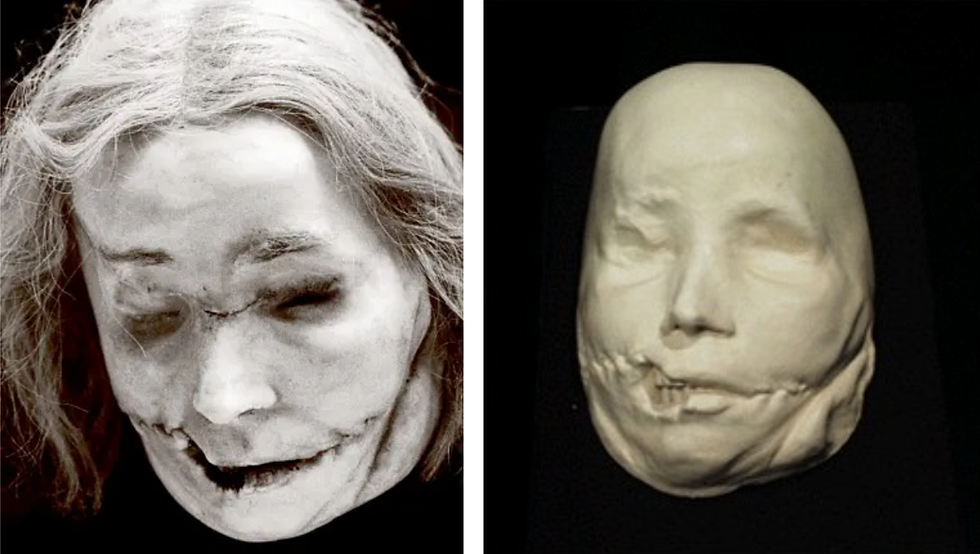
Anna wasn't so fortunate. Her sentence stood. On August 7, 1890, she was executed by beheading in the grounds of Kristianstad's district jail, carried out by executioner Albert Gustaf Dahlman. It was the first time a woman had been executed in Sweden in thirty years, and it turned out to be the last time ever. Sweden formally abolished capital punishment for peacetime crimes in 1921, just over thirty years after Anna's death, so her case sits close to the tail end of the practice rather than some distant relic. We've written before about the men who carried out sentences like this one, including Albert Pierrepoint, Britain's most prolific executioner.

Why the case still gets told
The Yngsjö murder, as it's known in Sweden, never really faded from public memory. Writers and filmmakers kept returning to it for decades. A novel based loosely on the case appeared as early as 1902, and further books followed through the twentieth century, including one from the 1980s that inspired a stage production. A feature film adaptation was made in 1966 with some of Sweden's best known actors of the era in the lead roles, and the case was later revisited again as part of a television series covering notorious Swedish murders in the mid 1980s.
Part of the pull is obvious. It has all the elements that keep true crime cases alive generations later: poverty, a taboo relationship, a murder staged to look accidental, and a legal outcome that split two equally guilty defendants down completely different lines. Per lived into his sixties. Anna didn't survive past 48. It's a similar split to the one in Velma Barfield's case, another woman who ended up first, rather than last, in her country's history of executions, where politics shaped the outcome as much as the crime.
Worth saying plainly, a lot of this case rests on shaky ground. Both Anna and Per told different versions of events at different points, and some later writers argue Anna may have acted alone, with Per's involvement overstated or coerced out of him to save his own neck. There's no surviving confession that fully squares with the physical evidence, and modern historians treat much of the motive as informed guesswork. Worth bearing in mind, the same way it's worth questioning the tidy story behind the last public execution in France, another case that got flattened into legend over time.
What's certain is the outcome. A farm on the Baltic coast, a family already stretched thin by poverty and illness, and a relationship that should never have existed ended in a death that made history for entirely the wrong reasons. More than a century on, Anna Månsdotter is still remembered not just as a killer, but as the last woman Sweden ever sent to the executioner.