The Thrilla in Manila: Ali, Frazier and the Fight That Nearly Killed Them Both

At about quarter to eleven on a Wednesday morning in October 1975, two of the greatest heavyweights who ever lived climbed into a ring in a suburb of Manila and spent the next 14 rounds trying to take each other apart. It was so hot under the arena's metal roof that the heat was messing with the gloves. When it was over, one man could barely see and the other could barely stand.
Muhammad Ali kept his title. Joe Frazier lost nothing but the result. And neither of them was ever really the same again.
Behind the fight sat a dictator who needed good headlines, a mistress who made worse ones and a little American cable channel that bet its future on a satellite feed from the other side of the world. Here's the full story.
Quick Answers
What was the Thrilla in Manila? The third and final fight between Muhammad Ali and Joe Frazier, for the undisputed world heavyweight title, held on 1 October 1975 at the Araneta Coliseum in Quezon City, Philippines.
Who won? Ali, when Frazier's trainer Eddie Futch refused to send him out for the 15th round. It went into the record books as a 14th-round stoppage.
Why was it held in Manila? President Ferdinand Marcos, three years into martial law, wanted a global showpiece to make his regime look stable.
Why did it start in the morning? So it could go out live in the US on the evening of 30 September.
How much were they paid? Ali was guaranteed $4.5 million and Frazier $2 million, each against a share of the gross.
Is it the Thrilla or the Thriller in Manila? Thrilla, after Ali's rhyme. It's often misspelt as the Thriller in Manila, and even the Karlovy Vary film festival listed the 2008 documentary that way.
Why does it matter beyond boxing? It was the first big event HBO sent out by satellite, which helped turn cable TV into a national business.
The Ali vs Frazier Trilogy
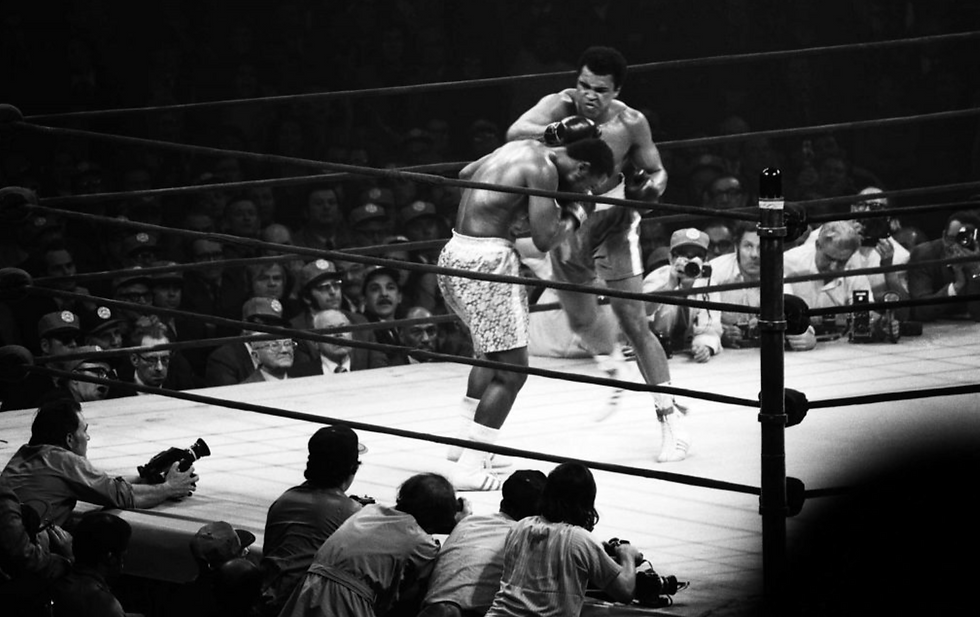
Ali and Frazier had serious history long before Manila. When Ali was stripped of his title in 1967 for refusing the draft during the Vietnam War, it was Frazier who stepped into the gap and became champion. Their first meeting, the so-called Fight of the Century at Madison Square Garden in March 1971, ended with Frazier dropping Ali with a left hook in the 15th and winning on points.
Fight | Date | Venue | Result | Title at stake |
|---|---|---|---|---|
Ali vs Frazier I (Fight of the Century) | 8 March 1971 | Madison Square Garden, New York | Frazier on points after 15 rounds | World heavyweight title (Frazier's) |
Ali vs Frazier II | 28 January 1974 | Madison Square Garden, New York | Ali on points after 12 rounds | No world title (NABF belt only) |
Ali vs Frazier III (Thrilla in Manila) | 1 October 1975 | Araneta Coliseum, Quezon City | Ali, after Frazier retired following round 14 | Undisputed world heavyweight title (Ali's) |
Ali won a non-title rematch in New York in January 1974. By the time they got to Manila, Frazier had lost the belt to George Foreman and Ali had taken it back from Foreman in Zaire. So this was the decider. And it was personal.
Ali, a long way from the Louisville teenager whose first professional contract had been negotiated by civil rights lawyer Alberta Jones, had turned trash talk into an art form. With Frazier it curdled into something nastier. Before their first fight he'd branded Frazier an Uncle Tom, a jibe Ali later admitted he regretted. Before Manila he went further and started calling him a gorilla, boasting that it'd be "a thrilla, and a chilla, and a killa, when I get the Gorilla in Manila". His entourage even wore T-shirts with the 'Manila Gorilla' slogan. The rhyme gave the fight its name. It also gave Frazier a wound that never closed.
Why Was the Thrilla in Manila Held in the Philippines?
Ferdinand Marcos had put the whole of the Philippines under martial law in September 1972. By 1975 he was dealing with political unrest and growing Muslim and communist insurgencies, and he reportedly wanted the fight to pull attention away from all of it. Hosting the biggest sporting event on the planet was a way of telling the world everything was fine.
He already had form for this kind of thing. In March 1974 he'd stood in front of the television cameras at Malacañang Palace to accept the surrender of Hiroo Onoda, the Japanese soldier who'd kept fighting the Second World War in the Philippine jungle for almost three decades, and granted him a full pardon. Manila was getting good at spectacle.
Promoter Don King, fresh from the Rumble in the Jungle, found a willing partner. King guaranteed Ali $4.5 million against 43 per cent of the gross and Frazier $2 million against 23 per cent, which could have pushed their earnings far higher. The fight sold out and ticket sales alone brought in about $1.5 million, a record at the time.
The venue was the Araneta Coliseum in Cubao, one of Asia's biggest indoor arenas. The government's one condition was that it be temporarily renamed the Philippine Coliseum to match the billing. Sports Illustrated's Mark Kram was given close access to Marcos, even playing a round of golf with him and asking who he fancied in the fight. Kram later described the atmosphere in the country as "martial law with a smile".
Plenty of Filipinos still remember the fight fondly, abuses and all. Philippine Olympic Committee vice-president Joey Romasanta told AFP years later that for a while the fight made people forget their problems. Then the next day came, and so did the reality of martial law.
The Mistress, the President and the Furious Wife
Ali arrived in Manila with a big entourage, and one member of it caused more headlines than the fight. Veronica Porché was a young model he'd been seeing behind his wife's back. At a reception with Ferdinand and Imelda Marcos, Ali introduced Porché as his wife, and the Marcoses publicly treated her that way. The press loved it.
Back home, Ali's wife Belinda, who by then went by Khalilah, saw the coverage. She flew to Manila, stormed into his suite at the Manila Hilton for a blazing row and flew straight back out again. The marriage was finished, and one newsman joked at the time that people were talking more about Veronica and Belinda than about Ali and Frazier. Porché later became Ali's third wife.
How Hot Was the Thrilla in Manila?
To hit prime time on the US east coast, the fight started at 10.45am local time. That meant boxing through the heat of a tropical morning inside an arena with an aluminium roof, under hot TV lights, in front of a crowd of nearly 27,000 including most of the country's political elite.
Nobody quite agrees how hot it got. Contemporary and later estimates run from around 100°F to well over 110°F at ringside, and Frazier later put it at 125°F, which probably tells you more about how it felt than what a thermometer would've said. Angelo Dundee, Ali's trainer, said the heat was even affecting the condition of the gloves. One account also claims Frazier's corner ran out of ice late on because it had all melted, though that's a single-source detail worth taking with a pinch of salt.
What Happened in the Fight, Round by Round
Ali started fast, rattling Frazier with crisp combinations early on. Then, from around the fourth round, Frazier did what Frazier always did. He walked through the punches, got inside and started hammering Ali's body.
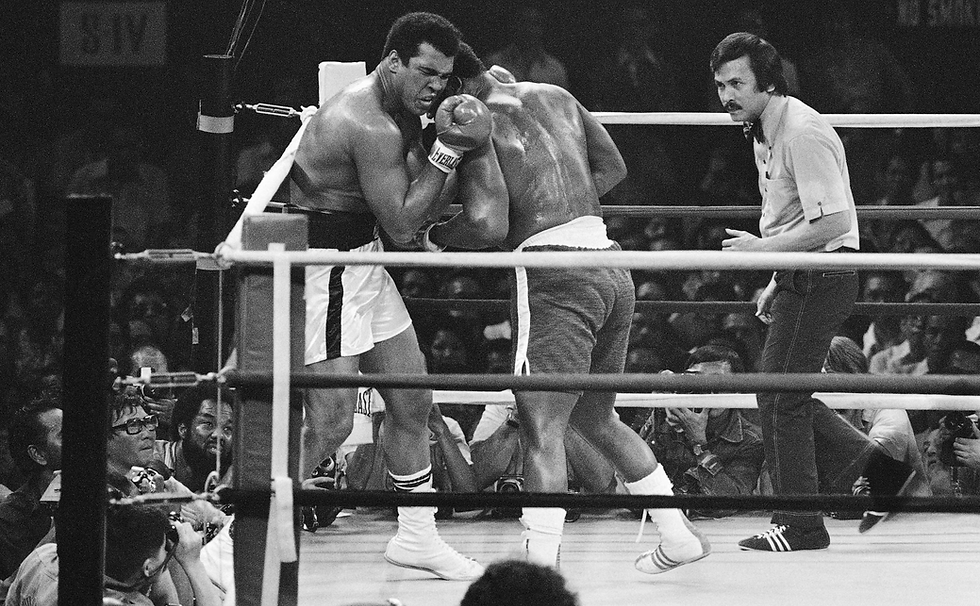
In the middle rounds the fight swung hard his way. At one point Ali leaned in and told Frazier he'd thought he was washed up. Frazier's reply has gone down in boxing legend: "Somebody told you all wrong, pretty boy." By the 10th it was roughly level on the cards.
What most people didn't know was that Frazier had been fighting half-blind for years. A training accident back in 1964 had left him with little vision in one eye, and in Manila Ali's right hand was steadily closing the other one.
Ali dug in. Early in the 13th a vicious right sent Frazier's gumshield flying into the ringside seats, and from then on Ali was landing on a man who couldn't see the punches coming. The 14th was a beating. When the bell went, referee Carlos Padilla had to guide Frazier back to his corner.
Eddie Futch had seen enough. The veteran trainer pressed a hand on Frazier's shoulder and told him "Sit down, son". Frazier begged for one more round. Futch wouldn't budge. "It was a heck of a fight. I wanted to continue," Frazier told reporters afterwards. Thirty years on he'd come round to Futch's way of thinking. "One more round, my eggs might break," he told ESPN.
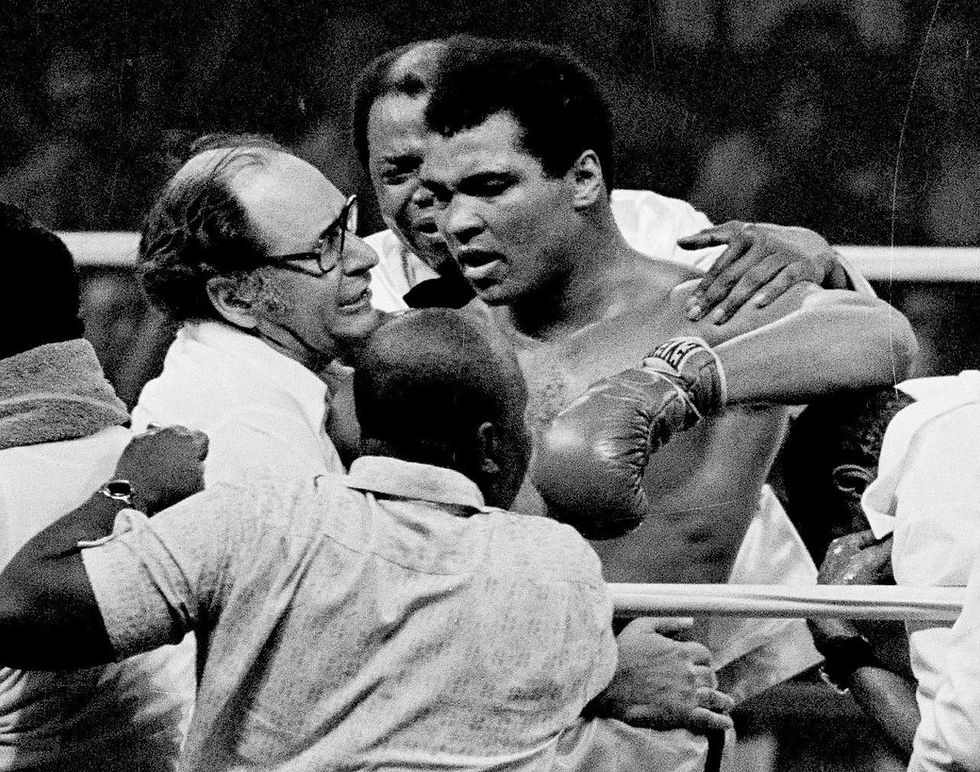
Here's the twist. Ali may have been about to quit too. Accounts from the night say he asked Dundee to cut his gloves off before Futch made his call, and Dundee ignored him. Just how close Ali came to retiring on his stool is still argued over, but he never pretended he had much left. When the result was announced he collapsed to the canvas and had to be helped up.
Ali was ahead on all three cards. Padilla had it 66-60, and judges Larry Nadayag and Alfredo Quiazon scored it 66-62 and 67-62. There was even some confusion over when it actually ended. Because the bell for the 15th hadn't rung, the local games and amusements board ruled it a 14th-round stoppage under WBA rules. There wasn't a single knockdown all fight, and it was only the second time in his career Frazier had been stopped.
How the Thrilla in Manila Changed TV
Filipinos watched in the morning. Americans watched on the evening of 30 September, and how they watched turned out to be historic. HBO, then a small pay cable service, bought the rights and beamed the fight to cable systems by satellite, which made it the first television network to deliver a continuous signal that way. Before then, big fights from abroad often meant flying film home and showing it days later.
It paid off. More than half a million homes reportedly paid to watch, a pay-per-view record for the time. Ted Turner was paying attention, and after seeing what HBO pulled off he turned his Atlanta station WTCG into the first cable superstation in 1976. Pretty much every premium sports broadcast you've paid for since owes something to that morning in Quezon City.
The Price They Paid
Ali called the fight "the closest thing to dying" he knew of. His fight doctor Ferdie Pacheco felt the 14th round was the nearest he'd seen one man come to killing another.
Ali carried on for six more years, losing and winning back the title against Leon Spinks before retiring in 1981 after defeats to Larry Holmes and Trevor Berbick. A lot of people around him believed Manila took something he never got back. He was later diagnosed with Parkinson's and died in June 2016. Frazier fought only twice more, losing again to Foreman in 1976 and drawing with Floyd Cummings in a 1981 comeback.
Straight after the fight Ali was gracious, calling Frazier "the toughest man in the world". He also apologised to Frazier's son Marvis. It didn't wash. Frazier kept calling him Clay for decades, and his 1996 autobiography was full of bitterness, even suggesting Ali's illness was some kind of divine payback. When a trembling Ali lit the Olympic flame in Atlanta that same year, Frazier grumbled that he, an Olympic gold medallist himself, should have been doing the honour.
In 2001 Ali told the New York Times he was sorry for the names he'd called Frazier, insisting "It was all meant to promote the fight." Frazier accepted the apology and by 2008 was saying he'd forgiven him. When Frazier died of liver cancer in November 2011, Ali was among the mourners.
What Manila Kept
The Philippines never let go of the fight. On 30 June 1976 the Araneta family opened Ali Mall right next to the Coliseum, named after the winner, and Ali flew back as guest of honour for the opening. It was the country's first enclosed, fully air-conditioned mall, with the first cineplex, a giant indoor skating rink called Skatetown and one of the earliest food courts. It's still trading today.
The arena, now the Smart Araneta Coliseum, has gone on to host everything from basketball finals to Lady Gaga and Taylor Swift. When the fight hit its 50th anniversary in 2025, the coincidences weren't lost on anyone. Another President Marcos was in Malacañang, and his First Lady traces her family back to the Araneta clan whose arena had been borrowed for the occasion.
Years later, ESPN Classic viewers voted it the best sporting event of the 20th century. Not bad for a fight that was over before lunch.
Where Can You Watch the Thrilla in Manila?
The full fight broadcast is easy to find online, though uploads come and go depending on who holds the rights. For the story behind it, the best place to start is Thrilla in Manila (2008), a 90-minute documentary directed by John Dower, narrated by Liev Schreiber and made with HBO Documentary Films. It features Frazier himself and, remarkably, Imelda Marcos.
Be warned, it's told very much from Frazier's corner, and some viewers have called it one-sided. It's also where one eyewitness claims Frazier had given Ali money back when Ali was banned and broke, which makes everything that followed even uglier.
If you'd rather read, Mark Kram's 2001 book Ghosts of Manila is the essential text. Kram was ringside for Sports Illustrated, and his take on Ali is famously unsentimental.
You Might Also Like
Sources
Manila Bulletin, Original Bulletin story of the Thrilla in Manila
ESPN, Thrilla: An exhausting, excruciating epic (Tim Graham)
Rappler, The Thrilla in Manila: Behind the scenes and beyond the fight
Rappler, How Ali's Thrilla in Manila left its mark on the Philippines
The Post, An ode to Cubao and the day it hosted boxing's greatest, most brutal fight
World Boxing Council, Thrilla in Manila Fiftieth Anniversary
Asian Journal, Thrilla in Manila at 50: Heat, endurance and a fight that still echoes
Arab News (AFP), How Thrilla in Manila changed Ali and Frazier forever
University of Colorado Boulder, And heavyweight champion of TV: HBO
Ultimate Classic Rock, How the Thrilla in Manila Changed Boxing and Broadcasting Forever
BoxingScene, Muhammad Ali, Joe Frazier Feud Was Vicious, Lasted For Decades
Smart Araneta Coliseum, Reclaims Spotlight for Thrilla in Manila's 50th Anniversary
Macau Daily Times, On this day: Ali retains title in Thrilla in Manila
Fox News (AP), Muhammad Ali exhibit opens in venue of Thrilla in Manila
Big Fight Weekend, Nearly 50 years ago it was Thrilla in Manila
Karlovy Vary International Film Festival, Thriller in Manila (2008)
History Hit, Hiroo Onoda: The Japanese Soldier Who Refused to Surrender