The Last Public Execution in the United States: What Really Happened in Owensboro
Updated: Aug 14

At sunrise on August 14, 1936, somewhere between 10,000 and 20,000 people crowded a vacant lot in Owensboro, Kentucky to watch a 22 year old Black man named Rainey Bethea hang. It's remembered today as the last public execution in American history, but that headline barely scratches the surface of what actually happened that morning. There was a rape charge chosen specifically because it carried a public hanging instead of a private electrocution. There was a sheriff who never wanted the job in the first place. There was a hangman so drunk he couldn't pull his own lever. And there was a defense team of five Black lawyers working for free who lost the case in court, then went on to help kill public hangings in Kentucky for good. A new book published in late 2025 has reopened the whole story, arguing it wasn't really justice at all.
A Killing in Owensboro
Early on the morning of June 7, 1936, someone broke into the home of Lischia Edwards, a 70 year old widow living alone in Owensboro, raped her and strangled her to death. The Smith family, who found her that morning, alerted police, who turned up muddy footprints at the scene and a distinctive celluloid ring that didn't belong to Edwards. Investigators tracked the man they believed had worn it, Rainey Bethea, to the banks of the Ohio River a few days later, arresting him as he tried to board a barge. He gave police at least two confessions in the days that followed, the second of which led them to jewelry he'd stashed in a nearby barn.

A Rape Charge, Not a Murder Charge
Under Kentucky law at the time, a murder conviction meant execution by electric chair at the state penitentiary in Eddyville, out of public view. A rape conviction, on the other hand, could still be punished by hanging, and that hanging had to take place in the county where the crime occurred, in front of anyone who wanted to watch. Prosecutors charged Bethea with rape alone, deliberately leaving the murder off the docket, which meant that whatever happened next would happen publicly, in Owensboro, rather than quietly at Eddyville. It's a detail that rarely makes it into shorter tellings of this story, and it explains why an execution that could have taken place behind prison walls instead became a spectacle.
Five Black Lawyers, Working for Free
Bethea's trial, on June 25, 1936, lasted about three hours. He pleaded guilty despite offering an alibi witness who ultimately denied even knowing him, and the jury took roughly five minutes to come back with a death sentence. What's often left out is who represented him on appeal: five Black attorneys, Charles Ewbank Tucker, Stephen A. Burnley, Charles W. Anderson Jr., Harry E. Bonaparte and R. Everett Ray, took the case pro bono and fought it through a motion for a new trial, an appeal to the Kentucky Court of Appeals, and a federal habeas corpus petition. All three efforts failed within about a month. It's a case that sits alongside the lynching of J. Thomas Shipp and Abraham S. Smith as one of several moments in this era where the legal system and mob justice ended up looking uncomfortably similar, even when the killing technically followed the law.

The Sheriff Who Didn't Want the Job
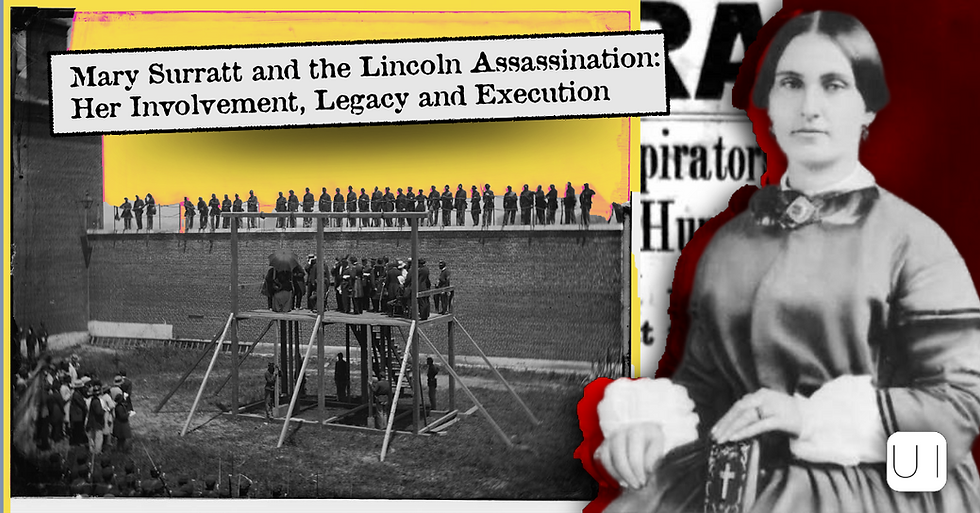
Florence Shoemaker Thompson became sheriff of Daviess County on April 13, 1936, after her husband died suddenly of pneumonia while in office, a common way for women to inherit a sheriff's badge in this period since Kentucky law let a widow finish her husband's term. Thompson had no desire to personally carry out an execution and accepted help from two men: G. Phil Hanna, an Illinois farmer who'd become an unlikely expert in humane hangings after supervising around 70 of them, and Arthur Hash, a retired Louisville police officer who volunteered to actually spring the trap. Thompson isn't the only woman in this site's true crime history connected to a hanging story worth reading, either. Decades earlier, Mary Surratt became the first woman ever executed by the U.S. government, hanged for her alleged role in the Lincoln assassination conspiracy, a case that still divides historians the same way Bethea's does.

Twenty Thousand People and a Man in a White Panama Hat
Arthur Hash showed up to the execution site that morning noticeably drunk, dressed in a white suit and a white Panama hat that made him stand out sharply against the gallows. When the moment came to pull the lever, Hash froze, and a deputy had to lean on it himself to open the trap. Hanna, at least, had rigged the rope and drop correctly, so Bethea's death was quick once the floor gave way. Hanna reportedly called it the worst display he'd witnessed across all his decades of doing this. Accounts of the crowd itself vary wildly depending on who was reporting it. The local Owensboro Messenger-Inquirer insisted the huge gathering stayed calm and orderly, going quiet the moment a priest raised his hand for silence before Bethea's death. National outlets told a very different story, describing hot dog and popcorn vendors doing brisk business at dawn and crowds allegedly surging toward the scaffold afterward, though the local paper specifically disputed claims that souvenir hunters tore pieces from Bethea's body, saying only that an attendant removed the tag from his hood after death was pronounced.

A National Scandal, and One Man Who Never Made It
Whichever version of the crowd's behaviour was closer to the truth, the coast to coast newspaper coverage of Owensboro's carnival atmosphere embarrassed Kentucky badly, and the fallout reached beyond the gallows itself. Leonard A. Peters, a 36 year old man driving toward Owensboro that morning specifically to watch the hanging, was killed in a car accident on the way, with three of his passengers injured. It's a grim footnote that rarely gets mentioned alongside the more famous details of vendors and souvenir hunters, but it underlines just how large and determined the crowd trying to reach that vacant lot actually was.
The Lawyer Who Helped End It
The most striking postscript to Bethea's execution belongs to one of his own defense attorneys. Charles W. Anderson Jr. went on to become Kentucky's first Black state legislator, and once in office he personally pushed the bill that finally stripped Kentucky of its public hanging requirement for rape convictions. Governor Albert 'Happy' Chandler, the same man who'd signed Bethea's death warrant, signed Senate Bill 69 into law on March 12, 1938, and it took effect that May. Kentucky's very next execution, of a man named Harold Van Venison that June, happened privately. The public hanging that had drawn thousands of spectators and national headlines two years earlier turned out to be the last one this country would ever see.
What Owensboro Still Won't Talk About
Bethea was buried in an unmarked grave whose exact location has since been lost, and the vacant lot where the gallows stood is a parking lot today. Locals have spent decades trying to forget the whole thing rather than commemorate it. A librarian at the Daviess County Public Library once described it as still a sore spot in town, and a resident donating old photographs of the execution to the library's archive asked that they be taken off his hands because his family didn't want to keep looking at them. Even Voices of Elmwood, a local group of historical reenactors who bring Owensboro's past to life at the town cemetery, has reportedly avoided taking on Bethea's story. Thompson herself, according to her son, carried the weight of that decision for the rest of her life, all the way until she died in 1961.
The story got a fresh, uncomfortable look in October 2025 with the publication of American Bloodlines by Sonya Lea, an Owensboro native who discovered while researching the book that her own grandparents had been in the crowd that morning, and that she was distantly related to the prosecuting attorney. Lea's book reframes Bethea's execution as what she calls a legal lynching, digging into shaky fingerprint evidence and a prison ring identified only by an initial, and questioning whether the swift guilty plea and five minute jury verdict amounted to real justice at all.
She's not the first to raise doubts about the case either. Richard Brown of the Kentucky Human Rights Commission has separately argued that Bethea's several confessions may not have been as clean as Perry T. Ryan's definitive account of the case suggests. Nearly ninety years later, the last public execution in American history still hasn't entirely settled.
Quick Answers
Who was the last person publicly executed in the United States? Rainey Bethea, a 22 year old Black man convicted of raping and murdering 70 year old Lischia Edwards, was hanged in Owensboro, Kentucky on August 14, 1936, in front of a crowd estimated at 10,000 to 20,000 people. No public execution has taken place in the U.S. since.
When did public executions end in the United States? Kentucky removed the legal requirement for public hangings in rape cases when Governor Albert 'Happy' Chandler signed Senate Bill 69 into law on March 12, 1938, effective that May. The state's next execution took place privately, and no other state has carried out a public execution since Bethea's hanging.