

Roch Thériault and the Ant Hill Kids: Canada's Cult of Horror
Updated: 4 days ago

In the summer of 1989 a woman with one arm hitchhiked out of the Ontario bush and got herself to a hospital. Her name was Gabrielle Lavallée, and the man who'd cut off her arm was the leader of the commune she'd lived in for over a decade. He called himself Moses. His followers called themselves the Ant Hill Kids. And by the time police started digging, they'd find that the arm was far from the worst of it.
Roch Thériault spent twelve years running a doomsday commune in Quebec and Ontario. He took around eight followers as wives, fathered more than 20 children, performed "surgery" on people with kitchen knives and got away with it for far longer than anyone should have. This is how it happened, how it ended and what became of the woman who brought him down.
Quick Answers
Who was Roch Thériault? A Quebec-born cult leader (1947 to 2011) who called himself Moïse, or Moses, and led a commune known first as the Holy Moses Mountain Family and later as the Ant Hill Kids.
Where was the cult based? Sainte-Marie-de-Beauce in Quebec, then a mountainside camp in the Gaspé, then Burnt River in Ontario from 1984.
Who did he kill? He pleaded guilty to the second-degree murder of Solange Boilard, who died in 1988 after he cut open her abdomen. A two-year-old boy, Samuel Giguère, also died at the commune in 1981.
Who escaped? Gabrielle Lavallée, who fled in August 1989 after Thériault amputated her arm. Her escape led to his arrest.
How did he die? He was stabbed to death by fellow inmate Matthew Gerrard MacDonald at Dorchester Penitentiary, New Brunswick, on 26 February 2011. He was 63.
Who Was Roch Thériault?
Thériault was born on 16 May 1947 in Rivière-du-Moulin, now part of Saguenay in Quebec, and grew up in a Catholic French-Canadian family. He left school at around 13, according to Morbidology's account, which draws on contemporary reporting from Maclean's, the Toronto Star and the Montreal Gazette. He was bright, a skilled woodworker and a natural talker, and he read the Bible obsessively, particularly the Old Testament and its fondness for wrath.

There was a darker family secret too. According to La Mémoire du Québec, which compiles Quebec press coverage of the case, his aunts revealed in 1987 that he'd been born of an incestuous relationship. The QMI Agency repeated the claim in 2011, though it's never been independently documented and it's not clear how much Thériault himself knew growing up.
At 18 he turned his back on Catholicism. By January 1977 he'd joined the Seventh-day Adventist Church, whose clean-living rules (no alcohol, no tobacco, no caffeine) and focus on the Second Coming suited him down to the ground. According to the World Religions and Spirituality Project, which keeps a detailed timeline of the group, he also claimed that February to have had a vision predicting the Jonestown massacre, which wouldn't happen until November 1978.
The Adventists didn't keep him long. He'd started pushing his own apocalyptic reading of scripture and, by some accounts, angling for a leadership role. The church expelled him and his wife Gisèle in April 1978.
The Healthy Living Clinic and the Mountain
By then Thériault already had a following. In October 1977 he'd opened a Healthy Living Clinic in Sainte-Marie-de-Beauce, running detox courses and anti-smoking sessions. The people who signed up were mostly young, many of them middle-class, and a surprising number of them simply stayed. They sold Adventist literature door to door and, according to the Encyclopedia of Cults, Sects and New Religious Movements, were encouraged to tap their own parents for money.
On 9 July 1978 the group packed up and headed for the Gaspé Peninsula, setting up camp on a mountainside in the woods near New Carlisle. Thériault named it Mont Éternel, or Eternal Mountain, and the group became the Holy Moses Mountain Family. That September he gave everyone biblical names. He became Moïse. The following month he began sleeping with most of the women in the group.
The world, he told them, would end in a great storm on 17 February 1979. Only those on the mountain would survive. When the date passed without so much as a stiff breeze, he explained that God's time didn't work like human time. Remarkably, nearly everybody stayed. Police briefly detained him for a psychological evaluation that year, but he came out the other side of it and some newspapers ended up painting him as a harmless eccentric living in the hills.
When Moses Was a Tourist Attraction
The press coverage of Thériault in these years swung wildly. After more than 900 people died at Jonestown in November 1978, just months after the group moved to the mountain, journalists started comparing Thériault to Jim Jones and calling his followers a cult. Given that he'd supposedly foreseen Jonestown, you'd think that would have been the end of the public's curiosity.
It wasn't. The World Religions and Spirituality Project records that by 1979 and 1980 the camp had become "a major tourist attraction", with as many as 75 to 100 visitors a day trekking up to gawp at the bearded prophet and his followers in their cabins. The failed apocalypse and the Jonestown comparisons seem to have made him more interesting to day-trippers, not less alarming to them, and the stream of outsiders did nothing to stop what was happening inside.
Thériault clearly enjoyed the attention. While serving his first prison sentence he wrote his own account of the commune, L'Affaire Moïse: La montagne de l'Éternel, published in 1983. It's worth remembering that at this point he was in jail over the death of a child.
1981: The First Dead Child
Nobody who looked closely could have called it harmless for long. Inside the camp Thériault controlled who could speak to whom, who could have sex with whom and who ate. Punishments started with beatings and got worse from there. Adults were reportedly made to hurt one another to prove their loyalty, and children weren't spared.

In 1981 a two-year-old boy called Samuel Giguère fell ill. Thériault's response was to cut into the child's genitals himself, and afterwards a follower named Guy Veer, acting on Thériault's orders, beat the boy. Samuel died and his body was burned to hide what had happened. That September Thériault castrated Veer as punishment, and the other members were told to say he'd been trampled by a horse.
Samuel's surname matters. Jacques Giguère was Thériault's right-hand man and, unusually for the group, lived monogamously with his wife Maryse. The WRSP account strongly implies Samuel was Jacques's son, though it never quite says so outright, and none of the sources we checked name the boy's mother. If he was, it tells you a lot about Thériault's hold on people: eight years later Jacques Giguère was still at his side, and went to prison with him in 1989.
The story didn't hold. In December 1981 police raided the commune and found the child's charred remains. Seven members were arrested, and in September 1982 several were convicted of criminal negligence. Thériault got a short prison term and was out by February 1984. His followers were waiting for him.
Burnt River and the Birth of the Ant Hill Kids
In May 1984, 22 members moved to Somerville Township near Burnt River, Ontario, about 30km north of Lindsay. It was here that the group picked up the name the world remembers. They ran a roadside stand selling fruit and pastries under the name Ant Hill Kids, and Thériault reportedly liked to compare his followers to ants toiling away on a hill. Given how he treated them, the comparison was more honest than he probably meant it to be.

Locals remembered the commune for its log buildings (Thériault really was good with wood), its crafts and a run of shoplifting incidents. The Maryboro Lodge Museum in nearby Fenelon Falls notes that some members even served community-service orders at the Kinmount Fair.
The Children's Aid Society was far less charmed. In January 1985, according to the WRSP timeline, a baby died of exposure after being left out in the cold. On 6 December 1985 Ontario child protection removed 14 children in one go, and La Mémoire du Québec records that the nine babies born at the commune between 1986 and 1988 were taken into care as well. That fits the Maryboro museum's total of 23 children eventually placed in foster homes, though a few accounts give different figures (ten or 17) and dates. What's clear is that by the late 1980s Thériault was left with a small group of adults, mostly women, who still wouldn't leave.
Much like Marcus Wesson in California, he'd built a closed world in which he was husband, father and god at once, and the women around him had spent years being taught that leaving meant damnation.

The Death of Solange Boilard
By the late 1980s Thériault was drinking heavily, and he'd come to believe he had divine medical gifts. When followers fell ill, he operated on them.
Solange Boilard, one of his wives, complained of stomach pain in 1988 (most sources say September, though some local reporting puts it in August). Thériault had her lie on a table, punched her in the abdomen, gave her a crude enema and then cut her open with a kitchen knife, tearing out part of her intestine with his hands. Other women were made to sew her up. She died the following day, most likely from infection as the contents of her gut leaked into her abdomen.
What happened next was even more grotesque. Thériault claimed he could bring her back to life and mutilated her body in the attempt, including sawing into her skull. According to reporting cited by Morbidology, he also removed one of her ribs and wore it in a leather pouch around his neck. Her body was buried in the woods nearby. Nobody reported it.
Gabrielle Lavallée: The Woman Who Got Out
Gabrielle Lavallée had been with Thériault since the clinic days in Quebec. In November 1988 she complained of toothache, and he pulled out eight of her teeth. He later slashed a tendon in her hand.
In July 1989 she mentioned that her hand was still stiff. Thériault pinned it to a table with a knife, left her there and then amputated her arm. Sources genuinely disagree on how. Contemporary reports cited by Morbidology say he used a meat cleaver, while a 2002 CBC report and the World Religions and Spirituality Project timeline both say a chainsaw.
Lavallée stayed for another few weeks. Then, in mid-August 1989, she ran. She hitchhiked to a hospital, and when police heard her story the whole thing finally came apart.

Manhunt, Arrest and Sentence
The commune scattered and the Ontario Provincial Police launched an air and land search of the surrounding bush. Thériault was picked up on 6 October 1989 along with several followers, and within days he'd pleaded guilty to assault charges over Lavallée. He was given 12 years.
Police then found Solange Boilard's remains near the abandoned commune. Thériault was ordered to stand trial for second-degree murder in December 1990, pleaded guilty and on 19 January 1993 was sentenced to life with no chance of parole for ten years. According to the Maryboro Lodge Museum's account of the trial, he told the court: "I didn't know everything because I was drunk."
Three of his followers also went to prison. Jacques Giguère got five years, Chantal Labrie two years less a day and Nicole Ruel 18 months.

Life Behind Bars
Prison didn't end his family life. Several of his wives kept visiting, and conjugal visits produced more children, which brought his reported total to around 26.
In 2002 he went before the National Parole Board and asked it not to release him. Brian Chase of the board told CBC Thériault seemed "scared to be released into the community given that he was a cult leader." The board, which had its own concerns about his drinking and the risk he posed, was happy to oblige.
Four more babies were born from those visits. According to the WRSP, every one was swiftly taken by child protection and put up for adoption.
Then there was the art. From around 2007, oil paintings, pastels, signed handprints and short poems attributed to Thériault turned up on MurderAuction.com, a US murderabilia site, with minimum bids ranging from $20 to $500. Most of the pictures were flowers and abstracts. A Corrections Canada spokesman told Religion News Blog it was "not within our mandate or jurisdiction to deal with these issues." By 2009, CBC reported, the Correctional Service of Canada said it was stopping his work leaving Dorchester, though items were still listed online.
In January 2011 he gave his first interview in 21 years to the QMI Agency, and for once he sounded sorry. He said he'd felt enormous remorse and described what he'd done as sickening, telling the reporter: "Ce que j'ai fait est écœurant" ("What I did is sickening"). He also said he'd come to see that he'd recreated the violence of his own father inside the commune. Lavallée, for her part, remained unconvinced it was genuine. A month later, he was dead.
Death at Dorchester
On 26 February 2011, Thériault was attacked near his cell at Dorchester Penitentiary in New Brunswick, where he'd been held since 2000. He died of his injuries at 63.
His killer was Matthew Gerrard MacDonald, a fellow inmate from Port au Port, Newfoundland, who was already serving time for killing a woman. He's widely described as Thériault's cellmate, although court reporting only places the attack near Thériault's cell. MacDonald stabbed him in the neck with a homemade shank and then went to the guards to tell them, in the words of the court as reported by CBC, "in rather cruder words than these" that he'd killed Thériault. You'll find a much juicier version of his words floating around online, but we couldn't trace it to a reliable source.

MacDonald initially faced a first-degree murder charge but pleaded guilty to second-degree murder in 2012 and was given life with no parole for 25 years.
What Happened to Gabrielle Lavallée?
Lavallée went home to Chicoutimi, and in 1993 she published a memoir, L'Alliance de la brebis (roughly, The Covenant of the Ewe), which has since been reissued. She went on to talk to school students about what she'd lived through and found her way back to religious faith.
When Thériault died, she said she spent a week withdrawn before feeling what she called "une profonde délivrance", a profound deliverance. She'd forgiven him, she said, but made it clear that forgiving wasn't the same as wanting him freed, and she'd have opposed his parole. She also told the Quotidien that she suspected MacDonald had acted with the connivance of the authorities, a claim that's never been substantiated. And yet she still said: "No human being deserves such a brutal death."
The Children of Moses
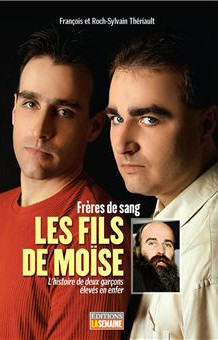
For years the children of the commune were an afterthought in coverage that focused on Thériault and his wives. That changed in 2009, when two of his eldest sons, Roch-Sylvain and François Thériault, published Frères de sang: Les fils de Moïse (Blood Brothers: The Sons of Moses). Written in two voices, it describes growing up in the commune from 1980, when the boys were brought to live with their father, until they broke free of him as young adults.
What they described was relentless: violence, abuse and horrors no child should see, including watching their father disembowel their stepmother, Solange Boilard. Talking to the Toronto Sun after their father's death, François remembered how frightened he'd been as a small boy: "He would say my name and I would tremble like a leaf."
Neither son sounded shocked when the news came from Dorchester. François said they'd always known it would happen one day. Roch-Sylvain said he'd never wanted it to end that way, though he understood why other people felt differently. Both said writing the book and talking about it publicly had freed them, and François said his own daughter would never experience anything like what he had.
Most of the other children, dozens of them removed from the commune over the years and raised in foster or adoptive homes, have never told their stories publicly. That's their right, and probably says something about how many of them wanted to leave the name Thériault behind.
Savage Messiah: The Book and the Film
The case got the full true-crime treatment in the 1990s. Journalists Paul Kaihla and Ross Laver published Savage Messiah in 1993, and it became the standard English-language account. In 2002 the story was turned into a Canadian film of the same name, directed by Mario Azzopardi, with Luc Picard as Thériault and Polly Walker as a social worker trying to get the children out. As the Encyclopedia.com synopsis notes, the film focuses on how the women kept refusing to leave, which remains the hardest part of the story to get your head around.
How Did He Get Away With It for So Long?
Part of the answer is geography. Thériault kept moving his group further into the woods and further from anyone who might ask questions. Part of it is that the authorities kept dealing with him in bits: a negligence case here, a child removal there, a short sentence followed by his release straight back to the same people.
But mostly it's the same story that runs through Heaven's Gate, Jonestown and the Turpin family. Once someone controls where you live, who you speak to, what you eat and what you believe happens after you die, walking away stops feeling like an option. Lavallée managed it only after losing an arm. That she then spent years talking to teenagers about it, and could still say no one deserved Thériault's death, is probably the most remarkable thing in this whole grim story.


