Myrna Darby: The Ziegfeld Beauty Who Died at 21 After a Summer Sunburn

In the summer of 1929, Myrna Darby had pretty much everything a Broadway hopeful could want. She was 21, a Ziegfeld Girl with a named part in one of the biggest musical comedies in New York, and her face was turning up in cigarette adverts. By the end of September she was dead. The explanation her doctor reportedly gave sounded almost too odd to be true: a bad sunburn and too much swimming.
She's been overshadowed by bigger Ziegfeld names like Louise Brooks and Mary Nolan, but her short life packed in a newspaper beauty contest, a divorce scandal, a broken engagement to a British millionaire and a Prohibition gangster who picked up the bill for her funeral.
Quick Answers
Who was Myrna Darby? A Ziegfeld Girl who appeared in four of Florenz Ziegfeld's Broadway shows between 1926 and 1929.
When did she die? On 26 September 1929, aged 21.
What did she die of? Her doctor reportedly blamed an inflammation of the heart, possibly brought on by severe sun poisoning and strenuous swimming.
Where's she buried? Woodlawn Cemetery in the Bronx, New York, in a plot known as Bluebell.
From a Newspaper Beauty Contest to Ziegfeld's Stage
Myrna Darby was born in 1908, and frustratingly little is on record about her childhood. Her first taste of the stage reportedly came in a production of Abie's Irish Rose, the comedy that critics hated and audiences couldn't get enough of.
At 17 she headed for New York and won a beauty contest run by one of the city's newspapers. In the mid-1920s that was one of the classic routes into the Follies. Ziegfeld was famous for picking his girls personally, and the Lost in Woodlawn cemetery project says he discovered Myrna himself when she was still 17.
Being a Ziegfeld Girl was about more than a pretty face. Ziegfeld sold his shows as glorifying the American girl, and his performers had to glide down steep staircases in huge feathered costumes without ever looking like they were trying. The hours were long, the competition was brutal and plenty of girls didn't last a single season. Myrna lasted four.
Four Ziegfeld Shows in Three Years
Her Playbill vault listing shows how quickly she moved up. In under three years she went from the line to named parts.

No Foolin' (Globe Theatre, opened 24 June 1926): her Broadway debut, in what was effectively that year's Follies under another name.
Rio Rita (Ziegfeld Theatre, opened 2 February 1927): the show that opened Ziegfeld's brand new theatre on Sixth Avenue. Myrna played Margarita and danced in the ensemble.
Ziegfeld Follies of 1927 (New Amsterdam Theatre, opened 16 August 1927): one of the most lavish Follies Ziegfeld ever staged.
Whoopee! (New Amsterdam Theatre, opened 4 December 1928): the Eddie Cantor smash, where she played Virginia and was billed among the Ziegfeld Glorified Girls.
Some accounts also put her in Rosalie, the 1928 Marilyn Miller musical, though she doesn't turn up in the Playbill cast records for it.
Whoopee! was the big one. It was among the hottest tickets of the 1928 to 1929 season, and Myrna was still part of it when she fell ill. The show was later turned into a 1930 film that gave a Broadway dance director called Busby Berkeley his first Hollywood job, so if things had gone differently she might well have followed it west.
In Front of Alfred Cheney Johnston's Camera
When she died, The New York Times made a point of saying in its headline that she'd been widely photographed. That wasn't an exaggeration.
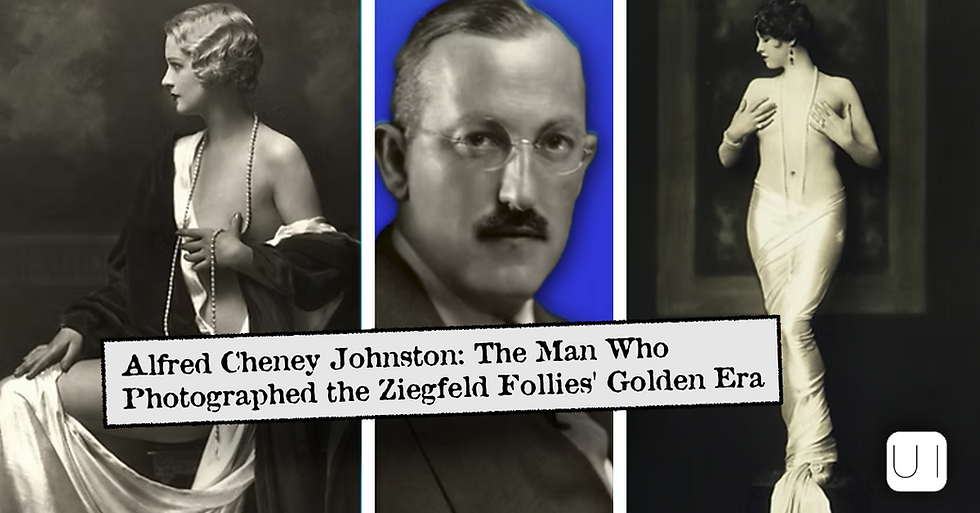
Like most Follies girls, she sat for Alfred Cheney Johnston, Ziegfeld's go-to photographer for more than 15 years. Johnston shot the girls in costume for publicity, but he also took far more revealing pictures in his studio, many of them nude. Myrna's were never published in her lifetime and only surfaced after Johnston died in 1971.
She did commercial work too. In 1927 she reportedly appeared in a Lucky Strike advert alongside fellow Ziegfeld Girls Murrell Finley, Blanche Satchel and Jean Ackerman. Tobacco firms loved a showgirl, and the Ziegfeld name gave a cigarette brand instant glamour.
A Married Pianist and a Millionaire Who Walked Away
Showgirls were gold dust for the gossip columns, and Myrna didn't escape them. In 1927 she was linked to a pianist named George A. Walsh, who happened to be married. His wife went after a divorce and publicly accused Myrna of stealing her husband. For a girl not long out of her teens, that's a lot of very public mud to wade through.
Then, in the spring of 1929, came what looked like a fairytale ending. Myrna got engaged to a wealthy Briton, a millionaire by most accounts. It didn't last. The engagement was called off and he went on to marry someone else.
That jilting fed one of the more romantic theories about what happened next. After her death, some papers claimed she'd died of a broken heart. It made a far better headline than a sunburn.

The Sunburn That Started It All
In July 1929, Myrna got a severe sunburn. Today that's a few days of misery and a bottle of aloe vera. In 1929 it was the start of a slide she never recovered from.
Over the next two months her health fell apart and she ended up in hospital. She died on 26 September 1929. She was 21 years old.
What Actually Killed Myrna Darby?
Her physician reportedly put it down to inflammation of the heart, possibly triggered by severe sun poisoning combined with strenuous swimming. It sounds bizarre now, but there's a plausible thread running through it.
Bad sunburn can blister and break the skin, and before antibiotics a skin infection could get into the bloodstream and settle on the heart. Alexander Fleming had discovered penicillin in 1928, the year before Myrna fell ill, but it wouldn't be mass produced until the Second World War. For a young woman in 1929, an infection like that could be a death sentence.
Other accounts suggest she'd had a heart defect all along, and the strain of a long illness finally exposed it. With no post-mortem findings published, we'll probably never know which version's right. What's clear is that it took her two long months to die.
The Bootlegger Who Paid Her Bills
Here's where the story takes a turn. Myrna's hospital and funeral bills were reportedly paid by Larry Fay, one of the more colourful crooks of Prohibition New York. Crime historian Patrick Downey records the episode in Gangster City, his history of the city's underworld.

Fay made his early money running booze down from Canada, then muscled into the taxi trade with a fleet of cabs and enough heavies to keep rivals off his ranks. He bankrolled nightclubs too, most famously the El Fey Club, where Texas Guinan greeted punters with her catchphrase "Hello, suckers!"
Why a racketeer would pay for a showgirl's funeral isn't clear. Fay lived in the same Broadway nightclub world as the Ziegfeld Girls, the same Jazz Age New York that produced gentleman jewel thief Arthur Barry, and gangsters often liked to play the generous benefactor to performers they admired. Whatever his reasons, Fay's luck ran out soon after. He was shot dead at his own Casa Blanca club on New Year's Day 1932 by a doorman whose wages he'd just cut.
The Bluebell Plot at Woodlawn
Myrna was buried at Woodlawn Cemetery in the Bronx, in the Bluebell plot. Her monument also carries the names of her mother Sarah Darby and her younger sister Donna, who later became Donna Fetonte.
Donna was only 7 when her big sister died, and she went on to a very different kind of public life. She became a longtime civil rights and political activist. In 1956 she hosted a civil rights meeting at her home and had rocks thrown through her windows for it. Seven years later she marched on Washington with Martin Luther King Jr. She died in 2013, a full 84 years after Myrna.
Why Has Myrna Darby Been Forgotten?
Timing, mostly. Myrna died a month before the Wall Street Crash, which wiped out fortunes all over Broadway, Ziegfeld's included. Within a few years the golden age of the Follies was over, and Ziegfeld himself was dead by 1932, buried under debts. A showgirl who died just as that world was ending was always going to slip through the cracks.
She also never made a film. Plenty of her Follies colleagues, from Louise Brooks to Paulette Goddard, went to Hollywood and stayed in the public eye for decades. Myrna's career was entirely on stage, and stage careers leave behind little more than programmes, photos and old newspaper cuttings.
Those photos are why people still stumble across her. Johnston's portraits turn up on collectors' sites and old Hollywood fan pages, usually captioned with little more than her name and the word showgirl. Behind them is a 21-year-old who crammed more into three years on Broadway than most performers manage in a lifetime.

Suggested Reading
Want to know more about the Follies and the world Myrna Darby lived in? These are worth a look.
Ziegfeld: The Man Who Invented Show Business by Ethan Mordden. A lively biography of the showman who made Myrna's career, from his first Follies to his debt-ridden end.
Ziegfeld Girl: Image and Icon in Culture and Cinema by Linda Mizejewski. A sharp look at how the Ziegfeld Girl was manufactured and sold, and what it meant for the women who played her.
Gangster City by Patrick Downey. The underworld side of the story, including Larry Fay and the racketeers who ran Broadway's nightlife.
As an Amazon Associate, Utterly Interesting earns from qualifying purchases.
You Might Also Like
Sources
Myrna Darby (Performer), Playbill Vault
Myrna Darby rests in Woodlawn Cemetery's Bluebell plot, Lost in Woodlawn
Myrna Darby Dies; Ziegfeld Show Girl and Beauty, 21, Was Widely Photographed (28 September 1929), The New York Times
Gangster City: A History of the New York Underworld by Patrick Downey, Internet Archive