

Margery Booth: The Opera Singer Who Spied on Hitler From Inside Berlin

Adolf Hitler once sent Margery Booth 200 red roses wrapped in a sash printed with a swastika. He'd just watched her sing at Bayreuth and told her she was perfectly charming. What he didn't know was that the same woman was smuggling British intelligence out of Nazi Germany hidden in her underwear, hiding a Jewish woman in her Berlin flat, and burying stolen documents in the grounds of a royal palace. She got away with it for years, moving through Hitler's inner circle as one of the most unlikely spies of the Second World War. Then, when it was all over, Britain barely thanked her for it.
From Wigan to the Berlin Opera House
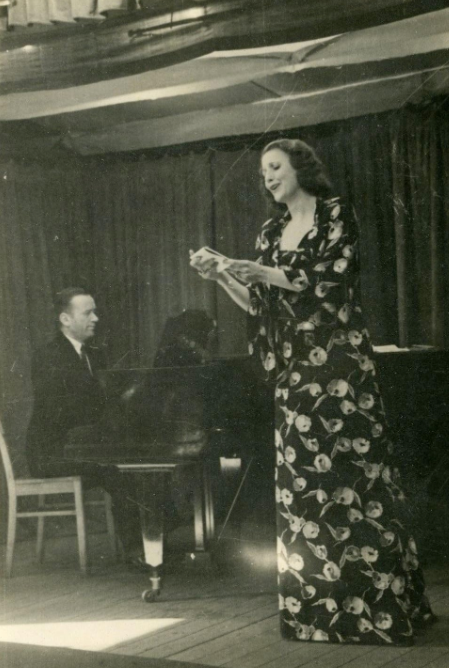
Margery Myers Booth was born in Wigan, usually dated to 1905, though the town's own local history archives put it more precisely at January 25, 1906. Her father ran the family's brush manufacturing business, and the family later moved to Southport, where an eight year old Margery made her first stage appearance in an operetta in 1914. She started formal voice training at 14, studied under Aileen D'Orme in London, and won a scholarship to the Guildhall School of Music and Drama, picking up the Mercer Scholarship two years running along with the Liza Lehman prize. It was at Guildhall that she met Egon Strohm, a German student studying English, a friendship that would later turn into something more complicated. In 1928, still in her early twenties, Margery auditioned successfully for the Berlin State Opera and made her debut in La Tosca. By 1930 she was landing lead roles, including in the new opera Der Fremde Erde, an unusually rare honor for a foreign singer on a German stage.
She told a reporter from the Lancashire Evening Post in 1932 that she loved Germany so much she wouldn't want to leave it. She had no idea yet how true that would turn out to be, or what it would cost her.
Roses From Hitler
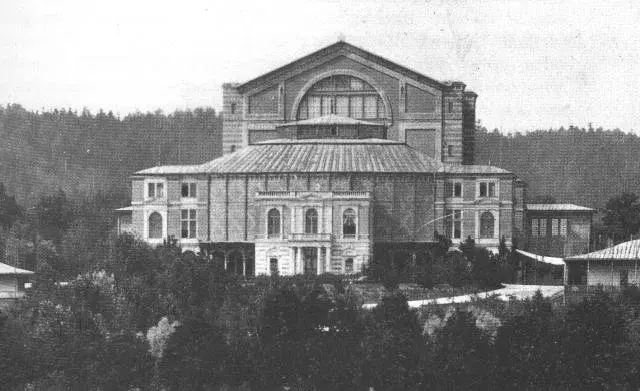
In 1933, Margery performed in Wagner's Parsifal at the Bayreuth Festival, carrying the Holy Grail across the stage in one of opera's most reverent roles. Adolf Hitler was in the audience, and afterward he came to her dressing room. She later described him to a reporter as perfectly charming, someone who wanted to talk about art and music, and he sent her 200 red roses tied with a swastika sash.
A few months later she was invited to dinner with Hitler and Crown Prince Wilhelm, telling the Lancashire Daily Post she'd received a beautiful bouquet and met people who were all very charming. It reads almost absurdly cheerful in hindsight, a British singer from a Lancashire mill town being courted by the men who'd go on to start a world war, but it put her exactly where she'd eventually need to be. She wasn't the only performer of her era who'd learn to use fame and access like this as cover. Josephine Baker was doing something similar for French intelligence around the same period, hiding messages in sheet music and smuggling documents in her clothing while touring as one of the most famous entertainers in Europe.
A Secret Wedding, and a Husband Broadcasting for the Nazis
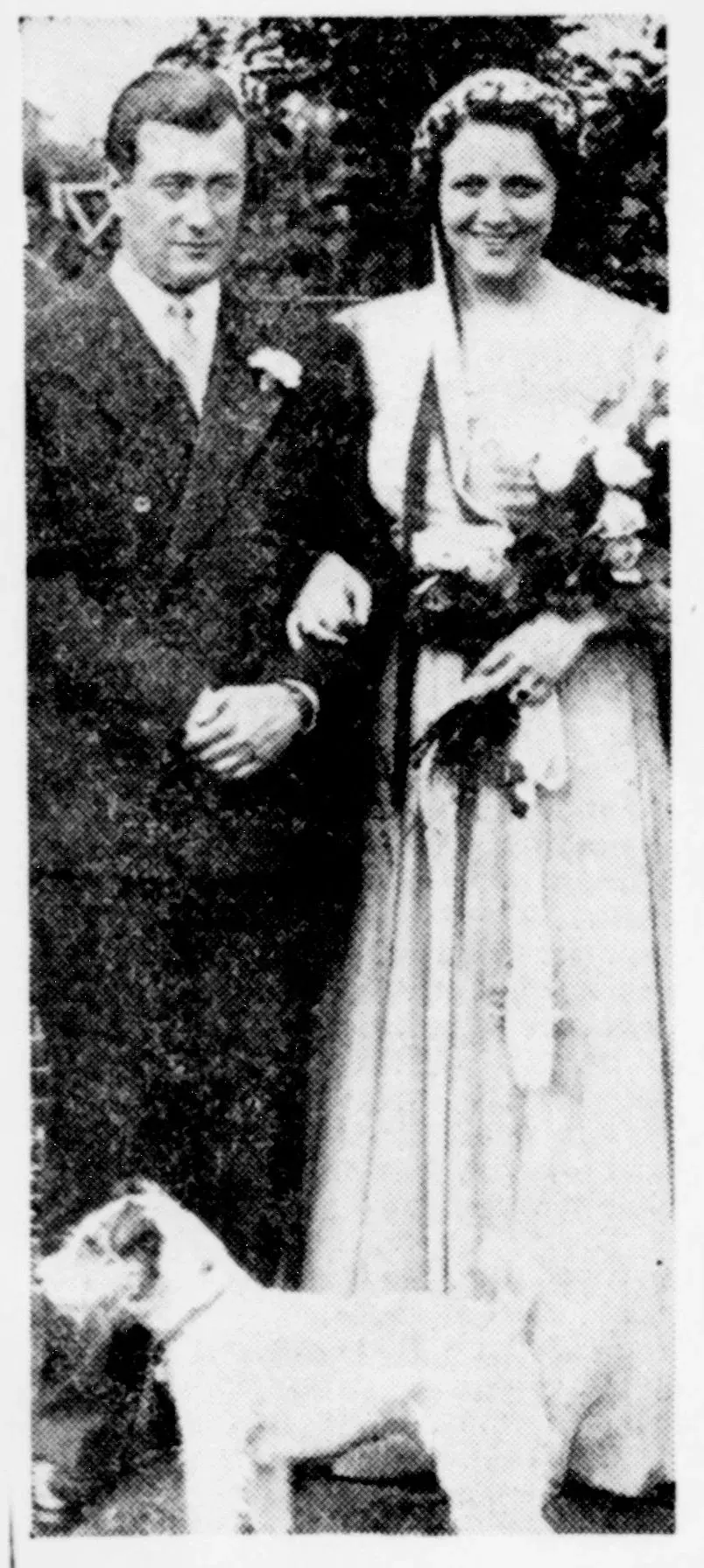
Margery and Egon Strohm married in a small, secret ceremony at All Saints Church in Southport on August 26, 1936, with only a handful of family and friends present, before returning together to Berlin. Egon, who came from a prominent German brewing family and held a doctorate in law and economics, ended up working for Reichs-Rundfunk-Gesellschaft, the Nazi state broadcaster, under the on-air alias Scrutator, eventually rising to section head over a team of thirty. He was briefly dismissed in 1942 over an irregularity involving a trip to Budapest before being reinstated as chief commentator. The marriage itself didn't hold up nearly as well as his career. Friends later said it was an unhappy one, with Egon spending through Margery's money, and the two separated during the war before eventually divorcing. She kept performing at the Berlin Opera and at Bayreuth right through it, giving her final performance, Mozart's Le nozze di Figaro, on August 31, 1944, shortly before Goebbels ordered German opera houses closed for good.
The Knicker Spy
Margery's espionage work centered on her relationship with John Henry Owen Brown, a British soldier captured near Dunkirk in May 1940 and sent to a POW camp in Upper Silesia. Brown volunteered for a series of work details specifically to put himself in a position to gather intelligence, eventually landing at Genshagen, a so called holiday camp the Germans had set up outside Berlin partly to identify potential collaborators for the British Free Corps.
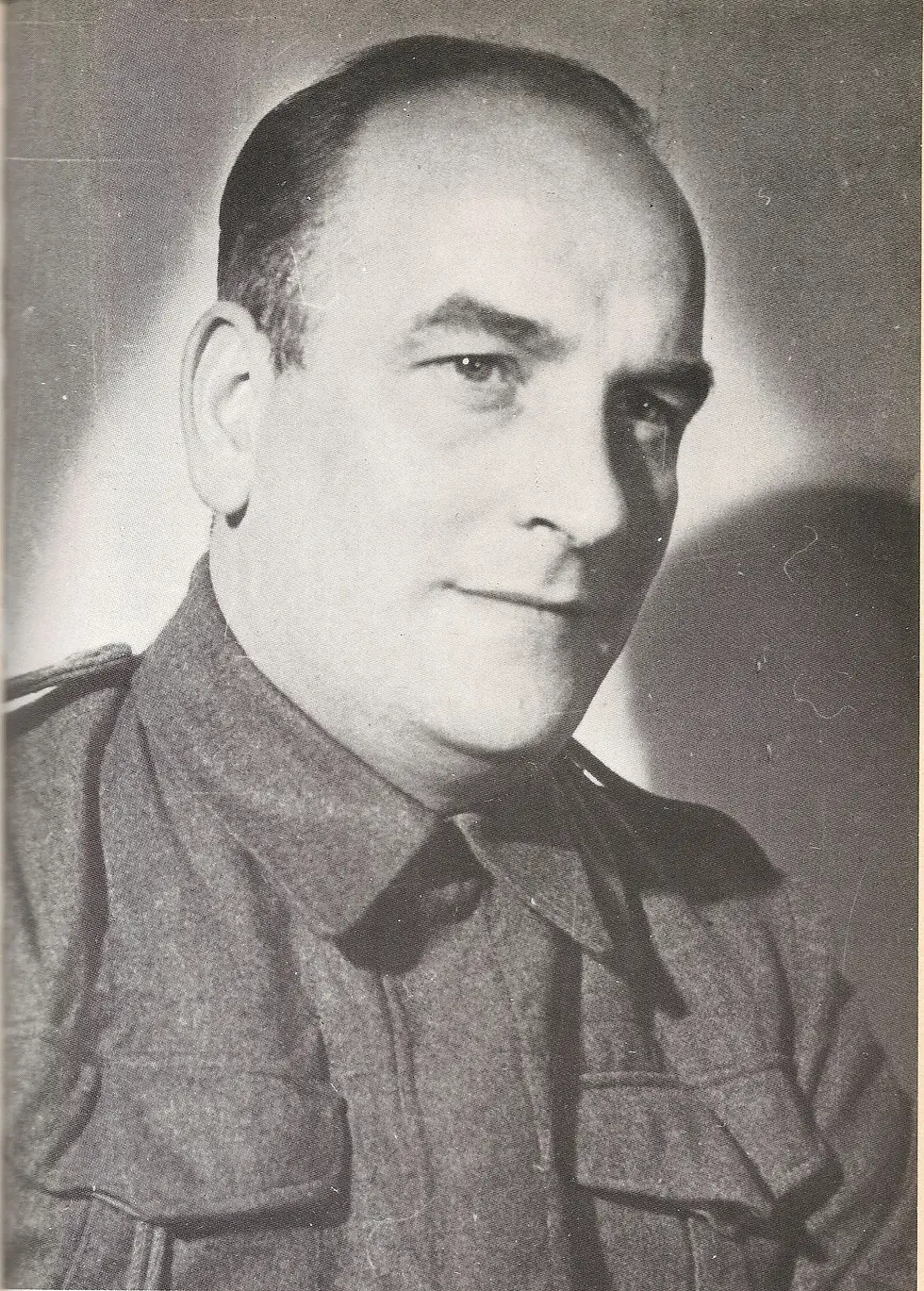
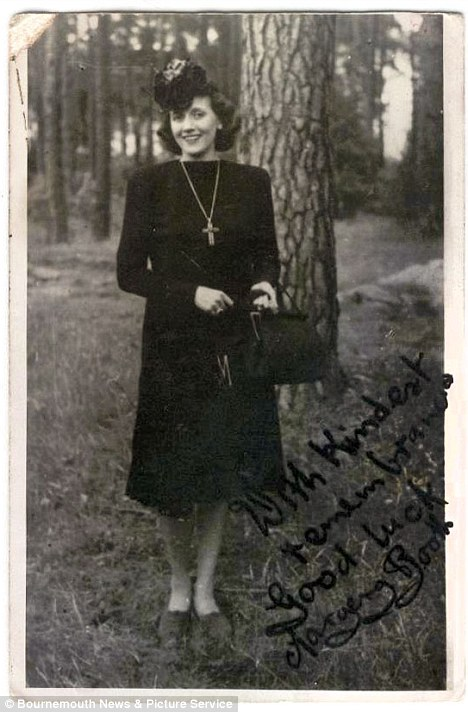
When Margery came to sing for the prisoners there, twice a month for roughly two hours a time, Brown recognized her immediately as the famous singer from his own part of England. He later wrote that he was moved the first time he heard her sing, though he had no idea yet how much he'd end up needing to trust her. She sang patriotic songs like Land of Hope and Glory to homesick prisoners, technically against German restrictions, and arranged for selected men from the camp to attend her State Opera performances followed by dinner at her flat, using those evenings to gather and pass along information. Brown fed her documents, including the names of British soldiers who'd defected to the German side, which she hid in her underclothing to carry between meetings, earning her the wartime nickname the Knicker Spy. Away from the camp she hid a Jewish woman in her Berlin flat for nine months and helped other people evade capture. At one point, with Gestapo surveillance tightening after the July 1944 assassination attempt on Hitler, she buried a set of Brown's documents in the grounds of Cecilienhof, the Potsdam palace belonging to her Bayreuth acquaintance Crown Prince Wilhelm.
The Tiger Tank Secret
The boldest story to come out of this period involves the Tiger tank, Germany's newest and most feared armored vehicle. As the story has been told since, at one of Hitler's birthday celebrations General Alfred Jodl presented the tank's technical specifications to the assembled guests, and Margery, present in the room, memorized the details by turning them into a piece of music in her head. She later passed the information to Brown, who encoded it and sent it on to London. Whether or not that specific version holds up to the letter, the wider intelligence effort around German tank capabilities in this period was real, and Winston Churchill did personally push for a captured Tiger to be brought back for British engineers to study. That tank, now known as Tiger 131, was seized in Tunisia on April 21, 1943, by the 48th Royal Tank Regiment and still sits today in the Tank Museum at Bovington, one of the only working Tiger tanks left in the world.
Three Days With the Gestapo
Margery's luck ran out, briefly, in January 1945. She was arrested at her own flat and held for three days of interrogation at Prinz-Albrecht-Strasse, Gestapo headquarters in Berlin. They couldn't prove she'd been collaborating with British intelligence and eventually released her, but she wasn't free of them. For the rest of the war she was required to report back to Gestapo headquarters twice a month for two hour interrogation sessions, each one carrying the threat of deportation to a concentration camp if they found anything. She'd been warned plainly that being caught meant certain death. She kept singing anyway.
Fleeing Berlin
The end came in the chaos of the Allied bombing campaign. On March 18, 1945, roughly 1,300 American bombers hit Berlin in a single raid, and by the end of the month Margery had fled the city with her fifteen year old maid, Augusta, who'd stayed loyally by her side. The two women made their way nearly 145 miles south to Pössneck in Thuringia, where they managed to reach advancing American forces on April 13. Margery was moved to a displaced persons camp in Naila, Bavaria, and stayed there for seven months while the paperwork and questioning around her identity sorted itself out. The stress of it all turned her hair white and left her, by her own account, barely able to write a coherent sentence. She had no idea whether Brown had survived to confirm any of what she'd done, and without him there was no one left who could vouch for her.
Testifying Against Lord Haw-Haw
Once she was back in Britain, Margery was called to give evidence in a string of high profile treason trials against Englishmen who'd broadcast Nazi propaganda or otherwise collaborated in Berlin, men she'd personally crossed paths with during her years there. She testified against William Joyce, the notorious Lord Haw-Haw, along with John Amery and Walter Purdy. Joyce was hanged on January 3, 1946, at 39 years old. Amery had already been hanged the previous December. Purdy's death sentence was commuted to life in prison, and he was eventually released on parole in 1954. Margery had spent years risking her life to help defeat men exactly like these, and now she was standing in an Old Bailey courtroom helping finish the job in person.
Mistaken for the Enemy
What happened next is the part of Margery's story that makes the whole thing sting. Back in London, looking for work as a singer again, she found producers assumed the opposite of the truth, that a woman who'd spent the war performing in Berlin and dining with Nazi officials must have been a collaborator rather than a spy. Nobody offered her work. She eventually left for New York to try to rebuild her career there, and on arrival was referred to a doctor who diagnosed her with terminal cancer.
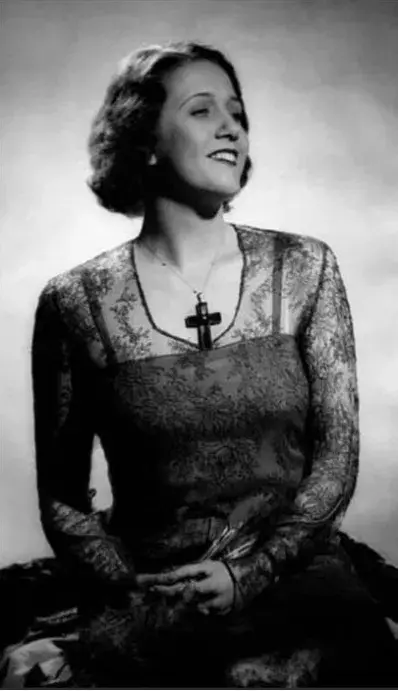
She died in New York in 1952, in relative obscurity, without the acknowledgment or honours her actual wartime record would have justified. Calls for a posthumous honour have surfaced periodically since, including around a planned biopic that at one point attached Stephen Fry and Udo Kier to the cast. IMDb and a handful of film databases list that project under the year 2014, and one aggregator even shows a UK release date, but there's no actual review, premiere writeup or box office record anywhere to back that up.
A 2019 press release for the same production was still describing it as pre-production and looking to start filming within six months, so despite what the listings suggest, the film appears to still be unmade. The woman Hitler once sent 200 roses spent her final days largely unrecognized by the country she'd risked her life for.


