

What Happened to John and Lorena Bobbitt After 1993

Almost everyone alive in 1993 remembers some version of what happened in that Manassas, Virginia apartment: Lorena Bobbitt severed her husband John's penis with a kitchen knife while he slept, drove off with it still in her hand, and became a late night punchline for the next decade. What almost nobody remembers, because it was never as funny or as tidy a headline, is what each of them actually did with the following thirty years. One built a nonprofit. The other built an arrest record. The gap between those two outcomes tells you more about the case than the incident itself ever did.

The Night Itself, Briefly
By 1993, John had been out of the Marine Corps for two years and had struggled to hold down steady work, leaving Lorena as the household's main earner through jobs as a nanny and a manicurist. Days before the incident, Lorena went to court seeking a restraining order against John. She was told she'd have to wait roughly a week for a hearing date. Two nights later, she alleges, he raped her. It's a grim reminder, echoed in cases like Carl Panzram's own history of childhood abuse feeding into a lifetime of violence, of how directly early abuse can shape the violence that follows, whether the person doing the shaping ends up remembered as victim, perpetrator, or, as in the Bobbitts' case, both at once depending on who's telling the story.
In the early hours of 23 June 1993, Lorena Bobbitt cut off her husband John's penis with an eight-inch Ginsu knife at their home in Manassas, Virginia. She later said he'd raped her earlier that night. After he fell asleep, she got up for a glass of water, grabbed the knife off the counter, went back into the bedroom, pulled back the sheets, and cut it off.
Then she took off in her car with his penis still in her hand. Driving and holding onto it at the same time turned out to be a lot harder than it sounds, so she rolled down the window and tossed it into a field on Maplewood Drive. A few minutes later she pulled over and called 911 herself, telling them what she'd done and roughly where they'd find it.
Police searched the area, found it, cleaned it up and packed it in saline ice. Surgeons spent nine and a half hours reattaching it, and somehow it actually worked. John was separately charged with marital sexual assault under a Virginia statute that, at the time, was still relatively new and rarely used, since marital rape had only recently stopped being treated as a legal impossibility in much of the country.

Both were eventually acquitted. John was found not guilty of the assault charge that November, after a trial that lasted only two days. Lorena's trial for malicious wounding followed two months later, where she testified before a jury of seven women and five men about four years of what she described as escalating abuse. A psychiatrist testified that she'd experienced a brief reactive psychosis at the moment of the attack, and after six hours of deliberation the jury acquitted her on the grounds that the abuse had produced what her defence called an irresistible impulse, a specific and rarely used standard under Virginia's insanity law. Rather than prison, she was ordered into a 45 day psychiatric evaluation and treatment period.
The first person to actually see the aftermath wasn't a doctor. John's houseguest that night, a friend named Robert Johnston, later described being woken by a kick from Bobbitt, who was standing there naked with a bloody sheet pressed to his groin, asking calmly to be driven to the hospital. On the way, Bobbitt reportedly said he hoped doctors could at least build him a replacement if the original couldn't be found, a strikingly composed reaction for a man who'd just lost a third of his blood volume.
A Circus Neither of Them Controlled
The case became a genuine cultural phenomenon almost overnight. Jay Leno and David Letterman built entire monologues around it for months. The Virginia chapter of the National Organization for Women set up a support hotline in response to the case, while, in an odd reversal, Dr Sehn's own wife reportedly faced harassment from women angry that her husband's surgery had succeeded at all. Commentators split sharply over what the case actually meant. One widely discussed TIME essay by the writer Barbara Ehrenreich argued the moment had exposed a class divide within feminism itself, with more privileged commentators uneasy about the case while many ordinary women, she wrote, felt an uncomfortable flicker of satisfaction at the story regardless of its details. Both Bobbitts signed with agents within days, chasing book and interview deals before either trial had even started.
It's far from the only marriage that's turned into national tabloid theatre. Around a decade later, Dalia Dippolito became a media fixture of her own, after she was caught on tape trying to hire a hitman to kill her husband, unaware the hitman was an undercover cop, in a story that's stayed a case study in how quickly a domestic dispute can turn into a public spectacle. Even further from the Bobbitts' circumstances, but cut from the same cloth of marriage-gone-fatal headlines, is the case of Phil Hartman, killed by his wife in a murder-suicide that shocked Hollywood and became inseparable from how both of them are remembered.
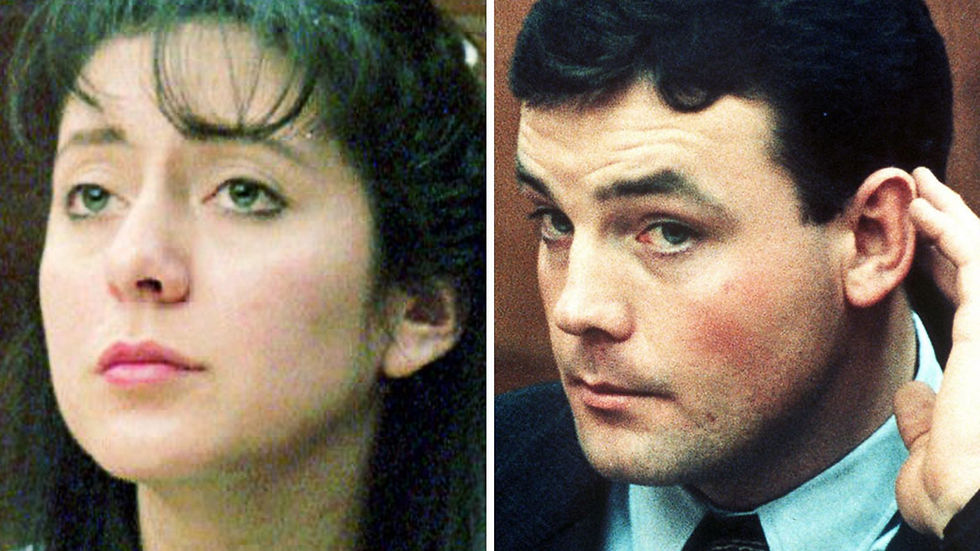
A Surgery Nobody Thought Would Work
Police eventually found the severed organ in a field near the apartment and rushed it to Prince William Hospital packed in ice inside a hot dog bag, according to the surgeons who treated Bobbitt. Urologist James Sehn and plastic surgeon David Berman spent roughly nine hours in surgery reconnecting arteries, a vein and a nerve, working on a procedure so rare that Berman said he'd never seen one attempted before, despite years of experience reattaching severed fingers. Bobbitt had lost close to a third of his blood volume by the time surgery began. It worked. He was able to have an erection within two weeks and was discharged after roughly three weeks in hospital, a genuine landmark in microsurgery that got almost entirely overshadowed by the tabloid frenzy surrounding the case.
What John Did With His Fame
After his acquittal, John Wayne Bobbitt leaned all the way into the notoriety. He starred in adult films, did the rounds on The Howard Stern Show, worked as a greeter at Nevada's Moonlight Bunny Ranch brothel, and later took jobs as a bartender and tow truck driver. Within months of his own trial ending, he was already back in a courtroom: his fiancee at the time, a topless dancer named Kristina Elliott, had him arrested in May 1994 for allegedly throwing her against a wall. He was convicted of misdemeanour battery and served jail time.

A Pattern That Kept Repeating
That conviction turned out to be the first of several, not the last. Over the following decade, Bobbitt was arrested multiple times on domestic violence related charges involving different partners. His then wife Joanna Ferrell accused him of pushing her down hard enough to break her tailbone and finger during one incident, and he was convicted of battering her in February 2003. Weeks later, a separate probation violation, tied to a 1999 grand larceny charge involving more than 140,000 dollars in stolen clothing, sent him to prison. In 2004 he was arrested again after his teenage stepson called police, alleging Bobbitt had hit him and shoved Joanna during a fight that started after the boy found sex toys in his mother's bedroom.
None of this proves anything about what happened on the night in 1993, and John has consistently denied both the original abuse allegations and the pattern that followed. But it's a documented record spanning more than a decade, across at least three different partners and jurisdictions, and it rarely gets mentioned in the same breath as the joke that made him famous in the first place. More recently, in 2023, Bobbitt had several toes amputated, which he's said stemmed from exposure to contaminated water at Camp Lejeune during his time in the Marine Corps in the 1980s, decades before any of this happened, a footnote that's mostly notable for how far removed it is from the version of him most people still picture.
What Lorena Did Instead
Lorena eventually returned to her maiden name, Gallo, and largely stepped out of the spotlight for two decades, working quietly and raising a daughter with her longtime partner in Virginia. In 2018, on the 25th anniversary of the case, she founded the Lorena Gallo Foundation, a nonprofit providing domestic violence and sexual assault prevention, intervention and awareness services in Prince William County. She's spoken at colleges, volunteered at shelters, and pushed publicly for tighter gun laws around domestic abusers, and in 2019 she was an executive producer on the Amazon docuseries Lorena, which revisited the case from a domestic violence perspective for a generation that mostly only knew it as a punchline.

The Punchline Everyone Remembers, the Pattern Nobody Does
For most of the 1990s, the case was fodder for late night monologues, and the joke always ran the same direction, with Lorena cast as the unhinged one and John as the punchline's hapless victim. The case left such a mark on the culture that the surname itself became a verb, bobbittize, entered into slang dictionaries as shorthand for an act of violent revenge, with barely a mention of the abuse allegations that were part of the actual court record. Thirty years on, the real record looks almost the opposite of that framing: the woman who was mocked has spent the last several years building support services for abuse survivors, while the man positioned as the victim has an arrest history for the exact kind of behaviour she said drove her to violence in the first place. Neither fact settles what happened in that bedroom in 1993. Together, they're a much more interesting story than the one that got told at the time.


