


Jobriath: The First Openly Gay Rock Star and the Hype That Buried Him

In the last weeks of 1973 a billboard went up over Times Square, on the corner of Broadway and 47th Street. It was 41 feet by 43 and it showed a naked man, painted white, lying on his front with his legs crumbling away like a broken Roman statue. There was one word on it: Jobriath. The same picture was on the side of 250 New York buses and in full-page adverts in Vogue, Penthouse, Rolling Stone and the New York Times.
Hardly anyone looking up at it had heard a note of his music. He hadn't played a single concert. His manager was already telling reporters he'd be bigger than Elvis. He was also telling them, loudly and on purpose, that his new star was gay, which no rock act on a major American label had ever said out loud before. Within two years Jobriath had quit the business. Within ten he was dead, and it took four days for anyone to find him.
Quick Answers
Who was Jobriath? An American singer, pianist and composer, born Bruce Wayne Campbell in 1946, who's usually described as the first openly gay rock musician signed to a major label.
What was he known for? Two glam rock albums for Elektra, Jobriath (1973) and Creatures of the Street (1974), and one of the most expensive hype campaigns the record business had seen.
Was he an actor too? Yes. He came up through the Los Angeles cast of the musical Hair and spent his later years trying to get back into theatre and film.
Why did he fail? The hype outran the music, the planned live debut was cancelled, rock audiences in 1974 were openly hostile to a gay frontman and he fell out with his manager.
How did Jobriath die? Of an AIDS-related illness in his rooftop apartment at the Chelsea Hotel in New York in August 1983. He was 36.
Who rediscovered him? Morrissey, mainly, who tried to book him as a support act in 1992 without knowing he was dead and put out a compilation in 2004.
A Piano Prodigy From King of Prussia
Bruce Wayne Campbell was born on 14 December 1946 in King of Prussia, Pennsylvania, about 20 miles outside Philadelphia. His father Jim was a military man and the family moved between army bases in Maine and Colorado before his parents split. Bruce and his brothers ended up with their father.
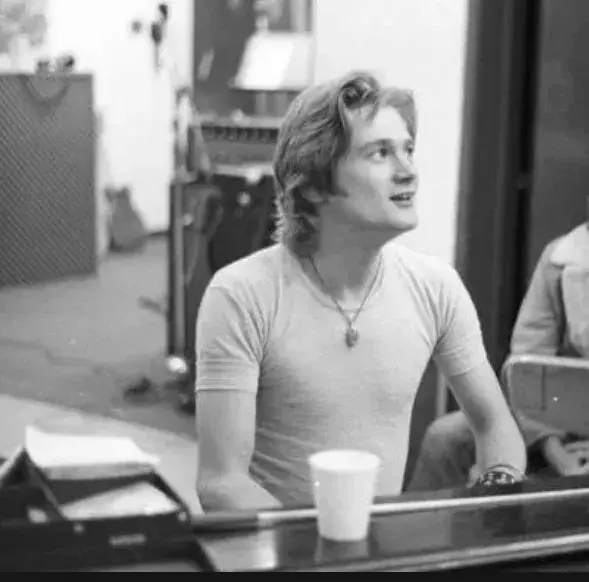
He was the kind of musical child teachers talk about for years. He played the organ in church and worshipped Prokofiev. In 1962, at 15, he won a Tri-State Piano Competition with a piece he’d written himself, called Diablo, and was taken to play for Eugene Ormandy, the conductor of the Philadelphia Orchestra. By the time he left school he'd written half a symphony. He lasted one semester at Temple University and took a job at Wanamaker's department store.
AWOL, Hair and a New Name
In the mid-1960s he went into the army, and within months he walked out of it. He never went back voluntarily. To stay hidden he dropped the name Bruce Campbell and became Jobriath Salisbury, borrowing his mother's maiden name for the second half. The first half he explained in different ways at different times. The version that stuck is that it was a mash-up of the biblical names Job and Goliath.
He headed for Los Angeles, and in 1968 he sat down at a piano at an audition for the West Coast production of Hair. He was cast as Woof, the character who's hopelessly in love with Mick Jagger, which was about as close to an openly gay role as mainstream theatre offered that year. Castmates remembered the talent and the charisma. He later claimed he was sacked for upstaging everyone else.
In 1969 he formed a baroque folk group called Pidgeon, who made one album for Decca that sank without trace. Then the army caught up with him. Military police arrested him, and he spent the best part of six months in a military psychiatric hospital, where he had a breakdown before being discharged. Sources don't agree on exactly when this happened, with some putting the arrest at the end of the 1960s and others in 1970, but they do agree it left him badly shaken. He came out of it writing songs and, by several accounts, working as a rent boy to pay for the time to do it.
Enter Jerry Brandt
Jerry Brandt was a former William Morris agent who'd helped bring the Rolling Stones to America, had run the Electric Circus nightclub in the East Village and had managed Carly Simon. In December 1972 he was in the office of Clive Davis, the head of Columbia Records, when a demo tape came on. Davis didn't want it. He called the music “mad and unstructured and destructive to melody”. Brandt thought it was the best thing he'd heard in years, tracked the singer down in California and signed him to a ten-year management contract.

Brandt took him to Jac Holzman at Elektra, the label of the Doors and Love, and came out announcing a two-album deal worth $500,000. He said it was the biggest advance in the history of recorded music. That number has been repeated ever since and it almost certainly isn't true. For comparison, the New York Dolls signed to Mercury that same year for $25,000. The documentary made about Jobriath in 2012 found that Elektra spent a little over $80,000 on the first album, nearly half of it on promotion, and other estimates of the actual advance go far lower. The real figure has never been pinned down. Brandt understood that the claim was worth more than the cheque.
By now the singer had a new surname as well. He was Jobriath Boone, and soon just Jobriath.
The True Fairy of Rock and Roll
The record itself was made properly. Jobriath co-produced it with Eddie Kramer, who'd engineered Jimi Hendrix and Led Zeppelin, and the two flew to London to record at Olympic Studios with a 55-piece orchestra. Jobriath had never arranged for an orchestra, so he taught himself orchestration in about two weeks. Peter Frampton played guitar on the sessions and Led Zeppelin's John Paul Jones turned up too.
Then Brandt went to work. This was a year after David Bowie had told Melody Maker he was gay while married with a child, and with Marc Bolan in satin and glitter on British television every week. Brandt's pitch was that those two were playing dress-up and his man was the real thing. He told one reporter that “Jobriath is as different from Bowie as a Lamborghini is from a Model A Ford”. To another he gave the line of succession as “Elvis, the Beatles and Jobriath”.
Jobriath played along and went further. He called himself the true fairy of rock and roll. When a journalist asked the obvious question he said: “Asking me if I’m a homosexual is like asking James Brown if he’s black.” It's hard to overstate how unusual that was. The Stonewall riots were only four years in the past. Little Richard had spent two decades veering between flamboyance and denial, and Liberace had gone to court and lied under oath to protect his career. Jobriath just said it.
The live debut was going to be the clincher. Brandt booked three nights at the Paris Opera, the Palais Garnier, for December 1973, with a budget of $200,000. The set was commissioned from the New Jersey firm that built floats for the Macy's Thanksgiving parade. The plan had Jobriath in a King Kong suit climbing a model Empire State Building, with costume transformations on the way up, and the whole thing was to be recorded for a live album.
It never happened. With the album out and not selling, Elektra pushed the Paris shows back to February 1974 and then cancelled them.
What Happened When People Actually Heard Him
The reviews weren't the problem. Rolling Stone, Cashbox and Record World all liked the debut, and Britain's Melody Maker was impressed. Esquire, on the other hand, named it the hype of the year, and that was the label that stuck. Listeners who'd been promised the new Elvis got a theatrical, piano-led record that opened with a song about sadomasochism. They didn't buy it.
American television got its look at him in early 1974 on NBC's The Midnight Special, where Gladys Knight introduced him. He performed I'maman and Rock of Ages in costumes by a young designer called Stephen Sprouse, one of them a space-age bubble of an outfit. The producers had refused to let him sing Take Me I’m Yours, the S&M number. In Britain a clip ran on The Old Grey Whistle Test and the NME wrote him off as the fag-end of glam rock, pun very much intended.
He didn't play an actual gig until July 1974, two sold-out nights at the Bottom Line in New York in front of 400 people each. Those went well. A support slot at the Nassau Coliseum on Long Island didn't. The crowd shouted slurs and threw rubbish at the stage. New York's downtown scene had made room for Candy Darling and the Warhol crowd years before, but an arena full of suburban rock fans was another matter.
Elektra put out the second album, Creatures of the Street, about six months after the first. It was made up largely of songs left over from the same sessions and it got next to no promotion.

The Split
What finished it off was money. On tour with his band, the Creatures, Jobriath accused Brandt of spending the advance for the second album on another of his ventures. Brandt walked away mid-tour. Elektra dropped the act. The band kept going for a while anyway, charging their costs to a label that no longer wanted them.
The last show was at the University of Alabama in Tuscaloosa, and by every account it was a triumph: a sold-out hall, five encores and the fire department eventually turning up to shut it down. Sources disagree on whether that was September 1974 or September 1975, and on whether his announcement that he was retiring from music came before or after it. Either way, he was 28 and it was over.
Years later Jac Holzman, who'd signed him, gave his own verdict on the whole episode. The music had come second to everything else, he said, and he summed it up in three words: “It’s an embarrassment.”
One footnote from the wreckage is that the Creatures' drummer, Gregg Diamond, went on to write More, More, More for Andrea True, one of the biggest disco hits of 1976. So somebody from the Jobriath project did end up with a smash.

Cole Berlin in the Pyramid
Jobriath tried to go back to acting. He read for a part in Dog Day Afternoon, which went to Chris Sarandon, and worked on a stage musical called Pop Star that was meant for the producer Joseph Papp and never got put on.
He moved into the Chelsea Hotel, into a glass-roofed pyramid apartment on top of the building. He couldn't release music even if he'd wanted to, because the ten-year contract he'd signed still had years to run. So he invented someone else. As Cole Berlin, a name stitched together from Cole Porter and Irving Berlin, he sat at the piano in Manhattan restaurants and supper clubs and sang songs from the 1930s plus a few of his own in the same style. He built up a small, loyal audience. He also went back to hustling.
In 1979 he gave a rare interview to a magazine called Omega One, in character, and was asked what had become of the rock star. “Jobriath committed suicide in a drug, alcohol and publicity overdose,” he said. He blamed Brandt for being too busy getting his own name on posters to book a tour.
There's film of him from this period. When the BBC's Arena programme made a documentary about the Chelsea Hotel and its residents, Cole Berlin was in it, playing a comic song of his own about a tourist who gets eaten alive in New York. In November 1982 he played at the hotel's hundredth anniversary party. He was already visibly unwell.
Four Days
He'd been getting ill since 1981, losing weight and trying a macrobiotic diet and meditation to fix it. This was at the very start of the epidemic, when the illness had only just been given a name and public understanding of AIDS was close to zero.
Jobriath died in the pyramid on or around 3 August 1983. He was 36. Nobody was with him, and his body lay there for about four days until police broke the door down. He's thought to have been the first Chelsea Hotel resident to die of AIDS. By a grim coincidence, the ten-year contract he'd signed with Jerry Brandt had run out about a week earlier.
He was cremated and his ashes were buried at Valley Forge Memorial Gardens in King of Prussia. One fan-run archive says that his father destroyed his diaries and career papers afterwards, which would go some way to explaining why so little of his own voice survives. His records had been out of print for years.
The Afterlife
The revival started with a mistake. In 1992 Morrissey, a long-time fan of the albums, asked for Jobriath as the support act on his Your Arsenal tour. Only then did he find out the man had been dead for nine years. In 2004 he put together a compilation, Lonely Planet Boy, and both albums were reissued in full in 2007.
Other fans came forward. Def Leppard recorded a cover of Heartbeat, and their singer Joe Elliott has spent years telling anyone who'll listen about the debut album. His one-line review is “It was Ziggy Stardust sung by Mick Jagger.” Marc Almond, Gary Numan, the Pet Shop Boys and Jake Shears of Scissor Sisters have all claimed him. Todd Haynes's 1998 film Velvet Goldmine borrowed bits of his story. In 2012 the director Kieran Turner released a documentary, Jobriath A.D., narrated by Henry Rollins, which interviewed his family, his bandmates and Brandt himself.
Turner went in thinking of Jobriath as a joke, the industry's favourite cautionary tale. He came out with a different view, which he put to a Canadian paper like this: “Sometimes the groundbreakers, that’s all they get to do, is break the ground.”
You Might Also Like
Sources
Music Biographies: Jobriath, Eric Brightwell, 14 December 2025
Jobriath: Rock’s First Gay Icon, Perfect Sound Forever, November 2004
The Rise and Fall of Jobriath, Rock’s First Openly Gay Star, Ultimate Classic Rock, 13 June 2023
Def Leppard’s Joe Elliott remembers Jobriath, Yahoo Entertainment
Audio Archaeology, 1973: The Legacy of Jobriath, Front Row & Backstage, 8 May 2023
Jobriath A.D.: Kieran Turner interview, L.A. Record, 17 June 2014
Jobriath A.D. beguiled by true fairy of rock ’n’ roll, The Georgia Straight, 15 August 2012
A forgotten groundbreaking glam rocker glitters again in Jobriath A.D., Atlanta Magazine
Jobriath (December 14, 1946 to August 3 or 4, 1983), Jointz of the Day
The Rise and Fall of Jobriath, Pop’s First Openly Gay Star, AnOther Magazine, 17 January 2017


