


Greg Scarpa: The Grim Reaper Who Killed for the Mob and Worked for the FBI

Picture a man who'd shoot a rival dead from a car window while the poor sod was hanging Christmas decorations, then pop round to see his FBI handler for a cosy chat about who else might be talking to the feds. That was Greg Scarpa, and for the best part of three decades he lived a double life that still makes the Bureau squirm. Now Mark Wahlberg is playing him on the big screen in By Any Means, and a whole new audience is asking whether the story's for real.
Short answer? Almost certainly yes. He was a stone-cold killer who boasted of dozens of murders and one of the FBI's most prized informants, paid and protected while the bodies piled up around Brooklyn. In the 1960s the Bureau sent him to Mississippi to frighten the Ku Klux Klan into talking. His story ends with a bleeding ulcer, a contaminated pint of blood, a shootout that cost him an eye and a corruption trial that blew up in court. Buckle up.
Quick Answers
Who was Greg Scarpa? A Colombo crime family capo and hitman from Brooklyn, nicknamed the Grim Reaper, who secretly informed for the FBI from 1962.
How many people did he kill? He bragged of involvement in around 20 gangland murders, though some accounts put him behind more than 25 between 1980 and 1992 alone.
Did he really help the FBI in Mississippi? The evidence says yes. His mistress testified to it under oath, FBI files show him working as informant NY-3461 and his son says the story is true.
Is By Any Means a true story? It's based on Scarpa's real work for the FBI in Mississippi, though the Black FBI agent at its centre, Wayne Strider, is a fictional character.
How did he die? From AIDS-related complications on 4 June 1994 at a federal prison hospital in Rochester, Minnesota, after contracting HIV from a blood transfusion in 1986.
Greg Scarpa's Early Life in Brooklyn
Scarpa was born in Brooklyn in 1928, the son of Italian immigrants, and grew up in a neighbourhood where the best-dressed men on the street were the ones handing out cash. Kids ran errands for local wiseguys, got noticed and got pulled in. Gangsters Inc's profile of Scarpa describes boys like him being schooled in mob life before they were old enough to shave, and Scarpa took to it like a duck to water.
He came up in what was then the Profaci family, the outfit that would later be renamed after Joseph Colombo Sr, the most publicity-hungry Mafia boss of his era. Scarpa was built like a removal man, about 5ft 10in and 220lb, with a thick neck and huge arms. One FBI agent who dealt with him compared him to a short piano mover, which gives you a decent mental picture.
In 1949 he married Connie Forrest and the couple went on to have four children, including Gregory Jr, who'd follow his dad into the family business with grim enthusiasm. That marriage didn't stop Scarpa from collecting partners, though. More on them shortly.

March 1962: How Greg Scarpa Became an FBI Informant
In March 1962 FBI agents arrested Scarpa as a suspect in an armed robbery. He was given a stark choice. Go to prison or start talking. He chose to talk, and he kept talking on and off for over 30 years.
Timing matters here. This was before Joe Valachi famously broke omertà in front of a Senate committee in 1963, which is why Cosa Nostra News called Scarpa the pre-Valachi informer. At a time when J. Edgar Hoover had spent years insisting the Mafia barely existed, the Bureau suddenly had a made man feeding it secrets from the inside. Scarpa became what the FBI called a top echelon informant, and the Bureau treated him like the crown jewels.
The trouble was that Scarpa never stopped being a gangster. He just added a second employer. While he passed on titbits about rivals, he went on robbing, dealing, loan sharking and killing. The people who were meant to be stopping crime looked the other way. If you've read about FBI agent Robert Hanssen selling secrets to Moscow, this was a different kind of rot, but rot all the same.
Greg Scarpa and the Mississippi Burning Murders
In June 1964 three young civil rights workers, James Chaney, Michael Schwerner and Andrew Goodman, vanished near Philadelphia, Mississippi. They'd been beaten and shot by Klansmen and buried in an earthen dam. It came a decade after the lynching of 14-year-old Emmett Till had horrified the country, and Hoover was under enormous pressure to get results.
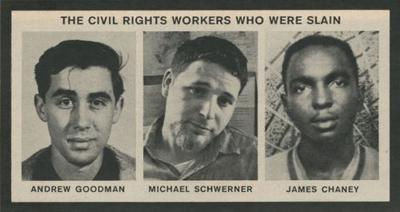
This is where the FBI made one of the strangest calls in its history. With agents getting nowhere against a wall of Klan silence, the Bureau turned to its pet mobster. Peter Lance, who spent years going through FBI files for his book Deal with the Devil, says J. Edgar Hoover knew about the plan and signed off on it. Scarpa was flown south and handed a pistol.
The target was a Klansman who ran an appliance business. As the story goes, Scarpa posed as a customer, grabbed the man while he was delivering a television, beat him and threatened him with the pistol and a straight razor until he gave up the location of the bodies. On 4 August 1964 agents dug Chaney, Schwerner and Goodman out of an earthen dam on Olen Burrage's farm, buried deep in red clay. As far back as 1994 the New York Daily News was reporting the same account, citing federal officials.
In October 2007 Scarpa's long-time mistress Linda Schiro repeated it under oath. She told a Brooklyn court that she went to Mississippi with Scarpa that year, that he winked at agents gathered in their hotel and that an agent later handed him a gun in their room. Once the job was done, she said, another agent turned up, gave Scarpa a wad of cash and took the gun back. In a podcast chat with Gangland Wire, author Jeffrey Sussman says the Bureau paid him $100,000.

Vernon Dahmer and the second trip south
Mississippi wasn't a one-off. In January 1966 Klansmen firebombed the home of Vernon Dahmer, a businessman and NAACP leader who'd been helping Black residents register to vote in Hattiesburg. He died from his burns. Lance's research shows Scarpa, listed in FBI paperwork as informant NY-3461, being used again to lean on a Klan-linked man called Lawrence Byrd. On 2 March 1966 Byrd signed a 22-page confession naming himself and seven other Klansmen over the attack.
Part of the reason the two trips get muddled is that the Bureau never wanted either on the record. The case files now held by the Mississippi Department of Archives and History include FBI memos and federal informant reports, and researchers can also dig through the FBI's own MIBURN investigation files, which run to thousands of pages.
So why does the FBI still deny it?
Officially the Bureau credits a $30,000 reward paid to a mystery source known as Mr X, later identified as Mississippi highway patrolman Maynard King, and some retired agents still insist that's how it happened. Retired agent Greg Stejskal, writing on Tickle the Wire, calls the Scarpa version possibly apocryphal.
But look at it from the Bureau's side. Admitting that Hoover had sent a Mafia killer to torture information out of suspects would've tainted the prosecutions and embarrassed the FBI at the height of the civil rights era. A paid reward makes a much tidier story. The two accounts aren't even mutually exclusive, since a payment to a trooper could easily have covered for information that came from elsewhere. With a sworn eyewitness, contemporary press reports, a documented informant number and his own family backing it up, the weight of evidence points to Scarpa being there.
What's beyond doubt is how little justice the victims got. Seven men were convicted in 1967 and none served more than six years. It wasn't until 2005 that former Klansman Edgar Ray Killen was finally convicted of manslaughter.
By Any Means: Mark Wahlberg Plays Greg Scarpa
Scarpa's Mississippi years are now a Hollywood film. By Any Means, a Paramount release directed by Elegance Bratton, who made the acclaimed The Inspection, hit cinemas in September 2026. The Mob Museum reports that Mark Wahlberg wore facial prosthetics to play Scarpa, with Yahya Abdul-Mateen II as a young FBI agent, and that it was written by Sasha Penn.
The film is set in 1966 and centres on the Vernon Dahmer killing. Abdul-Mateen II plays Wayne Strider, a fictional Black FBI agent who's forced to handle Scarpa after the Bureau blackmails the mobster into helping. Giancarlo Esposito plays Dahmer, with Nicole Beharie, Josh Lucas and Ethan Embry also in the cast.
Crucially, Scarpa's own family worked on it. His son Greg Jr and daughter Linda Scarpa both served as advisers, and Greg Jr, now in his seventies, told the Mob Museum it's based on a true story and mostly accurate. Bratton and his team also went to Mississippi and met members of the Dahmer family during their research.
Critics have been mixed. JoBlo gave it 6 out of 10, praising the performances and Wahlberg's gleeful, borderline psychopathic take on Scarpa but finding it a bit too Hollywood. Amusingly, Alan Parker's 1988 film Mississippi Burning never mentions Scarpa at all.
Wives, Mistresses and a Former Miss Israel
Scarpa's love life was about as tidy as his criminal record. Linda Schiro was just 17 when she met him in a bar, and she'd stay with him for decades, raising two of his children. Officially she married a man named Schiro, who apparently believed the kids were his.
Then, in 1975, while still married to Connie, Scarpa married Lili Dajani in Las Vegas. She was a 35-year-old former Miss Israel. Bigamy, it seems, was the least of his worries.
Stranger still, in 1979 he gave Linda his blessing to start a relationship with a young man called Larry Mazza. Mazza became his protégé and, eventually, his right-hand gunman. He'd later turn government witness and talk openly about life with the Reaper.

The Money Machine on 13th Avenue
For more than 40 years Scarpa ruled his patch of Bensonhurst around 13th Avenue, operating out of the Wimpy Boys Social Club. His crew made millions from hijackings, bank jobs, stolen securities, credit card fraud, an international car theft ring and drugs.
The headline grabber was the Bypass Gang, a crew of specialist burglars who could get round alarm systems. Their 4 July 1974 bank raid netted around $15 million. Peter Lance, whose book Deal with the Devil is the deepest dive into Scarpa's life, reckons his sports betting brought in $2.5 million a year and his crew grossed $70,000 a week from drugs.
He liked to look the part, too. He carried about $5,000 in cash at all times, wore a seven-carat pinky ring and kept homes in Brooklyn, Staten Island, Florida and Las Vegas, plus a co-op apartment in Manhattan's Sutton Place.
Enter Lin DeVecchio
In 1978 Scarpa got a new FBI handler, an agent called R Lindley DeVecchio, who'd go on to become a supervisor in the Bureau's New York office. This is where the story gets properly murky.

Schiro later claimed she sat in on weekly meetings between the two men at the couple's flat. She said Scarpa handed DeVecchio stolen jewellery, which he pocketed. Prosecutors later alleged that Scarpa gave him cash, booze, jewellery and even prostitutes in return for confidential information about suspected informants and rivals.
The most chilling allegation dates to autumn 1984. Schiro said she overheard DeVecchio warn Scarpa that the girlfriend of another Colombo capo might be an informant, and that Scarpa replied he'd take care of it. Days later that woman, Mary Bari, was shot in the head at point-blank range at a mob social club and her body was dumped rolled up in canvas.
The Pint of Blood That Sealed His Fate
In 1986 Scarpa was rushed into hospital with bleeding ulcers and needed blood transfusions. Being a man who didn't trust outsiders, he arranged for donations from his own crew. It was a catastrophic decision.
One of the crew members who donated had been sharing needles with bodybuilding pals who were injecting steroids, and his blood carried HIV. Scarpa was infected. Over the next few years the virus took hold, and by the early 1990s he'd developed full-blown AIDS and was told he didn't have long left.
Sussman says Scarpa later sued the doctor involved and that, during the case, it emerged the same doctor faced a separate complaint from two male patients who claimed he'd sedated and sexually assaulted them. The suit was settled for $300,000, paid out to Scarpa's family.
The Colombo War and the Grim Reaper's Bloodiest Year
The war had been brewing for years. Carmine Persico was running the Colombo family from a prison cell, where he was serving a sentence that would keep him inside for the rest of his life, and he planned to hand the throne to his son Alphonse once he was released. In the meantime he made his cousin Victor Orena acting boss. Orena had other ideas.
Crime Library's history of the family says Orena, with the backing of Gambino boss John Gotti, asked the Mafia Commission in 1990 to strip Persico of his title and make him boss instead. The family split down the middle. On 20 June 1991 a Persico hit team turned up at Orena's Long Island home to kill him, but one shooter opened fire too early and Orena got away. After that there was no going back. Scarpa sided with Persico.
The Orena camp struck at the Reaper on 18 November 1991, ambushing him in Brooklyn as he drove his daughter and granddaughter home. Scarpa floored it through the attackers' cars and escaped, though several bystanders were hurt. Five days later Orena's side shot dead Persico man Henry Smurra outside a doughnut shop.

Scarpa's response was ferocious, especially for a man dying of AIDS. In December 1991 he shot Orena loyalist Vincent Fusaro three times from a car window while Fusaro was putting up Christmas lights. In January 1992, with Mazza at his side, he went after Orena capo Nicholas Grancio. Scarpa's rifle jammed, so he ordered the others to fire. The blast tore off part of Grancio's face, and a tooth was reportedly found later in a nearby building. In February 1992 he shot Joel Cacace in the stomach. Cacace survived.
By the end, 12 people were dead, two of them innocent bystanders, and another 15 were seriously wounded. The New York Sun noted that the fallout was still landing on mobsters 15 years later. Scarpa even sent an 18-year-old called John Pappa to carry out one of the last hits. Pappa went on to collect four life sentences.
All the while, prosecutors would later claim, DeVecchio was feeding Scarpa intel that helped him find his targets. The war fizzled out after Orena's arrest in 1992, with 41 Persico loyalists also jailed, and Scarpa's protection went with it. With the Bureau unable to keep covering for him, he was charged and, because of his health, placed under house arrest.
One Last Shootout
Most men in Scarpa's state would have stayed in bed. Not him. On 29 December 1992, still wearing an electronic tag, he found out that a couple of drug dealers had ripped off and threatened his son Joey. So he grabbed a gun, drove round with Joey and opened fire.

One of the dealers was hit, but Scarpa took a bullet in the face and lost an eye. The story goes that he walked home, poured scotch on the wound and had a drink before Mazza drove him to hospital. When the monitoring company rang to ask why he'd left the house, he claimed he'd nipped out to the chemist. Prosecutors weren't fooled and his house arrest was revoked.
On 6 May 1993 he pleaded guilty to three murders and conspiracy to murder several others. On 15 December 1993 he was sentenced to ten years. He never came close to serving them.
Death in a Prison Hospital
Greg Scarpa died on 4 June 1994 at the Federal Medical Center in Rochester, Minnesota, from AIDS-related complications. He was 66. The man who'd survived a mob war, a botched hit and a gunfight was finally finished off by a pint of his own crew's blood.
He'd collected a fistful of nicknames along the way. Besides the Grim Reaper, he was the Mad Hatter, Hannibal Lecter and the Killing Machine, and he'd sign letters with the initials KM. He's said to have told people he loved the smell of gunpowder. At home, his daughter described a very different man, a doting dad who was incredibly loving to his family. Both versions seem to have been true.
The Trial That Blew Up in Court
Scarpa's ghost came back to haunt the FBI in 2006, when Brooklyn prosecutors charged the now-retired DeVecchio with helping his informant commit four murders, including Mary Bari's. Authorities called it one of the worst law enforcement corruption cases in American history. DeVecchio pleaded not guilty and was freed on $1 million bail, and dozens of retired agents rallied behind him.
Linda Schiro was the star witness, testifying about the hotel room in Mississippi and the meetings at the flat. Then it all fell apart. Village Voice reporter Tom Robbins had interviewed Schiro around a decade earlier for a planned book, and the deal had fallen through. NPR reported that his tapes showed her giving an account that contradicted what she'd just told the jury about DeVecchio fingering informants.
Robbins published his story, the tapes were played in court the next day, and prosecutors dropped the case. On 1 November 2007 the judge, Gustin Reichbach, dismissed the charges. Schiro was given a lawyer because she faced possible perjury charges, though her daughter insisted her mother had never lied. DeVecchio walked free and has always denied wrongdoing. The jury never got to decide.
The Son Who Tried to Play the Same Game
Scarpa's legacy didn't stop with his own death. Gregory Scarpa Jr was jailed for racketeering and, while held in a Manhattan federal jail in the 1990s, ended up in the next cell to Ramzi Yousef, the man behind the 1993 World Trade Center bombing. Scarpa Jr claimed he passed on intelligence from Yousef to the FBI, which later dismissed much of it as a hoax. Whether he was genuinely trying to help or simply copying his old man's playbook to cut his sentence is still argued over by mob writers today. He was eventually freed and, as noted above, helped bring his dad's Mississippi story to the screen.
Why Greg Scarpa Still Matters
The Scarpa story is a horror show on two levels. There's the man himself, a killer who seemed to enjoy it. Then there's the institution that kept him on the books for three decades because the information was too good to give up. Every murder he committed while on the payroll raises the same uncomfortable question about how much the Bureau knew and when.
He belongs on the list of New York's most dangerous gangsters alongside the likes of Murder Inc hitman Abe Reles, another killer whose dealings with the authorities ended in mystery. The difference is that Reles flipped once. Scarpa played both sides for most of his adult life and very nearly got away with it.
Frequently Asked Questions
Is By Any Means a true story?
Yes, it's based on Greg Scarpa's real work for the FBI in Mississippi in the 1960s. The film takes some liberties, merging events and inventing the FBI agent Wayne Strider, but Scarpa's son Greg Jr, who advised on it, says it's mostly accurate.
Was Greg Scarpa in the film Mississippi Burning?
No. The 1988 film starring Gene Hackman and Willem Dafoe doesn't mention him at all, which helps explain why so few people had heard of his role until By Any Means came out.
What happened to Greg Scarpa Jr?
He spent decades in federal prison after a 1998 racketeering conviction and was later released. He was alive in 2026 and worked as an adviser on By Any Means.
How much did the FBI pay Greg Scarpa?
Nobody outside the Bureau knows the full figure. Linda Schiro described agents handing him a wad of cash after the 1964 job, and Jeffrey Sussman says that payment came to $100,000.

Suggested Reading
If you want the full, grisly picture of Scarpa and the FBI, these are the books to get.
Deal with the Devil: The FBI's Secret Thirty-Year Relationship with a Mafia Killer by Peter Lance. The definitive account of Scarpa's double life and the main historical source behind By Any Means, packed with FBI files and court records.
Triple Cross by Peter Lance. Covers the strange tale of Gregory Scarpa Jr, Ramzi Yousef and the jailhouse intelligence the FBI chose to ignore.
As an Amazon Associate, Utterly Interesting earns from qualifying purchases.
You Might Also Like
Sources
Witness: FBI used mob muscle to crack '64 case, NBC News / Associated Press
Mob Moll: Mafia Solved Civil Rights Case, ABA Journal
The mobster and the Klan: Truth or myth?, Philadelphia Daily News
Mississippi Burning 50 Years Later, Tickle the Wire
The Pre-Valachi Informer: The Mafioso the Feds Aided for Decades, Cosa Nostra News
Jeffrey Sussman on Greg Scarpa, Gangland Wire
Profile of Colombo crime family capo Gregory 'The Grim Reaper' Scarpa, Gangsters Inc
Echoes of Mob War Reverberate 15 Years Later, New York Sun
Citing delay, judge throws out mob hit case, NBC News / Associated Press
Mark Wahlberg portrays Mafia killer Gregory Scarpa Sr. in By Any Means, The Mob Museum
By Any Means Review, JoBlo
By Any Means: the true FBI story behind the film, Khaleej Times
"Mississippi Burning" Case Files Open at State Archives, Mississippi Department of Archives and History
FBI FOIA MIBURN collection, Civil Rights Digital Library
The Colombo Family: The Third Colombo War, Crime Library


