


Frank Sheeran: Did The Irishman Really Kill Jimmy Hoffa?
Updated: Oct 30

Frank Sheeran went to his grave in 2003 as a bit-part player in American crime history, a Teamsters boss from Delaware with a racketeering conviction and a lot of friends in the Mafia. Sixteen years later he was one of the most famous hitmen who ever lived. Martin Scorsese's The Irishman put Robert De Niro in his shoes and told the world, on Sheeran's word, that he'd shot Jimmy Hoffa, Joey Gallo and a string of others.
The trouble is that his word is about all there is. The FBI agents who worked the Hoffa case don't believe him. The blood found where he said Hoffa died wasn't Hoffa's. Witnesses to the Gallo shooting described a man who looked nothing like him. And in 1995 he told a reporter flat out that he had nothing to do with Hoffa's disappearance.
So who was the real Frank Sheeran, and how much of his story actually holds up? Here's what the record shows.
Quick Answers
• Did Frank Sheeran kill Jimmy Hoffa? He claimed to, late in life, but nobody has ever proved it. Most of the FBI agents and reporters who spent decades on the case don't believe him.
• Was Sheeran a suspect at the time? Yes. The FBI's 1976 summary of the case listed him and noted he was in the Detroit area when Hoffa vanished. But it named Salvatore Briguglio, not Sheeran, as involved in the actual disappearance.
• Did he kill Joey Gallo? Almost certainly not. The police description of the gunman was a short, stocky man, and Sheeran was well over six feet tall.
• What was he actually convicted of? Labour racketeering. A federal jury convicted him in the early 1980s over payoffs from labour-leasing deals while he ran Teamsters Local 326.
Who Was Frank Sheeran?
Francis Joseph Sheeran was born on 25 October 1920. Even that detail wobbles depending on who you read. Biography.com puts his birth in Camden, New Jersey, while The Philadelphia Inquirer says he was a product of Darby, the working-class town in Delaware County, Pennsylvania, where he grew up. Either way, he was an Irish Catholic kid from the rough edges of Philadelphia.
He joined the army in 1941 and served with the 45th Infantry Division in Europe. According to Sheeran, he racked up 411 days of combat, against an average of around 100, fighting through Sicily, Italy, France and Germany. He also told his biographer that he and other soldiers shot German prisoners. Those claims come from Sheeran himself and they've never been independently checked, but they became a big part of his later legend: the war, he said, was where he learned to kill without feeling anything.
After the war he drove trucks. According to Biography.com, he met the Pennsylvania mob boss Russell Bufalino in 1955, and Jimmy Hoffa, the president of the Teamsters union, in 1957. The Inquirer says his first mob contacts in Philadelphia included Felix "Skinny Razor" DiTullio, who ran the Friendly Lounge in South Philadelphia, and the city's Mafia boss, Angelo Bruno.

The Union Man
Sheeran's real power came from the Teamsters. With Hoffa's backing he became president of Local 326 in Wilmington, Delaware. He was close to Hoffa, close to Bufalino and useful to both.
How close? In October 1974 there was a "Frank Sheeran Appreciation Night" at the Latin Casino in South Jersey, where Hoffa presented him with a solid gold watch set with diamonds, according to Delaware Today. If that sounds familiar, it's because Scorsese recreated it in the film. Less than a year later, Hoffa was gone.

"I Heard You Paint Houses"
The title of Charles Brandt's 2004 book, the one the film is based on, comes from what Sheeran said were the first words Hoffa ever spoke to him on the phone. "Painting houses" was supposedly mob slang for killing people, with the paint being the blood on the walls. Sheeran said he replied that he did his own carpentry too, meaning he got rid of the bodies.
It's a great line. It might also be made up. When journalist Bill Tonelli went looking for the phrase in his 2019 investigation for Slate, he couldn't find any sign that anyone in organised crime had ever used it before Sheeran's book.
The Day Hoffa Vanished
On 30 July 1975, Jimmy Hoffa went to the Machus Red Fox restaurant outside Detroit, expecting to meet the New Jersey Teamsters boss Tony Provenzano and the Detroit mobster Anthony Giacalone. Neither turned up. Hoffa was never seen again.
Hoffa had spent the late 1960s in federal prison for jury tampering and fraud, serving a 15-year sentence. On 23 December 1971, President Nixon commuted it. But there was a catch. According to TIME, Hoffa had to "not engage in direct or indirect management of any labor organization" until March 1980. The Teamsters, now run by his handpicked successor Frank Fitzsimmons, backed Nixon for re-election the following year.
Hoffa had no intention of waiting until 1980. By 1975 he was working hard to win back the union, and the Mafia, which had found Fitzsimmons much easier to deal with, didn't want him back. That gave the mob every reason to want him out of the way, and almost everyone who's studied the case agrees that's what happened. The argument is over who did it.
Sheeran's version, as told to Brandt, goes like this. He was sent to Detroit to reassure Hoffa. Hoffa got into a car outside the restaurant with Sheeran, Hoffa's foster son Chuckie O'Brien, who was driving, and the New Jersey mobster Salvatore "Sally Bugs" Briguglio. They drove to an empty house in north-west Detroit, where Sheeran walked Hoffa inside and shot him twice in the back of the head. The body was then taken away and cremated.

What the FBI Actually Thought
Sheeran wasn't someone who crept out of nowhere decades later. In 1976 the FBI put together a summary of the case, known as the Hoffex memo, and he was in it. It describes him as the president of Local 326 and a known associate of Bufalino, and it notes he was "known to be in Detroit area at the time of JRH disappearance".
But the same memo named Briguglio, not Sheeran, as involved in the actual disappearance. That fits the view of Dan Moldea, who's been investigating Hoffa's death since 1975 and wrote The Hoffa Wars. He told The Mob Museum plainly: "Frank Sheeran did not kill Jimmy Hoffa." Moldea thinks Briguglio pulled the trigger, and he points out that Sheeran's account is full of passive phrasing like "Jimmy Hoffa got shot" rather than a clear "I shot him."
Tonelli spoke to other people who'd lived with the case for decades, and found little support. John Tamm, an FBI agent who knew Sheeran, told him he wasn't aware of anyone Sheeran had ever personally killed.
The Hair in the Car
There's one real piece of physical evidence in the Hoffa case, and it has nothing to do with Sheeran's house. On the day Hoffa vanished, Chuckie O'Brien borrowed a Mercury Marquis belonging to Joey Giacalone, the son of Tony Giacalone, one of the two men Hoffa was meant to be meeting. O'Brien said he'd used it to deliver a frozen salmon to a friend. In 1975 FBI sniffer dogs picked up Hoffa's scent in the car, according to Jack Goldsmith.
In September 2001, according to UPI, the Detroit News reported that FBI scientists had matched DNA from a hair found in that car to hair taken from Hoffa's own hairbrush. O'Brien had always said Hoffa was never in it. Even so, the assistant US attorney on the case warned that a prosecution would be difficult with a case that old, and nobody was ever charged.
On the face of it, that sounds like it backs up the one part of Sheeran's story where Hoffa gets into a car with O'Brien. But the FBI had suspected that car since 1975, decades before Sheeran said a word, so it's hardly independent confirmation. And Goldsmith, who spent seven years on his stepfather's case, insists the hair got there some other way. His blunt verdict: "Hoffa was never in that Mercury."

The Informant Who Told a Different Story
If anyone was in a position to hear Sheeran boast about killing Hoffa, it was Charles Allen. A nephew of the Philadelphia gangster Blinky Palermo, Allen had been Hoffa's bodyguard in prison and later became an FBI informant. His secret tape recordings of Sheeran were part of the evidence that convicted him, according to the appeals court ruling.
On 22 June 1982, Allen gave evidence to the Senate Permanent Subcommittee on Investigations from behind a screen, to protect his new identity. According to UPI, he told senators Hoffa had planned to kill Fitzsimmons and take the union back, and had even asked Allen to shoot Fitzsimmons in the Teamsters car park. He said the men who actually killed Hoffa were Tony Provenzano and Sally Bugs Briguglio, and that the body was "ground up in little pieces, shipped to Florida and thrown into the swamp."
Allen said he'd heard it from Chuckie O'Brien. He didn't mention Sheeran as the killer at all. Allen was a hitman and an informant with his own reasons to tell a good story, so his version is no more proven than Sheeran's. But it's telling that the man who spent years secretly recording Sheeran for the FBI pointed at somebody else.
Everyone Killed Hoffa
Sheeran is far from the only man to claim the credit. Selwyn Raab, the veteran New York mob reporter, told Tonelli that 14 different people have claimed to have killed Hoffa. A few of the best known:
• Donald "Tony the Greek" Frankos told Playboy in 1989 that Hoffa was cut up and buried under one of the end zones at Giants Stadium in New Jersey. The stadium was demolished in 2010, and no body turned up, according to HISTORY.
• Richard Kuklinski, the contract killer known as "the Iceman", told writer Philip Carlo that he killed Hoffa in Michigan, then had the body burned in a drum, crushed into a cube and shipped to Japan as scrap metal, according to Den of Geek.
• Anthony Zerilli, a former Detroit underboss, claimed Hoffa was buried on a farm in Oakland County, Michigan. The FBI dug there in 2013 and found nothing, as Goldsmith notes in his rundown of the searches for Lawfare.
On top of that, investigators have dug up a backyard pool in Hampton, Michigan, in 2003, a horse farm in Milford, Michigan, for two weeks in 2006, and a shed in Roseville, Michigan, in 2012. None of them found Hoffa. Seen in that light, Sheeran's confession looks less like a unique deathbed secret and more like one entry in a very long list.
The Blood in the House
There was one way to test Sheeran's story, and it was tried. Fox News reporter Eric Shawn, who'd met Sheeran in 2001, tracked down the house Sheeran described on Beaverland Street in Detroit. In 2004, working with retired Michigan State Police investigators, his team pulled up the vinyl tiles in the hallway and sprayed the old floorboards with luminol, a chemical that glows when it touches traces of blood. According to Shawn's own account, the floor lit up, with the most hits right by the front door and more along the narrow hallway to the kitchen.
The Oakland County prosecutor had the floorboards taken up and sent to the FBI lab. Of 50 samples, 28 tested positive for possible blood. DNA could only be recovered from two. One was male but couldn't be matched to anyone, and the other was largely inconclusive. Neither matched Hoffa. In February 2005 the local police announced that the blood on the floorboards wasn't Hoffa's.
To be fair to Sheeran, that doesn't prove Hoffa was never there. Old blood breaks down, and the prosecutor had warned it would take a miracle to get Hoffa's DNA from it. But the one piece of physical evidence that could have backed him up didn't.

"I Did Not Kill Hoffa"
The biggest problem with Sheeran's confession is Sheeran. In 1995, years before Brandt's book, he spoke to Philadelphia Daily News reporter Kitty Caparella and told her the opposite. As Tonelli reports, he said "I did not kill Hoffa and I had nothing to do with it", and suggested President Nixon was behind the disappearance instead.
Then there's the way he "confessed". On the video Brandt recorded shortly before Sheeran died, he doesn't say "I killed Jimmy Hoffa." He says he stands behind what's written in the book. That's a very careful way of confessing to a murder.
Brandt and his publisher have always defended the book. In a reply to Tonelli, publisher Chip Fleischer pointed to the Hoffex memo, to a 57-page conclusion added to later editions laying out what he called independent corroboration, and to Hoffa's own son, who said of Sheeran: "Yes, my father would have gotten into a car with him." That's a fair point. Hoffa was famously careful, and he would only have got into a car with someone he trusted. But being someone Hoffa trusted isn't the same as being the man who shot him.
The Stepson Who Says It Didn't Happen
One person with a very personal stake in Sheeran's story is the Harvard law professor Jack Goldsmith. His stepfather was Chuckie O'Brien, the man Sheeran says drove Hoffa to his death. O'Brien spent decades under suspicion, and Goldsmith wrote a whole book, In Hoffa's Shadow, arguing he was innocent.
In a 2019 piece for The New York Review of Books, Goldsmith picked Sheeran's account apart. He pointed out that the timings don't work, and that Sheeran says he missed both the phone call and the meeting time he'd arranged with Hoffa, which would have made a notoriously suspicious man even more wary. He asked why the mob would involve a Hoffa loyalist with so many loose ends and witnesses at airports. And he noted that Tony Provenzano, supposedly behind the whole thing, met Sheeran in public just five days later, which is hardly what you'd do with your hitman. Goldsmith quotes Andrew Sluss, the lead agent on the case, calling Sheeran's video confession "a laughable, sad, desperate attempt."
Goldsmith also says the agents who worked the case for 25 years came to believe O'Brien wasn't involved at all. If that's right, one of the key details of Sheeran's story falls apart.
Did He Kill Joey Gallo?
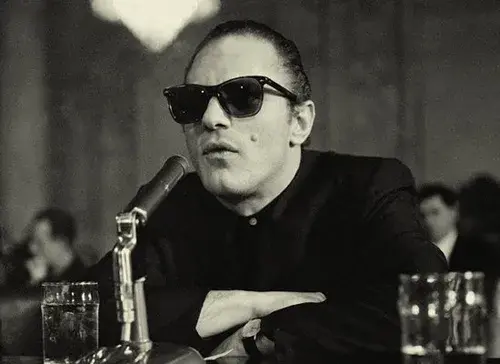
Sheeran also claimed he killed "Crazy Joe" Gallo, the Brooklyn mobster gunned down at Umberto's Clam House in Little Italy in April 1972. Gallo had been the prime suspect in the shooting of rival boss Joseph Colombo at a rally the year before, so plenty of people wanted him dead.
This one's even harder to believe than Hoffa. According to Tonelli, the police description of the gunman was a man around 5 foot 8, stocky and about 40. Sheeran was a huge man, well over six feet tall and in his fifties. A witness who was in the restaurant described the shooters as short, heavy-set Italians. The journalist Nicholas Gage, who covered the case, has said the shooter was Carmine "Sonny Pinto" DiBiase, a Colombo family associate.
Fleischer's reply claims a witness to the Gallo shooting later picked out Sheeran from a photo. The witness isn't named in that piece, though, and Sheeran was never charged over Gallo's death.
The Forrest Gump of the Mob
Hoffa and Gallo weren't the end of it. According to the Mob Museum, Sheeran confessed to 25 murders in all, including Briguglio himself, who was shot dead in Little Italy in 1978. He also said he delivered guns for the Bay of Pigs invasion and had inside knowledge of the Kennedy assassination. The Inquirer called him "the Forrest Gump of organized crime", a man who somehow turned up at every big moment in mob history.
That's the pattern that worries historians. Mob storytellers often have good reasons to make themselves look bigger than they were, and Sheeran was old, ill and talking to a man writing a book. It's a familiar problem with Mafia memoirs. A lot of what everyone "knows" about Tommy DeSimone, for example, comes from Henry Hill, who wasn't exactly a reliable witness either.
Prison and a Family That Stopped Talking
Sheeran's real crimes, the ones a court actually convicted him of, were a lot less cinematic. He was prosecuted over labour-leasing deals, a scheme in which labour contracts were shuffled between companies to cheat drivers out of wages and benefits. A federal jury convicted him of racketeering and of taking illegal payments, with the evidence including tapes made by an FBI informant. When he appealed, the Third Circuit Court of Appeals threw out his mail fraud convictions in January 1983 but upheld the racketeering counts.
He was eventually looking at 32 years behind bars. According to Delaware Today, Brandt, who was then working as his lawyer, helped get him released early because of his poor health. He was suffering from arthritis and a dropped foot.
His family paid a price too. In the book, Sheeran says his daughter Peggy stopped speaking to him after Hoffa disappeared, and quotes her telling him "I don't even want to know a person like you." The film made her silent disapproval one of its main threads. But according to Oxygen, Brandt later said Peggy didn't actually believe her father had killed Hoffa.
Frank Sheeran died of cancer in a Philadelphia-area nursing home on 14 December 2003, aged 83. Brandt's book came out the following year.
From Book to Scorsese
I Heard You Paint Houses became a bestseller, and in 2019 Scorsese turned it into The Irishman for Netflix, with De Niro as Sheeran, Al Pacino as Hoffa and Joe Pesci coming out of retirement to play Russell Bufalino. It picked up ten Oscar nominations.
The film was a masterpiece to a lot of critics and a problem to a lot of historians. Tonelli's Slate piece was titled "The Lies of the Irishman", and he accused the film of building its whole story on the word of a man who invented much of what he said. Scorsese and the filmmakers have always said they were telling Sheeran's story as Sheeran told it, not claiming it as proven fact.
The Hoffa Case Hasn't Gone Away
Fifty years on, the hunt for Hoffa keeps going, and none of it has pointed back to Sheeran. In 2021 Congressman Lee Zeldin pushed the Justice Department to declassify the tens of thousands of pages the FBI still holds on the case, according to Fox News. Some of the files are already public in heavily redacted form on the FBI's records vault.
That same year the FBI dug under the Pulaski Skyway in New Jersey, following a deathbed claim from a man who said he'd buried Hoffa in a steel drum near a landfill there. In July 2022 the FBI said nothing of evidentiary value was found.
On the 50th anniversary of the disappearance, in July 2025, the FBI's Detroit office appealed for new tips, and Hoffa's son James publicly asked President Trump to release the files. In October 2025, CNN reported that FBI employees had been ordered to search their records for anything relating to Hoffa, and the case was reported as reopened at the White House's request. If those files ever come out in full, they might finally settle who killed Jimmy Hoffa. Whether they'll say anything at all about Frank Sheeran is another question.
So Did Frank Sheeran Kill Jimmy Hoffa?
Probably not. Here's where it stands:
• He was real, and he really was close to Hoffa and Bufalino. The FBI did list him as a suspect in 1976.
• But the FBI's own summary pointed to Briguglio, not Sheeran, and the agents who worked the case don't believe his confession.
• The blood in the Detroit house wasn't Hoffa's, and in 1995 Sheeran denied any part in the killing.
• His Gallo claim clashes with every contemporary description of the gunman.
Sheeran was a violent man in a violent world, and he almost certainly knew more about the mob than most. But the best evidence suggests that his most famous "confession" was a story, told late in life by a dying man who wanted to be remembered as more than a crooked union boss. If that was the plan, it worked.


